Authentic Indian Men's Jewelry: The Ultimate Buying Guide
Explore our expert buying guide to authentic Indian men's jewelry. Discover 22k gold standards, Kundan techniques, BIS hallmarks, and pricing.


The Renaissance of Heritage Menswear
As we navigate the style landscape of 2026, Indian men's jewelry has transcended its traditional boundaries. No longer confined to wedding-day obligations or purely ceremonial investments, heritage pieces are now at the forefront of global menswear. From the runways of Milan to the streets of Mumbai, modern men are integrating intricate regional craftsmanship into their daily wardrobes. However, buying authentic Indian men's jewelry requires a nuanced understanding of metallurgy, historical techniques, and modern hallmarking standards. This comprehensive buying guide will equip you with the technical knowledge needed to invest in pieces that are culturally significant, structurally sound, and financially sound.
Decoding Traditional Metals and Purity Standards
The foundation of any high-quality Indian jewelry piece lies in its metal purity. Unlike Western markets that predominantly favor 14k or 18k gold, the Indian market heavily indexes on 22-karat gold for solid pieces, and sterling silver for oxidized or tribal designs. Understanding the mechanical limitations of these metals is critical to avoiding structural failure.
Gold Purity and Durability
According to the World Gold Council, 22k gold (91.6% pure) is the standard for Indian investment jewelry. However, pure gold is inherently soft. A solid 22k gold signet ring worn during manual labor or gym sessions will warp, scratch, and lose its structural integrity over time. For pieces requiring stone settings or intricate structural claws, 18k gold (75% pure) is mandatory. The alloy mix (usually copper, silver, and zinc) provides the tensile strength required to hold heavy Polki diamonds or precious gemstones securely.
Oxidized Silver and Tribal Alloys
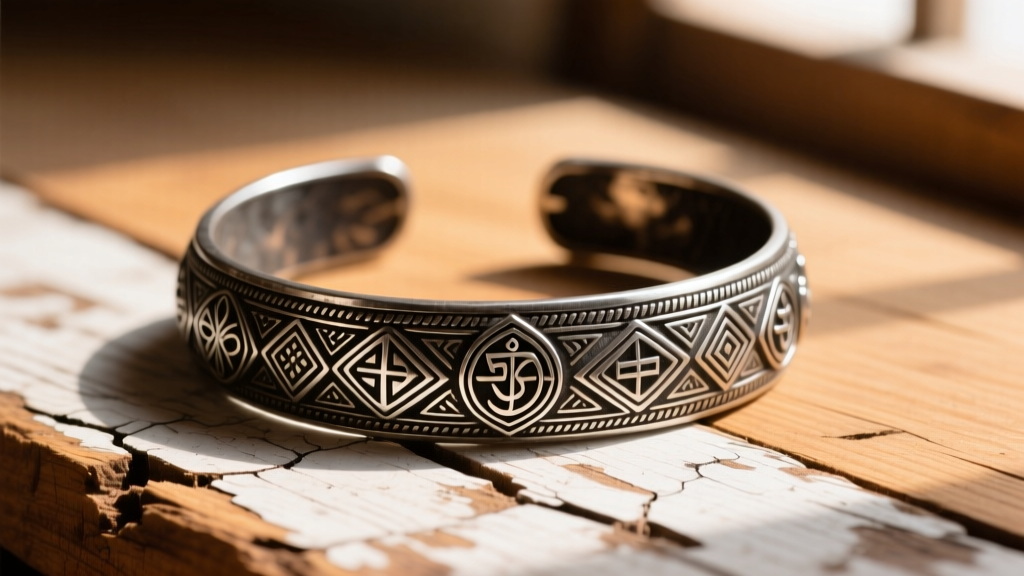
For everyday wear, oxidized sterling silver (92.5% purity) is the preferred choice for tribal and Rajasthani motifs. The deliberate oxidation process involves exposing the silver to sulfur compounds to create a darkened, antique patina that highlights the intricate repoussé work. Beware of 'German silver' or 'white metal' imitations, which contain zero actual silver and often cause severe contact dermatitis due to high nickel content.
| Metal / Purity | Hallmark Code | Best Application | Durability & Failure Modes |
|---|---|---|---|
| 22K Gold | 916 | Solid chains, signet rings, wedding bands | Moderate. Prone to warping and deep scratching under physical stress. |
| 18K Gold | 750 | Polki/Kundan settings, diamond accents | High. Provides necessary tensile strength for stone prongs and claws. |
| Sterling Silver | 925 | Oxidized kadas, tribal cuffs, everyday wear | High. Tarnishes naturally; structural failure only occurs under extreme bending. |
Signature Techniques: What to Look For
Authentic Indian men's jewelry is defined by its artisanal techniques. Mass-produced castings cannot replicate the depth of traditional hand-crafted methods. When evaluating a piece, look for these three hallmark techniques.
Kundan and Polki: The Royal Standard
Kundan is not a stone; it is a technique. Originating from the Mughal era, it involves setting uncut diamonds (Polki) or glass into a gold mount using highly refined 24k gold foil (Kundan). The foil is burnished around the stone's edges to lock it in place. What to look for: Inspect the edges of the stones. Authentic Kundan will show microscopic, smooth ridges of gold foil. If you see uniform metal claws or prongs, it is a modern cast imitation, not true Kundan.
Meenakari: Enamel Artistry
Often found on the reverse side of Kundan pieces, Meenakari is the art of coloring metal surfaces with vibrant enamel. Jaipur remains the global epicenter for this craft. High-quality Meenakari should feel like smooth glass, with no bubbling, pitting, or bleeding between the color fields. Because the enamel is essentially fused glass, it can shatter if the metal base is bent or dropped on a hard surface.
Essential Pieces for the Modern Wardrobe
When building a collection of Indian men's jewelry, focus on versatile anchor pieces that bridge the gap between traditional craftsmanship and contemporary styling.
- The Kada (Bracelet): A solid, heavy cuff or closed bangle. Traditional Sikh and Rajput kadas are forged from a single piece of steel, silver, or gold. Look for a weight between 40 and 80 grams for a substantial, masculine feel on the wrist.
- The Signet Ring (Challa): Opt for broad bands featuring geometric Mughal motifs or uncut emeralds. Avoid overly ornate, towering cocktail rings for daily wear; reserve those for formal ethnic events.
- The Mala (Necklace): While traditional 108-bead Rudraksha malas are common, modern iterations feature matte-finished gold beads interspersed with onyx or lapis lazuli, worn over plain linen or denim.
Sizing, Weight, and Comfort Considerations
Indian jewelry sizing often differs from Western standards, leading to costly resizing errors. India primarily uses the UK alphabetical ring sizing system. A standard men's ring size in India ranges from size 10 to 14 (equivalent to US sizes 9 to 12.5). Always verify the sizing chart with the jeweler before purchasing.
For Kadas and bangles, sizing is determined by the inner diameter in millimeters. Most men require an inner diameter between 65mm and 75mm. Because traditional kadas lack hinges or clasps, you must measure the widest part of your knuckles, not just your wrist, to ensure the piece can slide on comfortably. Furthermore, consider the weight. A 100-gram gold chain will cause significant neck fatigue over an 8-hour workday; for daily wear, aim for chains weighing between 20 and 40 grams with a flat, interlocking link structure (like the Ghunghroo chain) to prevent pulling on chest hair.
Authentication and Avoiding Counterfeits
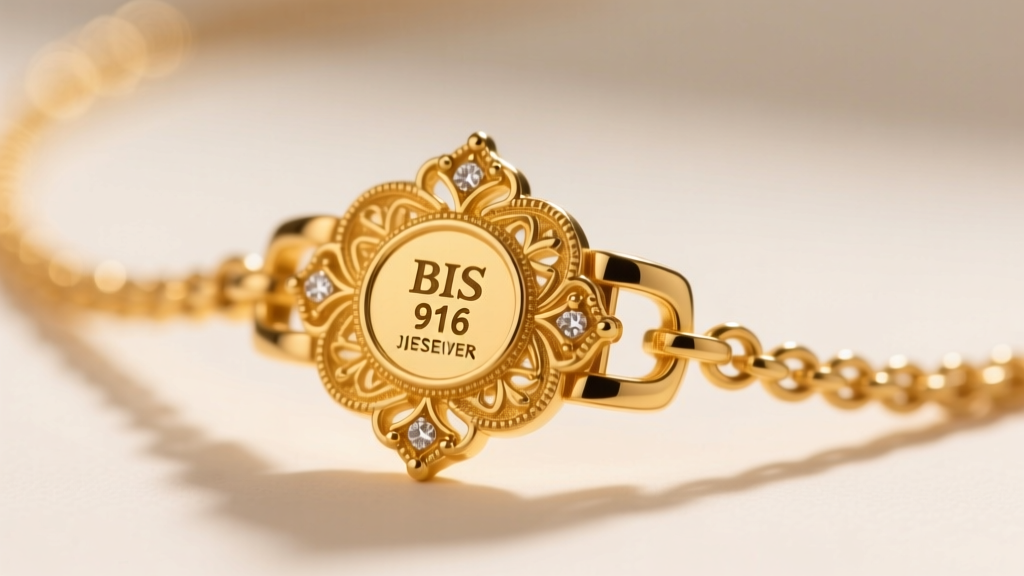
The proliferation of counterfeit gold and synthetic Polki requires strict due diligence. In India, the Bureau of Indian Standards (BIS) mandates hallmarking for all gold jewelry. When inspecting a piece, you must locate four distinct laser-engraved marks:
- The BIS Logo: A triangular mark confirming government assaying.
- Purity Grade: e.g., 916 for 22k, 750 for 18k.
- Assaying Center Mark: A code identifying the specific testing laboratory.
- Jeweler's Identification Mark: The registered logo or code of the manufacturer.
Expert Tip: If a jeweler claims a piece is 'antique' and therefore exempt from modern hallmarking, demand a third-party XRF (X-ray fluorescence) scan to verify the metal's elemental composition before completing the transaction.
Pricing Framework: What Should You Pay?
Understanding the pricing architecture of Indian jewelry prevents you from overpaying for craftsmanship. The final retail price is calculated using a strict formula:
Total Cost = (Metal Weight × Daily Market Rate) + Making Charges + Stone Cost + GST
As noted by Vogue India, making charges (the labor cost for crafting the piece) are highly negotiable in independent boutiques but fixed in corporate chain stores. For simple cast bands, making charges should range from 8% to 12% of the metal's value. For intricate, hand-carved Kundan or Meenakari work, making charges can legitimately reach 25% to 40%. Always ask for an itemized invoice that separates the gold weight, stone weight, and making charges. In India, a 3% Goods and Services Tax (GST) is applied to the final sum.
Care and Maintenance for Heritage Pieces
Traditional Indian techniques require specific maintenance protocols to prevent irreversible damage. Kundan and Polki are highly sensitive to moisture. The Lac (natural resin) used to fill the back of the stone settings will degrade, turn white, and cause the stones to fall out if exposed to water, sweat, or alcohol-based perfumes. Always apply cologne before putting on your jewelry.
For oxidized silver, avoid using standard silver dips or ultrasonic cleaners. These will strip the deliberate black patina, leaving you with a bright, shiny piece that loses its tribal character. Instead, clean oxidized silver using a soft, dry horsehair brush to remove dust from the deep crevices, and store it in an anti-tarnish flannel bag rather than an airtight plastic box, which can trap moisture and cause localized green corrosion.


