Preserving Navajo Jewelry Marks: Cleaning & Care Guide
Learn how to clean vintage silver and turquoise without erasing faint Navajo jewelry marks. Expert tips on preserving hallmarks, patina, and stone integrity.

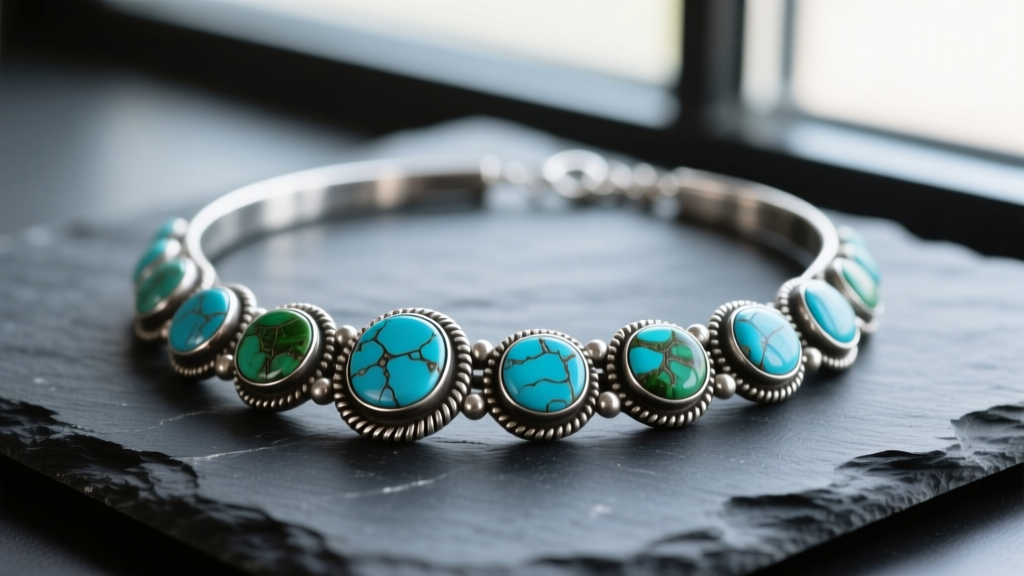
The Critical Importance of Navajo Jewelry Marks
Navajo (Diné) silversmithing is a cornerstone of Southwestern cultural heritage, celebrated for its heavy silverwork, intricate stamping, and masterful turquoise inlay. For collectors, appraisers, and historians, the true value of a piece often lies in its authentication. This is where Navajo jewelry marks—the hallmarks, shop stamps, and artist initials pressed into the silver—become paramount. According to the Indian Arts and Crafts Board, these marks are essential for verifying authenticity, tracing lineage, and establishing market value.
Historically, early Navajo silversmiths did not hallmark their work. It wasn't until the mid-20th century, and particularly during the Native American jewelry boom of the 1970s, that artist initials, clan symbols, and 'Sterling' stamps became standard. Today, a faint, oxidized stamp from a legendary maker like Kirk Smith or a historic Bell Trading Post mark can increase a piece's value by thousands of dollars. However, these marks are physically stamped into the metal, creating microscopic recesses that trap dirt, oils, and tarnish. Cleaning these pieces requires a highly specialized approach; aggressive polishing can literally erase history.
The Cleaning Dilemma: Patina vs. Polish
The greatest threat to Navajo jewelry marks is well-intentioned but misguided cleaning. Silver tarnish is chemically known as silver sulfide. When silver reacts with sulfur in the air, a dark layer forms on the surface. In flat areas, this looks like dullness. In the recessed grooves of a hallmark or stamp, this tarnish provides the crucial visual contrast that makes the mark readable against the brighter surrounding silver.
Many popular internet hacks recommend an electrochemical reduction bath—using boiling water, baking soda, and aluminum foil to strip tarnish instantly. While this works for flat modern silverware, it is disastrous for vintage Navajo jewelry. This process removes 100% of the silver sulfide, including the dark oxidation trapped inside the hallmark. Once the contrast is gone, a faint stamp becomes nearly invisible to the naked eye, severely diminishing the piece's appraisal value and historical readability.
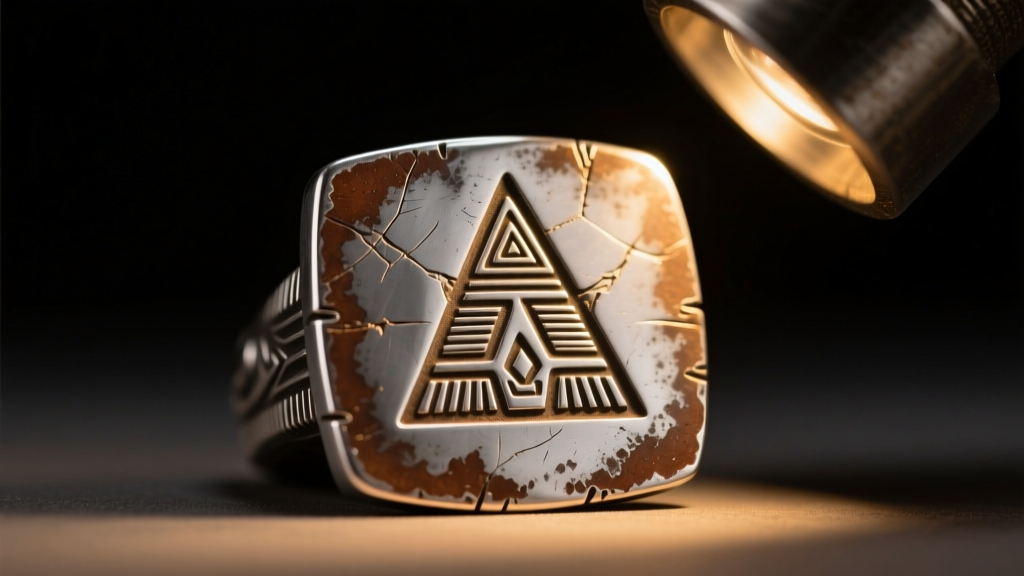
Step-by-Step Cleaning Protocol for Stamped Silver
To maintain the structural integrity of the silver while preserving the legibility of Navajo jewelry marks, follow this conservator-approved protocol. This method removes surface grime and harmful acids from skin contact without stripping the protective patina from the stamp recesses.
- Initial Inspection: Use a 10x jeweler's loupe to inspect the hallmark. Identify if the mark is deeply struck or shallow. Shallow marks require extreme caution.
- Dry Dusting: Use a clean, dry, soft-bristled horsehair brush to dislodge loose dust and grit. Never rub with a dry cloth, as trapped silica dust can cause micro-scratches on the silver.
- The Wash Solution: Mix distilled water with a few drops of pH-neutral, phosphate-free dish soap. Avoid tap water, as chlorine and dissolved minerals can react with the silver alloy.
- Targeted Agitation: Dip the horsehair brush into the suds (not the soaking water) and gently agitate the surface of the silver. When brushing near the hallmark, stroke parallel to the stamp, not perpendicular, to avoid pulling soap residue out of the grooves.
- Rinsing and Drying: Rinse briefly under a gentle stream of lukewarm distilled water. Immediately pat dry with a lint-free microfiber cloth. Use a can of compressed air to blow moisture out of the stamp recesses and around the stone bezels.
Protecting Turquoise and Coral Inlays During Cleaning
Navajo jewelry is rarely just silver; it is a canvas for natural stones. Turquoise, coral, lapis lazuli, and spiny oyster shell are highly porous and chemically sensitive. The Smithsonian National Museum of the American Indian emphasizes that organic and porous materials require entirely different conservation strategies than metals.
Turquoise ranks between 5 and 6 on the Mohs hardness scale, making it susceptible to scratching. More importantly, its porous nature means it will absorb liquids. If you submerge a turquoise-set Navajo cuff in water, the stone will absorb the moisture, which can cause it to swell, crack, or turn green as it absorbs copper from the surrounding silver or backing. Furthermore, many vintage turquoise stones are 'stabilized' with early polymers that can degrade when exposed to harsh solvents.
Chemical Compatibility Chart
Understanding what chemicals are safe for your specific piece is critical. Use this reference guide before applying any cleaner to your Navajo jewelry.
| Material | Safe Cleaners & Methods | Avoid At All Costs |
|---|---|---|
| Sterling Silver (Hallmarked) | Distilled water, pH-neutral soap, horsehair brush, Pacific Silvercloth | Baking soda/foil baths, silver dip liquids, abrasive pastes, ultrasonic cleaners |
| Natural Turquoise | Dry microfiber cloth, soft dry brush, mild soapy water (surface only, quick wipe) | Ultrasonic cleaners, ammonia, bleach, prolonged water submersion, steam |
| Red Coral | Dry soft cloth only | Any liquids, acids, citrus, ultrasonic cleaners, heat |
| Spiny Oyster Shell | Dry soft cloth, slightly damp cloth for surface grime | Harsh chemicals, soaking, ultrasonic vibrations |
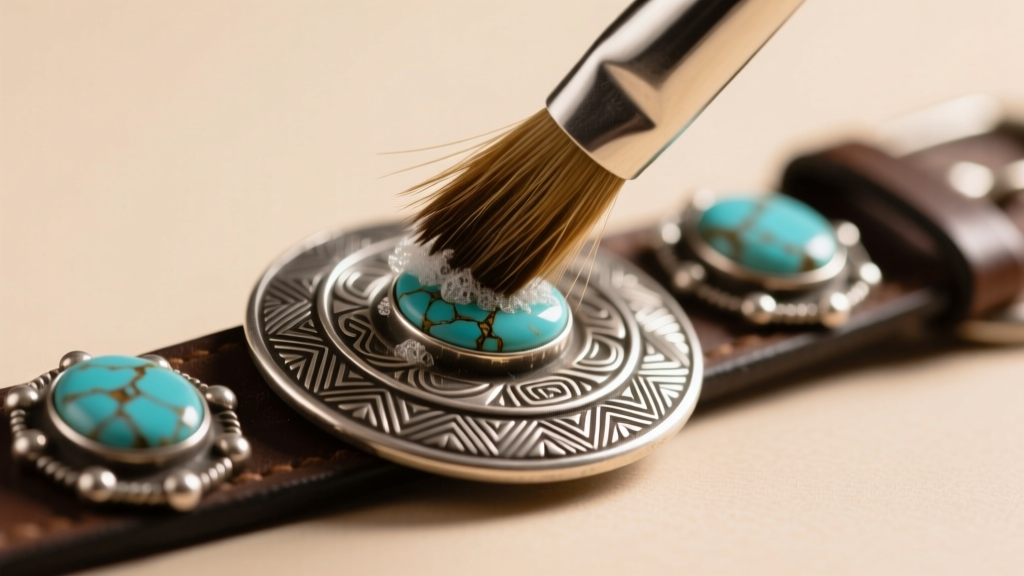
Storage and Environmental Controls
Prevention is always superior to intervention. The way you store your Navajo jewelry directly impacts how often it needs cleaning and how well the hallmarks remain preserved over the decades.
- Anti-Tarnish Textiles: Store pieces in Pacific Silvercloth or similar anti-tarnish flannel bags. These fabrics are embedded with microscopic silver particles that absorb sulfur gases from the air before they can reach your jewelry.
- Humidity Control: Keep jewelry in an environment with a stable relative humidity of around 45-50%. High humidity accelerates silver sulfide formation, while extreme dryness can cause turquoise and coral to crack or craze.
- Avoid Sulfur Sources: Never store Navajo jewelry in areas with high sulfur exposure, such as near rubber bands, wool felt, certain painted woods, or in bathrooms where sulfur-based soaps are used.
- Individual Compartments: Store pieces individually. Navajo silverwork is often heavy and features high bezels. If pieces tumble together, the silver can scratch the softer turquoise stones, and heavy conchos can dent delicate hollow-form bracelets.
When to Seek a Professional Conservator
While routine maintenance can be done at home, certain situations require professional intervention. If a hallmark is entirely obscured by decades of hardened grime, or if the silver has developed 'silver chloride' (a crusty, greenish-black corrosion that pits the metal), do not attempt to clean it yourself.
'A professional metals conservator can use specialized micro-abrasion tools and localized chemical poultices to remove corrosive salts without disturbing the original patina inside the maker's mark. Attempting to dig dirt out of a shallow hallmark with a needle or toothpick often results in permanent scratching that alters the stamp's geometry.'
Furthermore, if the silver bezel surrounding a turquoise stone has pulled away, or if the jewelry marks indicate a highly valuable, museum-grade piece (such as early Atsidi Sani or Fred Peshlakai work), professional appraisal and conservation are mandatory before any cleaning is attempted. By respecting the chemistry of the materials and the historical weight of the Navajo jewelry marks, you ensure these cultural artifacts remain legible and beautiful for generations to come.


