How to Clean & Care for Pieces from Greek Jewelry Brands
Learn expert care, cleaning, and storage tips for high-karat gold and oxidized silver pieces from iconic Greek jewelry brands like Lalaounis.

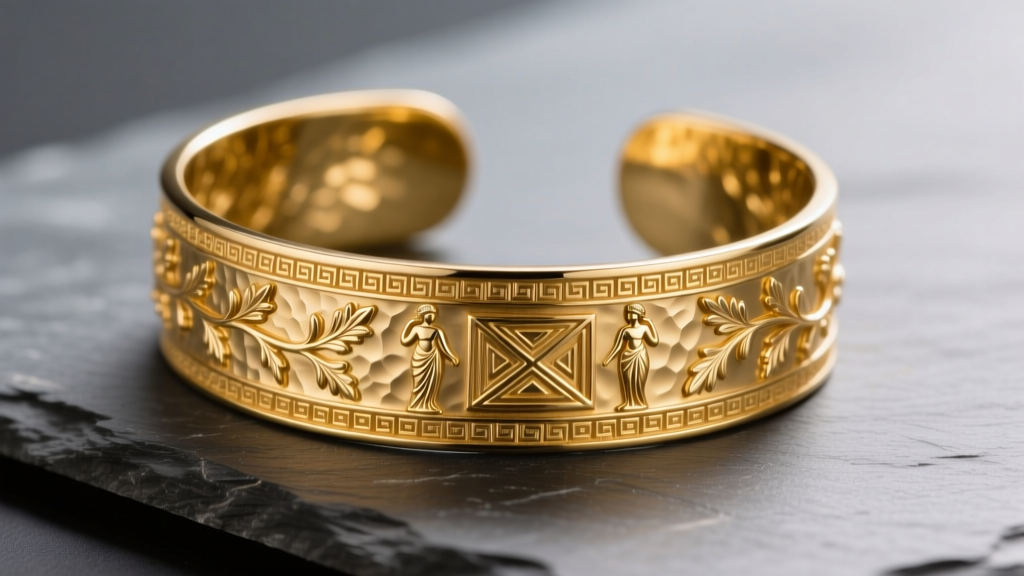
Owning a piece from premier Greek jewelry brands is akin to possessing a wearable artifact. Houses like Ilias Lalaounis, Zolotas, and Eleftheriou do not merely manufacture accessories; they resurrect ancient Hellenistic metallurgical techniques. From the microscopic precision of granulation to the bold, hammered reliefs of repoussé, these pieces demand a highly specialized approach to maintenance. Standard commercial jewelry cleaning methods can easily destroy the intentional patinas, loosen delicate solder work, or scratch high-karat gold. As of 2026, conservation standards for historical revival jewelry emphasize gentle, non-invasive cleaning protocols. This guide provides a meticulous, expert-level framework for preserving the structural integrity and visual brilliance of your Greek cultural jewelry.
The Unique Metallurgy and Techniques of Greek Jewelry Brands
To properly care for these pieces, you must first understand their construction. Iconic Greek jewelry brands frequently utilize 18-karat (75% pure) and 22-karat (91.6% pure) yellow gold. While 22k gold offers the rich, buttery yellow hue characteristic of ancient Mycenaean and Minoan artifacts, it is significantly softer than 14k or 18k alloys. This makes it highly susceptible to micro-scratching and deformation under pressure.
Furthermore, the defining aesthetic of these brands relies on complex surface textures:
- Granulation: The fusion of microscopic gold spheres to a base surface without traditional solder, relying on copper salts and heat. Dirt easily traps between these spheres.
- Repoussé: Hammering the reverse side of the metal to create a raised relief design on the front, resulting in deep, uneven crevices.
- Filigree: Delicate, lace-like wirework, often seen in traditional Epirote silver pieces, which acts as a magnet for skin oils and cosmetic residues.
Because these techniques create extreme topographical variations on the metal's surface, they require targeted cleaning tools rather than broad, abrasive polishing.
Step-by-Step Cleaning for High-Karat Gold (Lalaounis & Zolotas)
High-karat gold does not tarnish, but it readily accumulates sebum, lotions, and environmental dust, which dull its natural luster. According to the Gemological Institute of America (GIA), the safest method for cleaning pure and high-karat gold involves mild surfactants and mechanical agitation via ultra-soft bristles.
The Soak and Agitation Protocol
Begin by preparing a lukewarm bath of distilled water and a few drops of pH-neutral, phosphate-free dish soap. Avoid tap water, as dissolved minerals and chlorine can leave microscopic water spots on high-polish gold surfaces. Submerge the jewelry for no more than three to five minutes. This brief soak is sufficient to soften lipid-based residues without compromising any secondary adhesives if the piece contains cabochon stones.
For agitation, discard standard jewelry brushes. Instead, use an extra-soft baby toothbrush with bristles measuring 0.1mm or less. Gently sweep the bristles across the repoussé ridges and between granulation clusters using circular motions. Never apply downward pressure; let the bristle tips do the work of lifting the debris.
Rinsing and Drying
Rinse the piece under a gentle stream of distilled water. To dry, do not rub the metal. Wrap the piece in a clean, lint-free microfiber cloth and gently pat it dry. Allow it to air-dry completely in a low-humidity environment before storing to prevent water spots from forming in the deep crevices of hammered textures.
Maintaining Oxidized Silver and Filigree (Eleftheriou & Artisans)
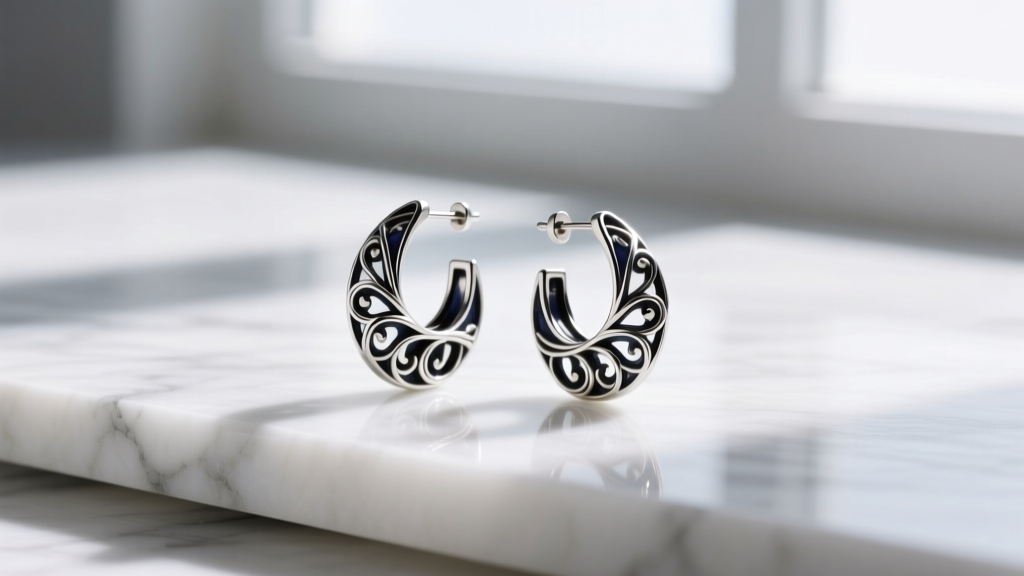
Greek silver jewelry, particularly pieces featuring traditional filigree or classical motifs, often utilizes intentional oxidation. This process involves exposing the silver to sulfur compounds to create a dark silver sulfide patina, which is then polished off the high points, leaving the recesses dark. This contrast is what gives the intricate wirework its three-dimensional depth.
Critical Warning: Never use liquid silver dips or commercial tarnish removers on these pieces. These products typically contain thiourea, a chemical that strips oxidation instantly and uniformly. Using a dip will erase the dark recesses, leaving the filigree looking flat, chalky, and ruined.
To clean oxidized silver, use a dry, untreated silver polishing cloth. Gently glide the cloth over the raised, high-polish areas of the design. Avoid pressing the cloth into the crevices. If debris is trapped in the filigree wirework, use a dry, soft-bristled makeup brush to gently sweep out the dust without disturbing the chemical patina.
Handling Enamel and Gemstone Accents
Some contemporary and vintage pieces from top Greek jewelry brands incorporate guilloché enamel or semi-precious cabochons like lapis lazuli, turquoise, and malachite. These materials are highly porous and sensitive to thermal shock.
When cleaning a piece with enamel or porous stones, never submerge it in water. Water can seep beneath the enamel or into the bezel setting, causing the stone to crack or the enamel to lift. Instead, dampen a cotton swab with a tiny amount of distilled water and carefully clean the metal surrounding the stone. Dry immediately with a second, dry cotton swab. For a comprehensive overview on handling delicate historical materials, the Victoria and Albert Museum's conservation guidelines strongly advise against immersing composite antique or revival jewelry.
The Ultrasonic and Chemical Traps
It is a common misconception that ultrasonic cleaners are safe for all solid gold jewelry. For pieces from Greek jewelry brands featuring granulation or repoussé, ultrasonic machines are highly destructive. The high-frequency sound waves create microscopic cavitation bubbles that implode against the metal. While this cleans effectively, the shockwaves can easily fracture the delicate copper-salt bonds used in traditional granulation, causing the tiny gold spheres to detach and fall out.
Similarly, avoid ammonia-based cleaners. While ammonia is safe for diamonds and platinum, it can react poorly with the specific copper and silver alloys used in 18k and 22k yellow gold, potentially causing surface pitting or altering the metal's color over time.
Material-Specific Care Matrix
To streamline your maintenance routine, refer to the following decision matrix based on the specific material and technique of your jewelry:
| Material / Technique | Recommended Cleaning Agent | Tool | Primary Risk Factor |
|---|---|---|---|
| 22k Gold (Repoussé) | Distilled water + pH-neutral soap | 0.1mm baby toothbrush | Scratching, deformation from pressure |
| 18k Gold (Granulation) | Distilled water + pH-neutral soap | Extra-soft makeup brush | Ultrasonic cavitation loosening spheres |
| Oxidized Silver (Filigree) | None (Dry cleaning only) | Untreated polishing cloth | Thiourea dips stripping intentional patina |
| Gold with Enamel/Stones | Damp cotton swab (Spot clean) | Cotton swab, microfiber | Water ingress, thermal shock, chemical etching |
Long-Term Storage and Professional Servicing
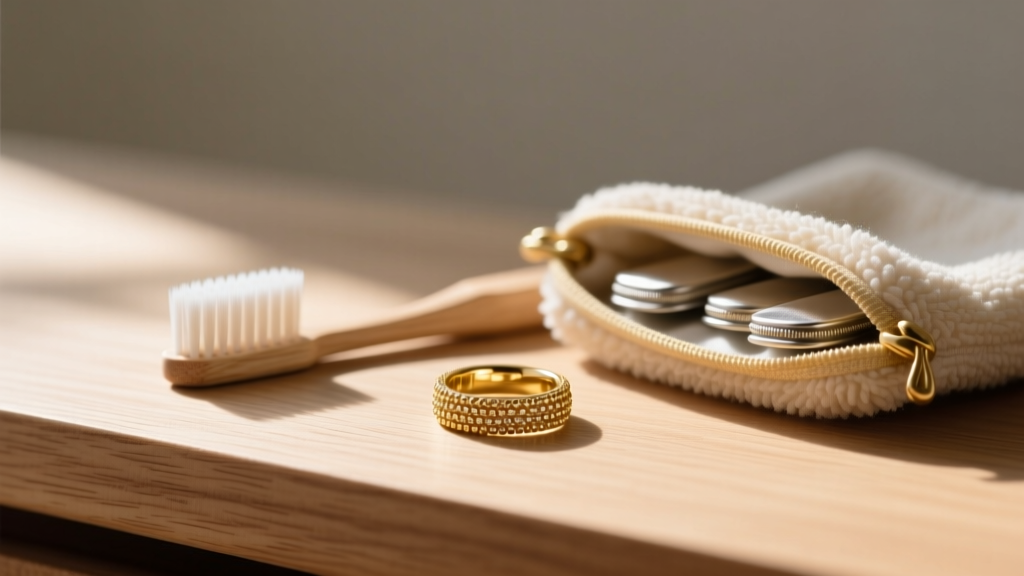
Proper storage is just as critical as the cleaning process. Because 22k and high-karat 18k gold are relatively soft, storing multiple pieces together in a communal jewelry box will result in severe scratching. Each piece must be housed in its own individual, soft flannel or microfiber pouch.
For silver pieces, introduce 3M anti-tarnish strips into the storage pouch or drawer. These strips absorb airborne sulfur compounds before they can react with the silver, significantly slowing down the tarnishing process without altering the piece's intentional oxidation.
Finally, schedule a professional inspection with a certified bench jeweler every 18 to 24 months. They can check the integrity of hidden clasps, re-tighten bezels holding cabochon stones, and, if necessary, professionally re-apply oxidation to silver pieces where the patina has naturally worn away from friction against the skin. By adhering to these meticulous care standards, you ensure that the historical artistry of Greek jewelry brands remains pristine for generations.


