Egyptian Scarab Beetle Jewelry: A Buyer's Value & Pricing Guide
Discover how to evaluate Egyptian scarab beetle jewelry. Learn material grades, pricing tiers, common failure modes, and authentication tips for buyers.

The Allure and Market Reality of the Scarab
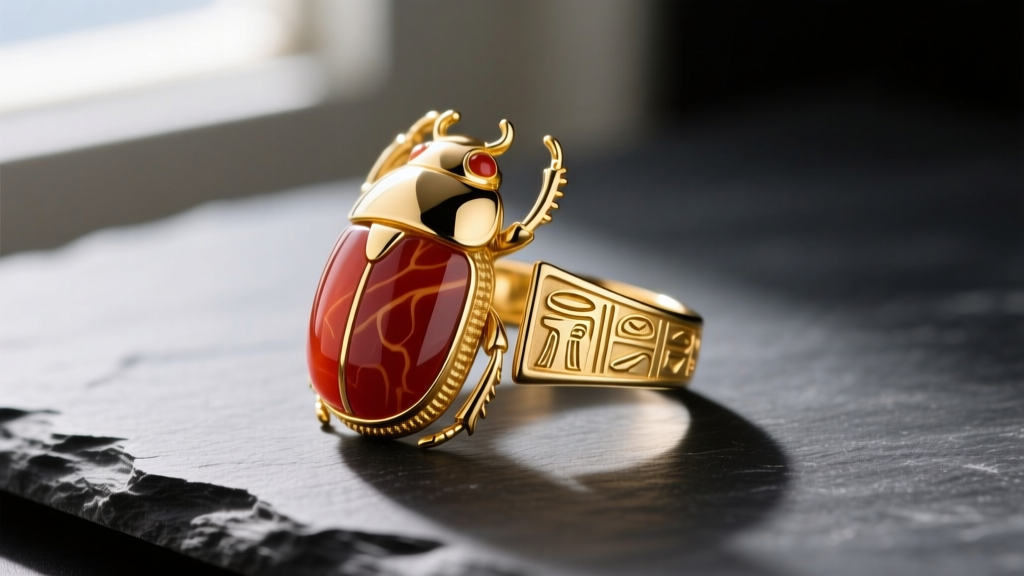
The Egyptian scarab beetle (Scarabaeus sacer) has been a potent symbol of rebirth, transformation, and the sun god Khepri for over four millennia. Today, Egyptian scarab beetle jewelry remains one of the most recognizable and highly sought-after motifs in regional and cultural jewelry. However, the modern market is a minefield of extreme price disparities. A quick search will yield results ranging from $12 mass-produced base-metal souvenirs to $15,000 authenticated antiquities and bespoke artisan pieces.
As a buyer in 2026, navigating this landscape requires more than an appreciation for ancient aesthetics; it demands a rigorous understanding of material grades, structural integrity, and historical accuracy. This comprehensive value assessment will break down exactly what you are paying for, how to identify structural weaknesses in popular scarab designs, and where to allocate your budget for maximum longevity and investment value.
Material Tiers: What You Are Actually Paying For
The value of any scarab piece is fundamentally anchored by its metallurgical composition and the gemological reality of its carved stone. Understanding these variables is the first step in avoiding overpriced costume pieces disguised as fine jewelry.
The Metallurgical Hierarchy
At the bottom of the value chain are zinc alloys and brass, often plated with microscopic layers of gold via electroplating. These pieces typically cost under $40 but carry a high risk of contact dermatitis due to nickel content, and the plating will inevitably wear off within months of daily use.
Stepping up, we find Sterling Silver (925) and Gold Vermeil. For vermeil to hold genuine value, the Federal Trade Commission (FTC) mandates a minimum of 2.5 microns of gold plating over a sterling silver base. However, for high-friction items like rings, you should seek out heavy vermeil (3.0 to 4.0 microns) or solid 10k/14k gold. Solid 18k gold is the standard for heirloom-quality scarab jewelry, offering superior tarnish resistance and a rich, warm hue that historically mimics the sun-worship origins of the motif.
Gemstone Valuation: Beyond the Blue and Red
The stones used to carve scarabs dictate a massive portion of the price. Here is how the most common materials break down in terms of value and durability:
- Carnelian: The quintessential scarab stone. Natural carnelian (Mohs hardness 7) is highly durable for daily ring wear. However, the market is saturated with dyed agate sold as carnelian. According to the Gemological Institute of America (GIA), heat treatment is common and acceptable, but chemical dyeing drastically reduces the stone's intrinsic value. Natural carnelian exhibits cloudy internal banding and a greasy luster, whereas dyed agate often shows concentrated color pooling in microscopic fractures.
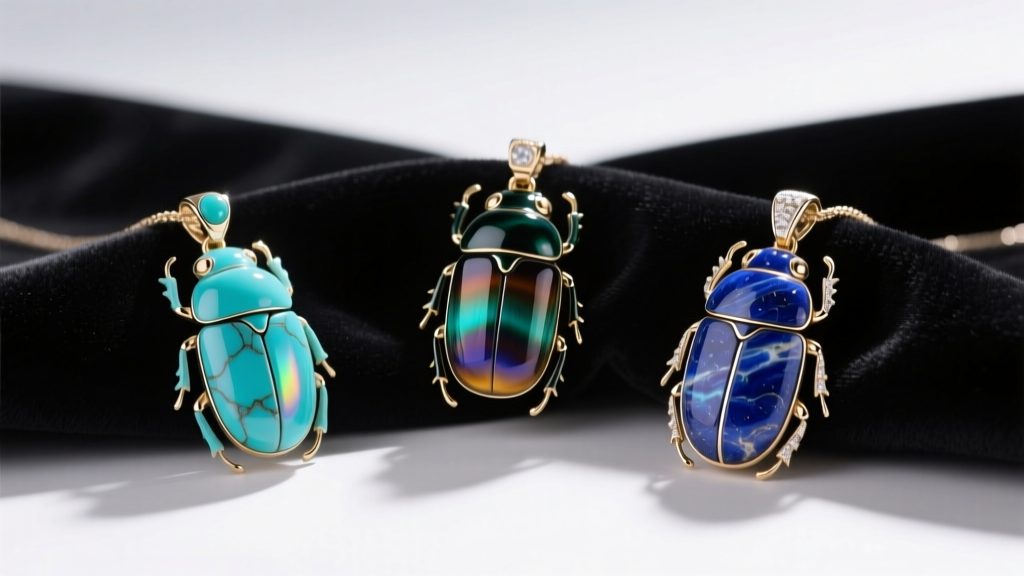
- Lapis Lazuli: Prized for its deep celestial blue. High-grade Afghan lapis contains golden pyrite flecks and minimal white calcite matrix. With a Mohs hardness of 5 to 5.5, lapis is too soft for everyday scarab rings and is better suited for pendants or earrings. Beware of dyed howlite or synthetic spinel passed off as lapis; the GIA's Lapis Lazuli guide notes that synthetic versions lack the natural pyrite inclusions and will often fluoresce under UV light due to dyes.
- Turquoise Faience vs. Natural Turquoise: Ancient Egyptians pioneered faience, a sintered-quartz ceramic with a vibrant turquoise glaze. Modern replicas made of authentic faience hold cultural value but are inexpensive to produce. Natural, stabilized turquoise is significantly more expensive and requires careful maintenance to prevent the stone from absorbing skin oils and darkening over time.
Pricing Matrix: Budgeting for Your Scarab Piece
To help you benchmark offers from artisans, estate dealers, and commercial brands, refer to the pricing matrix below. These ranges reflect the 2026 market for newly crafted and verified vintage pieces.
| Market Tier | Typical Metal | Typical Stone / Material | Price Range (USD) | Best Use Case |
|---|---|---|---|---|
| Tourist / Novelty | Base Metal / Brass | Glass, Resin, or Dyed Howlite | $15 - $45 | Costume wear, theatrical props |
| Demi-Fine | Sterling Silver / Standard Vermeil | Dyed Agate, Sodalite, Modern Faience | $80 - $250 | Occasional wear, fashion layering |
| Fine Artisan | Solid 14k / 18k Gold | Natural Carnelian, High-Grade Lapis, Jade | $600 - $3,500 | Daily heirloom wear, investment |
| Antiquity / Artifact | Ancient Bronze / Historical Gold | Ancient Faience, Steatite, Amethyst | $1,500 - $20,000+ | Museum-grade collecting, archiving |
Common Failure Modes and Value Destroyers
Egyptian scarab beetle jewelry is famous for the "swivel ring" design, where the stone rotates 360 degrees within a wire bezel. While visually striking and historically inspired by signet rings used to stamp wax seals, this mechanism is a structural nightmare if poorly engineered.
The Swivel Mechanism Vulnerability
In mass-produced and even some mid-tier demi-fine rings, the swivel mechanism relies on the tension of the two side prongs (the shank arms) pressing into small drilled holes on the sides of the scarab stone. Over time, the repetitive spinning motion acts as a lapidary grinding wheel, slowly widening the drilled holes in the stone. Simultaneously, the metal prongs suffer from metal fatigue and bend outward. The inevitable result is the scarab popping out and being lost.
The Expert Fix: If you are buying a swivel ring for daily wear, ensure the setting uses a steel tension pin or a threaded screw mechanism rather than simple bent wire prongs. Alternatively, opt for a fixed bezel setting where the scarab is locked in place; you lose the spinning novelty but gain decades of structural security.
Enamel and Faience Chipping
Pieces featuring cloisonné enamel or modern faience replicas are highly susceptible to chipping upon impact. Because the scarab shape is domed and protrudes above the finger or chest, it acts as a natural impact zone. When assessing value, inspect the edges of the beetle's wings (the elytra) for micro-chips. Even a 1-millimeter chip in a faience glaze will reduce a piece's resale value by up to 40% and cannot be seamlessly repaired.
Authentication and Avoiding Overpriced Fakes
When venturing into the higher tiers of the market, particularly when purchasing vintage or artifact-grade scarabs, authentication is paramount. The Metropolitan Museum of Art's Egyptian collection provides excellent visual benchmarks for historically accurate proportions and carvings.
Ventral (Belly) Carvings
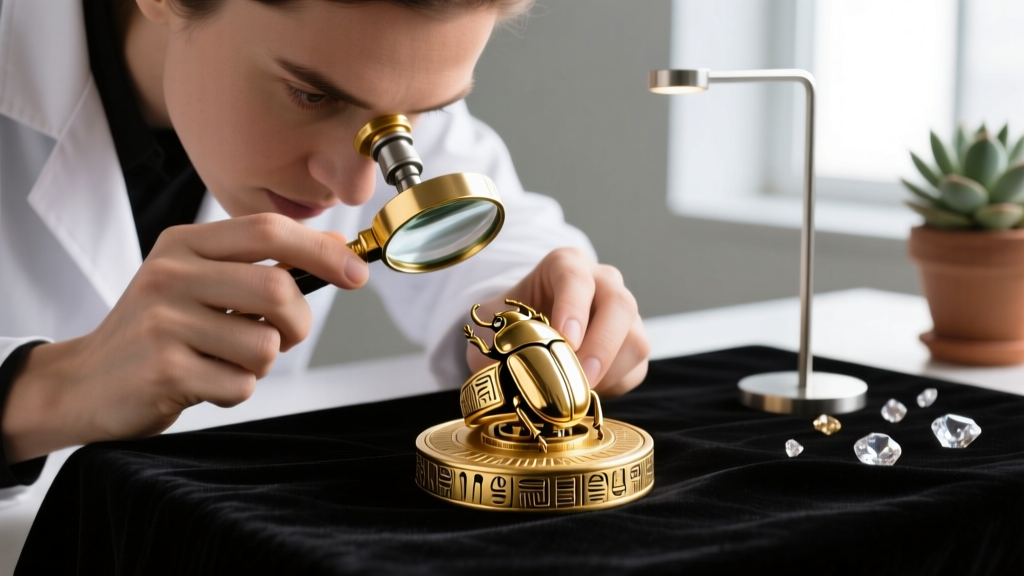
A genuine ancient scarab, or a high-end artisan replica, will feature meticulously carved hieroglyphs on the flat ventral side. These are not random scratches. Authentic historical pieces feature specific protective symbols, such as the ankh (life), nefer (beauty/goodness), or the cartouches of specific pharaohs. Mass-produced fakes often feature shallow, machine-stamped squiggles that mimic hieroglyphs but hold no linguistic or historical meaning. Use a 10x jeweler's loupe to check the depth and crispness of these carvings; hand-carved stones will show microscopic tool marks, whereas molded glass or resin will appear perfectly smooth or have air bubbles in the grooves.
Drilling and Stringing Holes
Ancient scarabs were typically drilled longitudinally (from front to back) using bow drills with abrasives. This leaves a distinct, slightly irregular, and often tapered hole. Modern fakes made to look ancient are frequently drilled with high-speed diamond bits, leaving perfectly cylindrical, parallel holes with sharp, clean edges. Furthermore, true artifact scarabs were meant to be strung on linen or leather cords; if a piece features a glued-on metal bail or a modern soldered jump ring directly attached to an "ancient" stone, it is almost certainly a modern tourist-trade fabrication.
Final Verdict: Where to Allocate Your Budget
For the modern jewelry enthusiast, the sweet spot for value lies in the Fine Artisan tier ($600 - $1,500). By allocating your budget to solid 14k gold and natural, untreated carnelian or high-grade lapis lazuli, you secure a piece that honors the ancient Egyptian legacy while offering the durability required for 21st-century wear. Avoid the temptation of ultra-cheap swivel rings, and always prioritize structural integrity and verifiable gemstone origins over superficial gold plating. A well-crafted scarab is not just an accessory; it is a talisman of endurance, and your purchasing strategy should reflect that timeless resilience.


