When to Choose Customizable Jewelry: A Buyer's Guide
Discover when to choose customizable jewelry over off-the-rack pieces. Explore material limits, engraving techniques, and bespoke pricing frameworks.

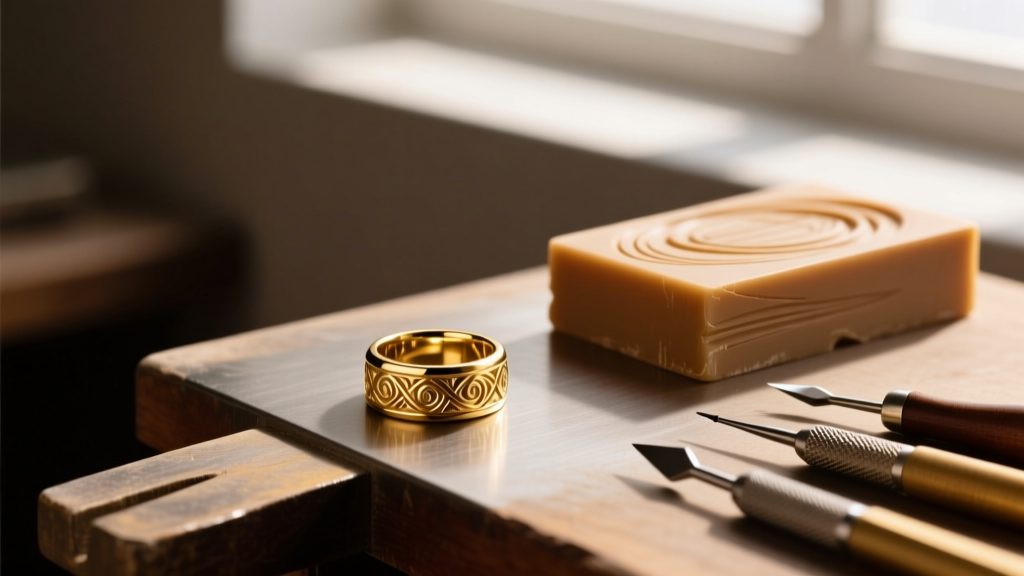
The decision to invest in fine jewelry often hinges on a balance between aesthetic preference, emotional significance, and financial pragmatism. While mass-produced and off-the-rack pieces offer immediate gratification and lower price points, they rarely capture the nuanced personal narrative that a bespoke piece can. Understanding exactly when to choose customizable jewelry requires a deep dive into metallurgy, structural longevity, and the hidden economics of bespoke commissions. This guide strips away the marketing fluff to provide a rigorous, expert-level framework for buyers navigating the custom jewelry landscape in 2026.
The Customization Threshold: Evaluating the Premium
Custom jewelry inherently carries a premium, typically ranging from 20% to 45% over comparable cast, mass-produced pieces. This markup covers the non-scalable labor of CAD (Computer-Aided Design) modeling, wax printing, and individual bench finishing. However, this premium is justified—and often financially superior—in specific scenarios.
First, consider anatomical anomalies. Standard ring shanks are cast in uniform half-sizes with standard comfort-fit profiles. If you have large knuckles but slender finger bases, a custom ring can be designed with a subtle "speed bump" (sizing beads) or a tapered euro-shank that prevents spinning without requiring painful compression over the knuckle. Second, custom work is essential for heirloom integration. Resetting a fragile, century-old Old European Cut (OEC) diamond requires a custom bezel or specialized prong placement to protect chipped girdles, something pre-made settings cannot accommodate safely.
Material Realities: What Can and Cannot Be Customized
Not all metals respond equally to customization. The physical properties of your chosen alloy will dictate the design limitations of your piece. According to the Gemological Institute of America (GIA), understanding metal memory and malleability is crucial for bespoke designs.
- Platinum (950/50 or 950/Ru): The undisputed king of custom fine jewelry. Platinum is highly malleable and lacks "memory," meaning once a prong is pushed over a gemstone, it stays there. It is also the only metal that develops a desirable patina rather than losing metal mass when scratched. It is mandatory for intricate, hand-fabricated micro-pavé settings.
- 18k vs. 14k Gold: 18k yellow gold (75% pure gold) is softer, richer in color, and ideal for deep hand engraving and wax carving. 14k gold (58.5% pure gold) is harder and more durable, making it the superior choice for custom tension settings or ultra-thank minimalist bands that require high tensile strength.
- Titanium and Tungsten Carbide: Often marketed as modern alternatives, these metals are a trap for custom buyers. They cannot be resized, cannot be easily cut off in a medical emergency, and destroy traditional jeweler's saws. Customization is limited to the initial CNC milling or laser engraving; post-creation alterations are virtually impossible.
Engraving Techniques: Laser vs. Hand vs. CNC
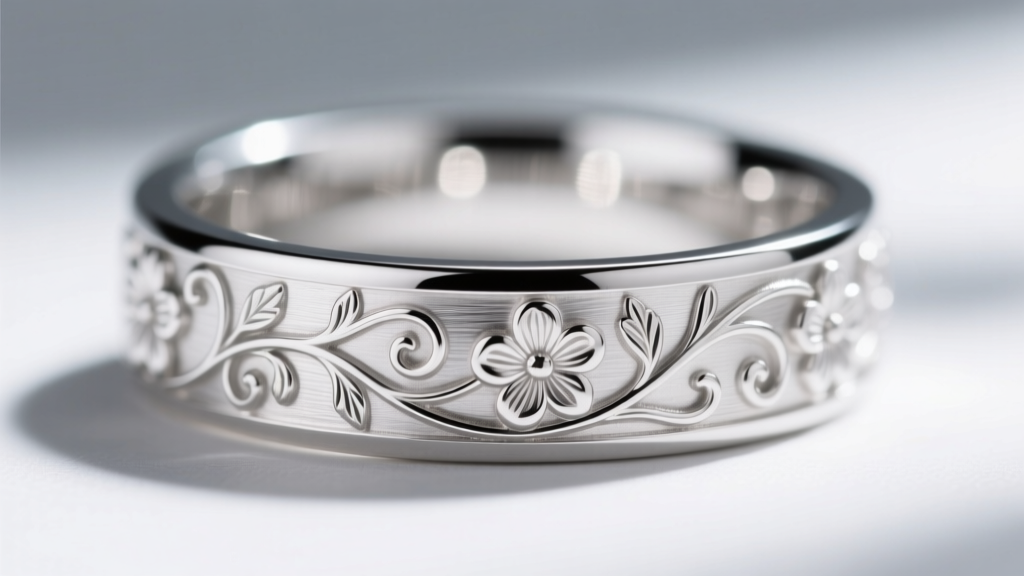
Personalization through engraving is a primary reason buyers seek custom pieces. However, the method of engraving drastically alters the longevity, cost, and visual impact of the jewelry. Hand engraving is a dying art form that involves physically carving away metal with hardened steel gravers, while laser engraving merely alters the surface oxidation or etches microscopic layers.
| Technique | Best Metals | Average Cost | Depth & Durability | Design Limitations |
|---|---|---|---|---|
| Hand Engraving | Platinum, 18k Gold, Sterling Silver | $75 - $250+ per line | Deep cuts; lifetime durability. Bright-cuts reflect light brilliantly. | Requires curved surfaces; limited to master graver's skill. |
| Laser Engraving | All metals, including Titanium & Tungsten | $25 - $60 flat fee | Superficial; can wear away on high-friction areas (like ring interiors) over 10-15 years. | Can reproduce exact handwriting, fingerprints, and complex 2D vectors. |
| CNC / Rotary | Gold, Platinum, Steel | $40 - $100 | Medium depth; uniform but lacks the angled light-reflecting facets of hand work. | Restricted to standard fonts and continuous rotational patterns. |
The Decision Matrix: Off-the-Rack vs. Semi-Custom vs. Full Bespoke
To determine if the investment aligns with your needs, utilize this decision framework. The Jewelers of America emphasizes matching the acquisition method to the emotional and functional lifespan of the piece.
1. Off-the-Rack (Cast Production)
Choose this when: You are buying fashion jewelry, trend-driven pieces, or standard milestone gifts (like a classic 1mm tennis bracelet) where immediate availability and lower cost are paramount. Cast pieces are poured in batches, meaning the grain structure of the metal is less dense, making prongs slightly more prone to snapping under heavy impact compared to hand-forged metal.
2. Semi-Custom (Modular Customization)
Choose this when: You want a personalized touch without the $3,000+ starting price of full bespoke design. Semi-custom involves selecting a pre-designed center setting and pairing it with a custom-engraved band or swapping out standard side-stones for colored sapphires. This bridges the gap between personalization and economies of scale.
3. Full Bespoke (Hand-Fabricated or Custom CAD)
Choose this when: You are designing an engagement ring with an unconventional center stone (like a hexagonal salt-and-pepper diamond or a fragile emerald), integrating inherited gems, or requiring a piece that contours perfectly to an existing, hard-to-match wedding band. Full bespoke allows the jeweler to engineer the structural integrity of the piece from the atomic level up.
Future-Proofing Your Custom Commission
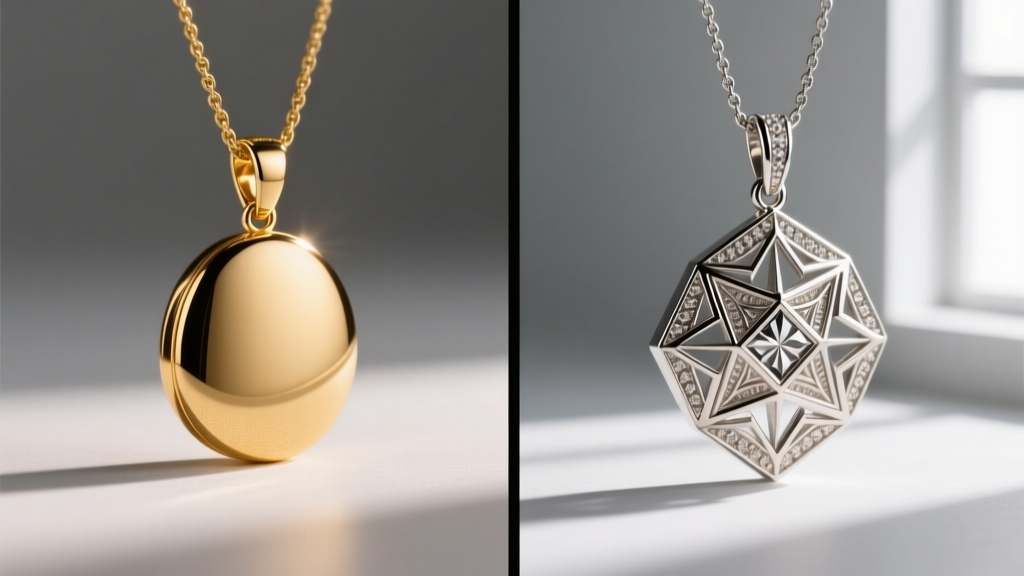
A true hallmark of expert custom jewelry design is anticipating the wearer's future. When commissioning a bespoke ring, you must explicitly instruct your jeweler to incorporate future-proofing elements. First, ensure the ring shank is cast or forged no thinner than 1.8mm in width and 1.5mm in depth. Anything thinner will warp within five years of daily wear, compromising the stone settings above.
Second, request a "sizing bar" or extra metal left at the bottom of the shank. When a ring is resized, a jeweler must cut the shank, add or remove metal, and solder it back together. Having a dedicated, unadorned section of metal at the base ensures the jeweler doesn't have to cut through intricate milgrain detailing or side-stone settings to adjust the fit a decade down the line. Finally, for top-heavy rings featuring massive center stones, ask for a "euro-shank" (a squared-off bottom interior) which naturally counterbalances the weight and prevents the ring from spinning on the finger.
Expert Insight: Never commission a full eternity band (stones wrapping 360 degrees around the shank) in platinum or gold if you anticipate finger size fluctuations due to age, climate, or pregnancy. Eternity bands cannot be traditionally resized without completely destroying the structural integrity and risking the loss of multiple diamonds. Opt for a 3/4 eternity band, leaving a bare metal sizing plate at the bottom.
Final Verdict on Custom Commissions
Knowing when to choose customizable jewelry ultimately comes down to evaluating the piece's intended lifespan and emotional weight. If you are buying a temporary trend piece, save your money and buy off-the-rack. But if you are engineering an heirloom meant to survive three generations, withstand daily mechanical stress, and tell a deeply personal story, the bespoke premium is not just justified—it is strictly necessary. By understanding the metallurgical limits, demanding proper shank thickness, and choosing the right engraving technique, you transition from a passive consumer to an informed commissioner of wearable art.


