Mens Jewelry Buying Guide: Metals, Weights & Fit in 2026
Discover what to look for in mens jewelry. Our 2026 buying guide covers metal grades, chain weights, ring profiles, and clasp mechanics for everyday wear.
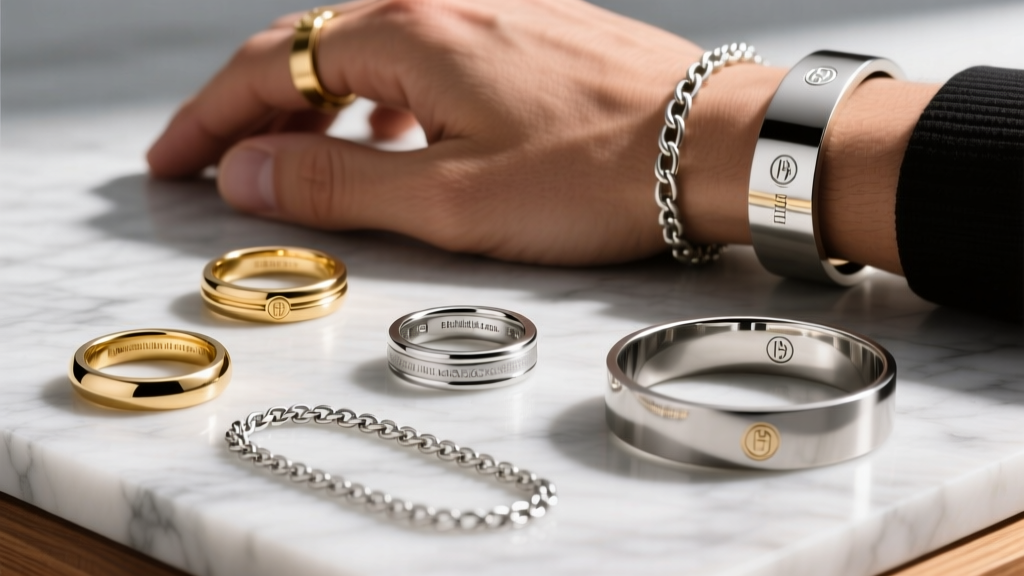
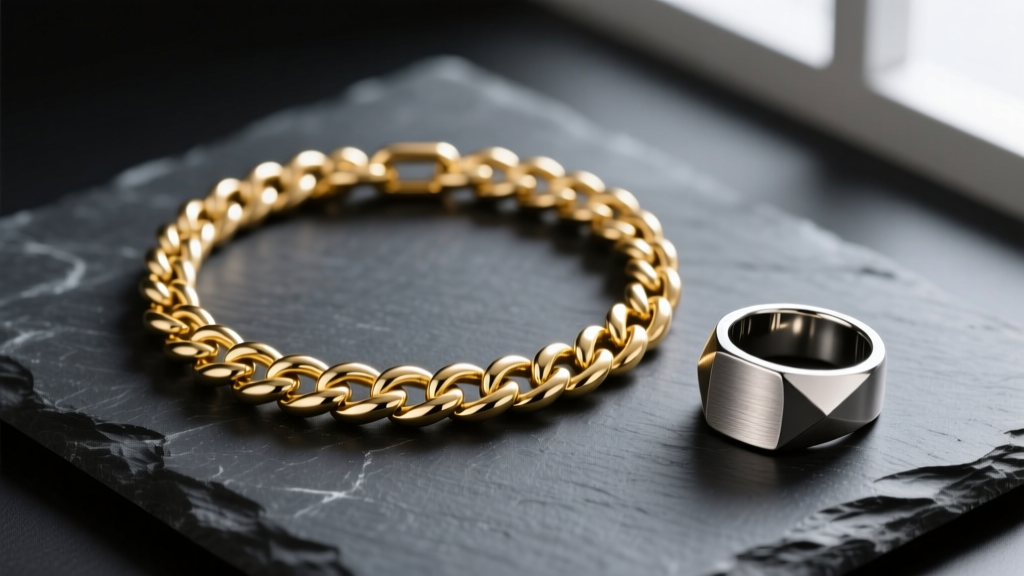
The landscape of mens jewelry has fundamentally shifted. Gone are the days of accepting hollow chains, fragile clasps, and poorly alloyed metals. In 2026, the modern man approaches jewelry with the same horological scrutiny applied to luxury watches. Whether you are investing in your first everyday chain or expanding a curated ring stack, understanding the structural engineering and metallurgy behind these pieces is non-negotiable. This comprehensive buying guide cuts through the marketing fluff to deliver exact specifications, material grades, and mechanical insights you need before making a purchase.
The Metallurgy of Everyday Mens Jewelry
The foundation of any enduring piece is its metal. However, not all gold or silver is created equal. The alloy composition dictates the Vickers hardness (HV), tensile strength, and long-term tarnish resistance of your jewelry. According to the Gemological Institute of America (GIA), pure 24k gold is far too soft for daily wear chains, scoring a mere 25 HV. Therefore, understanding the alloy mix is critical.
14k vs. 18k Gold: The Tensile Reality
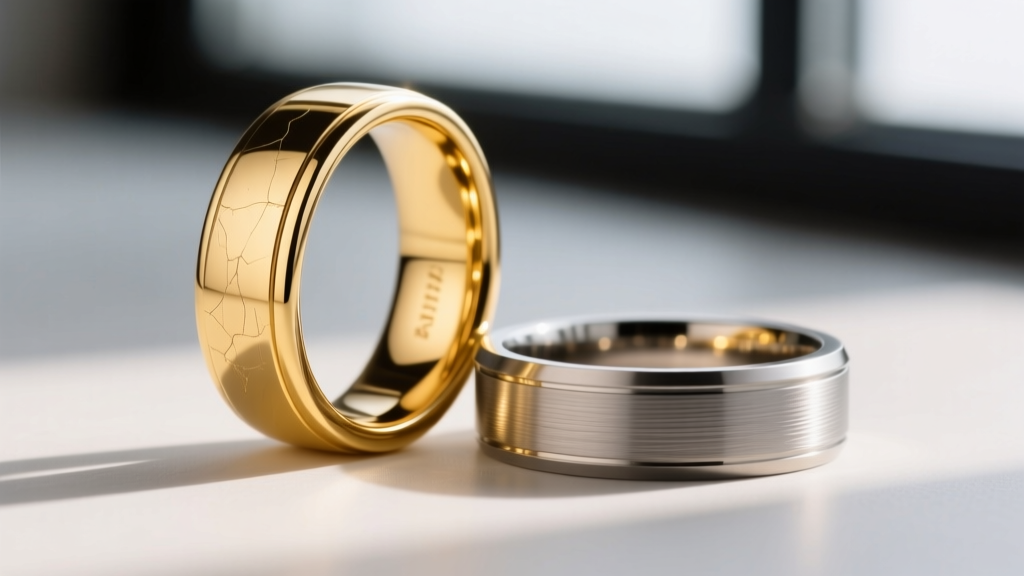
While 18k gold (75% pure gold) offers a richer, deeper yellow hue and commands a premium, it is softer (approx. 125 HV). For heavy pendants or chains subjected to daily pulling, 14k gold (58.5% pure gold) is the superior structural choice. The higher copper and zinc content in 14k gold pushes its hardness to roughly 140-160 HV, significantly reducing the risk of link stretching or clasp deformation over time.
Titanium: Grade 23 vs. Grade 5
Titanium has surged in popularity for mens rings due to its strength-to-weight ratio. However, buyers must verify the grade. Grade 5 Titanium (Ti-6Al-4V) is the aerospace standard, offering exceptional scratch resistance. Conversely, Grade 23 (Ti-6Al-4V ELI) is implant-grade, slightly more flexible, and hypoallergenic, making it ideal for initial piercings or sensitive skin, though slightly less rigid for heavy signet rings.
| Metal Grade | Vickers Hardness (HV) | Tarnish Resistance | 2026 Est. Price per Gram | Best Application |
|---|---|---|---|---|
| 14k Yellow Gold | 140 - 160 | High | $65 - $85 | Everyday Chains, Clasps |
| 18k Yellow Gold | 120 - 130 | High | $85 - $110 | Signet Rings, Low-Impact Pendants |
| 925 Sterling Silver | 60 - 75 | Low (Requires Rhodium) | $1.50 - $3.00 | Fashion Rings, Occasional Chains |
| Grade 5 Titanium | 330 - 350 | Absolute | $2.00 - $5.00 | Architectural Rings, Cuff Bracelets |
Chain Architecture: Width, Weight, and Clasps
When evaluating chains, width is merely aesthetic; weight and wire gauge dictate longevity. A common failure mode in cheap mens jewelry is the use of hollow-core links or ultra-thin wire gauges that dent upon impact and are impossible for jewelers to solder.
The Weight-to-Width Ratio
For a standard Cuban Link chain, you should expect specific weight benchmarks to ensure the piece is solid. A 20-inch chain at 5mm width should weigh between 38 and 45 grams. If a 5mm chain weighs under 20 grams, it is either hollow or heavily under-carat. Furthermore, inspect the wire gauge of the links; a durable 5mm Cuban requires a minimum wire thickness of 1.2mm to withstand the torque of daily movement without warping.
Clasp Mechanics: The Critical Weak Point
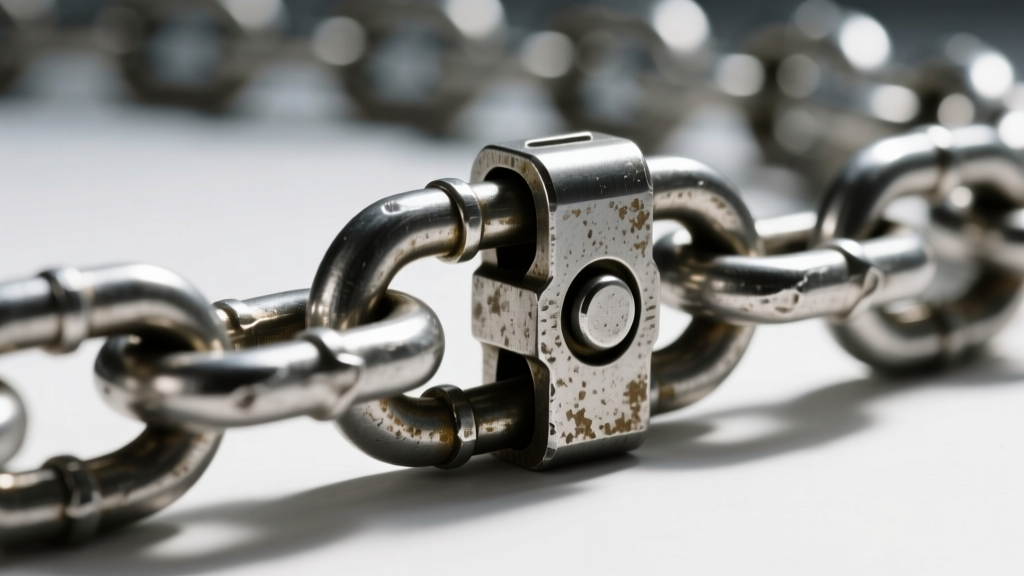
The clasp is the single most common point of failure. Standard lobster claw clasps rely on a tiny internal spring that fatigues and snaps under loads exceeding 25 grams. If your chain weighs more than 30 grams, you must demand a box clasp with a figure-8 safety catch. The box clasp utilizes a tongue-and-groove friction lock, while the figure-8 safety wire acts as a secondary fail-safe, ensuring the chain stays on your neck even if the primary lever is snagged.
Ring Ergonomics: Profiles, Widths, and Knuckle Clearances
Buying rings online or in-store requires more than just knowing your base finger size. The ergonomics of mens jewelry demand an understanding of interior profiles and knuckle differentials to prevent the dreaded 'ring spin' or circulation loss.
Comfort Fit vs. Standard Fit
A standard fit ring has a flat interior, which creates a suction effect against the skin, making it difficult to remove when wet or cold. A comfort fit ring features a domed interior, reducing the surface area in contact with the skin by roughly 40%. For any mens ring wider than 6mm, a comfort fit is mandatory to allow the knuckle to slide through without excessive force.
Solving the Knuckle Differential
Many men have knuckles that are 1.5 to 2 full sizes larger than their finger base. If you buy a ring sized to your base (e.g., Size 9) but your knuckle is a Size 11, the ring will spin constantly once past the joint. The Solution: Opt for a wider band (8mm instead of 5mm). A wider band distributes the weight and creates more friction against the proximal phalanx, significantly reducing rotational spin. Alternatively, look for rings with interior 'speed bumps' (small silicone or metal nodules on the inner shank) that grip the finger base without requiring a larger knuckle clearance.
The 2026 Budget Allocation Framework
If you are building a foundational mens jewelry wardrobe with a $2,000 budget, avoid spreading your capital across ten mediocre pieces. Instead, concentrate on high-impact, structurally sound essentials.
Pro-Tip: Never compromise on the clasp or jump rings. According to industry repair data from JCK Online, over 60% of chain repairs stem from poorly soldered jump rings. Always request laser-welded jump rings for chains over 40 grams.
- The Anchor Chain ($1,200): A 20-inch, 5mm solid 14k yellow gold rope or Cuban chain (approx. 40g). This serves as your daily driver, capable of holding a pendant or standing alone.
- The Signet Ring ($600): A solid 14k gold or Grade 5 Titanium signet ring with a 12mm face. Ensure it features a comfort-fit interior and a minimum shank thickness of 2.5mm to prevent bending.
- The Subtle Bracelet ($200): A 7.5-inch, 3mm solid 925 sterling silver box chain with a rhodium flash to prevent sulfur-induced tarnishing, finished with a secure lobster clasp (acceptable here due to the low 12g weight).
Final Verification Before Checkout
Before finalizing any mens jewelry purchase in 2026, request the exact gram weight, the specific alloy grade (not just 'gold', but '14k nickel-free gold'), and the clasp mechanism type. Reputable jewelers will provide a specification sheet detailing these metrics. By prioritizing structural integrity, precise ergonomics, and verified metallurgy over fleeting trends, you ensure your collection is built to outlast the decade.


