2026 Gift Guide: Choosing the Ideal Antique Jewelry Stand
Discover how to match an antique jewelry stand to specific occasions and eras in our 2026 gift guide for collectors and vintage lovers.

Gifting jewelry is a time-honored tradition, but gifting the home for that jewelry elevates the gesture from a simple present to a legacy-building heirloom. For the serious collector, an antique jewelry stand is not merely a functional accessory; it is a curated stage that respects the provenance, material, and era of the pieces it holds. In our 2026 gift guide, we move beyond generic display boxes and dive deep into the connoisseur’s world of antique display furniture. Whether you are shopping for a bridal shower, a milestone anniversary, or a seasoned estate jewelry collector, matching the right antique jewelry stand to the occasion requires an understanding of historical design, material preservation, and authentic craftsmanship.
The Connoisseur’s Framework: Matching Stand to Era
A common mistake buyers make is pairing a delicate Edwardian platinum lacework brooch with a heavy, rustic 1970s wooden display. To truly honor the jewelry, the display piece must reflect the design philosophies of its time. Here is how to match the stand to the collector's primary focus.
Victorian & Edwardian (1837–1910)
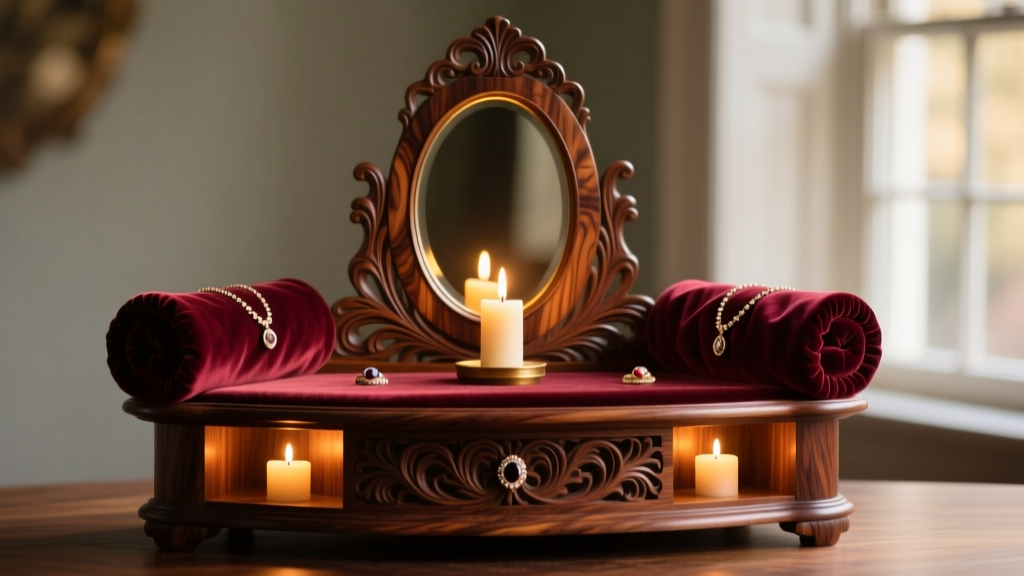
The Victorian era favored romanticism, heavy carving, and rich materials. Look for an antique jewelry stand crafted from burl walnut or mahogany, often featuring brass ormolu mounts and plush velvet interiors. Ring trees and tiered necklace busts were popular. For Edwardian collectors, the aesthetic shifts to lightness and elegance. Seek out silver-plated wire displays, delicate glass cloches, or mirrored vanity trays with lace-like filigree borders that mimic the platinum openwork of the era's jewelry.
Art Deco & Retro (1920–1950)
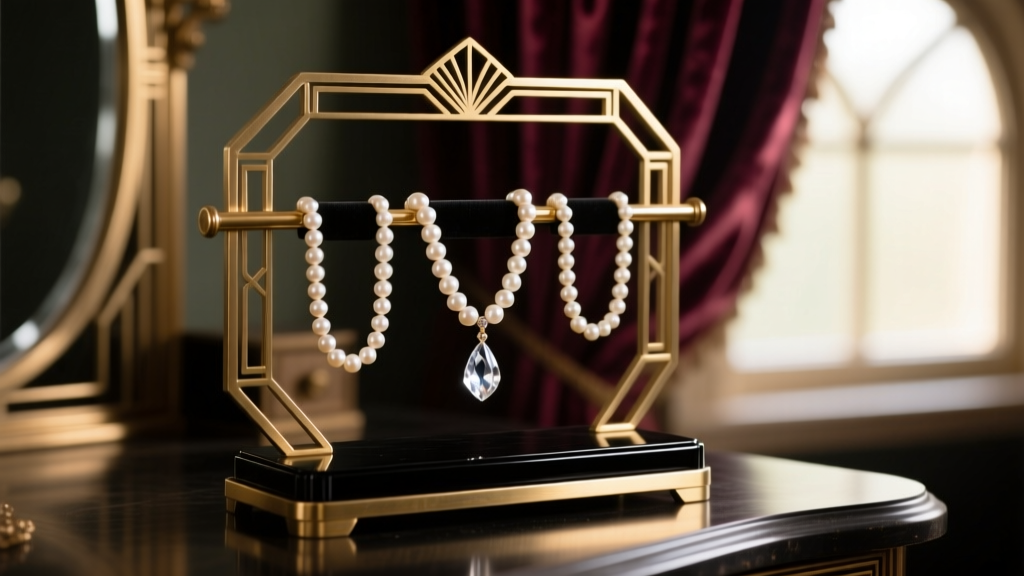
Collectors of 1920s and 1930s geometric jewels need displays that echo the machine age and bold contrasts. An Art Deco antique jewelry stand will frequently incorporate Bakelite, chrome, mirrored glass, and macassar ebony. Look for sharp angles, stepped motifs, and high-contrast color palettes (like black and gold). Retro (1940s) displays often feature larger, more sculptural forms in polished brass or early acrylics, designed to hold the substantial, chunky gold cocktail rings and flexible gas-pipe bracelets of the World War II era.
Occasion Matching: Which Stand for Which Milestone?
Selecting the right antique jewelry stand depends heavily on the gifting occasion and the recipient's current collection stage. Use this 2026 market matrix to guide your purchase.
| Milestone / Occasion | Recommended Era & Style | 2026 Market Value Range | Best For Displaying |
|---|---|---|---|
| Bridal Shower / Engagement | Edwardian Silver-Plate & Glass Cloche | $120 – $280 | Solitaire rings, pearl strands, delicate lacework brooches |
| 10th or 25th Anniversary | Victorian Burl Walnut Ring Tree | $350 – $850 | Eternity bands, signet rings, cameo collections |
| Collector's Milestone | 1920s Art Deco Bakelite & Chrome Vanity Box | $600 – $1,500+ | Geometric onyx pieces, jadeite, cocktail rings |
| Graduation / First Estate Piece | Mid-Century Modern Teak & Brass Valet | $90 – $200 | Everyday gold chains, vintage stud earrings, charm bracelets |
Material Grades & Preservation Pitfalls
An antique jewelry stand must protect the pieces it displays. This is where many well-meaning gift-givers inadvertently cause damage. Understanding material degradation is critical for any serious collector.
The Danger of Mid-Century PVC Linings
If you are sourcing a mid-century (1950s–1970s) jewelry box or stand, you must inspect the interior lining. Many mass-produced pieces from this era utilized polyvinyl chloride (PVC) faux leathers and synthetic velvets. Over decades, PVC off-gasses hydrogen chloride, creating an acidic micro-environment that will rapidly corrode silver, pit gold alloys, and permanently degrade the nacre on natural pearls. According to conservation guidelines from the Victoria and Albert Museum, jewelry should only be stored in acid-free, unbleached cotton, linen, or specifically treated tarnish-inhibiting fabrics.
Wood Veneers vs. Solid Hardwoods
When evaluating 19th-century wooden stands, distinguish between solid mahogany and thin veneers over secondary woods like pine. While veneer is not inherently bad—master craftsmen used it to achieve stunning burl patterns—it is highly susceptible to delamination if exposed to modern central heating or fluctuating humidity. The Metropolitan Museum of Art's conservation department notes that wooden antiques require stable relative humidity (ideally 45-55%) to prevent the glue lines from failing and the wood from warping.
Hardware and Tarnish Transfer
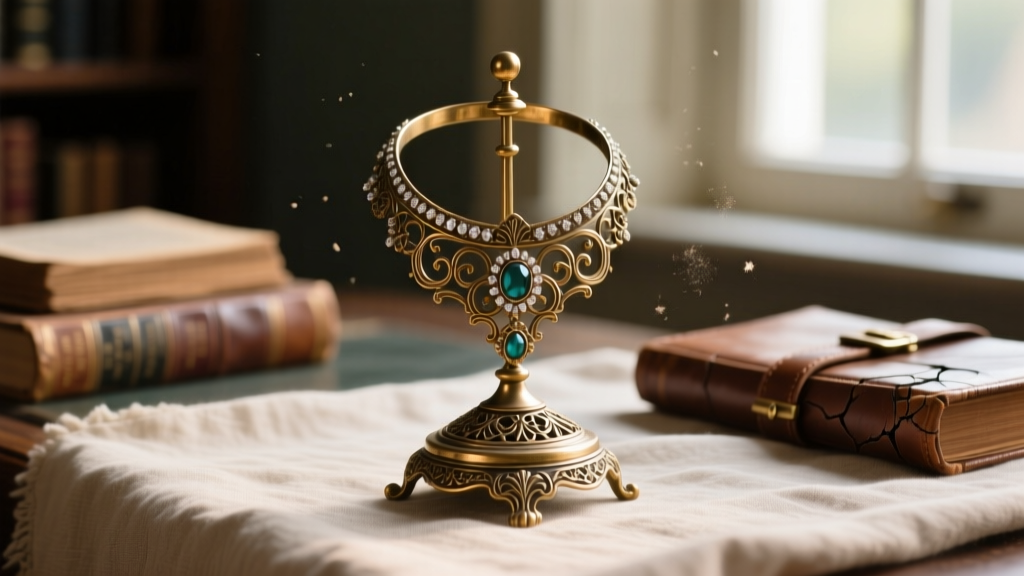
Antique stands featuring internal brass hooks or silver-plated hanging racks can cause galvanic corrosion if the jewelry rests directly against tarnished metal for prolonged periods. Look for stands where the internal hooks are wrapped in silk thread, or plan to retrofit the stand with modern, inert acrylic or nylon display prongs to ensure safe suspension of heavy gemstone necklaces.
Authentication: Spotting the Fakes and Frankenstein Pieces
The market for antique display furniture is flooded with reproductions and "Frankenstein" pieces (stands made from multiple unrelated broken antiques). Use these actionable authentication checks before purchasing:
- The Screw Test: Examine the hinges and internal hardware. The Phillips head screw was not invented until the 1930s. If a purported 1880s Victorian jewelry stand features Phillips screws, it is either a reproduction or has been heavily and poorly restored.
- Dovetail Joints: Pull out the drawers of a wooden vanity stand. Hand-cut dovetails (common before 1860) will be slightly irregular, with thin tails and wider pins. Machine-cut dovetails are perfectly uniform and indicate a post-1890 manufacturing date.
- Patina Consistency: Check the wear patterns. A genuine antique jewelry stand will show natural wear on the velvet where rings are frequently placed, and the wood finish will be darker in recessed areas where wax and dust have accumulated over a century. A uniformly distressed piece is likely a modern factory reproduction.
- Mirror Desilvering: If the stand includes a mirror, look at the edges. Antique mercury glass or early silver-backed mirrors will exhibit a speckled, oxidized "foxing" pattern around the edges. Modern mirrors with artificially applied antiquing spray often look uniform and lack the depth of genuine chemical degradation.
"A true collector knows that the vessel holding the history is just as important as the history itself. An authentic antique stand doesn't just display jewelry; it contextualizes it."
Sourcing Your Gift: Where to Buy in 2026
Finding a high-quality antique jewelry stand requires looking beyond standard big-box antique malls. For verified pieces, consult specialized online auction houses like 1stDibs or Sotheby's online decorative arts auctions. For more budget-friendly but authentic finds, regional estate sales remain the gold mine. When buying from estate sales, always bring a small UV flashlight; modern synthetic varnishes and glues will fluoresce brightly under UV light, instantly revealing hidden modern repairs on otherwise authentic 19th-century wood.
Conclusion
An antique jewelry stand is a profoundly thoughtful gift that speaks to the recipient's passion for history, design, and preservation. By carefully matching the era of the stand to the jewelry, avoiding destructive synthetic linings, and rigorously authenticating the hardware and joinery, you can gift a functional heirloom that will protect and showcase precious collections for generations to come.


