Antique Symbols Stamped On Jewelry: A Metal Purity Guide
Learn to decode antique symbols stamped on jewelry. Compare metal purities, hallmark properties, and testing methods for vintage gold, silver, and platinum.

The Metallurgy of History: Decoding Material Stamps
When evaluating estate pieces, the antique symbols stamped on jewelry serve as far more than mere decorative engravings or maker's signatures. They are legally binding metallurgical guarantees that reveal the exact elemental composition, structural integrity, and historical origin of the piece. In the vintage jewelry market of 2026, where sophisticated counterfeits and altered hallmarks are increasingly prevalent, understanding the material science behind these stamps is a non-negotiable skill for collectors and appraisers.
A hallmark is essentially a material passport. It dictates how a piece will respond to stress, how it will oxidize over decades, and its intrinsic melt value. However, because global standards for metal purity have shifted dramatically over the last three centuries, a stamp from 1890s London requires a completely different metallurgical interpretation than a stamp from 1920s New York. This guide breaks down the physical properties and chemical realities behind the most common antique metal stamps.
Gold Karatage vs. European Millesimal Fineness
The most fundamental divide in antique gold stamps is the measurement system. The United States and the UK traditionally utilized the karat system (parts per 24), while continental Europe relied on the millesimal system (parts per 1,000). But beyond the math, these stamps indicate vastly different physical properties due to the alloying metals used.
The Vickers Hardness Scale in Vintage Gold
Pure 24k gold is exceptionally soft, registering a mere 25 HV (Vickers Hardness). To create durable jewelry, antique jewelers alloyed gold with copper, silver, zinc, and sometimes palladium. The stamps tell us exactly what to expect regarding the metal's tensile strength and brittleness:
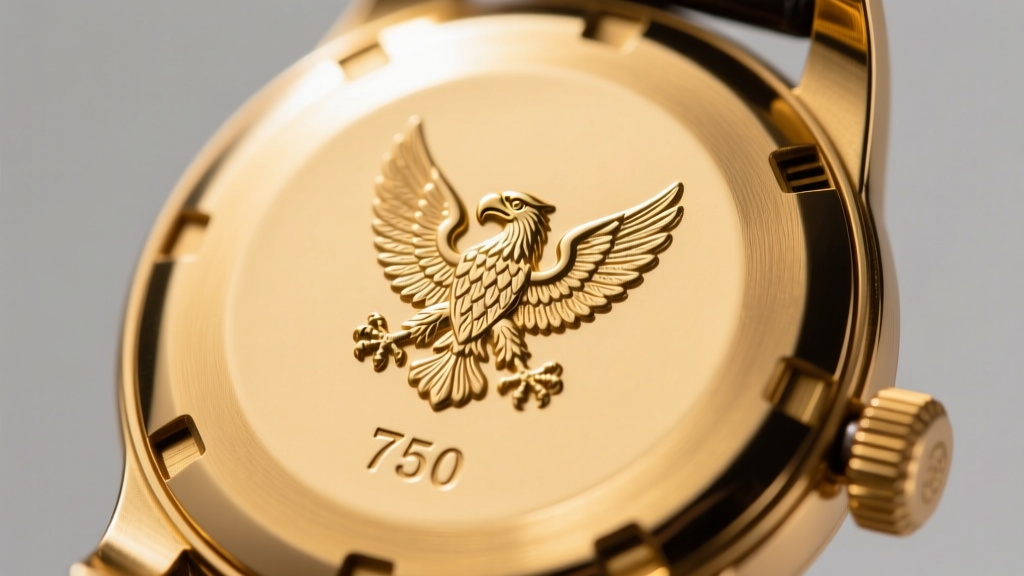
- 18k / 750 Stamp: Composed of 75% gold. With a hardness of roughly 125 HV, 18k gold is highly malleable, making it the preferred choice for intricate Edwardian repoussé work and detailed Art Nouveau enameling. However, it is prone to scratching and wear over a century of use.
- 14k / 585 Stamp: Composed of 58.5% gold. Registering around 150 HV, this is the sweet spot for antique durability. The higher copper or nickel content provides excellent structural memory for prongs holding heavy old European cut diamonds.
- 9k / 375 Stamp: Common in British Victorian and Edwardian jewelry. At 180 HV, 9k gold is incredibly hard and resistant to deformation. However, its high copper content (often over 40%) makes it highly susceptible to stress cracking and rapid oxidation if exposed to harsh chemicals.
According to the educational archives at Lang Antiques, the presence of a 9k stamp on a piece claiming to be American-made prior to 1981 is an immediate red flag, as the US did not legally recognize 9k as 'gold' until the late 20th century.

Silver Standards: The Chemistry of Tarnish and Alloying
Silver stamps are deeply tied to the chemical behavior of the piece. Pure silver does not tarnish; the black copper sulfide layer that forms on antique silver is entirely the fault of the alloying metals required to give the piece structural rigidity.
Sterling (925) vs. Britannia (958) vs. Coin (900)
The antique symbols stamped on jewelry made of silver usually fall into one of three historical categories, each with distinct material behaviors:
- Sterling (925 / Lion Passant): The global standard, comprising 92.5% silver and 7.5% copper. The copper provides necessary hardness but acts as a catalyst for sulfur-based tarnishing. In high-humidity environments, unsealed sterling will oxidize rapidly.
- Britannia (958): A higher purity standard (95.8% silver) mandated in England between 1697 and 1720 to prevent the melting down of coinage. Because it contains less copper, Britannia silver is noticeably softer and more prone to denting, but it exhibits superior tarnish resistance.
- Coin Silver (900): The predominant US standard prior to the 1870s, created by melting down European coins. Containing 10% copper, coin silver is harder than sterling but exhibits a slightly grayer hue and a more aggressive tarnishing profile.
Comparative Data: Common Antique Metal Stamps and Properties
The following table synthesizes the most critical material stamps found in estate jewelry, correlating the visual mark with its metallurgical reality.
| Stamp / Symbol | Metal | Purity | Material Properties & Historical Context |
|---|---|---|---|
| 750 / 18k | Gold | 75.0% | High malleability, rich color. Prone to prong wear in rings older than 80 years. |
| 585 / 14k | Gold | 58.5% | Optimal hardness for stone settings. Often alloyed with nickel in early 20th-century US pieces, posing modern allergy risks. |
| Lion Passant | Silver | 92.5% | UK Sterling standard. Requires regular polishing to manage copper-sulfide tarnish. |
| 950 / PT950 | Platinum | 95.0% | Extremely dense (21.45 g/cm³). Work-hardens when scratched, meaning it displaces rather than loses metal. |
| 1/20 12k GF | Rolled Gold | 5% Gold | Mechanically bonded gold layer over brass. Far more durable than electroplated vermeil; will not flake under normal wear. |
Platinum and the White Metal Alloys
Platinum entered the mainstream jewelry market during the Edwardian era, prized for its immense tensile strength, which allowed jewelers to create nearly invisible, lace-like diamond settings. However, early platinum stamps can be highly confusing due to shifting alloy standards.
Decoding Early Platinum Marks
Unlike gold, platinum is rarely alloyed with base metals. It is typically alloyed with other platinum group metals like iridium, ruthenium, or cobalt to increase its hardness from a baseline of 56 HV to a workable 135 HV.
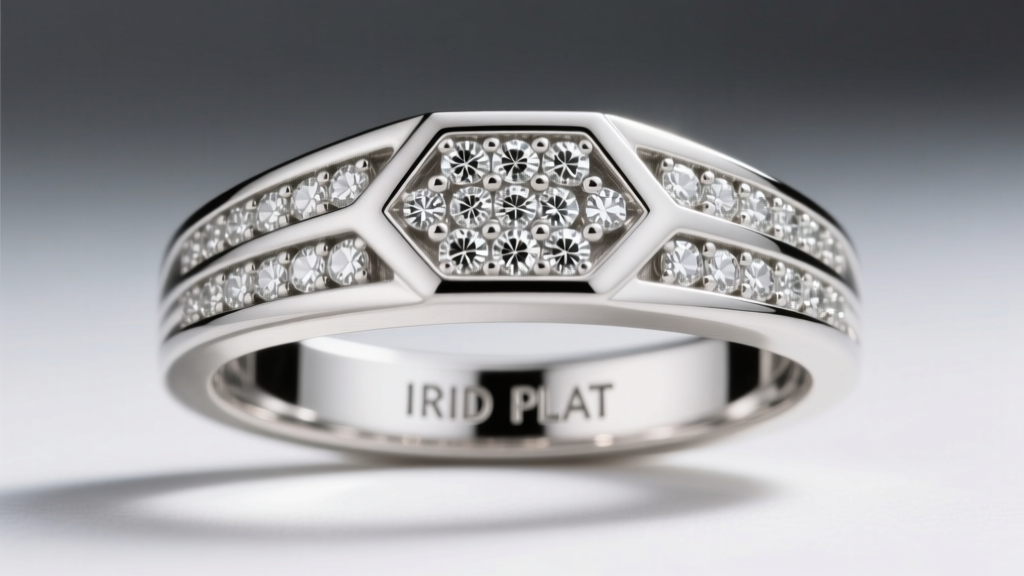
Stamps such as IRID.PLAT or 900 PT indicate an alloy of 90% platinum and 10% iridium. This specific 90/10 mix was the undisputed standard for Art Deco jewelry due to its excellent casting properties and bright white luster. By contrast, modern platinum is often stamped PT950 (alloyed with 5% ruthenium or cobalt). If you encounter a heavy, white antique ring stamped simply 'PLAT' without a numerical purity mark, it is highly likely to be an early 20th-century piece where the 900 standard was assumed by local jewelers before strict FTC regulations were enforced in the US.
For a comprehensive breakdown of historical UK platinum and white gold regulations, the London Assay Office provides extensive documentation on how the Hallmarking Act of 1973 retroactively affected the identification of older white metals.
Base Metals and Deceptive Alloys: Pinchbeck and Vermeil
Not all antique symbols stamped on jewelry denote precious metals. The 18th and 19th centuries saw the rise of sophisticated base-metal alloys designed to mimic gold.
- Pinchbeck: An alloy of roughly 89% copper and 11% zinc. Invented by Christopher Pinchbeck in the 1720s, it perfectly mimics the color of 18k gold and does not tarnish as quickly as brass. Genuine antique Pinchbeck is rarely stamped, as it was sold as an honest alternative to gold, but later Victorian imitations sometimes bear misleading sunburst or star stamps to imply preciousness.
- Vermeil (Silver Gilt): Sterling silver coated in a thick layer of gold via electrolysis. Antique vermeil was often stamped with silver hallmarks (like the 925 or Lion Passant) on the interior, hidden beneath the gold layer. Over a century of polishing, the gold layer frequently wears away at high-contact points, revealing the sterling core and causing localized galvanic corrosion where the two metals meet.
Authenticating Material Properties: Beyond the Visual Stamp
In 2026, relying solely on a visual inspection of a hallmark is insufficient. Stamps can be easily forged, transferred from scrapped pieces, or misapplied by novice bench jewelers during resizing. True authentication requires verifying the material properties the stamp claims to represent.
Non-Destructive Testing Methodologies
- X-Ray Fluorescence (XRF) Spectrometry: The gold standard for modern appraisers. XRF machines bombard the piece with X-rays and measure the fluorescent emissions to determine exact elemental percentages. However, XRF only reads the surface layer (roughly 50 microns deep). A lead-filled gold chain or a thick rolled-gold piece can easily fool an XRF scanner.
- Specific Gravity (SG) Testing: Utilizing Archimedes' principle, SG testing measures the density of the piece by comparing its weight in air to its weight in water. Because gold (19.32 g/cm³) and platinum (21.45 g/cm³) are vastly denser than base metals like tungsten or steel, SG testing instantly reveals hollow constructions, internal solder voids, or base-metal cores that XRF might miss.
- Magnetic Susceptibility: While gold and silver are diamagnetic (slightly repelled by magnets), many antique white gold alloys contained high levels of nickel, which is ferromagnetic. A strong neodymium magnet test can help differentiate between early nickel-alloyed white gold and non-magnetic platinum or silver.
Conclusion: Preserving the Integrity of Estate Pieces
Understanding the antique symbols stamped on jewelry requires a dual lens: historical knowledge and material science. A hallmark is a promise of elemental composition, dictating everything from the Vickers hardness of a prong to the oxidation rate of a Victorian pendant. By combining visual hallmark identification with modern metallurgical testing, collectors can accurately authenticate, value, and preserve the structural legacy of antique jewelry for generations to come.


