Expert Care and Cleaning Guide for Victorian Period Jewelry
Discover expert care and cleaning tips for Victorian period jewelry. Learn how to safely maintain jet, foil-backed gems, and hairwork pieces.

The Unique Vulnerabilities of Victorian Period Jewelry
Collecting and preserving Victorian period jewelry requires a fundamental shift away from modern cleaning habits. Spanning the reign of Queen Victoria from 1837 to 1901, this era introduced a massive diversification in jewelry materials. While Georgian pieces relied heavily on high-karat gold and silver, Victorian jewelers experimented with early plastics, fossilized woods, complex metal alloys, and delicate organic materials. Applying a standard ultrasonic cleaner or a commercial silver dip to these artifacts will result in irreversible catastrophic damage.
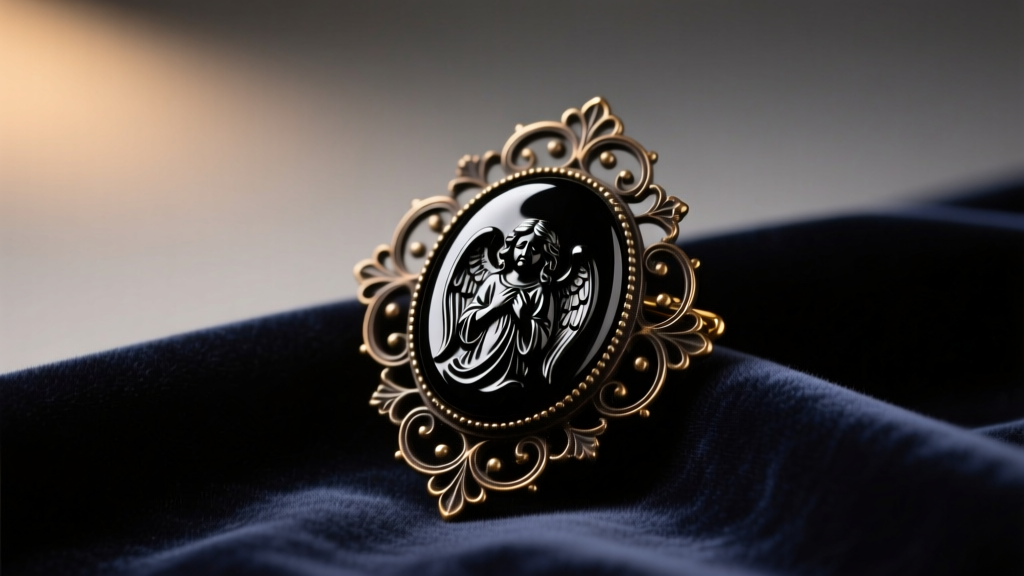
Before attempting any maintenance, you must accurately identify the material composition of the piece. The Victorian era is broadly categorized into the Romantic (1837-1860), Grand (1861-1885), and Aesthetic (1885-1901) periods, each favoring different materials. For instance, the Grand period saw the mass production of mourning jewelry utilizing Whitby jet, vulcanite, and gutta-percha. Misidentifying vulcanite as black glass and cleaning it with ammonia will strip its surface and cause rapid deterioration. True preservation begins with material-specific protocols.
Material-Specific Cleaning Protocols
Foil-Backed Gemstones and Rose-Cut Diamonds
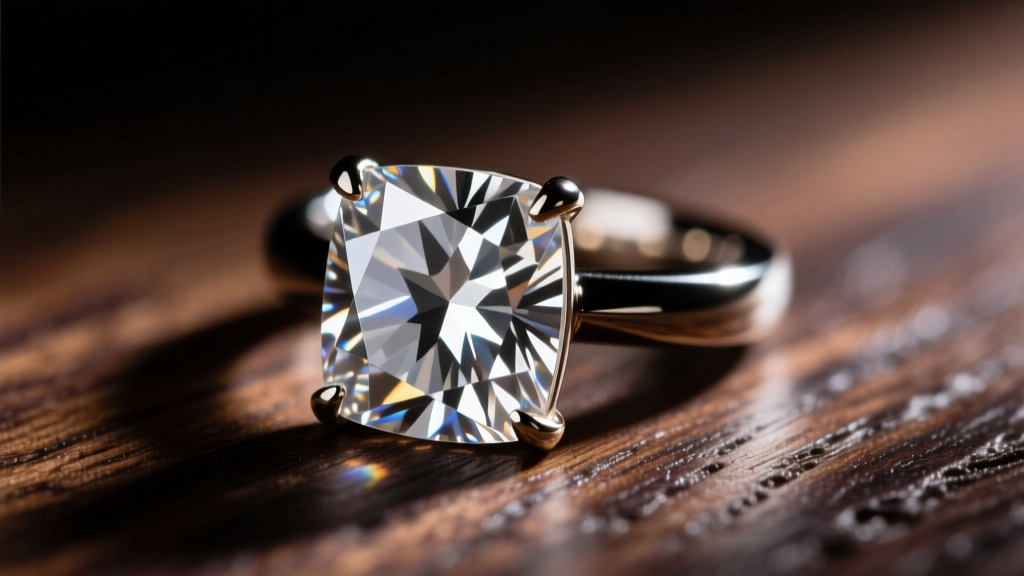
One of the most common and easily destroyed elements in early Victorian period jewelry is the foil-backed gemstone. Before the advent of modern brilliant cutting techniques, jewelers placed thin sheets of silver, copper, or colored foil behind rose-cut diamonds, pastes, and colored gems to enhance their brilliance and color. According to Antique Jewelry University, these foils are hermetically sealed within closed-back settings, but the seals degrade over 150 years.
The Golden Rule: Never submerge foil-backed jewelry in water or any liquid solution. If moisture breaches the setting, it becomes trapped between the stone and the foil. This causes the metallic foil to oxidize, tarnish, or turn completely black, effectively killing the stone's brilliance from the inside out. To clean these pieces, use a dry, ultra-soft makeup brush to gently sweep away dust from the table of the stone. For the metal setting, use a barely damp microfiber cloth, carefully avoiding the bezel edge where the stone meets the metal.
Mourning Materials: Jet, Gutta-Percha, and Vulcanite
Mourning jewelry is a cornerstone of Victorian period jewelry, but its organic and semi-synthetic materials are highly reactive.
- Whitby Jet: This fossilized wood has a Mohs hardness of just 2.5 to 4, making it incredibly susceptible to scratching. Jet can also dry out and develop micro-fissures over time. Clean it only with a dry, soft cotton cloth. If the jet appears chalky or desiccated, a professional conservator may apply a microscopic layer of museum-grade mineral oil, but DIY oiling can attract dust and turn the piece gummy.
- Gutta-Percha: An early natural latex plastic derived from Malaysian trees. It is highly sensitive to UV light and heat, which cause it to become brittle and develop a brownish patina. Never use chemical solvents, alcohol, or even warm water on gutta-percha. Dust it gently with a soft brush.
- Vulcanite: Created by vulcanizing rubber with sulfur. When rubbed vigorously, it emits a faint smell of burnt rubber. Vulcanite degrades and turns brownish-green when exposed to prolonged light and moisture. Wipe it with a dry cloth and store it away from direct sunlight.
Victorian Hairwork and Woven Jewelry
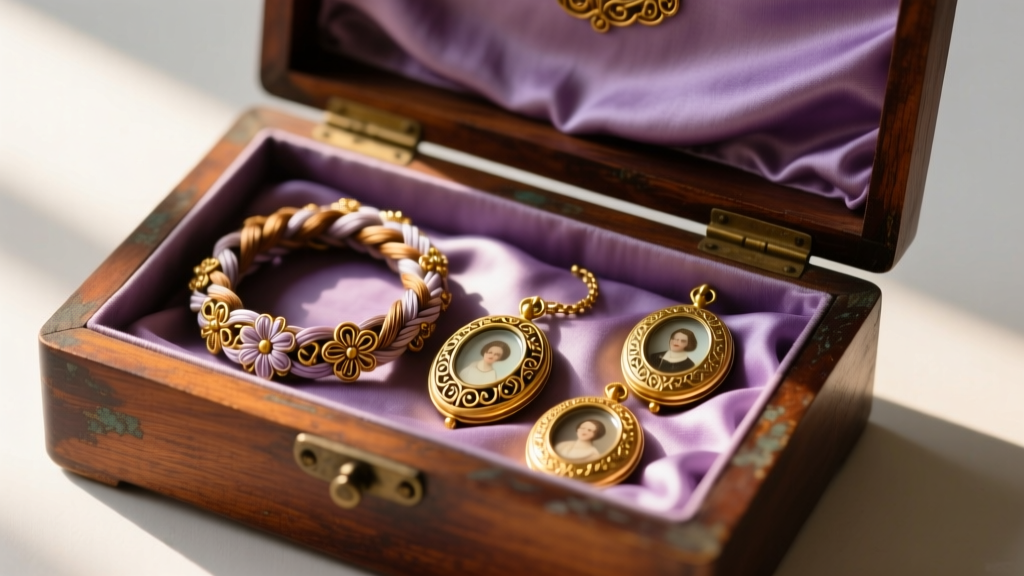
Woven human hair—used in watch chains, bracelets, and mourning brooches—is remarkably durable but vulnerable to harsh chemicals. Never use soap, shampoo, or detergents on Victorian hairwork, as these strip the natural oils and cause the hair to become brittle and snap. If the hair is dusty, use a soft, dry sable brush. If there is light soil, slightly dampen a cotton swab with distilled water and gently roll it over the weave, allowing it to air dry completely before storage.
Handling Pinchbeck and Cannetille Metals
Pinchbeck, an alloy of copper and zinc (typically 89% copper to 11% zinc), was invented as an affordable alternative to gold. Over time, Pinchbeck develops a dark, oxidized patina. While modern collectors often want to polish metals to a high shine, removing the patina from Pinchbeck drastically reduces its historical value and aesthetic warmth. Use a dry polishing cloth designed for gold, but avoid liquid tarnish removers entirely.
Cannetille and filigree wirework, popular in the early Romantic period, feature incredibly fine, coiled gold wires. The primary danger here is mechanical, not chemical. The thin wires can easily snag on clothing or cleaning cloths. Clean cannetille using compressed air (held at least six inches away) to blow out dust from the microscopic crevices, followed by a soft, dry camel-hair brush.
What to Avoid: The Destructive Agents
Modern jewelry cleaning solutions are formulated for contemporary platinum, white gold, and laser-drilled diamonds. They are toxic to antique artifacts. The Victoria and Albert Museum explicitly warns against using commercial dips on historical pieces due to the unpredictable reactions with antique alloys and porous gemstones.
| Cleaning Agent | Target Material | Resulting Damage |
|---|---|---|
| Ultrasonic Cleaners | Foil-backed stones, Emeralds, Opals | Vibrations shatter inclusions; water destroys foil backing. |
| Silver Dip (Thiourea) | Pinchbeck, Silver-gilt, Paste | Strips gold wash; causes rapid re-tarnishing and pitting. |
| Isopropyl Alcohol | Gutta-percha, Tortoiseshell, Coral | Dries out organic materials, causing cracking and crazing. |
| Ammonia-based Cleaners | Vulcanite, Pearls, Turquoise | Causes chemical burns, discoloration, and surface etching. |
| Toothpaste / Baking Soda | Whitby Jet, High-Karat Gold | Micro-abrasions permanently scratch soft surfaces (Mohs < 4). |
Proper Storage and Environmental Controls
How you store Victorian period jewelry is just as critical as how you clean it. The environmental controls in your storage area dictate the lifespan of organic and metallic components.
Humidity and Temperature
Maintain a stable relative humidity (RH) between 45% and 55%. Fluctuations in humidity cause organic materials like ivory, tortoiseshell, and wood to expand and contract, leading to warping and splitting. Temperature should remain stable at around 68°F (20°C). Avoid storing jewelry in attics, basements, or exterior-facing walls where thermal shifts are common.
Archival Storage Materials
Never store antique jewelry in standard plastic bags or PVC-laden boxes. Polyvinyl chloride off-gasses hydrochloric acid over time, which will aggressively corrode silver and copper alloys. Instead, use acid-free, unbuffered tissue paper to wrap pieces. For silver and Pinchbeck items, utilize Pacific Silvercloth or anti-tarnish strips (such as 3M Anti-Tarnish Strips) placed inside the storage drawer to absorb atmospheric sulfur compounds. Ensure that pieces do not touch one another; the Mohs hardness disparity between a steel pin and a soft Whitby jet brooch will result in severe scratching if they are jumbled together in a single compartment.
When to Seek Professional Conservation
There is a distinct line between routine maintenance and active conservation. If your Victorian period jewelry exhibits active bronze disease (a powdery green corrosion on copper alloys), weeping glass (where paste stones become cloudy and exude moisture due to alkaline breakdown), or structural failures in the cannetille wirework, stop all cleaning attempts immediately. These issues require intervention by a certified antiquities or jewelry conservator who can apply specialized chemical stabilizers like benzotriazole (BTA) or perform microscopic laser welding. Attempting to fix these advanced degradation modes at home will invariably destroy the historical and monetary value of the artifact.


