Collector's Guide to Buying Authentic Victorian Hair Jewelry
Discover how to authenticate, value, and buy Victorian hair jewelry. Learn to identify real hairwork, gold hallmarks, and avoid modern fakes.

The Enduring Allure of Victorian Hair Jewelry
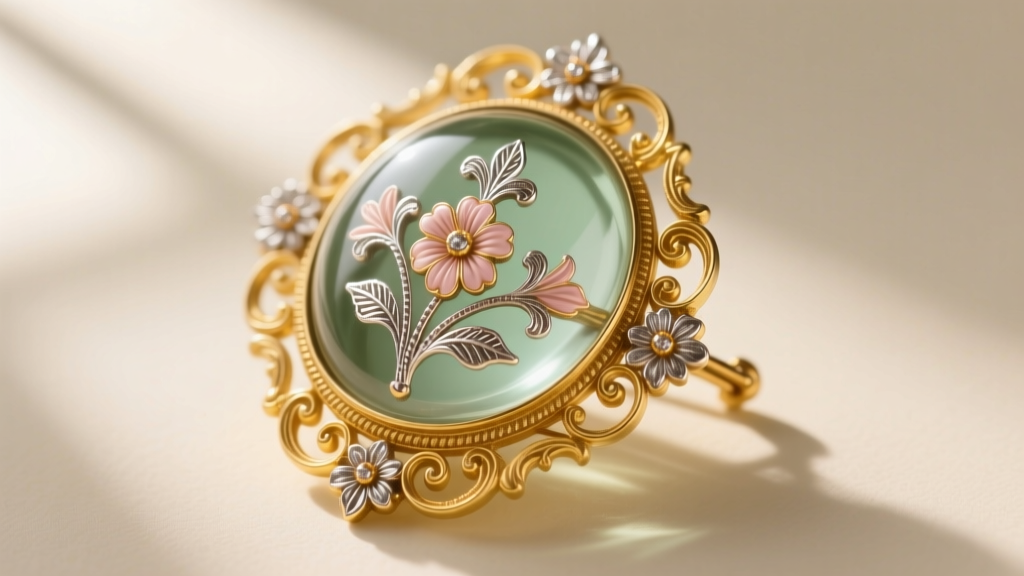
Hair jewelry represents one of the most intimate, fascinating, and highly collectible niches within antique adornment. Peaking between the 1840s and the 1880s, Victorian hair jewelry was not exclusively a product of mourning. While the tragic loss of Prince Albert in 1861 sent Queen Victoria—and consequently the entire British Empire—into decades of sartorial mourning, hairwork was equally utilized as a sentimental love token, a friendship keepsake, and a family heirloom. For modern collectors, navigating the secondary market requires a keen eye for historical construction techniques, metallurgical hallmarks, and the subtle signs of aging that separate genuine 19th-century artifacts from modern reproductions.
Collector's Note: Never assume a piece is mourning jewelry simply because it contains hair. Sentimental pieces often feature blonde or brown hair woven into intricate floral patterns, whereas mourning pieces heavily rely on black enamel, seed pearls (symbolizing tears), and darker hair tones.
Table Work vs. Palette Work: Identifying the Technique
Authenticating Victorian hair jewelry begins with understanding how it was made. Artisans primarily used two distinct methods, and recognizing the difference is crucial for accurate valuation.
Table Work (Braided Hair)
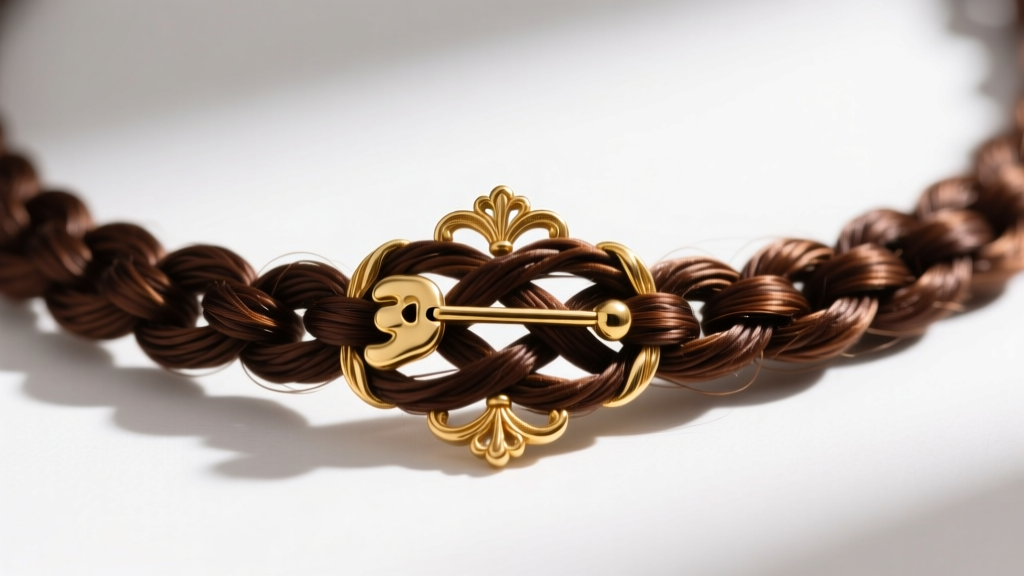
Table work involves braiding hair on a specialized, donut-shaped braiding table using weighted bobbins to maintain uniform tension. This technique was used to create watch chains, bracelets, necklaces, and intricate three-dimensional shapes. When examining table work under a 10x to 30x jeweler's loupe, look for the following:
- Uniform Tension: Master braiders achieved incredibly tight, even patterns. Sloppy or loose braiding often indicates a later reproduction or amateur hobbyist work from the 1920s revival.
- Pattern Complexity: Look for specific weaves like the 'square chain,' 'flat chain,' or 'round rope.' High-end pieces often feature multiple colors of hair woven into geometric or chevron patterns.
- End Finishing: The ends of the braid should be tightly bound with silk thread or seamlessly tucked into metal findings using period-appropriate adhesives.
Palette Work (Painted and Glued Hair)
Palette work is typically found in brooches, rings, and lockets. The hair is chopped or crushed, mixed with a binder (like gum arabic or watercolor), and painted onto a backing of ivory, vellum, or cardstock. It often depicts mourning motifs like weeping willows, urns, and doves. Genuine palette work will show slight textural irregularities and a matte finish, whereas modern fakes often look like flat, glossy printed images.
Decoding Metal Fittings and Hallmarks
The metal settings encasing the hairwork provide vital clues regarding a piece's age, origin, and value. While solid gold is the most desirable, Victorian jewelers frequently utilized alternative metals to make hair jewelry accessible to the middle class.
Precious Metals: English pieces from this era frequently feature 15k gold, a standard that was highly popular in Britain until 1932. Look for hallmarks on the back of the clasp or the edge of the bezel. American pieces are more likely to be 14k or 10k.
Base Metals and Alternatives: Pinchbeck (an alloy of copper and zinc that mimics gold) and rolled gold (a thin layer of gold mechanically bonded to a brass core) were incredibly common. To identify rolled gold, examine the high-wear areas like the pin stem or clasp hinge; if you see a darker, brassy metal bleeding through, it is gold-filled or rolled, not solid.
Authentication: How to Spot Fakes and Reproductions
As the market for Victorian antiques has surged, so has the influx of synthetic reproductions. According to Antique Trader, buyers must employ rigorous physical inspections before acquiring high-value hairwork. Here is a practical framework for authentication:
The Loupe Test: Human Hair vs. Synthetics
Under 20x magnification, genuine human hair reveals a scaly, overlapping cuticle structure. It may also show natural variations in thickness and slight split ends. Synthetic hair (nylon, rayon, or modern polyester) will appear perfectly smooth, uniform in diameter, and may exhibit manufacturing striations or a melted appearance at the tips.
The Adhesive Analysis
Victorian artisans used natural binders such as hide glue, gum arabic, or tree resins. Over 150 years, these organic glues dry out, shrink, crack, and develop a distinct yellowish-brown patina. If you see a clear, hard, glossy residue seeping from the bezel, you are likely looking at modern cyanoacrylate (super glue) or hot glue, which are dead giveaways of a contemporary forgery or a heavily restored piece.
Glass and Bezel Examination
Antique beveled glass was cut by hand. You should expect slight asymmetries in the bevel angles and occasional 'seed bubbles' trapped within the glass pane. Furthermore, the metal bezel holding the glass should be hand-burnished or crimped over the backplate. Machine-stamped, perfectly uniform bezels with modern prong settings indicate a 20th-century reproduction.
2026 Market Valuation and Pricing Guide
Pricing for Victorian hair jewelry varies wildly based on the complexity of the weave, the karat of the gold, and the condition of the hair. Below is a general valuation matrix for the current collector's market:
| Piece Type | Material / Metal | Condition | Estimated Market Value (USD) |
|---|---|---|---|
| Simple Palette Brooch | Gold-plated brass, basic floral motif | Good (minor foxing) | $75 - $150 |
| Woven Hair Watch Chain | 14k Solid Gold, complex square braid | Excellent | $400 - $850 |
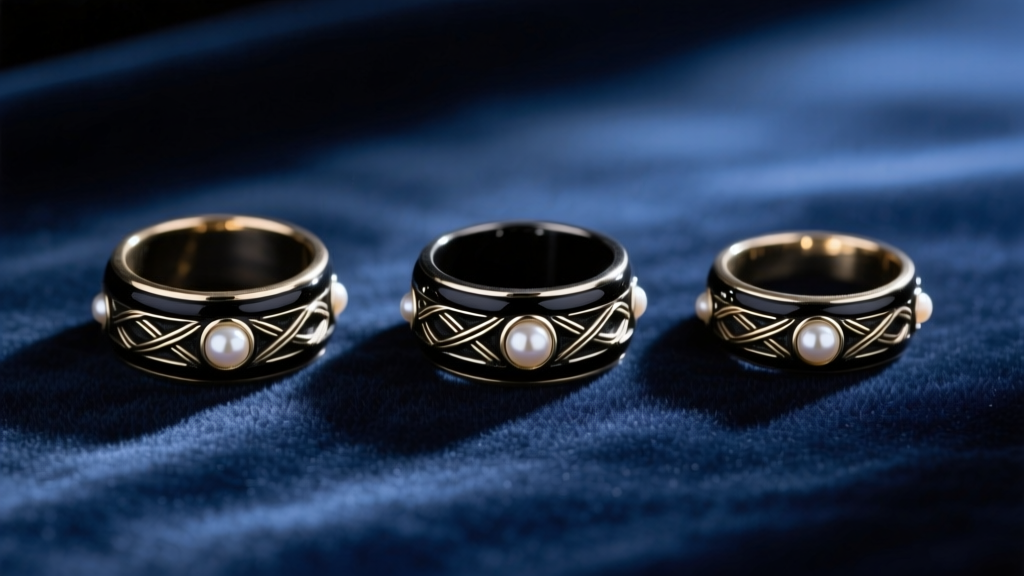
| Mourning Ring (Enamel) | 18k Gold, black enamel, seed pearls | Very Good (clear inscription) | $600 - $1,200 |
| Masterpiece Table Work | 15k Gold, multi-color geometric weave | Museum Quality | $1,500 - $3,500+ |
Preservation and Care Guidelines
Hair is remarkably resilient, but the environment around it is not. To preserve your collection, store pieces in acid-free tissue paper within archival-quality boxes. Avoid exposing palette work to direct UV light, which will rapidly fade the watercolor pigments and bleach the hair. Never submerge hair jewelry in water or use ultrasonic cleaners; moisture will dissolve the antique hide glues, causing the bezel to fail and the hair to disintegrate. If a piece requires cleaning, gently dust the metal with a soft, dry brush and polish only the gold with a non-chemical jeweler's cloth.
Final Thoughts for Collectors
Collecting Victorian hair jewelry is an exercise in historical preservation. Each piece holds the literal DNA of the past, offering a tangible connection to the loves, losses, and lives of the 19th century. By prioritizing thorough authentication, understanding the nuances of table and palette work, and respecting the delicate nature of organic materials, you can build a collection that is both financially sound and profoundly moving.


