How to Buy Estate Jewelry: The Ultimate Authentication Guide
Learn how to buy estate jewelry with our expert authentication guide. Discover hallmark secrets, gemstone diagnostics, and valuation strategies.

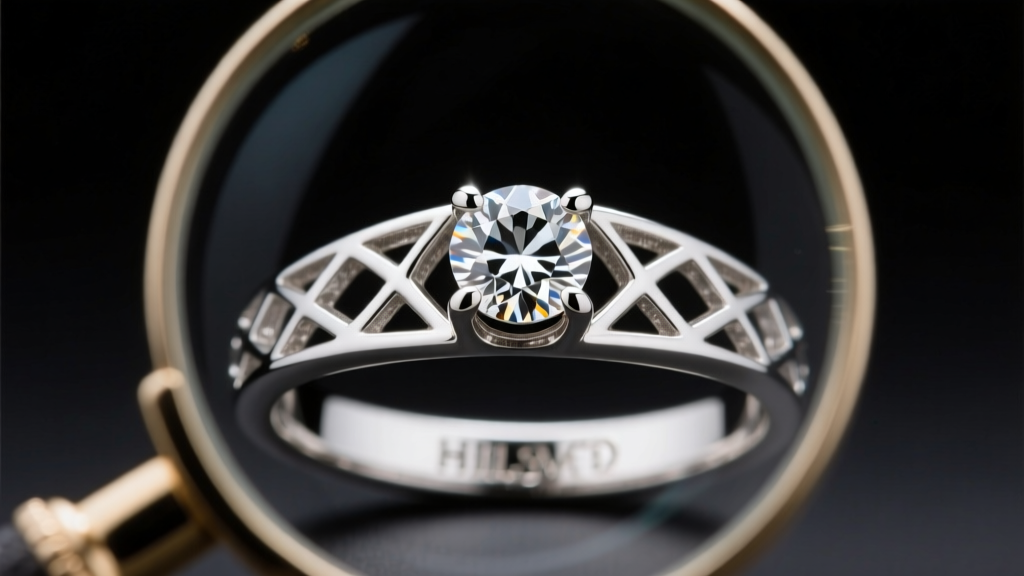
Learning how to buy estate jewelry is akin to stepping into a time machine where metallurgy, art history, and gemology intersect. Whether you are hunting for a Georgian foiled garnet brooch or a mid-century cocktail ring, the estate market is fraught with sophisticated reproductions, franken-pieces (jewelry cobbled together from different eras), and undisclosed restorations. In 2026, the proliferation of AI-assisted CAD modeling and 3D-printed casting molds means that counterfeit hallmarks are more precise than ever. To build a collection that holds its historical and financial value, you must move beyond basic visual inspections and adopt a forensic approach to authentication.
The Definition: Estate vs. Vintage vs. Antique
Before diving into diagnostics, it is crucial to clarify the terminology, as mislabeling is a common tactic used to inflate prices in the secondary market.
- Estate Jewelry: Simply means the piece is previously owned. It could be five years old or two hundred. The term refers to the chain of custody (originating from an estate), not the age.
- Vintage Jewelry: Generally refers to pieces that are at least 20 to 30 years old but less than 100 years old. This encompasses Retro (1940s), Mid-Century (1950s-1960s), and Art Deco revival pieces.
- Antique Jewelry: Strictly defined by customs and gemological authorities as jewelry that is 100 years or older. As of 2026, this means pieces crafted in 1926 or earlier (Art Deco, Edwardian, Victorian, and Georgian).
According to the Lang Antiques University, understanding these distinctions is vital because antique pieces often carry a premium due to their rarity and historical significance, making them prime targets for misrepresentation.
Decoding Hallmarks and Maker's Marks
Hallmarks are the DNA of estate jewelry. However, a missing hallmark does not automatically mean a piece is fake; many early American pieces were never stamped, and European marks often wear away over decades of polishing. Conversely, a crisp, perfectly struck hallmark on a heavily worn ring shank is a massive red flag for a modern reproduction.
Key European Hallmarks to Memorize
European countries have strict, government-regulated hallmarking systems that are incredibly helpful for dating and authenticating estate pieces:
- France (18k Gold): Look for the Eagle's Head (Tête d'Aigle), introduced in 1838. If a piece claims to be 18th-century French gold but bears an eagle head, it has either been misdated or the shank was replaced post-1838.
- France (Platinum): The Dog's Head (Tête de Chien) was used from 1907 to 1994.
- Great Britain: The British system requires a standard mark (e.g., a crown and number for gold), a town mark (e.g., a Leopard's Head for London, an Anchor for Birmingham), and a date letter. Note that 15k gold was a standard in Victorian England but was officially discontinued in 1932. If you see a 15k stamp on a piece marketed as 1950s Retro, you are looking at a misidentified or altered piece.
For a comprehensive database of global stamps, the Victoria and Albert Museum offers excellent historical resources on European metalwork and stamping conventions.
Gemstone Diagnostics: Spotting Era-Specific Treatments
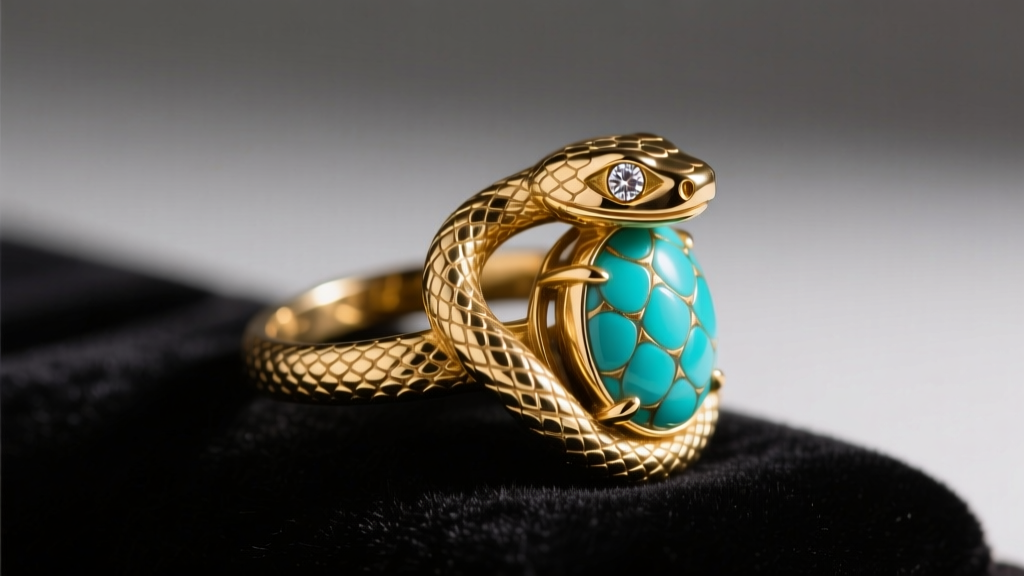
Knowing how to buy estate jewelry requires a deep understanding of historical gemstone cutting styles and era-specific treatments. Modern brilliant cuts did not become the industry standard until the mid-20th century. If you are looking at a purported Victorian ring featuring a modern 57-facet round brilliant diamond with a laser-inscribed girdle, the stone is a modern replacement.
The Evolution of Diamond Cuts
| Cut Style | Era of Prominence | Key Visual Characteristics |
|---|---|---|
| Rose Cut | Georgian / Victorian | Flat base, domed top with triangular facets. Lacks a pavilion, making it appear more translucent and less fiery. |
| Old Mine Cut (OMC) | Georgian / Early Victorian | Squarish or cushion shape with a very high crown, small table, and a large, visible open culet (looks like a dark hole in the center). |
| Old European Cut (OEC) | Late Victorian / Art Deco | Round shape, high crown, small table, and a smaller but still visible open culet. 58 facets. |
Colored Stones and Historical Treatments
Be highly skeptical of vivid, flawless rubies and sapphires in estate settings. In the early 20th century, synthetic flame-fusion sapphires and rubies were widely used in Art Deco jewelry. Furthermore, many antique emeralds were heavily oiled to mask fractures. According to the Gemological Institute of America (GIA), detecting lead-glass fracture filling in early 20th-century rubies requires magnification to spot the tell-tale blue and orange flash effect along the fracture planes.
Where to Buy: Channel Comparison and Hidden Fees
The venue where you purchase estate jewelry drastically impacts both the price and the authenticity guarantees. Here is a breakdown of the primary acquisition channels in the current market.
| Buying Channel | Pros | Cons | Typical Fees / Markups |
|---|---|---|---|
| Major Auction Houses (e.g., Sotheby's, Christie's) | Impeccable provenance, rigorous in-house gemological vetting, investment-grade pieces. | Highly competitive, intimidating for beginners, no returns. | 20% - 28% Buyer's Premium on top of hammer price. |
| Specialized Antique Dealers | Curated selections, accurate period dating, restoration guarantees, educational guidance. | Highest retail prices, limited inventory turnover. | 30% - 60% retail markup over wholesale/auction value. |
| Local Estate Sales | Potential for incredible "sleeper" bargains, direct negotiation. | Zero authentication guarantees, high risk of fakes or franken-pieces, sold as-is. | No premiums, but cash-only and final sale. |
| Online Marketplaces (e.g., 1stDibs, Ruby Lane) | Vast global inventory, buyer protection programs, easy filtering by era. | Cannot physically inspect prong wear or clasp mechanics, photography can hide flaws. | 10% - 20% platform fees baked into the seller's price. |
The 5-Point Physical Inspection Checklist
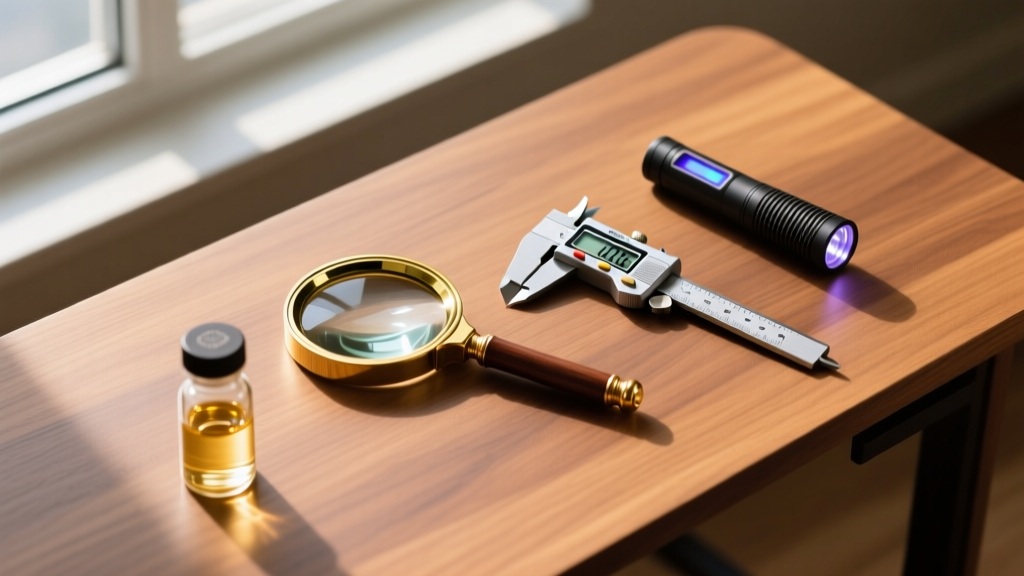
When you have a piece in hand, put down the price tag and perform this forensic checklist. You will need a 10x triplet loupe, a UV flashlight, and digital calipers.
Pro Tip: Always inspect jewelry under natural daylight or a 5000K color-balanced lamp. Halogen and warm LED lights artificially enhance the warmth of lower-color diamonds and mask the yellowing of aged rhodium plating on white gold.
- The Clasp and Hinge Mechanics: Clasp technology is one of the most reliable dating tools. A simple "C-clasp" with a T-bar hinge strongly suggests a pre-1900 origin. The "trombone clasp" (a push-tube mechanism) was predominantly used in Europe between 1890 and 1940. If a piece features a modern safety catch with a rolling locket, it was likely manufactured post-1950 or has been retrofitted.
- Shank Thinning and Solder Joints: Turn the ring over. Estate rings often suffer from thinning shanks due to decades of friction against the skin. Look closely at the base for a straight, slightly discolored line—this indicates a previous sizing or a complete shank replacement. A replaced shank diminishes the antique value of the piece.
- Prong Wear and Re-tipping: Use your loupe to examine the prongs holding the gemstones. Are they flat and worn down? Have they been re-tipped with modern, bright white solder that contrasts with the patina of the rest of the setting? Re-tipping is necessary for security, but excessive re-tipping can alter the original architectural lines of an Art Deco mounting.
- The UV Fluorescence Test: Shine a UV flashlight over the piece. Modern synthetic diamonds and certain moissanites will exhibit vastly different fluorescence patterns compared to natural, earth-mined antique diamonds. Additionally, UV light can reveal modern epoxy resins used to stabilize fragile stones like opals or turquoise in older settings.
- Patina and Porosity: Authentic antique silver and gold develop a soft, micro-scratched patina in recessed areas that is nearly impossible to fake convincingly. Cast reproductions often exhibit a "pebbly" or porous texture under magnification due to modern casting shrinkage, whereas hand-fabricated antique pieces will show precise file marks and clean, sharp milgrain edges.
Final Thoughts on Building an Estate Collection
Mastering how to buy estate jewelry is a lifelong pursuit of education and observation. The most successful collectors do not just buy the stone; they buy the craftsmanship, the history, and the survival of the piece. Always prioritize structural integrity and original condition over sheer carat weight. A slightly included, original Old European Cut diamond in an untouched, hand-engraved platinum mounting will always hold more historical prestige—and ultimately, better market liquidity—than a modern brilliant diamond forced into a mass-produced, artificially aged setting. Take your time, build relationships with reputable dealers, and never let the pressure of a "rare find" bypass your forensic checklist.


