Hunting Unmarked, Most Valuable Rare Vintage Costume Jewelry
Learn how to identify and appraise unmarked, most valuable rare vintage costume jewelry using construction clues, materials, and maker hallmarks.

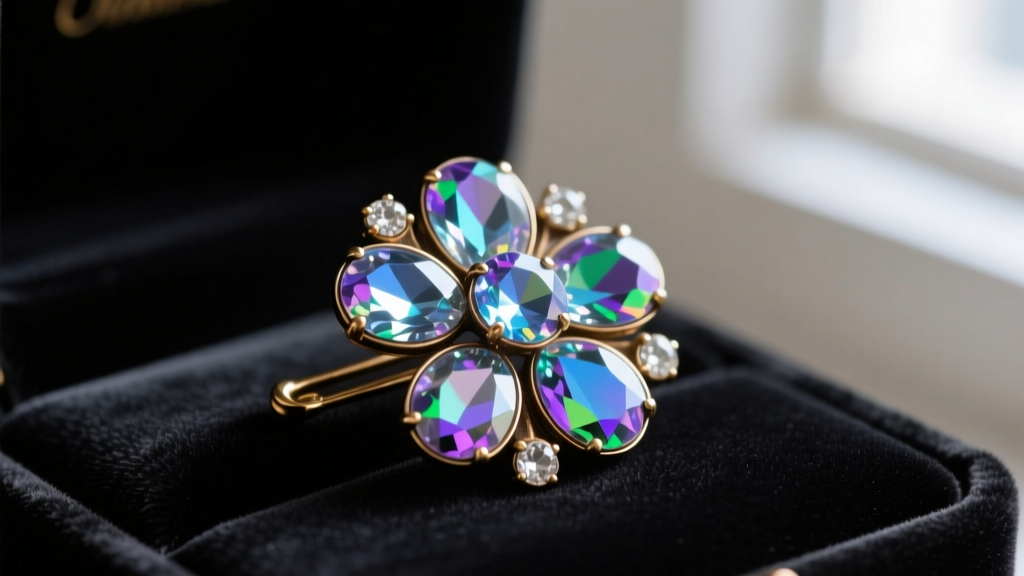
The Allure of the Unmarked: Why Provenance Isn't Everything
When collectors begin their journey into mid-century and Art Deco adornments, they quickly encounter a frustrating reality: some of the most breathtaking pieces bear no signature. Finding unmarked, most valuable rare vintage costume jewelry requires shifting your focus from brand names to material forensics and structural anatomy. Before the 1950s, many high-end couture houses and master artisans relied on fragile paper hang-tags or foil stickers that were discarded the moment the piece was worn. Consequently, museum-quality pieces by makers like early Miriam Haskell or Elsa Schiaparelli frequently circulate in the estate market completely unsigned. To the untrained eye, they are mere thrift store trinkets; to the educated collector, they are hidden treasures worth thousands of dollars.
According to the Victoria and Albert Museum Jewelry Guide, the distinction between fine and costume jewelry in the early 20th century was defined by design innovation rather than intrinsic material wealth. Mastering the identification of unsigned pieces requires a systematic approach to metals, plastics, and mechanical findings.
Material Forensics: Reading the Metals and Stones
The first step in authenticating high-end unsigned vintage costume jewelry is analyzing the raw materials. Master artisans did not cut corners, even when working with non-precious elements.
Base Metals vs. Precious Overlays
Look closely at the gold and silver tones on the piece. High-end unsigned pieces from the 1920s and 1930s often feature "Russian Gilt," a heavy 24-karat gold wash applied over a brass base. Unlike modern electroplating, which appears bright and yellow, Russian Gilt has a distinct, muted, almost antique rose-gold hue. If the piece features a silver tone, check for heavy rhodium plating. Rhodium was expensive and used primarily by top-tier houses like Boucher and Trifari to prevent tarnishing. If you see a dull, grayish base metal pitting beneath the surface, you may be looking at "pot metal" (a zinc, lead, and tin alloy). While early pot metal was standard, it is highly susceptible to "zinc pest"—an irreversible intergranular corrosion that causes the metal to swell, crack, and crumble, effectively destroying the piece's value.
Glass, Rhinestones, and Early Plastics
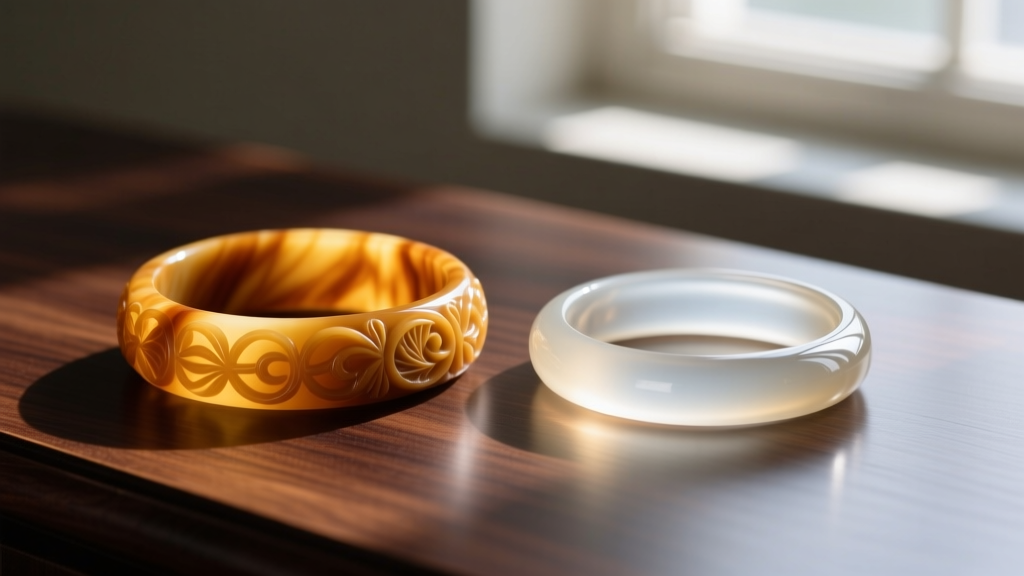
The stones tell a chronological story. Aurora Borealis (AB) rhinestones, characterized by their iridescent oil-slick finish, were introduced by Swarovski in 1955. If an allegedly "1930s Art Deco" piece features AB stones, it is either a later reproduction or has been heavily altered. For early plastics, you must differentiate between Bakelite (phenol formaldehyde), Celluloid, and Lucite.
- Bakelite: Heavy, dense, and often carved. When rubbed vigorously with a soft cloth or tested with Simichrome metal polish, it will leave a yellow residue. It smells distinctly of formaldehyde when run under hot water.
- Celluloid: Much lighter and thinner than Bakelite. It emits a camphor or pine-like odor when gently warmed.
- Lucite: A crystal-clear acrylic popularized in the 1940s, often used for "Jelly Belly" figures. It is completely odorless.
Construction Clues: The Hidden Signatures of Master Artisans
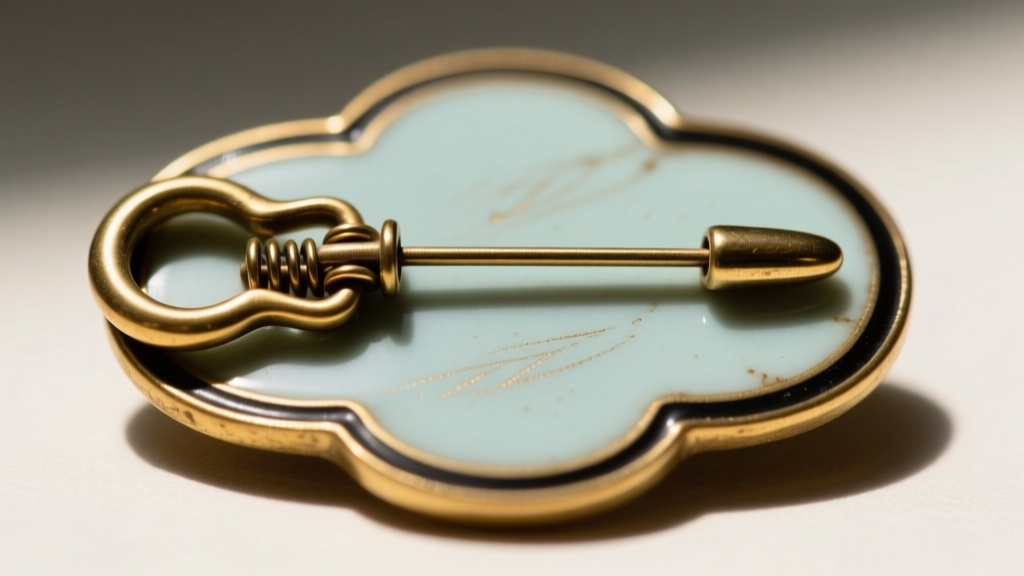
When a hallmark is missing, the hardware speaks. The evolution of jewelry clasps and pin stems provides a highly accurate timeline for dating unmarked pieces, a critical skill highlighted by the Lang Antiques University archives.
Decoding Clasps and Pin Stems
Turn the brooch over and examine the pin stem. If the pin stem extends past the edge of the brooch, the piece almost certainly predates the 1930s. Next, examine the catch mechanism:
- C-Clasp (Pre-1930s): A simple, open "C" shaped metal catch with no locking mechanism. The pin stem relies on tension to stay in place.
- Trombone Clasp (1890s-1950s): Predominantly found on European-made jewelry. It features a cylindrical barrel that slides over the pin stem to lock it. If you find a trombone clasp on an unsigned piece, look for European design motifs, such as Bohemian garnet clusters or French pâte de verre.
- Roll-Over Safety Clasp (1930s+): Patented in 1901 but not widely adopted until the 1930s, this mechanism features a rolling lever that locks the pin into a closed catch. Early versions had a distinct, rounded, machined look, while post-WWII versions became more streamlined and stamped.
Top Unmarked Makers and Their Telltale Traits
Some of the most valuable rare vintage costume jewelry was produced before companies began stamping their dies. Below is a decision framework for identifying unsigned heavyweights based on specific construction signatures and current 2026 market valuations.
| Maker (Unsigned Era) | Telltale Construction Traits | Primary Materials | Estimated Market Value |
|---|---|---|---|
| Miriam Haskell (1920s-1940s) | Hand-wired filigree, complex layered floral motifs, no soldering on wire wraps. | Russian gilt, seed pearls, baroque glass, faux turquoise. | $400 - $1,500+ |
| Trifari (Pre-1938) | Sterling silver bases, intricate pave settings, articulated animal joints. | Sterling silver, carved "Jelly Belly" lucite, foil-backed rhinestones. | $800 - $3,500+ |
| Boucher (Pre-1930s) | Heavy rhodium plating, Pharaoh/Egyptian revival motifs, precise calibrated baguettes. | Pot metal base, rhodium overlay, high-grade Austrian rhinestones. | $300 - $900 |
| Schiaparelli (1950s) | Surrealist motifs (hands, eyes, insects), custom-molded grip clasps, heavy weight. | Aurora Borealis stones, custom poured glass, heavy gilt brass. | $500 - $2,200 |
Valuation Framework: Pricing the Unmarked
Valuing unsigned vintage costume jewelry requires a strict assessment of condition, rarity, and aesthetic impact. According to market data from the Ruby Lane Jewelry Blog, collectors will pay a premium for unsigned pieces if the design is undeniably iconic and the condition is pristine.
The Cost of Flaws
Condition is the ultimate multiplier. Missing stones will immediately drop a piece's value by 40% to 60%, as sourcing period-correct, foil-backed chatons is incredibly difficult. Furthermore, "foil death"—where moisture breaches the closed-back setting and turns the silver foil black, killing the stone's sparkle—is a major detriment. While some collectors accept minor foil death in rare Art Deco pieces, it prevents the item from achieving top-tier auction pricing.
"In the realm of haute couture adornments, the absence of a hallmark is not an absence of pedigree; it is simply a puzzle waiting for a trained eye." — Jewel Style Radar Editorial
Sourcing and Authentication Resources
To successfully hunt for unmarked treasures, you must look beyond curated vintage boutiques where every piece is already identified and priced at a premium. Estate sales, regional auction houses, and antique mall "bottom shelves" are your primary hunting grounds. When you find a piece with heavy weight, complex hand-wiring, and period-correct C-clasps or trombone clasps, trust the material forensics over the lack of a signature. By mastering the subtle language of early plastics, precious metal washes, and mechanical findings, you can confidently identify and acquire the unmarked, most valuable rare vintage costume jewelry that others leave behind.


