Expert Guide: How to Sell Estate Jewelry for Top Dollar
Learn how to sell estate jewelry by understanding buyer priorities. Discover valuation metrics, hallmark identification, and top selling venues.

The 2026 Estate Market: What Buyers Actually Want
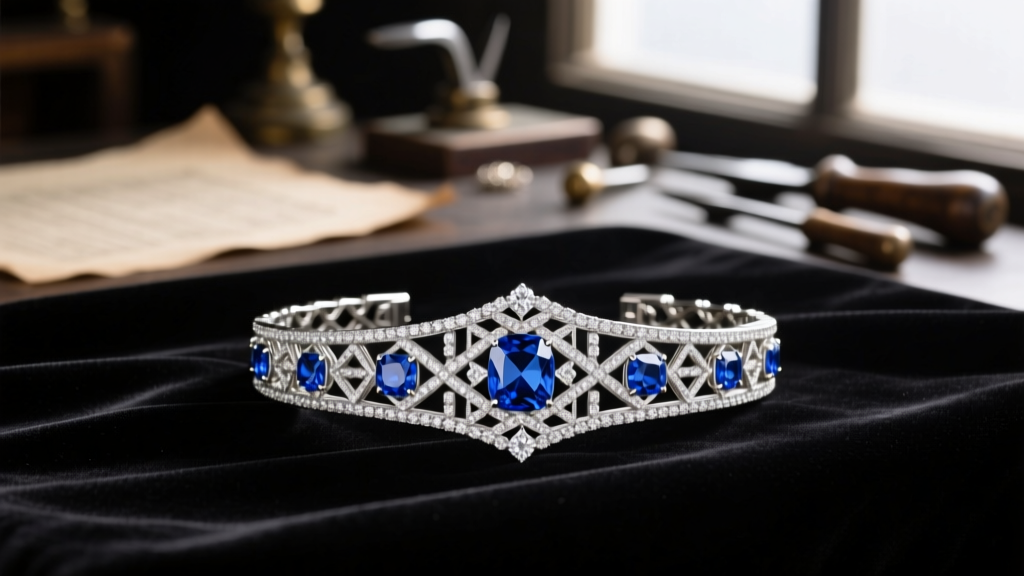
Selling inherited or previously owned jewelry requires navigating a complex landscape of sentimental value, market trends, and buyer psychology. If you are researching exactly how to sell estate jewelry, the first step is shedding the assumption that retail insurance appraisals equal cash offers. The secondary jewelry market in 2026 is highly bifurcated. On one side, the proliferation of high-quality lab-grown diamonds has severely depressed the resale value of generic, unsigned mid-century diamond solitaires. A standard 1.00-carat round brilliant in a 14k white gold setting from the 1960s might struggle to achieve $2,500 at auction today. Conversely, signed pieces, rare historical artifacts, and jewelry featuring antique diamond cuts—such as Old European Cuts (OEC) or Old Mine Cuts (OMC)—are commanding record premiums. Collectors are actively hunting for provenance, superior craftsmanship, and the unique optical properties of hand-cut stones that cannot be replicated by modern lasers.
Understanding what serious buyers and institutional auction houses prioritize is the ultimate key to maximizing your return. Buyers look for original condition, verifiable hallmarks, and era-specific design motifs. They penalize pieces that have been heavily altered, re-shanked, or stripped of their historical patina.
Step 1: Identify and Authenticate Your Pieces
Before approaching a buyer, you must accurately categorize your jewelry. The term "estate" simply means previously owned, but true value lies in identifying the specific historical era:
- Georgian (1714-1837): Characterized by hand-cut foil-backed gems, closed-back settings, and 18k to 22k yellow gold. Extremely rare and highly valuable if unaltered.
- Victorian (1837-1901): Spans the Romantic, Grand, and Aesthetic periods. Look for mourning jewelry (jet, onyx, hairwork), serpent motifs, and intricate repoussé metalwork.
- Art Nouveau (1890-1910): Focuses on organic forms, plique-à-jour enamel, and semi-precious stones like opals and moonstones rather than diamonds.
- Edwardian (1901-1915): Defined by delicate platinum lacework, milgrain detailing, and garland-style diamond motifs.
- Art Deco (1920-1935): The most collected era today. Features bold geometric patterns, calibré-cut sapphires or rubies, and high-contrast platinum and diamond designs.
- Retro (1935-1950): Chunky, three-dimensional rose and yellow gold pieces, often featuring large aquamarines or citrines due to WWII metal rationing.
Decoding Hallmarks and Maker's Marks
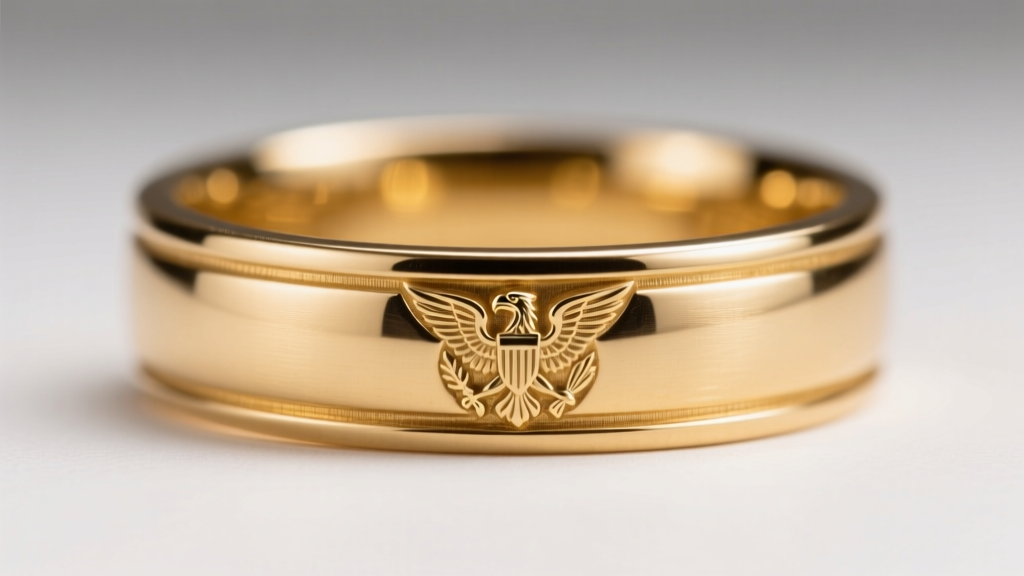
Hallmarks are your primary tool for authentication. While US pieces typically feature simple maker's marks and purity stamps (like 14k or 18k), European pieces offer a much richer tapestry of government-mandated hallmarks. A French eagle head signifies 18k gold, while a boar's head indicates 18k gold specifically assayed in Paris. The British lion passant guarantees sterling silver (925), and the French dog's head mark (tête de chien) is the definitive stamp for French platinum. When you approach high-end buyers, they will verify these metals using an XRF (X-ray fluorescence) spectrometer. This provides a non-destructive, exact elemental breakdown of the alloy, which is vastly superior to the destructive acid tests used by local pawn shops.
Step 2: The Valuation Matrix
The most common mistake sellers make is confusing an insurance appraisal with liquidation value. If your grandmother's diamond ring was appraised for $15,000 for insurance purposes in 2018, you will not receive a $15,000 check from a buyer. Insurance appraisals represent the cost to replace the item in a high-end retail environment, factoring in massive retail markups, overhead, and brand premiums. When figuring out how to sell estate jewelry, you must understand the actual valuation metrics buyers use.
| Valuation Type | Purpose | Typical % of Retail | Best For |
|---|---|---|---|
| Insurance Appraisal | Replacement cost for insurance coverage | 100% - 150% | None (Do not base selling expectations on this) |
| Estate Liquidation Value | Quick cash sale to a dealer or jeweler | 20% - 40% | Generic, unsigned, or damaged pieces requiring immediate sale |
| Fair Market Value (FMV) | IRS tax reporting and estate settlements | 40% - 60% | Private treaty sales and standard auction estimates |
| Auction Hammer Price | Open market bidding for rare/signed items | 60% - 120%+ | Art Deco signed pieces, rare Georgian, high-carat OEC diamonds |
| Scrap / Melt Value | Recovering raw gold/platinum weight | 5% - 15% | Broken chains, missing stones, heavily damaged unbranded gold |
Step 3: Choosing the Right Selling Venue
Where you sell is just as critical as what you sell. Matching the piece to the correct venue ensures you avoid leaving money on the table.
International and Regional Auction Houses
For signed pieces (e.g., Cartier, Van Cleef & Arpels, Tiffany & Co.) or highly desirable eras like Art Deco and Georgian, auction houses are the gold standard. According to market analysts at Heritage Auctions, competitive bidding can easily push a rare piece past its high estimate. However, be prepared for the financial structure: auction houses charge the seller a commission (typically 10% to 15%) and the buyer a premium (20% to 28%). Furthermore, the consignment process can take three to six months from cataloging to payout. Sotheby's and Christie's reserve their catalogs for the absolute top-tier of the market, usually requiring minimum lot values exceeding $10,000 to $20,000.
Specialized Online Marketplaces and Consignment
Platforms like 1stDibs or specialized online auction sites offer a middle ground. They provide access to a global audience of vintage collectors without the rigid seasonal schedules of traditional auction houses. These platforms typically take a 15% to 25% commission but offer faster turnaround times and professional photography services that highlight the intricate milgrain and hallmarks buyers crave.
Private Estate Buyers and Antique Dealers
If you need a faster transaction, specialized antique jewelry dealers are an excellent route. Unlike general pawn shops, these dealers understand the premium of an Old Mine Cut diamond and will pay for the historical value of the piece, not just the scrap gold weight. They offer immediate payment, though their offers will inherently be lower than an auction hammer price because they must assume the inventory risk and resell the item at a profit.
Step 4: Preparation and Preservation (What NOT to Do)
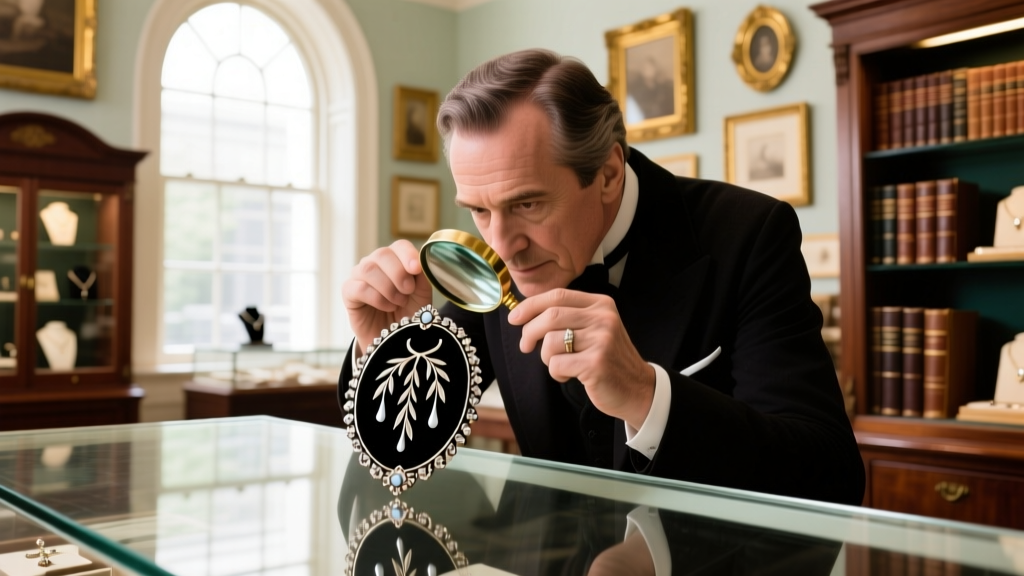
When preparing jewelry for sale, the instinct is to clean and polish it until it shines. Do not do this. In the vintage market, patina is proof of age and authenticity. Polishing an Edwardian platinum piece can erase the delicate milgrain edges and soften the crisp engraving, instantly dropping its value by 20% or more. For Victorian silver, removing the dark oxidation from the crevices destroys the contrast of the repoussé work.
Furthermore, never place antique jewelry in an ultrasonic cleaner. According to gemological guidelines from the Gemological Institute of America (GIA), ultrasonic vibrations can easily shatter included emeralds, crack opals, and completely dissolve the delicate foil backing on Georgian and early Victorian gemstones. If a stone falls out of a foil-backed setting, the moisture from the cleaning solution will ruin the foil, turning a vibrant gem dull and gray. Simply wipe the piece gently with a soft, dry microfiber cloth and present it in its original box if you have it. Provenance documentation, original receipts, or antique fitted boxes can increase a piece's final sale price by 10% to 15%.
Red Flags: Avoiding Lowball Offers and Scams
As you navigate the selling process, be highly wary of "Cash for Gold" mail-in services and storefronts that advertise melt-value buying. These operations weigh your jewelry, calculate the spot price of gold, and offer you a fraction of the scrap value. They will melt down a $5,000 Art Nouveau René Lalique pendant for its $300 gold weight because they lack the expertise to identify the maker's mark or the historical significance of the plique-à-jour enamel.
Additionally, be cautious of buyers who offer to "re-tip prongs" or "re-size" the ring before giving you a final quote. Unscrupulous operators have been known to swap out high-clarity antique diamonds for lower-grade modern stones during the "repair" process. Always insist that the jewelry is evaluated, weighed, and photographed in your direct line of sight, and ensure any XRF testing is performed while you watch. By understanding the deep nuances of historical jewelry, protecting the original condition of your pieces, and targeting the right specialized buyers, you can successfully navigate the estate market and secure the top-tier compensation your heirlooms deserve.


