Non Piercing Clit Jewelry: Troubleshooting Safety & Fit Issues
Troubleshoot non piercing clit jewelry fit and safety issues. Discover why magnetic and tension options fail, and explore safe, body-friendly alternatives.

The search for non piercing clit jewelry usually stems from a desire to achieve the aesthetic appeal or sensory enhancement of genital adornment without the commitment, healing time, or pain of a permanent piercing. However, the market is currently saturated with poorly engineered alternatives that pose significant risks to delicate mucosal tissue. If you are experiencing discomfort, frequent loss of jewelry, or skin irritation, you are not alone. Troubleshooting these issues requires a deep understanding of genital anatomy, material science, and the biomechanics of tension-based accessories.
In this comprehensive guide, we will diagnose the most common failures associated with non-piercing genital adornments, explain the severe medical risks of magnetic and clamp-on options, and provide safe, actionable alternatives for both temporary and long-term wear.
The Anatomy of Failure: Why Non Piercing Clit Jewelry Struggles
To understand why your jewelry keeps failing, we must first look at the anatomy of the vulva. The clitoral hood (prepuce) and the glans are highly mobile, heavily vascularized, and constantly subjected to friction from clothing and natural movement. Most mass-produced non piercing clit jewelry relies on one of three mechanisms: magnets, mechanical tension (clip-ons), or standard cosmetic adhesives. All three frequently fail when introduced to this specific anatomical environment.
1. Magnetic Clasps: The Hidden Necrosis Risk
Magnetic rings are frequently marketed as a painless alternative to a Vertical Clitoral Hood (VCH) piercing. They consist of two halves that snap together through the tissue. Troubleshooting the problem: If you feel throbbing, coldness, or notice a purple/blue tint to the tissue, remove the jewelry immediately.
The clitoral hood contains a dense network of capillaries. Magnetic jewelry typically exerts between 2,000 and 5,000 Gauss of magnetic force. This pressure easily exceeds capillary perfusion pressure (roughly 25-30 mmHg), cutting off blood flow. This condition, known as ischemia, can lead to tissue necrosis (cell death) and severe blistering in as little as two to four hours. According to safety guidelines outlined by the Association of Professional Piercers (APP), any jewelry that restricts blood flow to genital tissue is categorically unsafe and should never be worn.
2. Tension and Clip-On Rings: Migration and Pinching
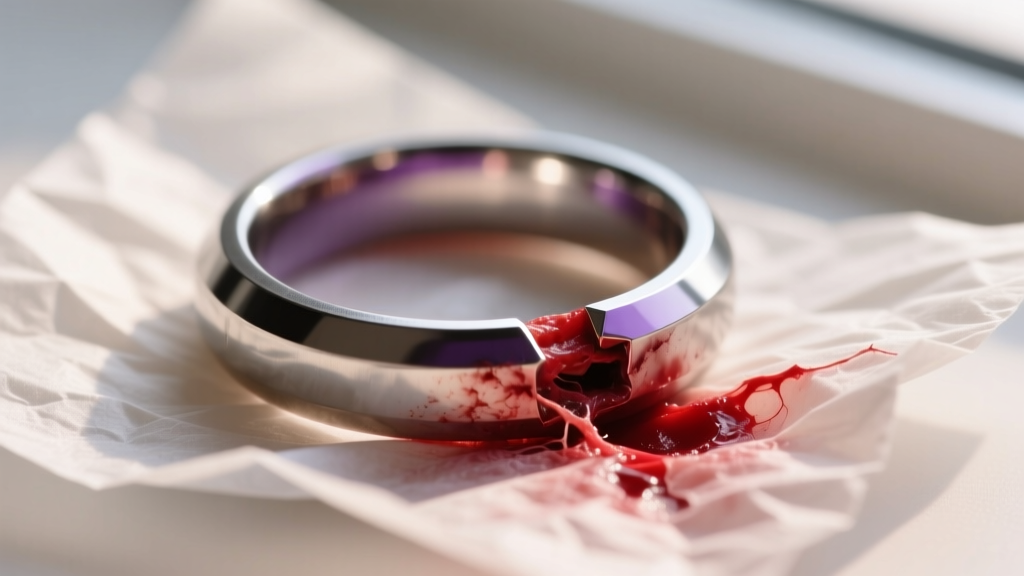
Tension rings use a spring-loaded or rigid metal gap to 'grip' the clitoral hood. Troubleshooting the problem: The jewelry constantly slips off during movement, or it pinches the highly sensitive clitoral glans when it shifts out of place.
The fundamental flaw with tension rings is that the clitoral hood is not a static, rigid structure. As you walk, sit, or engage in physical activity, the hood shifts. A tension ring will inevitably slide, often migrating downward to rest directly against the clitoral glans. Because the glans possesses thousands of nerve endings (roughly 8,000 to 10,000), the blunt pressure of a metal clip causes acute pain rather than pleasure. Furthermore, if a tension ring snaps off and migrates internally, it can become a severe medical emergency requiring extraction.
3. Standard Adhesive Gems: Sweat and Friction Failures
Rhinestone stickers and cheap adhesive gems are popular for festivals or boudoir photoshoots. Troubleshooting the problem: The adhesive breaks down within minutes, leaving a sticky, irritating residue on sensitive skin.
Most commercial body gems use cyanoacrylate-based glues or low-grade acrylic adhesives. These compounds cure rigidly and are highly susceptible to breaking down when exposed to moisture, sweat, and natural mucosal humidity. Additionally, cyanoacrylate can trigger severe contact dermatitis on the vulva, leading to itching, swelling, and peeling skin.
Safe Alternatives: A Comparison Chart
If traditional non piercing clit jewelry is inherently flawed, what are the safe workarounds? Below is a data-driven comparison of alternative methods for achieving genital aesthetics and sensory stimulation safely.
| Method | Material / Mechanism | Max Wear Time | Safety Rating | Primary Failure Mode |
|---|---|---|---|---|
| Magnetic Rings | Neodymium Magnets | Under 1 Hour | Extremely Dangerous | Ischemia and tissue necrosis |
| Tension Clips | Surgical Steel / Acrylic | Under 2 Hours | Poor | Glans pinching and internal migration |
| Medical Adhesive Gems | Pros-Aide / Silicone | 12 - 24 Hours | High (External Only) | Moisture degradation |
| VCH Piercing | ASTM F-136 Titanium | Permanent | Excellent (When healed) | Rejection (rare with proper anatomy) |
| Sensory Toys | Medical-Grade Silicone | During Use Only | High | N/A (Designed for temporary use) |
How to Safely Apply Adhesive Genital Jewelry
If your goal is short-term aesthetic enhancement (e.g., for a photoshoot or a special evening), medical-grade adhesive gems applied to the outer mons pubis or the very outer edge of the hood are the only safe non-piercing options. Here is how to troubleshoot the adhesion process for maximum longevity without skin damage.
Step 1: Skin Preparation
Adhesives fail when applied over natural skin oils or lotions. Cleanse the external area with a gentle, oil-free soap and water. Follow this by wiping the exact application site with a 70% isopropyl alcohol pad. Allow it to air dry completely. Do not apply alcohol to the inner mucosal tissue or the glans.
Step 2: Choosing the Right Adhesive
Never use Super Glue, nail glue, or standard eyelash glue on the vulva. Instead, invest in a medical-grade prosthetic adhesive like Pros-Aide or Telesis 5. These are acrylic and silicone-based emulsions designed for sensitive skin, allowing for flexibility and movement without tearing the epidermis upon removal.
Step 3: Application and Removal
Apply a micro-drop of the adhesive to the back of a flat-back titanium or glass gemstone (avoid cheap plastic rhinestones, which can harbor bacteria). Press firmly for 30 seconds. To remove, use a dedicated medical adhesive remover or an oil-based cleanser (like coconut oil or baby oil) to gently dissolve the bond without pulling the delicate skin.
When to See a Professional Piercer Instead
Many individuals seek out non piercing clit jewelry because they are intimidated by the idea of needles or the healing process of a genital piercing. However, a properly performed Vertical Clitoral Hood (VCH) piercing is vastly safer, more comfortable, and more reliable than any tension or magnetic alternative on the market.
A VCH piercing rests in the hood, not the glans, and when performed by an APP-certified professional using implant-grade ASTM F-136 titanium, the risk of rejection or allergic reaction is virtually zero. Titanium is non-porous, meaning it will not harbor bacteria or degrade when exposed to bodily fluids. A healed VCH allows for the continuous, safe wear of jewelry that moves naturally with your anatomy, completely eliminating the pinching, slipping, and necrosis risks associated with non-piercing alternatives.
Anatomy Checks: Are You a Candidate?
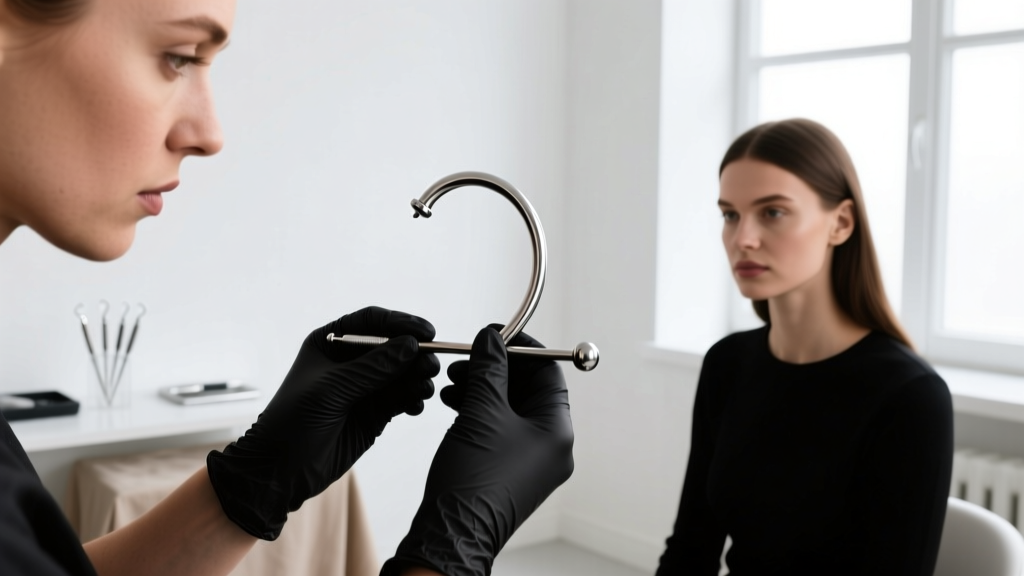
Not everyone has the anatomy for a VCH piercing. A professional piercer will perform a 'cotton swab test' to ensure your hood has enough depth and tissue laxity to accommodate a curved barbell. If you do not have the anatomy for a VCH, a piercer may suggest a Triangle piercing or external aesthetic piercings (like the Christina) that provide a similar visual appeal without compromising the clitoral structure.
Final Thoughts on Genital Aesthetics and Safety
Troubleshooting non piercing clit jewelry ultimately leads to a hard truth: the delicate, highly vascular anatomy of the vulva is not designed to accommodate external clamps, magnets, or rigid tension rings. The temporary aesthetic benefit is never worth the risk of permanent nerve damage, tissue necrosis, or severe allergic contact dermatitis.
By pivoting to safe, medical-grade adhesive applications for external, short-term wear—or by consulting a certified professional for a permanent, anatomically correct titanium piercing—you can achieve your desired aesthetic while prioritizing your long-term sexual health and physical safety. Always listen to your body; if a non-piercing accessory causes pain, numbness, or discoloration, remove it immediately and consult a healthcare provider.


