Princess Albertina Piercing Jewelry: Technical Sizing & Metals
Discover expert technical specifications for Princess Albertina piercing jewelry, including ideal gauges, implant-grade metals, and anatomical fit.


The Anatomy of a Princess Albertina Piercing
The Princess Albertina is an advanced, highly specialized female genital piercing. Unlike surface piercings or standard clitoral hood piercings, the Princess Albertina enters directly through the urethra and exits through the top of the clitoral hood. Because this jewelry traverses a delicate mucosal membrane and sits in an environment with high moisture, high bacterial presence, and significant kinetic movement, the technical specifications of the jewelry are not merely aesthetic choices—they are critical medical considerations.
Selecting the wrong curvature, gauge, or metal alloy can lead to severe complications, including urethral strictures, chronic urinary tract infections (UTIs), and the dreaded "cheese-cutter" migration effect. This guide provides a deep technical dive into the exact parameters required for safe, long-term Princess Albertina piercing jewelry.
Mandatory Material Specifications
The mucosal tissue of the urethra is highly reactive and absorbs ions more readily than external dermal tissue. Therefore, standard 316L surgical steel is entirely contraindicated for this piercing due to its nickel content and potential for corrosion in high-salinity environments.
ASTM F136 Implant-Grade Titanium
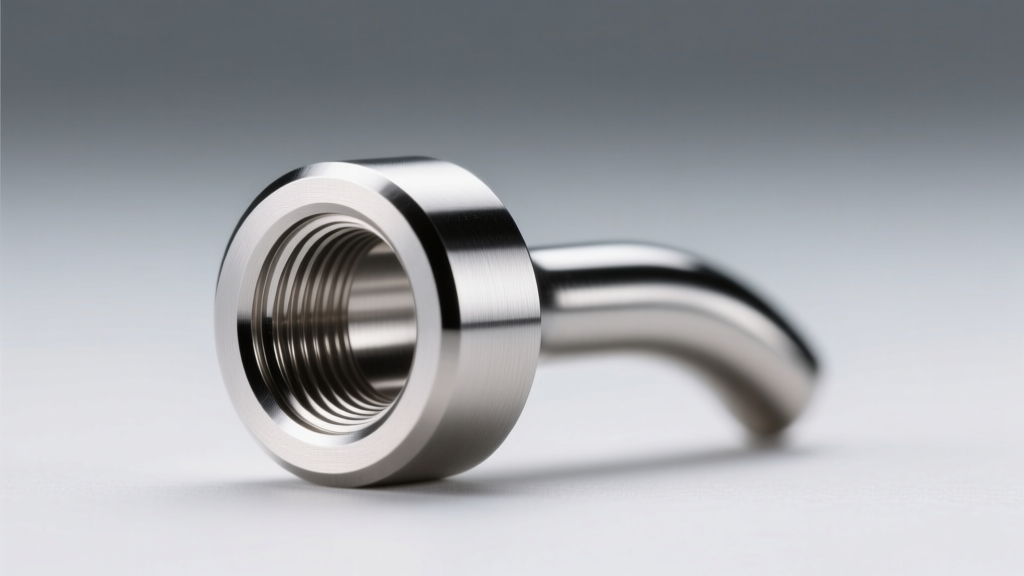
The undisputed gold standard for Princess Albertina jewelry is Ti6Al4V ELI (Extra Low Interstitial) titanium, compliant with ASTM F136 or ISO 5832-3 standards. This alloy is completely nickel-free, highly biocompatible, and resistant to the corrosive effects of urine and bodily fluids. Furthermore, the jewelry must feature a mirror polish finish. Matte or brushed finishes harbor microscopic ridges where bacteria like Pseudomonas and E. coli can form biofilms, drastically increasing the risk of urethral infections.
Niobium (Nb) as a Secondary Option
For the rare individual with a verified sensitivity to titanium alloys, pure Niobium (ASTM F3201) is the only acceptable alternative. It is highly inert and can be anodized to various colors without the use of toxic dyes or platings. However, Niobium is heavier and softer than titanium, which can influence the long-term drape and wear of the jewelry.
Gauge, Diameter, and the Cheese-Cutter Effect
The "cheese-cutter effect" occurs when a wire that is too thin is placed under tension in soft tissue, causing it to slowly slice through the flesh. Because the Princess Albertina rests against the thin posterior wall of the urethra and the clitoral hood, gauge selection is a matter of tissue preservation.
| Gauge Size | Millimeter (mm) | Viability for Princess Albertina | Clinical Risk Factors |
|---|---|---|---|
| 14g | 1.6mm | Not Recommended | High risk of migration, urethral tearing, and cheese-cutter effect due to insufficient surface area distributing the tension. |
| 12g | 2.0mm | Standard / Ideal | Optimal balance of structural integrity and tissue preservation. Provides enough width to prevent migration in most anatomies. |
| 10g | 2.4mm | Preferred for High Tension | Best for clients with thinner clitoral hoods or higher kinetic movement. Requires a highly skilled piercer for initial urethral dilation. |
| 8g | 3.2mm | Rare / Advanced | Typically reserved for stretched piercings. Initial piercing at this gauge carries a high risk of urethral trauma and stricture formation. |
Jewelry Styles: Curved Barbells and Threading Mechanics
The anatomical path of the Princess Albertina requires a specific curvature to avoid compressing the urethra or protruding awkwardly from the clitoral hood. The curved barbell (often called a banana barbell) is the only universally accepted style for initial healing and long-term wear in this piercing.
The Importance of the "Rise"
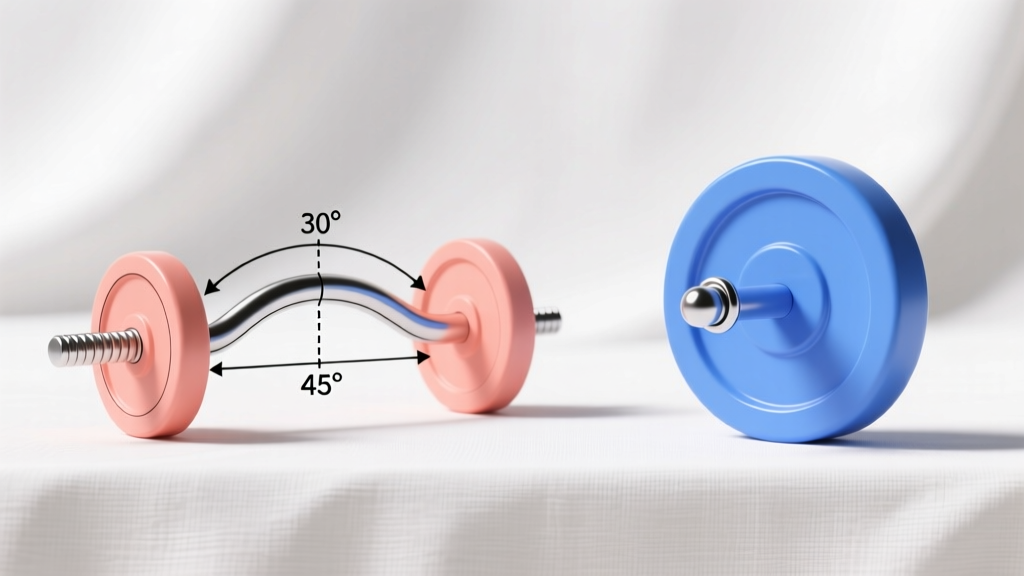
The "rise" refers to the degree of curvature in the barbell. A standard 90-degree curve is rarely appropriate. Most expert piercers utilize custom-bent barbells or specialized genital curves (often between 100 and 110 degrees) to match the natural angle of the female urethra. If the curve is too tight, it will compress the urethral tube, restricting urine flow and causing chronic discomfort. If it is too shallow, the ends will pull against the entry and exit holes, leading to hypertrophic scarring.
Threadless vs. Internally Threaded Fitment
The method by which the jewelry assembles is critical when passing through the urethra.
- Externally Threaded: Strictly prohibited. The sharp threads act like a file against the delicate urethral meatus and mucosal lining, causing micro-lacerations that heal as scar tissue (strictures).
- Internally Threaded: Acceptable, provided the threading is machined to a flawless finish. However, the slight lip where the ball meets the bar can still cause minor friction during insertion.
- Threadless (Push-Pin): The superior choice. Brands like NeoMetal utilize a tension-fit system where a slightly bent pin inserts into a hollow, polished bar. This creates a completely seamless exterior with zero threading to pass through the urethra, eliminating insertion trauma entirely.
Ends, Gemstones, and Snag Hazards
The ends of the jewelry sit at the urethral opening and the exterior of the clitoral hood. Therefore, the profile of the jewelry ends must be meticulously chosen to prevent snagging on clothing or during sexual activity.
For gemstone ends, bezel settings are mandatory. Prong settings feature tiny metal claws that easily catch on the urethral meatus or sexual partners, which can result in catastrophic tearing of the piercing channel. High-polish titanium or niobium balls (usually 4mm or 5mm for the urethral end to prevent accidental ingestion into the bladder, and 5mm to 8mm for the hood end) are the safest, most ergonomic options.
Healing Dynamics and Urethral Complications
The healing timeline for a Princess Albertina piercing typically ranges from 3 to 6 months, though the mucosal tissue inside the urethra heals much faster than the exterior dermal exit. The primary complication to monitor is the formation of a urethral stricture—a narrowing of the urethra caused by excessive scar tissue.
"Genital jewelry must possess a flawless mirror finish. Any surface irregularities, scratches, or porous materials will harbor pathogens in the mucosal environment, leading to localized infections and potential systemic complications."
— Association of Professional Piercers (APP) Jewelry Guidelines
Troubleshooting Common Fitment Issues
If a client experiences a "split stream" during urination, it is often caused by the jewelry sitting too close to the urethral opening, disrupting the fluid dynamics. This requires a longer barbell or a custom bend to pull the jewelry slightly deeper into the channel. Conversely, if the client experiences recurrent UTIs, the jewelry may be too long, allowing excess movement that introduces external bacteria into the urethra. In such cases, downsizing to a shorter rise by a professional piercer is required.
Sourcing and Brand Recommendations
Due to the extreme precision required for Princess Albertina jewelry, off-the-shelf mall kiosks and unverified online marketplaces must be avoided. Only source jewelry from manufacturers that provide mill certificates verifying their ASTM F136 compliance. Top-tier brands trusted by APP-certified piercers for genital applications include:
- NeoMetal: The industry leader for threadless, solid titanium ends and bars, offering the safest insertion method for urethral piercings.
- Anatometal: Renowned for their internally threaded 12g and 10g curved barbells and ultra-smooth bezel settings.
- Industrial Strength (IS2O): Offers exceptional custom-bending services for piercers who need to dial in the exact curvature for a client's unique anatomy.
For a comprehensive overview of safe piercing practices and to locate a certified professional capable of performing this advanced procedure, consult the Association of Professional Piercers directory.


