Smiley Piercing Jewelry Materials: A Safety Guide
Discover the safest smiley piercing jewelry materials to protect your gums and teeth. Compare titanium, glass, and PTFE for optimal oral healing.

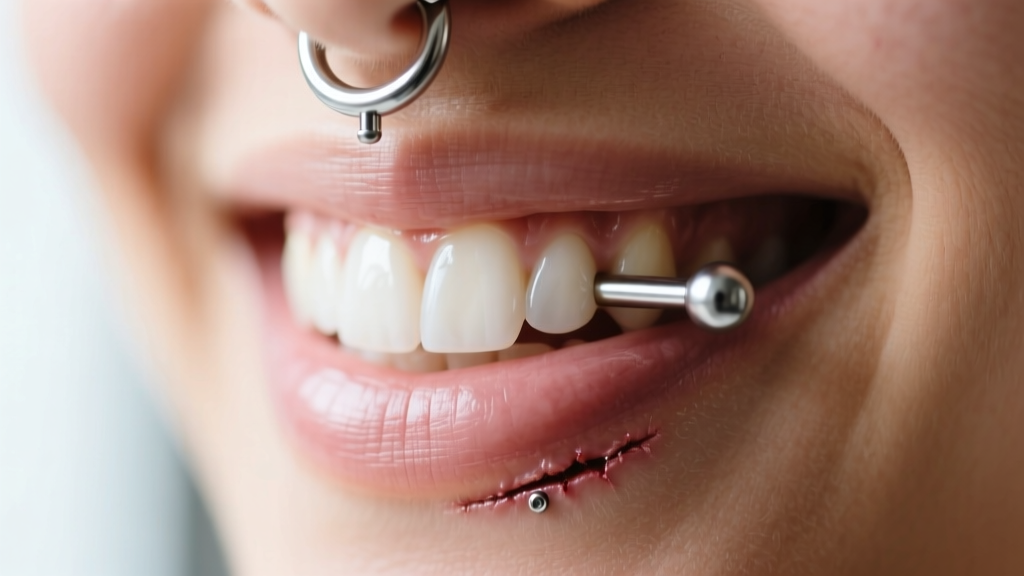
The maxillary labial frenulum—the thin web of tissue connecting your upper lip to your gums—is one of the most delicate and unforgiving canvases in body modification. When selecting smiley piercing jewelry, aesthetic appeal must always take a backseat to biomechanical safety. The oral cavity is a harsh, highly active environment characterized by fluctuating pH levels, constant moisture, and aggressive enzymatic activity. As we navigate the evolving body modification landscape in 2026, the consensus among elite piercers and dental professionals is clear: the wrong material will rapidly lead to gum recession, enamel abrasion, and inevitable rejection.
This comprehensive guide dissects the metallurgical and polymer properties of smiley piercing jewelry, providing a data-driven framework to protect your oral health while maintaining a flawless aesthetic.
The Biomechanics of the Maxillary Frenulum
Unlike an earlobe or navel, the frenulum lacks dense collagen networks. It is primarily composed of loose connective tissue and mucous membrane. Because of this structural fragility, the tissue is highly susceptible to the 'cheese-cutter effect'—a phenomenon where heavy or improperly shaped jewelry slowly migrates through the tissue due to gravity and the constant kinetic friction of speaking and eating.
Furthermore, the jewelry sits in direct proximity to the gingival margin (gum line) and the lingual surface of the maxillary incisors. Every time you smile, speak, or chew, the jewelry impacts these structures. Therefore, the density, surface porosity, and galvanic reactivity of the material are not just technical specifications; they are the primary determinants of whether your piercing will survive or cause permanent dental damage.
Tier 1: The Gold Standard for Smiley Piercing Jewelry
For both initial healing and long-term retention, only a select few materials possess the necessary biocompatibility and physical properties to survive the oral cavity.
Implant-Grade Titanium (ASTM F136)
Implant-grade titanium, specifically Ti-6Al-4V ELI (ASTM F136), is the undisputed champion for smiley piercing jewelry. Unlike commercial 'surgical steel,' F136 titanium contains zero nickel, eliminating the risk of contact dermatitis and localized allergic reactions. More importantly for the smiley, titanium has a remarkably low density (4.43 g/cm³). This lightweight profile drastically reduces the gravitational drag on the fragile frenulum, mitigating the cheese-cutter effect.
Titanium also forms a passive oxide layer when exposed to oxygen, rendering it highly resistant to the galvanic corrosion caused by the electrolytes in human saliva. According to the Association of Professional Piercers (APP), implant-grade titanium is the only metal universally recommended for fresh oral piercings due to its mirror-polish capability, which prevents oral biofilm and plaque adherence.
Borosilicate Glass and Fused Quartz
For clients with extreme metal sensitivities or those experiencing unexplained irritation, borosilicate glass and fused quartz offer a flawless alternative. Glass is entirely inert, non-porous, and completely impervious to oral acids. Because it lacks a crystalline structure at the microscopic level, a properly polished glass ring offers zero friction against the gums and teeth.
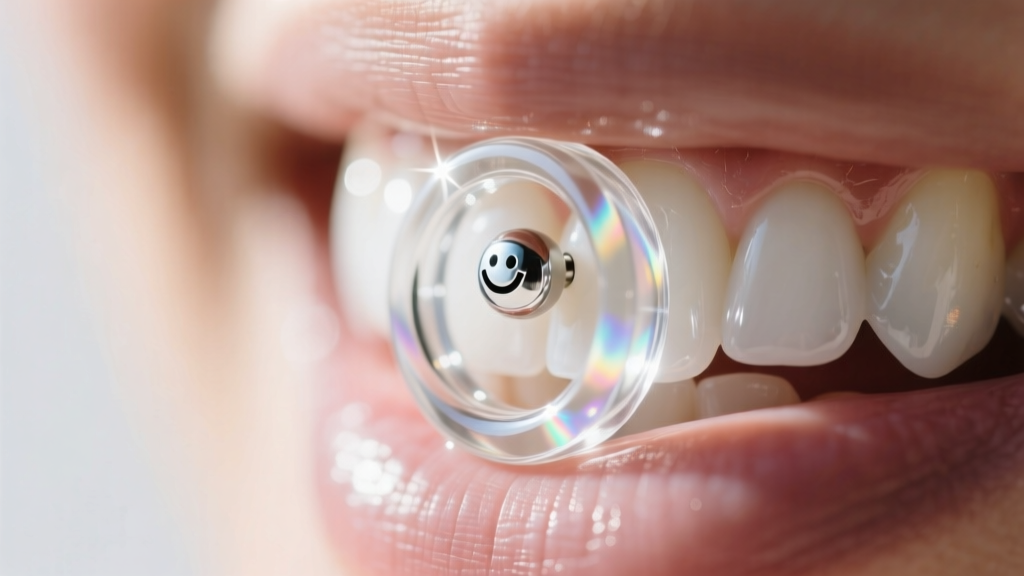
Glass is also an exceptional thermal conductor, meaning it won't harbor temperature extremes from hot coffee or ice water in a way that shocks the delicate fistula. However, glass is brittle; while it will not bend and warp like cheap metals, a severe impact to the mouth could shatter it, making it better suited for healed smileys rather than fresh ones.
Tier 2: Damage Control and Specialty Polymers
PTFE (Bioplast) and Biocompatible Polymers
Polytetrafluoroethylene (PTFE), commonly known by the brand name Bioplast, is a flexible, biocompatible polymer. In the context of smiley piercing jewelry, PTFE serves a very specific harm-reduction purpose. Because it is highly flexible, a PTFE circular barbell will bend upon impact rather than transferring kinetic force directly into the front teeth or gums.
If you play contact sports, grind your teeth at night (bruxism), or have already noticed minor enamel wear, swapping to a PTFE retainer can save your dentition. However, PTFE is not a permanent solution. Over time, the polymer degrades, absorbs oral bacteria, and becomes porous. Experts recommend replacing PTFE smiley jewelry every 3 to 6 months to prevent localized infections and foul odors.
The Danger Zone: Materials That Destroy Oral Tissue
The market is flooded with aesthetically pleasing but biologically hazardous options. Avoid the following materials at all costs when shopping for smiley piercing jewelry:
- Surgical Stainless Steel (316L): Contains 8-10% nickel. In the highly oxygenated, saline environment of the mouth, steel can undergo micro-corrosion, releasing nickel ions that cause gingival hyperplasia (gum swelling) and systemic sensitization.
- Acrylic and Silicone: Highly porous and prone to micro-fractures. Acrylic harbors anaerobic bacteria that cause severe halitosis and localized tissue necrosis. Silicone creates a suction effect against the mucous membrane, leading to chronic irritation and blistering.
- Heavy Karat Gold (18k and above): While high-karat gold is biocompatible, its extreme density (up to 19.3 g/cm³) makes it far too heavy for the frenulum. The sheer weight will accelerate migration and tissue tearing. If you must wear gold, opt for 14k palladium white gold, but only in a healed piercing.
Material Comparison Matrix
Understanding the physical properties of these materials helps illustrate why weight and surface finish dictate the lifespan of your piercing.
| Material | Density (g/cm³) | Surface Porosity | Galvanic Reactivity | Best Use Case |
|---|---|---|---|---|
| ASTM F136 Titanium | 4.43 | None (Mirror Polish) | None | Initial Healing & Long-Term |
| Borosilicate Glass | 2.23 | None | None | Healed / Metal Allergies |
| PTFE (Bioplast) | 2.15 | Low (Degrades over time) | None | Sports / Bruxism / Harm Reduction |
| 316L Surgical Steel | 8.00 | Micro-porous | High | Avoid in Oral Piercings |
| Acrylic | 1.18 | High | None | Strictly Avoid |
Beyond the Metal: Gauge, Threading, and Profile
Material science is only half the battle; the physical architecture of the jewelry is equally critical. The National Institutes of Health (NIH) notes that improper jewelry sizing is a leading cause of oral piercing complications.
The Gauge Dilemma
The standard gauge for a smiley piercing is 16G (1.2mm), though some piercers opt for 14G (1.6mm) for added stability. While it seems counterintuitive, a thicker gauge (14G) actually reduces the cheese-cutter effect by distributing the gravitational load over a wider surface area of the frenulum. Avoid 18G (1.0mm) or 20G wire rings; the thin profile acts like a scalpel against the thin tissue web.
Threading and End Profiles
Externally threaded jewelry (where the screw is on the barbell) is a biological hazard for the frenulum. The sharp threads will tear the micro-thin fistula during insertion and harbor plaque. You must insist on internally threaded or threadless (press-fit) jewelry. Threadless titanium push-pins are particularly advantageous for smileys, as the tension-fit mechanism leaves zero crevices for oral biofilm to colonize. Furthermore, the ends of the jewelry (the balls or gems) must be smooth and low-profile. Prong-set gems will inevitably snag on the upper lip and tear the tissue; opt for bezel-set gems or polished titanium beads.
Expert Troubleshooting: Signs of Material Failure
Even with high-quality smiley piercing jewelry, the oral environment is unpredictable. Monitor your piercing for these specific failure modes:
- Metallic Taste or Odor: This indicates galvanic corrosion. The jewelry is reacting with your saliva and breaking down. Remove it immediately and replace it with glass or F136 titanium.
- Gum Blanching (White Spots): If the gum tissue directly behind the jewelry turns white, this is pressure necrosis. The jewelry profile is too tight, cutting off blood supply to the gingiva. You need a jeweler with a wider diameter or a custom-bent barbell to relieve the pressure.
- Gray/Blue Tissue Shadow: Known as localized argyria or metallosis, this occurs when inferior metals leach silver or heavy metal ions into the mucous membrane. This staining is often permanent and requires surgical excision of the stained tissue.
By prioritizing implant-grade materials, precise gauges, and seamless architecture, you can safely enjoy a smiley piercing without sacrificing your dental health. Always consult with an APP-certified professional who stocks verified, mill-certified titanium and glass to ensure your jewelry meets the rigorous demands of the oral cavity.


