1 Inch Hoop Earrings: Technical Gauge and Fit Guide
Master the fit of 1 inch hoop earrings with our expert technical guide. Explore gauge sizes, weight distribution, closure types, and metal grades.

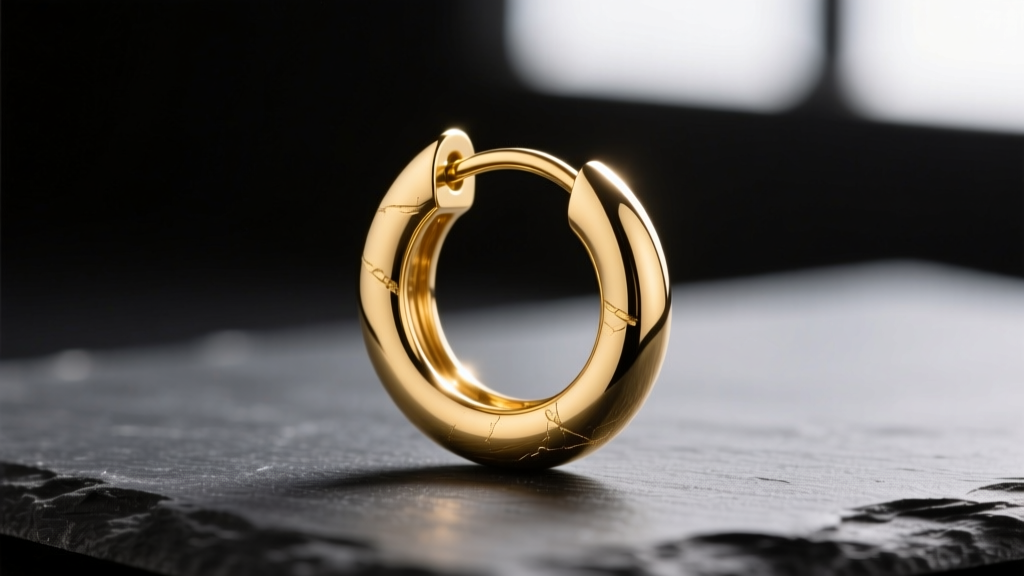
When it comes to versatile, everyday body jewelry, 1 inch hoop earrings represent the undisputed goldilocks zone. At exactly 25 millimeters in diameter, they offer enough presence to frame the face and highlight the jawline without risking the aggressive snags associated with larger, statement-sized hoops. However, beneath this seemingly simple accessory lies a complex intersection of metallurgy, biomechanics, and precision machining. As a jewelry technical reviewer, I frequently see consumers purchase poorly calibrated hoops that lead to tissue migration, contact dermatitis, or premature hardware failure. This deep dive deconstructs the exact specifications, material grades, and structural nuances you need to evaluate before investing in 1 inch hoops for your lobes or cartilage.
The Exact Dimensions: Inner vs. Outer Diameter
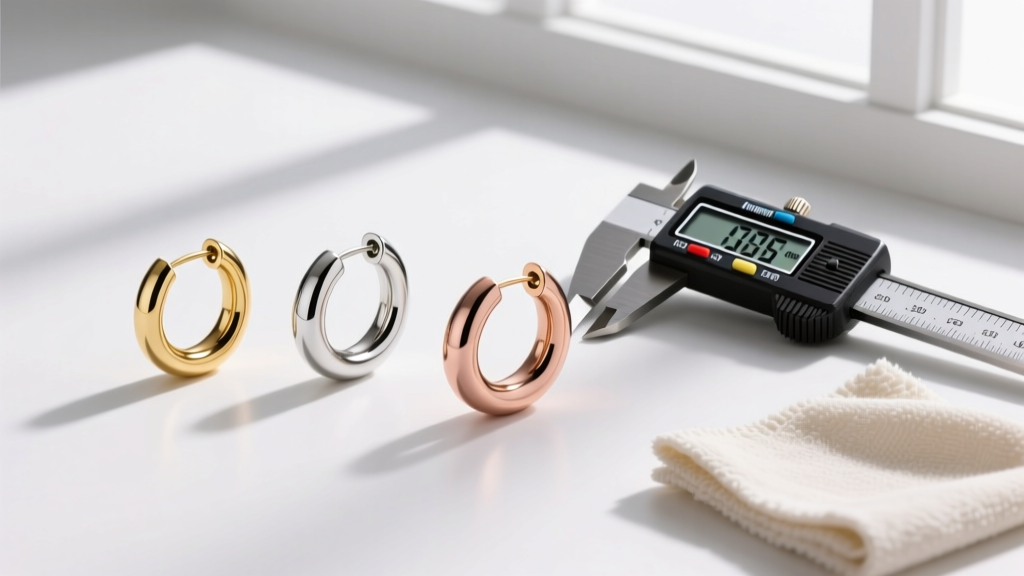
In the jewelry manufacturing sector, a 1 inch hoop is defined by its Inner Diameter (ID), which measures exactly 25mm from the inside edge of the wire across the center. However, the Outer Diameter (OD) is equally critical for fit, particularly in cartilage piercings like the helix or conch. The OD is calculated by adding the wire thickness to the ID on both sides. For example, a 25mm ID hoop crafted from 14-gauge (1.63mm) wire will have an actual OD of 28.26mm. If your cartilage piercing sits close to the outer ridge of the ear, an OD exceeding 28mm may cause the hoop to press against the scapha, creating uncomfortable friction and delaying healing. Always verify both ID and OD specifications with the manufacturer, especially when shopping from boutique metalsmiths who hand-forge their pieces.
Gauge Thickness and the Cheese-Cutter Effect
Gauge refers to the thickness of the wire that passes through the fistula (the piercing channel). The relationship between hoop weight and wire thickness dictates the long-term health of your piercing. Thin wires on heavy hoops create a high-pressure environment that can lead to the dreaded cheese-cutter effect, where the jewelry slowly migrates through the tissue over time.
| Gauge (AWG) | Wire Diameter | Avg. Weight (1 Inch) | Best Application |
|---|---|---|---|
| 20g | 0.81mm | 1.2 - 1.5g | Nose, thin lobes (Not recommended for heavy wear) |
| 18g | 1.02mm | 1.8 - 2.2g | Standard lobe, forward helix |
| 16g | 1.29mm | 2.5 - 3.1g | Helix, conch, thick lobes (Optimal balance) |
| 14g | 1.63mm | 3.8 - 4.5g | Stretched lobes, industrial, heavy-duty cartilage |
For standard 1 inch hoop earrings worn in the earlobe, 18g is the industry baseline, but stepping up to 16g provides superior weight distribution. The surface area of a 16g wire resting against the bottom of the fistula is nearly 60% greater than that of a 20g wire, effectively halving the downward pressure exerted by the hoop. If you are wearing solid 14k gold or platinum hoops, which are significantly denser than titanium, opting for a 16g or 14g wire is a non-negotiable requirement to prevent lobe tearing.

Closure Mechanisms and Machining Tolerances
The structural integrity of a hoop is only as reliable as its closure. In 2026, CNC (Computer Numerical Control) machining has allowed for unprecedented precision in jewelry closures, but different mechanisms still present unique failure modes.
Hinged Snap vs. Segment Clicker
Hinged Snap Hoops: These feature a microscopic pin that locks into a catch. While easy to insert, the catch mechanism acts as a trap for sebum, dead skin cells, and environmental debris. If not cleaned weekly with an ultrasonic bath, the trapped moisture and acids can degrade the catch spring, leading to accidental unclasping. Furthermore, the hinge pin is a single point of mechanical stress; repeated bending can cause metal fatigue and eventual snapping.
Segment Clickers: Originally designed for septum rings, clickers are now the gold standard for high-end 1 inch cartilage hoops. They rely on a tension-fit segment that flushes perfectly into the hoop body. A properly machined clicker will have a gap tolerance of less than 0.05mm, ensuring no snag points that could irritate the fistula. When shopping, test the clicker mechanism: it should produce a crisp, audible snap and sit entirely flush. If you can feel a ridge with your fingernail, the machining tolerance is too loose, and it will harbor bacteria.
Continuous (Endless) Hoops: These rely on the tensile strength of the metal, featuring a thin pin that slides into a hollow tube. While they offer a seamless aesthetic, they are highly susceptible to warping. Bending the wire to open the hoop alters its temper, and over time, the circular geometry will distort into an oval, preventing the pin from seating correctly.
Material Grades and Biocompatibility Standards
The ear is a highly vascularized area prone to contact dermatitis. According to the Mayo Clinic, nickel allergy remains one of the most common causes of allergic contact dermatitis, affecting up to 36% of women. Consequently, understanding material grades is critical.
- ASTM F136 Titanium (Ti-6Al-4V ELI): The ELI (Extra Low Interstitial) designation means the alloy has reduced levels of oxygen, nitrogen, carbon, and iron. This specific grade is the absolute pinnacle for biocompatibility, offering high fatigue strength and zero nickel content. Expect to pay $30 to $65 for precision-machined titanium 1 inch hoops.
- 14k and 18k Gold: Pure 24k gold is too soft for hoop structural integrity. It must be alloyed. For yellow and rose gold, copper and silver are used, which are generally safe. However, white gold is traditionally alloyed with nickel to achieve its silver color. Always seek out palladium-alloyed white gold, which is hypoallergenic and nickel-free. High-quality 14k gold 1 inch hoops typically range from $80 to $250 depending on the brand and weight.
- Surgical Steel: Despite the clinical name, standard 316L surgical steel contains up to 14% nickel. While the nickel is often bound within the alloy, the polishing process can expose it to the skin. The Association of Professional Piercers (APP) explicitly advises against using surgical steel for initial healing or for individuals with known metal sensitivities.
Piercing Angles and Cartilage Geometry
A common troubleshooting issue with 1 inch hoop earrings in cartilage piercings is the hoop sticking straight out from the head rather than hugging the ear. This is rarely a defect in the jewelry; it is a geometric mismatch between the hoop and the piercing angle. If a helix piercing was performed at a 45-degree angle to accommodate a flat-back labret stud, inserting a rigid 1-inch hoop will force the jewelry to follow that angled fistula. The result is a hoop that juts outward, creating a lever effect that puts immense torque on the piercing channel. If your cartilage piercings were angled for studs, you may need to consult a master piercer about having the fistula re-tapered or opting for a larger diameter hoop (e.g., 3/8 inch or 10mm ID) that can naturally curve back toward the ear without torque.
Maintenance and Ultrasonic Protocols
To maintain the structural integrity and hygiene of your 1 inch hoops, implement a strict maintenance protocol. Avoid using harsh chemical dips or toothpaste, which can micro-scratch high-polish gold and titanium, creating microscopic valleys where bacteria thrive. Instead, invest in a basic ultrasonic jewelry cleaner. Submerge your hoops in a solution of warm water and a few drops of mild, fragrance-free dish soap for three minutes. The cavitation bubbles generated by the ultrasonic waves will safely dislodge sebum and debris from the deepest recesses of the clicker or hinge mechanisms without degrading the metal temper. Dry thoroughly with a lint-free microfiber cloth before reinsertion to prevent moisture-induced oxidation in alloyed metals.


