10k Gold Earrings vs 14k: Durability, Allergies & Value
Discover if 10k gold earrings are right for you. We compare 10k vs 14k gold for durability, nickel allergies, tarnish resistance, and everyday value.

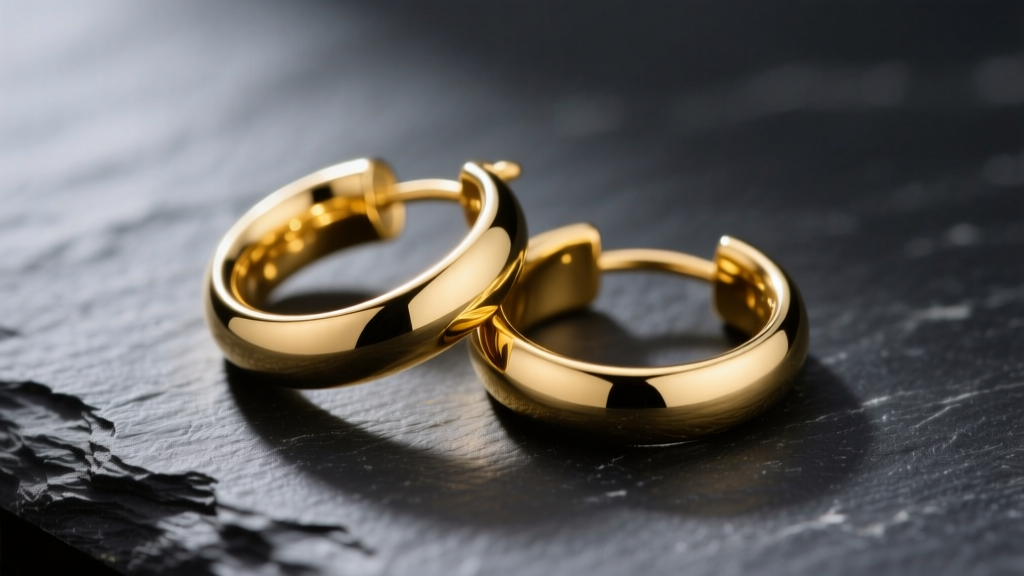
With gold spot prices reaching historic highs in 2026, the financial appeal of 10k gold earrings has never been stronger. For budget-conscious buyers or those seeking highly durable everyday jewelry, 10k gold presents a compelling alternative to the industry-standard 14k and 18k options. However, the lower gold content fundamentally alters the metal's physical behavior, structural integrity, and biological compatibility with your skin. Before investing in a new pair of studs, hoops, or huggies, it is critical to understand the exact metallurgical trade-offs involved.
In this comprehensive material comparison, we break down the specific properties of 10k gold, analyze its performance in delicate earring gauges, and provide a practical decision framework to help you determine if this alloy is the right choice for your piercing.
The Metallurgy of 10k Gold: What You Are Actually Wearing
To understand how 10k gold behaves in an earring, we must first look at its atomic composition. According to the Gemological Institute of America (GIA), the karat system measures the purity of gold on a scale of 24. Therefore, 10k gold consists of exactly 41.7% pure gold and 58.3% alloy metals. In many international markets, you will see this stamped as "417".
Because pure gold (24k) is exceptionally soft and malleable, it is entirely unsuitable for jewelry that requires structural rigidity. The 58.3% alloy mixture in 10k gold typically consists of copper, silver, zinc, and occasionally nickel. This high volume of base metals drastically changes the material properties:
- Vickers Hardness (HV): 10k gold typically scores between 130 and 140 on the Vickers Hardness scale. This makes it significantly harder and more rigid than 14k (approx. 120 HV) and 18k (approx. 90 HV).
- Tensile Strength: The higher copper and silver content increases the tensile strength, meaning 10k gold wire is less likely to stretch or deform under tension.
- Color Profile: Due to the lower gold content, 10k yellow gold has a noticeably paler, less saturated hue compared to the rich buttery tone of 18k. In white gold, the difference is negligible to the naked eye once rhodium plating is applied.
10k Gold Earrings vs. 14k and 18k: The Hard Data
When selecting metals for cartilage piercings or heavy lobe pieces, the mechanical differences between karats dictate the longevity of the jewelry. Below is a direct comparison of how 10k stacks up against higher karats in critical performance metrics.
| Property | 10k Gold (417) | 14k Gold (585) | 18k Gold (750) |
|---|---|---|---|
| Pure Gold Content | 41.7% | 58.5% | 75.0% |
| Vickers Hardness (HV) | 130 - 140 | 120 - 130 | 90 - 100 |
| Tarnish Resistance | Low to Moderate | Moderate to High | Very High |
| Allergy Risk | High (if nickel alloyed) | Moderate | Low |
| Relative Retail Price | Baseline (Lowest) | +20% to +35% | +60% to +90% |
Note: While the raw material cost of 10k gold is roughly 30% cheaper than 14k, the retail price difference for finished earrings is usually only 15-20%. This is because the labor costs for casting, polishing, and setting stones remain identical regardless of the gold karat.
The Allergy Factor: Nickel, Copper, and Contact Dermatitis
The most significant failure mode of 10k gold earrings is biological incompatibility. Because nearly 60% of the metal is composed of alloys, the risk of contact dermatitis is substantially higher than in 18k gold. The primary culprit is nickel, a cheap, hardening agent frequently used in white gold alloys.
According to the Mayo Clinic, nickel allergy is one of the most common causes of allergic contact dermatitis, affecting up to 10-20% of the population. When a nickel-alloyed 10k earring post rests against a fresh or sensitive piercing, sweat and skin oils can leach nickel salts from the metal, triggering redness, itching, and weeping of the earlobe.
How to Mitigate Allergy Risks in 10k Jewelry
If you have sensitive skin but prefer the budget and durability of 10k gold, you must be highly selective about the alloy composition:
- Demand Nickel-Free Alloys: Seek out jewelers who explicitly cast their 10k white gold using palladium or manganese as the whitening agent instead of nickel.
- Check for Rhodium Plating: Most 10k white gold earrings are plated with rhodium, a hypoallergenic platinum-group metal. This creates a safe barrier between your skin and the alloy. However, once the plating wears off (usually within 6-12 months on high-friction earring posts), the underlying nickel will be exposed.
- Opt for 10k Yellow or Rose Gold: These colors do not require nickel for whitening. However, be aware that high-copper alloys (common in rose gold) can occasionally cause mild reactions in individuals with extreme copper sensitivities, though this is rare.
Best Earring Styles for 10k Gold's Structural Strength
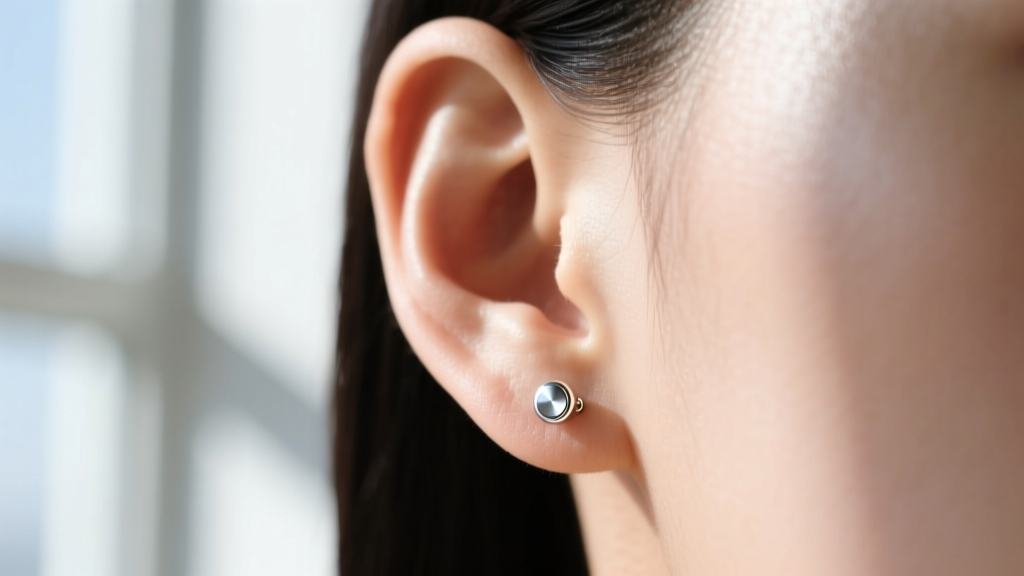
Where 10k gold truly excels is in structural applications. Its superior hardness and rigidity make it the ideal material for specific earring mechanisms and ultra-thin gauges that would easily bend if cast in softer 18k gold.
Threadless Labret Studs and Push-Pins
In modern body jewelry, threadless labret studs rely on a slight bend in the push-pin to create tension against the hollow post. For 18g (1.0mm) and 16g (1.2mm) cartilage piercings, a 10k gold pin holds its tension bend far better than 18k gold, ensuring the earring does not accidentally fall out during sleep or changing clothes.
Clicker Hinges and Seamless Hoops
Huggie earrings and segment rings utilize tiny, intricate hinge mechanisms. The snap-fit closure of a clicker ring requires the metal to possess high yield strength so the hinge pin does not warp over repeated use. A 16g 10k gold clicker hoop will maintain its satisfying "click" and structural alignment significantly longer than its higher-karat counterparts.
Delicate French Hook Ear Wires
For lightweight drop earrings utilizing 20g (0.81mm) or 22g (0.64mm) French hook wires, 10k gold provides the necessary "spring back" memory. Softer golds in these ultra-thin gauges will easily stretch and gape open when the earring is pulled, leading to lost jewelry.
Tarnish and Maintenance: The Reality of 10k Alloys
Unlike pure gold, which is completely inert and immune to oxidation, the alloy metals in 10k gold are highly reactive. Copper and silver readily react with oxygen, sulfur, and environmental chemicals to form tarnish (copper oxide and silver sulfide).
Environmental Failure Modes
Wearing 10k gold earrings in specific environments can accelerate tarnishing or even cause structural damage:
- Chlorine Exposure: Swimming in chlorinated pools or sitting in hot tubs while wearing 10k gold can cause stress corrosion cracking. The chlorine attacks the copper and silver alloys at a microscopic level, eventually causing the earring post or wire to become brittle and snap.
- Sulfur and Cosmetics: Hairsprays, perfumes, and lotions contain sulfur compounds and alcohols that will rapidly dull the polish of 10k gold, leaving a dark, smudgy film on the metal and the skin.
Proper Cleaning Protocol
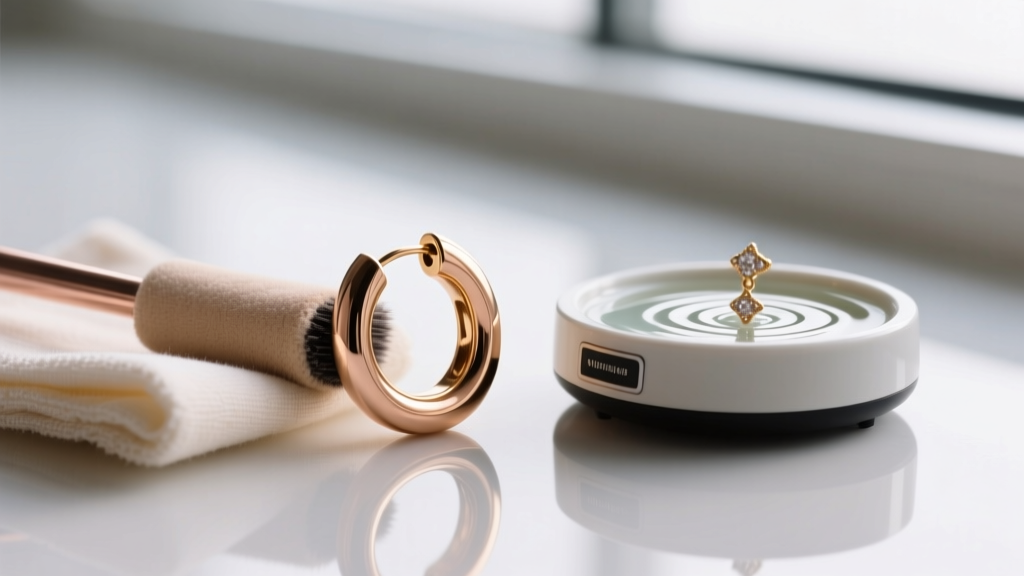
To maintain 10k gold earrings, avoid harsh chemical dips. Instead, use a few drops of mild dish soap in warm water and gently scrub with a soft-bristled baby toothbrush. For heavier tarnish, a specialized jeweler's polishing cloth impregnated with mild micro-abrasives will safely restore the high-polish finish without removing significant metal weight.
Final Verdict: When to Choose 10k Over 14k
Choosing between 10k and 14k gold earrings ultimately comes down to a balance of budget, skin sensitivity, and the specific mechanical requirements of the earring style. The Federal Trade Commission (FTC) Jewelry Guides ensure that any piece stamped 10k meets the strict 41.7% purity threshold, guaranteeing you are getting a genuine, albeit lower-karat, precious metal.
The 10k Gold Decision Framework:
Choose 10k Gold if: You are buying structural jewelry (clickers, thin wire hooks, threadless pins), you are on a strict budget, or you work with your hands and need a harder metal that resists scratching and bending.
Choose 14k or 18k Gold if: You have a known nickel or copper allergy, you are purchasing jewelry for a fresh, unhealed piercing, or you prioritize the rich, warm color saturation of high-purity yellow gold.
By understanding the exact metallurgical profile of 10k gold, you can confidently navigate the 2026 jewelry market, securing durable, cost-effective earrings that perfectly suit your lifestyle and anatomical needs.


