14k Gold Hoop Earrings 40mm: The Material & Fit Guide
Discover why 14k gold hoop earrings in 40mm offer the perfect balance of durability and style. Expert guide on alloys, gauge sizes, and clasps.

The 40mm Sweet Spot: Why Size Dictates Material
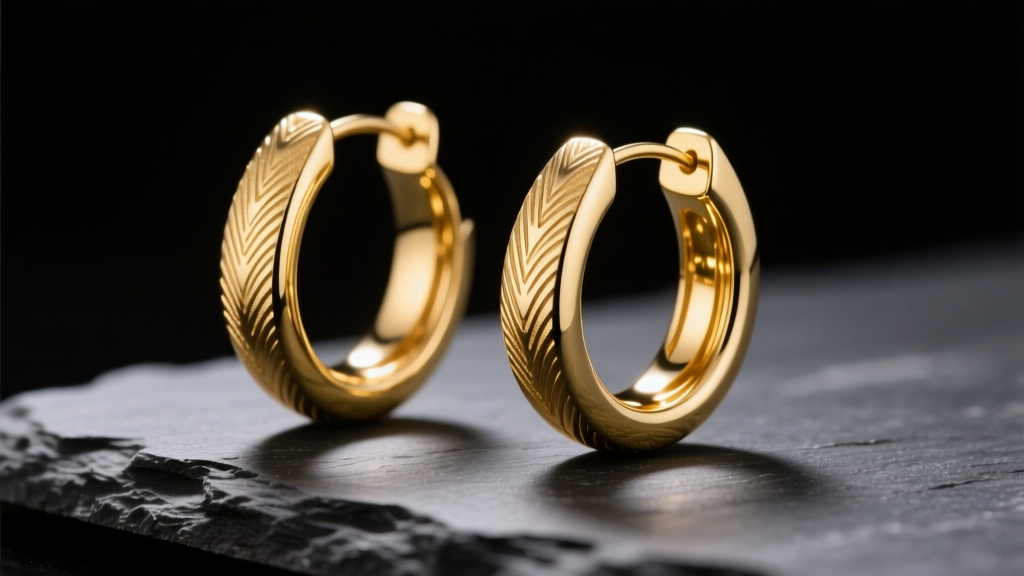
When navigating the crowded jewelry market, finding the perfect pair of 14k gold hoop earrings 40mm in diameter requires more than just an eye for aesthetics. At 40mm (approximately 1.57 inches), a hoop crosses the threshold from a subtle huggie into a medium-statement piece. This specific diameter introduces unique structural challenges: the earring is large enough to catch on hair, scarves, and clothing, yet it must remain light enough to avoid stretching the earlobe over time.
This is where material science intersects with daily wearability. While 18k gold offers a richer yellow hue and higher intrinsic value, its softer metallurgical profile makes it a liability for a 40mm hoop. Conversely, 10k gold is highly durable but lacks the luster and hypoallergenic properties desired by fine jewelry buyers. 14k gold emerges as the undisputed metallurgical sweet spot, offering an optimal balance of tensile strength, corrosion resistance, and visual warmth. In this comprehensive guide, we break down the exact alloy compositions, gauge requirements, and mechanical failure modes you need to understand before investing in 40mm 14k gold hoops.
The Metallurgical Advantage: 14k vs. Alternatives
To understand why 14k gold is the industry standard for medium-to-large hoops, we must look at the Vickers Hardness (HV) scale and alloy composition. Pure 24k gold is exceptionally malleable. To create 14k gold, manufacturers alloy 58.5% pure gold with 41.5% secondary metals—typically a precise ratio of copper, silver, and zinc. This specific blend increases the Vickers Hardness to approximately 135-160 HV, compared to the 115-125 HV of 18k gold.
For a 40mm hoop, this 20-point difference in hardness is critical. It dictates whether the earring will snap back into a perfect circle after being gently squeezed, or whether it will warp into an oval shape. According to the Gemological Institute of America (GIA), the specific alloy mix not only determines hardness but also the final color and oxidation resistance of the piece.
| Material | Gold Content | Approx. Hardness (HV) | Warp Resistance (40mm) | Best Use Case |
|---|---|---|---|---|
| 10k Gold | 41.7% | 160 - 180 HV | Excellent | Budget-friendly, high-impact active wear |
| 14k Gold | 58.5% | 135 - 160 HV | Very Good | Daily wear, optimal balance of value & strength |
| 18k Gold | 75.0% | 115 - 125 HV | Fair (Prone to bending) | Special occasion, smaller diameter hoops |
| Gold Vermeil | Sterling Core | ~65 HV (Core) | Poor (High warp risk) | Trend-driven, short-term seasonal wear |
Structural Integrity: Solid Wire vs. Hollow Tubing
The diameter of the hoop is only half the structural equation; the cross-sectional thickness (gauge) and manufacturing method dictate the weight and longevity of the piece. When shopping for 14k gold hoop earrings 40mm in size, you will generally encounter two construction types: solid wire and hollow tubing.
Solid Wire Hoops
A solid wire hoop is exactly what it sounds like—a continuous strand of 14k gold. For a 40mm diameter, the wire must be at least 14 gauge (1.6mm thick) to resist bending. However, a solid 14g wire hoop of this size will weigh approximately 4.5 to 5.5 grams per earring. While this provides a luxurious, premium feel and near-indestructible durability, wearing 5-gram hoops for 12+ hours a day can lead to gradual earlobe elongation over several years.
Hollow Tubing (Domed Hoops)
To solve the weight issue, master jewelers use hollow tubing. A 40mm hoop made from 14k gold tubing might have an outer diameter of 3.0mm but a wall thickness of just 0.8mm. This reduces the weight to a highly comfortable 1.5 - 2.5 grams per earring. The trade-off? Hollow hoops are susceptible to denting if crushed or stepped on. If you opt for hollow tubing, ensure the walls are at least 0.6mm thick to prevent the 'crinkle' effect that plagues cheap, ultra-lightweight hoops.
Clasp Engineering and Failure Modes
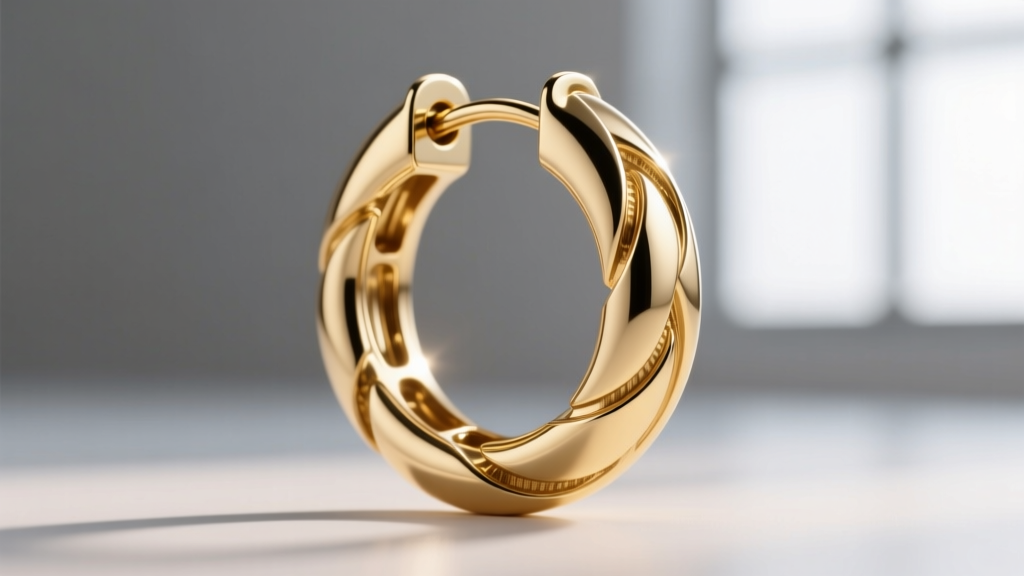
A 40mm hoop acts as a lever. When the bottom of the hoop is snagged, the fulcrum point is the clasp at the earlobe. The mechanical integrity of the closure mechanism is the most common point of failure in medium-large hoops. Here is a breakdown of the three primary clasp types used in 14k gold 40mm hoops:
- Hinged Snap (Click) Clasp: The most popular modern choice. A hidden hinge on the back of the hoop allows the front post to swing up and 'click' into a grooved receptacle. Failure Mode: In lower-quality manufacturing, the microscopic groove wears down after 2-3 years of daily use, causing the earring to pop open unexpectedly. Always test the 'snap'—it should require deliberate pressure to open.
- Saddleback Clasp: Features a hinged, U-shaped saddle that snaps over the ear wire. This provides excellent security and distributes weight evenly across the back of the lobe. Failure Mode: The hinge pin can accumulate sebum and debris, leading to stiffness. Requires monthly cleaning with a soft brush and mild soap.
- Classic Latchback (French Wire): A thin, curved wire that passes through the ear and hooks into a catch on the back. Failure Mode: The thin wire is highly prone to bending and losing its tension. Not recommended for 40mm hoops unless the wire is heavily reinforced, as the leverage of a 40mm circle will easily warp a standard latchback wire.
White vs. Yellow vs. Rose: Alloy Properties and Skin Sensitivities
The color of your 14k gold hoop earrings is not merely a cosmetic choice; it fundamentally alters the physical properties of the metal due to the varying alloy recipes.
Yellow Gold
Standard 14k yellow gold relies on a mix of copper and silver. It is the most hypoallergenic of the traditional gold colors and offers excellent tarnish resistance. It is the safest bet for sensitive earlobes.
Rose Gold
The pinkish hue of 14k rose gold is achieved by significantly increasing the copper content (often up to 20-25% of the total alloy). While copper adds exceptional tensile strength—making rose gold hoops incredibly resistant to warping—it can cause contact dermatitis in individuals with copper sensitivities.
White Gold
14k white gold is traditionally alloyed with nickel to achieve a silvery color, then plated with rhodium. According to the National Institutes of Health (NIH), nickel is one of the most common causes of allergic contact dermatitis. If you have sensitive ears, you must specifically seek out nickel-free 14k white gold, which uses palladium instead of nickel. Palladium white gold is slightly softer but entirely hypoallergenic and does not require rhodium plating to maintain its white color.
Expert Tip: If you are buying vintage or second-hand 14k white gold hoops, be aware that the rhodium plating will eventually wear off on the high-friction areas (like the clasp and the back of the hoop), revealing the slightly yellowish-white alloy beneath. This is not a defect, but a natural property of traditional white gold.
2026 Pricing Expectations and Buying Red Flags
As of 2026, the spot price of gold continues to influence retail jewelry pricing, but the craftsmanship and construction method play an equally large role in the final cost of 14k gold hoop earrings 40mm in size. Here is a realistic pricing framework to help you identify fair market value versus inflated retail markups.
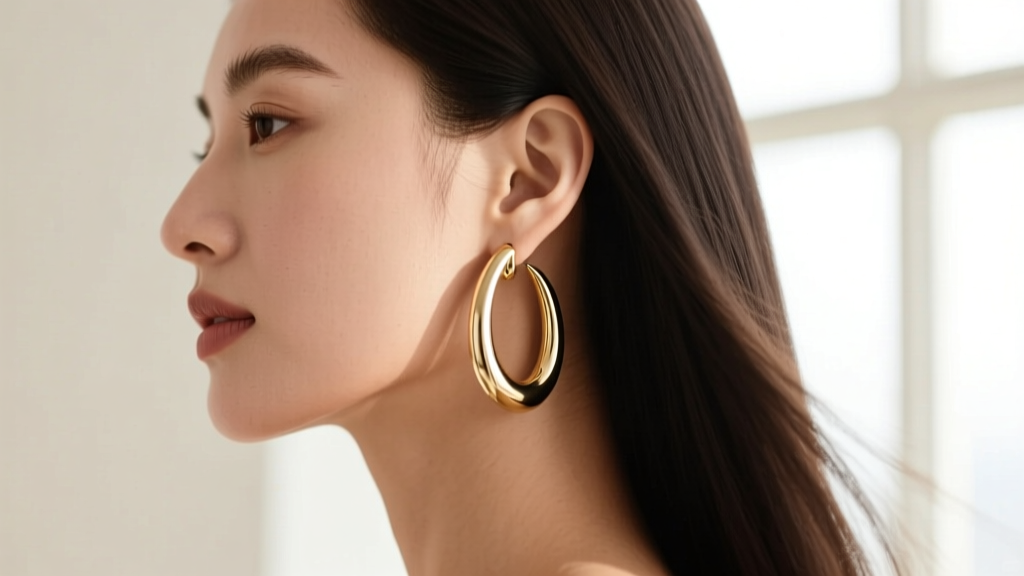
- Mass-Produced Hollow Tubing ($120 - $250): Typically manufactured via casting or electroforming. Lightweight and affordable, but check the clasp quality. If the hoop feels suspiciously light (under 1.2 grams per earring), the walls are too thin and will dent easily.
- Mid-Tier Solid Wire / Heavy Tubing ($280 - $550): The sweet spot for quality. These hoops feature robust hinged snap clasps, precise CNC-machined grooves, and a substantial feel (3 to 5 grams). Brands in this tier often offer lifetime warranties on the clasp mechanism.
- Artisan / Hand-Forged Solid ($600 - $900+): Hand-hammered or drawn from solid wire by independent jewelers. These feature unique textures, custom alloy blends (like palladium white gold), and superior finishing. You are paying for labor and structural permanence.
Red Flags to Avoid: Beware of listings that use the term '14k gold bonded' or '14k gold filled' when you are specifically looking for solid 14k gold. At a 40mm diameter, the friction against the neck and hair will eventually wear through gold-filled layers, exposing the base brass core and leading to rapid oxidation and skin discoloration. Always verify the stamp reads '14k' or '585' and request the exact gram weight from the seller before purchasing.
Final Verdict
Choosing the right 14k gold hoop earrings 40mm in diameter is an exercise in balancing metallurgy, mechanics, and personal comfort. By prioritizing a robust clasp mechanism, understanding the trade-offs between solid wire and hollow tubing, and selecting the correct alloy for your skin type, you can secure a pair of hoops that will maintain their perfect circular geometry and brilliant finish for decades of daily wear.


