The 2026 Buying Guide for 14k Gold Teardrop Earrings
Discover our expert 2026 buying guide for 14k gold teardrop earrings. Learn about alloys, clasp security, pricing tiers, and face-shape styling.

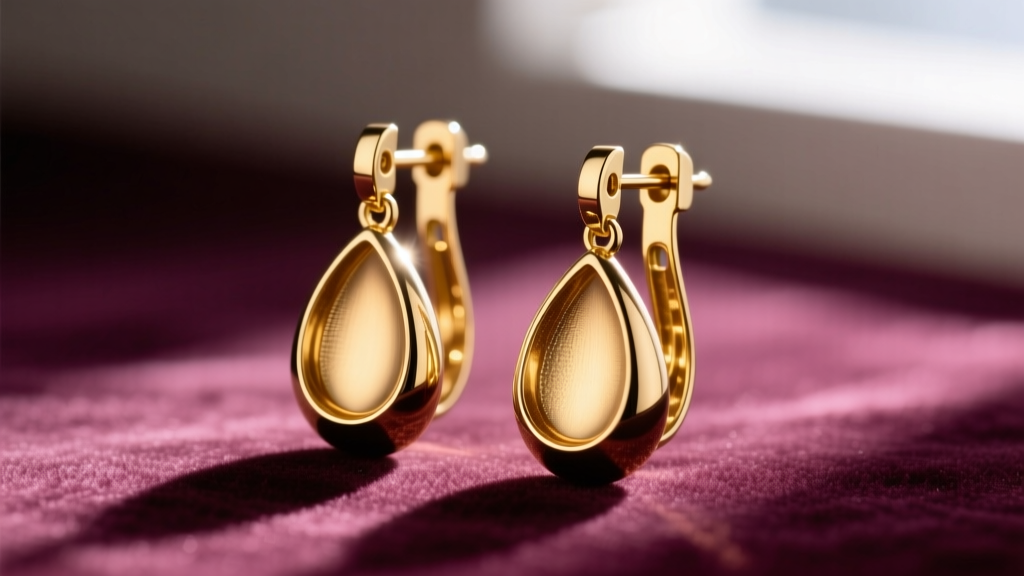
The Enduring Appeal of the Teardrop Silhouette
When it comes to balancing elegance with everyday wearability, 14k gold teardrop earrings occupy a unique space in fine jewelry. The teardrop—or pear—shape naturally draws the eye downward, elongating the neck and framing the jawline with a soft, organic geometry. However, navigating the market in 2026 requires more than just an eye for design; it demands a rigorous understanding of metallurgy, structural engineering at the micro-level, and pricing transparency. This guide strips away the marketing fluff to provide a masterclass in selecting high-quality 14k gold teardrops that will last a lifetime.
The Metallurgy of 14k Gold: Why 58.5% is the Sweet Spot
Pure 24k gold is far too malleable for structural jewelry components like earwires and delicate teardrop points. According to the Gemological Institute of America (GIA), 14k gold consists of 58.5% pure gold alloyed with 41.5% secondary metals. This specific ratio yields a Vickers hardness (HV) of approximately 140-160, making it rigid enough to hold a polished finish and resist bending, yet workable enough for intricate casting.
Decoding the Alloys: Yellow, Rose, and White
The color of your 14k gold teardrop earrings is dictated by the alloy mix, which also affects durability and skin sensitivity:
- 14k Yellow Gold: Typically alloyed with 25% silver and 16.5% copper. It offers the best balance of tarnish resistance and classic warmth.
- 14k Rose Gold: The copper content is increased (often up to 30% or more) while silver is reduced. This creates the pink hue but makes the metal slightly harder and more prone to patina over time.
- 14k White Gold: Alloyed with nickel, palladium, or zinc, and plated with rhodium. Failure Mode Alert: The rhodium plating on white gold ear posts will eventually wear away due to friction, revealing the slightly yellowish underlying alloy. Plan for re-plating every 2-3 years.
Casting vs. Electroforming: The Weight and Durability Debate
Not all solid 14k gold teardrops are created equal. The manufacturing method drastically alters the weight, price, and structural integrity of the earring.
Cast Teardrops: Created using the lost-wax casting method, these are solid throughout. A standard 15mm cast teardrop will weigh between 2.5 and 4.0 grams per earring. They are highly durable, can be polished repeatedly, and will not crush if dropped or squeezed.
Electroformed Teardrops: This process builds a thin shell of 14k gold over a wax or resin core, which is later melted or dissolved away. The result is a massive, voluminous teardrop that weighs less than 1.0 gram. While excellent for preventing earlobe stretching, electroformed jewelry has a critical failure mode: the hollow shells are incredibly fragile and will permanently dent if subjected to localized pressure.
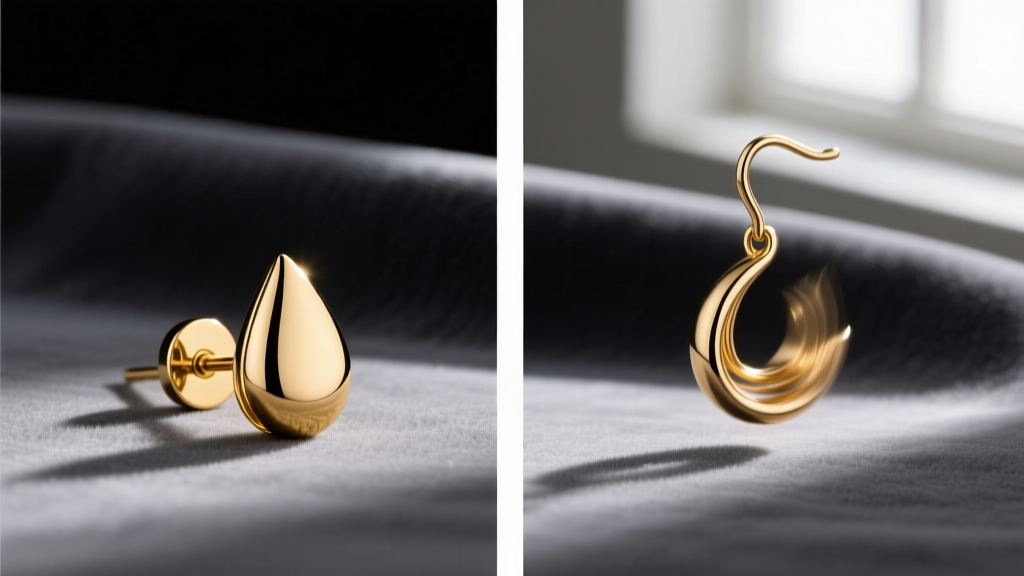
Clasp Mechanics and Wire Gauges
The most common point of failure for drop earrings is the connection to the ear. For 14k gold teardrop earrings, the earwire must be thick enough to support the pendulum motion without warping. Look for 20-gauge (0.81mm) or 22-gauge (0.64mm) wires. Anything thinner (like 24-gauge) risks bending when inserting the earring into the piercing.
| Clasp Type | Security Rating | Best Use Case | Potential Drawbacks |
|---|---|---|---|
| Leverback | High | Active wear, heavier solid teardrops | Can pinch thicker earlobes |
| French Wire (Fishhook) | Low-Medium | Lightweight electroformed drops | Slips out easily without silicone stoppers |
| La Pousette | Very High | High-value fine jewelry, security focus | Requires two hands to operate smoothly |
| Post with Friction Back | Medium | Stud-mounted teardrops (static) | Post can bend if snagged on clothing |
The Anatomy of the Connection: Jump Rings and Bails
If you are buying teardrops that dangle from a fishhook or leverback wire, inspect the jump ring (the tiny circular loop connecting the wire to the teardrop). In mass-produced jewelry, jump rings are often left unsoldered, meaning a slight snag on a sweater can pull the gap open, resulting in the loss of the earring. Always seek out artisans or brands that use laser-soldered or fused jump rings. If the teardrop connects via a built-in bail (a loop cast directly into the top of the teardrop), ensure the interior of the bail is smoothly polished to prevent it from acting as a saw against the earwire over time.

2026 Pricing Tiers: What You Should Actually Pay
With gold prices experiencing significant volatility and reaching new highs in 2026, understanding the breakdown of retail pricing is crucial to avoid massive markups. The price of 14k gold teardrop earrings should reflect the melt value of the gold, the labor intensity of the finish, and the brand overhead.
- Tier 1: Mass-Market / Electroformed ($120 - $280): Usually hollow, lightweight, and produced in high volumes. The gold content is minimal (often under 1 gram). You are paying primarily for the design and brand accessibility.
- Tier 2: Artisan Solid Cast ($450 - $950): Solid 14k gold, weighing 3 to 6 grams per pair. Pricing here closely tracks the spot price of gold plus a fair labor markup. Look for hand-polished finishes and soldered jump rings.
- Tier 3: Fine Jewelry / Gemstone Accented ($1,500+): Solid 14k gold integrated with pavé diamonds, briolette gemstones, or intricate milgrain detailing. The cost is driven by stone quality and master-level bench jewelry labor.
Hallmarks and FTC Compliance
In the United States, the Federal Trade Commission (FTC) strictly regulates gold purity stamping. Genuine 14k gold teardrop earrings must bear a quality mark, typically "14k" or the European equivalent "585". Furthermore, U.S. law requires that the quality mark be accompanied by a registered maker's mark (a trademark or symbol identifying the manufacturer). If you see a "14k" stamp without a maker's mark on a piece sold by a U.S. retailer, consider it a red flag regarding the item's authenticity and the seller's compliance with federal jewelry guidelines. Always inspect the post or the interior curve of the teardrop bail with a jeweler's loupe to verify these microscopic stamps.
Styling Matrix: Matching Teardrop Proportions to Face Shapes
The versatility of 14k gold teardrop earrings lies in their ability to be scaled. Use this framework to select the right proportion for your facial geometry:
Round and Square Faces
Opt for elongated, narrow teardrops (dropping 1.5 inches or more). The sharp bottom point and vertical lines create an optical illusion that lengthens the face and softens angular jawlines. Avoid wide, chunky briolette shapes that add horizontal volume.
Oval and Heart-Shaped Faces
You have the flexibility to wear wider, asymmetrical, or classic pear-shaped teardrops. A medium-length drop (around 1 inch) that widens at the bottom will beautifully balance a narrower chin characteristic of heart-shaped faces, while complementing the natural symmetry of an oval face.
Long and Rectangular Faces
Choose shorter, wider teardrops or stud-mounted static teardrops that sit snugly on the earlobe. Dangles that extend too far down will exaggerate the length of the face. A wide, hammered-finish 14k gold teardrop stud provides visual width without dragging the features downward.
By prioritizing structural integrity, verifying hallmarks, and understanding the nuances of 14k gold alloys, you can confidently invest in a pair of teardrop earrings that offer both timeless aesthetics and enduring material value.


