22 Gauge Earrings: Technical Sizing, Materials & Safety Guide
Master the technical specs of 22 gauge earrings. Learn exact millimeter conversions, safe material grades, and how to prevent the cheese cutter effect.

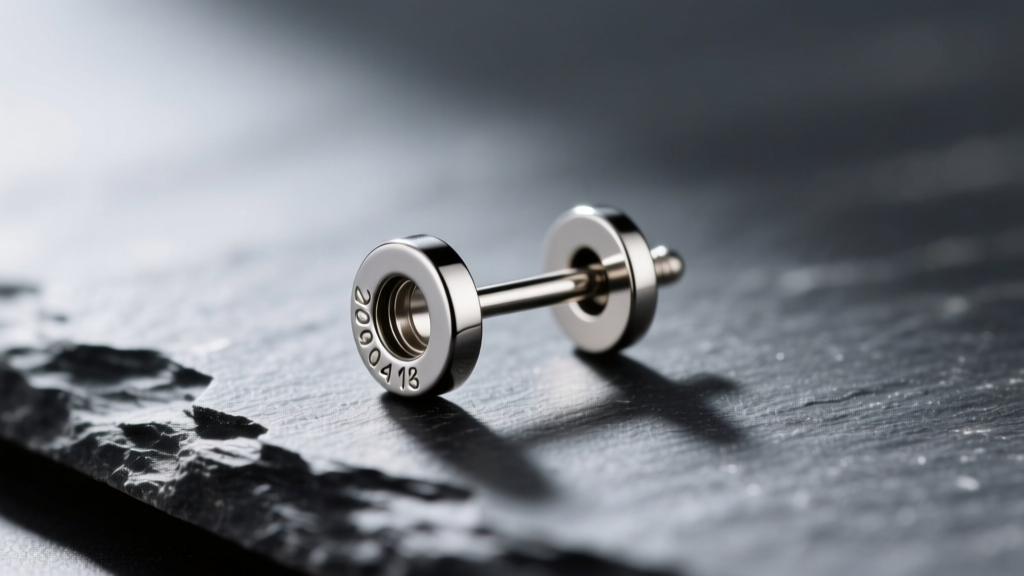
The Architecture of 22 Gauge: 0.64mm Explained
In the technical landscape of body jewelry, gauge sizing dictates not only the aesthetic profile of an earring but its structural integrity and biological compatibility with human tissue. The 22 gauge earring occupies a highly specific, ultra-fine niche in the jewelry market. Precisely measuring 0.643 millimeters (or 0.0253 inches) in diameter, 22g wire is significantly thinner than the standard 20g (0.81mm) or 18g (1.02mm) typically used for initial lobe piercings.
From an engineering perspective, manufacturing a 0.64mm post requires extreme precision. At this thickness, the margin for error in alloy composition and wire-drawing processes is virtually zero. A microscopic flaw or inclusion in the metal can lead to catastrophic structural failure—meaning the earring post can snap under minimal torsional stress. For consumers and piercers alike, understanding the physical limitations of 22 gauge earrings is critical for selecting pieces that are both beautiful and biomechanically safe.
The Physics of Thin Wire: Tensile Strength and Failure Modes
When evaluating 22 gauge earrings, we must look at the yield strength of the materials used. Yield strength is the point at which a material begins to deform plastically (permanently bend) under stress. Because the cross-sectional area of a 22g wire is roughly 0.32 square millimeters, it possesses very low resistance to bending moments.
The "Cheese Cutter" Effect and Tissue Migration
The most severe biological failure mode associated with 22 gauge jewelry is the "cheese cutter effect." This phenomenon occurs when a thin, rigid wire supports a disproportionately heavy decorative end. The localized pressure (Force ÷ Area) exerted by the 0.64mm wire against the delicate fistula (the tube of healed tissue) restricts blood flow, leading to localized tissue necrosis. Over time, the body slowly rejects the jewelry, and the earring migrates downward, eventually slicing through the earlobe entirely.
"To prevent migration and the cheese cutter effect, the weight of the decorative end on any wire thinner than 18 gauge must be strictly minimized. Heavy gemstones or large metal clusters should never be mounted on 22g or 24g posts." — Association of Professional Piercers (APP)
Therefore, 22 gauge earrings must be engineered with lightweight tops. Micro-bezels, tiny prong-set diamonds (1mm to 2.5mm), and minimalist metal beads are the only structurally sound options for this gauge.
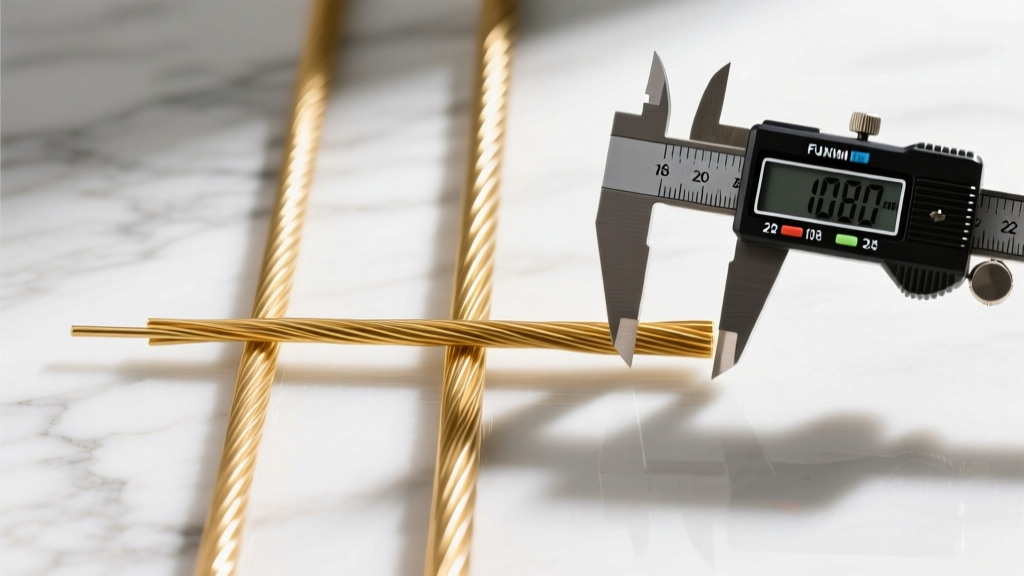
Material Grade Requirements for 0.64mm Jewelry
Not all metals can be safely drawn down to 22 gauge. Softer metals like pure 24k gold, fine silver, or pure niobium lack the necessary tensile strength and will bend or warp simply from the friction of inserting them into a piercing. High-quality 22g earrings rely on specific alloy grades to maintain rigidity.
| Material Grade | Tensile Strength | 2026 Market Price Range | Best Use Case for 22g |
|---|---|---|---|
| ASTM F136 Ti-6Al-4V (Implant Grade Titanium) | ~895 MPa | $18 - $45 | Hypoallergenic daily wear, sensitive healed lobes |
| 316L Surgical Steel | ~485 MPa | $10 - $25 | Budget-friendly fashion wear, short-term use |
| 14k Gold (Nickel-Free Alloy) | ~550 MPa | $65 - $180 | High-end luxury studs, permanent jewelry welding |
| 18k Gold | ~400 MPa | $90 - $250 | Special occasion wear (higher bend risk) |
According to ASTM International standards, implant-grade titanium (F136) offers the highest strength-to-weight ratio, making it the undisputed champion for ultra-thin 22g posts. Conversely, while 18k gold is highly desirable for its color and prestige, its lower yield strength means an 18k 22g post will bend much easier than a 14k or titanium equivalent.
Optimal Earring Styles for 22 Gauge Piercings
Because of the mechanical limitations of a 0.64mm post, certain earring mechanisms are entirely unviable at this gauge. For instance, internally threaded 22g jewelry is practically nonexistent; cutting a threading pattern into a 0.64mm rod removes too much material, leaving the core weak and prone to snapping inside the ear. Instead, expert jewelers utilize the following configurations:
- Soldered Bezel Studs: The decorative end is laser-welded or soldered directly to the 22g post, eliminating the need for threading and maximizing structural integrity.
- Friction-Fit (Push-Pin) Ends: A slightly thicker 20g or 18g decorative pin is sometimes used with a specialized 22g receiving tube, though true 22g friction backs rely on precision-machined grooves on the post to hold a silicone or metal clutch.
- Continuous Seamless Hoops: For cartilage or delicate lobe placements, 22g continuous wire hoops (where the wire tapers and slides into a hollow tube) provide a secure, snag-free closure without the weak point of a hinge.
- L-Shaped or Bone Studs: Primarily used for nostril piercings, these rely on the tension of the bent wire against the inside of the nasal cavity to stay in place, bypassing the need for a backing entirely.
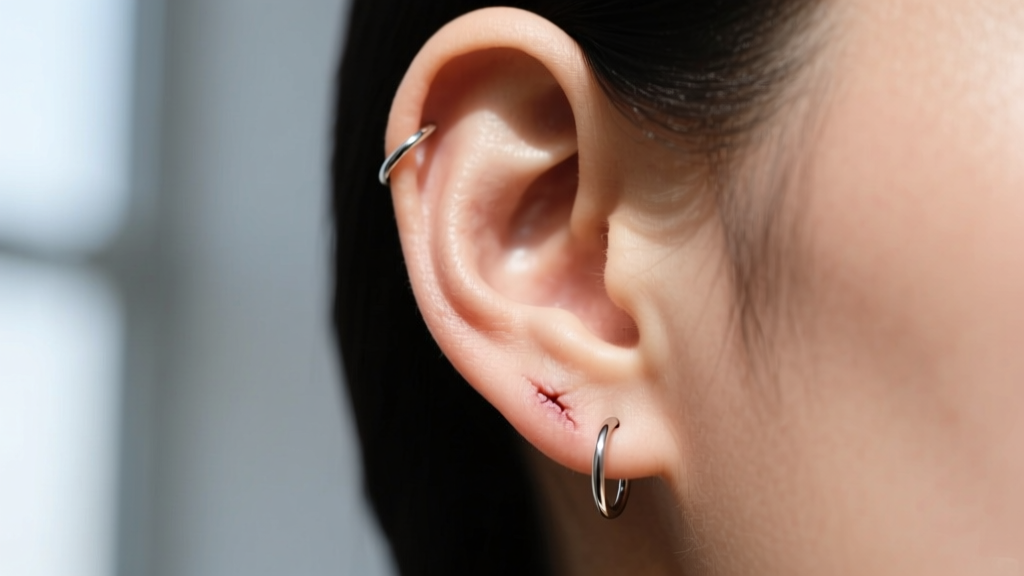
Expert Troubleshooting: Bending, Snagging, and Care
Owning 22 gauge earrings requires a shift in how you handle and maintain your jewelry. The most common complaint from consumers transitioning from standard 20g earrings to 22g is accidental bending during insertion or removal.
Insertion Technique: Never force a 22g post. If the fistula is tight or slightly shrunk, use a sterile insertion taper (starting at 22g and stepping up to 18g) to gently dilate the tissue before guiding the thin post through. Pushing a 0.64mm wire against resistance will immediately result in a buckled post.
Cleaning Protocols: Because the surface area is so small, debris and sebum can quickly build up around the microscopic gap between the post and the tissue. Clean 22g earrings with sterile saline spray and a non-woven gauze. Avoid cotton swabs, as the cotton fibers can easily snag on the ultra-thin friction grooves or microscopic prongs, potentially bending the metal.
Sleeping and Snagging: The low profile of 22g studs makes them excellent for sleeping, provided the backing is secure. However, if you wear 22g hoops, be aware that the thin wire can easily catch on hairbrushes or towels. If a 22g hoop becomes misshapen, do not attempt to bend it back into a perfect circle with your fingers; the repeated stress will cause metal fatigue and eventual snapping. Take it to a professional jeweler for re-rounding on a mandrel.
Final Technical Verdict
22 gauge earrings represent the intersection of delicate aesthetics and strict biomechanical limits. They are not suitable for heavy statement pieces, initial piercings, or active lifestyles where snagging is likely. However, for healed, stable piercings where the goal is a barely-there, ultra-fine sparkle, 22g is unparalleled. By strictly adhering to high-tensile materials like ASTM F136 titanium or 14k gold, and by selecting lightweight, soldered, or seamless designs, you can safely enjoy the sophisticated subtlety of 0.64mm jewelry without compromising the health of your tissue. For further reading on tissue compatibility and jewelry safety, consult the National Center for Biotechnology Information (NCBI) resources on dermatological reactions to body modifications.


