24 Karat Gold Earrings: Purity, Durability & Material Guide
Discover the truth about 24 karat gold earrings. We compare 24k purity against 18k and 14k, exploring durability, pricing, and ideal earring styles.

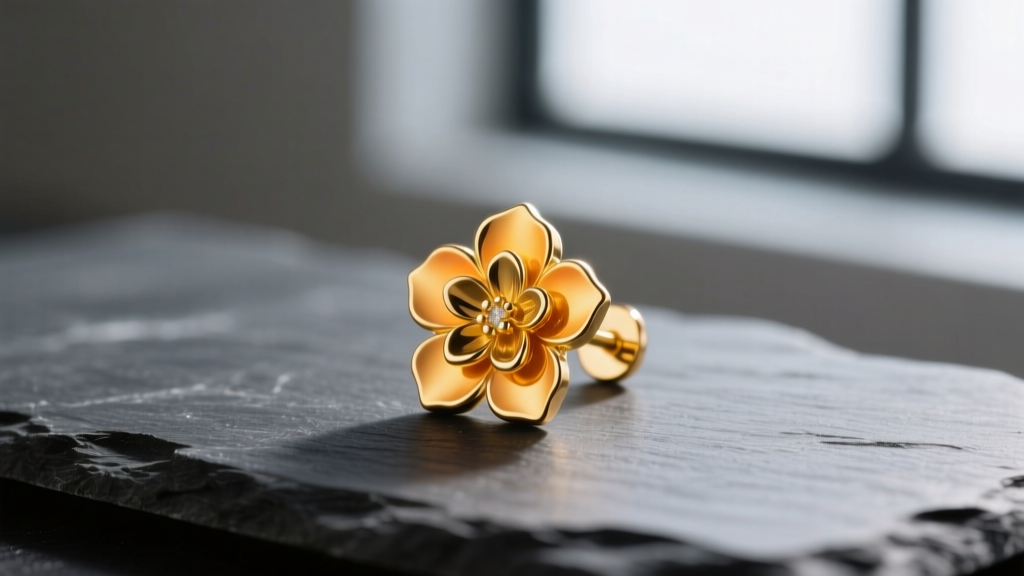
The Allure and Reality of 99.9% Pure Gold
When consumers search for 24 karat gold earrings, they are typically driven by three factors: the desire for a hypoallergenic metal, the appeal of a rich, unmistakable yellow-orange hue, and the perception of intrinsic investment value. In its purest form, 24k gold is 99.9% gold, completely free of alloy metals like nickel, copper, or zinc that commonly trigger contact dermatitis. However, from a metallurgical and jewelry design perspective, pure gold presents significant structural challenges that every buyer must understand before making a purchase.
On the Mohs scale of mineral hardness, pure gold registers at a mere 2.5—roughly the same hardness as a human fingernail. In metallurgical terms, its Vickers hardness (HV) is approximately 25 to 30. This extreme malleability is due to gold's face-centered cubic crystal lattice, which allows planes of atoms to slide past one another with minimal resistance. While this makes 24k gold ideal for minting coins or drawing into microscopic wires for electronics, it is inherently problematic for functional jewelry components that require structural rigidity, tension, or friction to stay securely in the ear.
24k vs. 18k vs. 14k: A Metallurgical Comparison
To understand why pure gold behaves the way it does, it is essential to compare it against the industry standards for fine jewelry. Alloying gold with metals like copper, silver, and zinc introduces atoms of varying sizes into the crystal lattice. These foreign atoms disrupt the lattice structure, pinning dislocations and drastically increasing the metal's yield strength and scratch resistance. According to the Gemological Institute of America (GIA), the karat system dictates the exact ratio of pure gold to alloy metals, directly influencing the physical properties of the final earring.
| Karat | Gold Purity | Vickers Hardness (HV) | Common Alloy Metals | Best Earring Applications |
|---|---|---|---|---|
| 24k | 99.9% | ~25 - 30 | None (Pure Gold) | Bezel fronts, traditional bridal, decorative cuffs |
| 22k | 91.6% | ~40 - 50 | Copper, Silver | Heavy dangles, Jhumkas, thick hoops |
| 18k | 75.0% | ~120 - 150 | Copper, Silver, Zinc | Huggies, clickers, diamond studs, seamless hoops |
| 14k | 58.3% | ~140 - 170 | Copper, Zinc, Silver | Everyday hoops, cartilage studs, tension clasps |
Which Earring Styles Actually Work in 24 Karat Gold?
Because 24k gold cannot hold tension or withstand repetitive mechanical stress, jewelry designers must be highly strategic about how they utilize it. The style of the earring dictates whether pure gold will be a lifelong heirloom or a frustrating failure.
Traditional Studs and Bezel Settings
Solid 24k gold is exceptionally well-suited for the decorative front of stud earrings, provided the structural components are made from harder metals. A common and highly effective design features a surgical steel or titanium post (usually 20-gauge or 18-gauge) that is laser-welded to a 24k gold decorative face. Furthermore, 24k gold is the premier choice for bezel settings. Because it is so soft, a jeweler can easily burnish and push a 24k gold bezel wall tightly over a cabochon gemstone like turquoise or lapis lazuli, creating a secure, friction-held seal without the need for prongs.
Cultural and Bridal Jhumkas
In South Asian and Middle Eastern bridal traditions, 22k and 24k gold are the standard for elaborate, heavy dangle earrings like Jhumkas. In these contexts, the softness of the metal is actually a feature, not a bug. The heavy, intricate components are designed to drape and move fluidly. Minor dents and deformations that occur over decades of wear are often viewed as a desirable patina that adds to the antique, heirloom quality of the piece.
The Verdict on Hoops, Huggies, and Cartilage Clickers
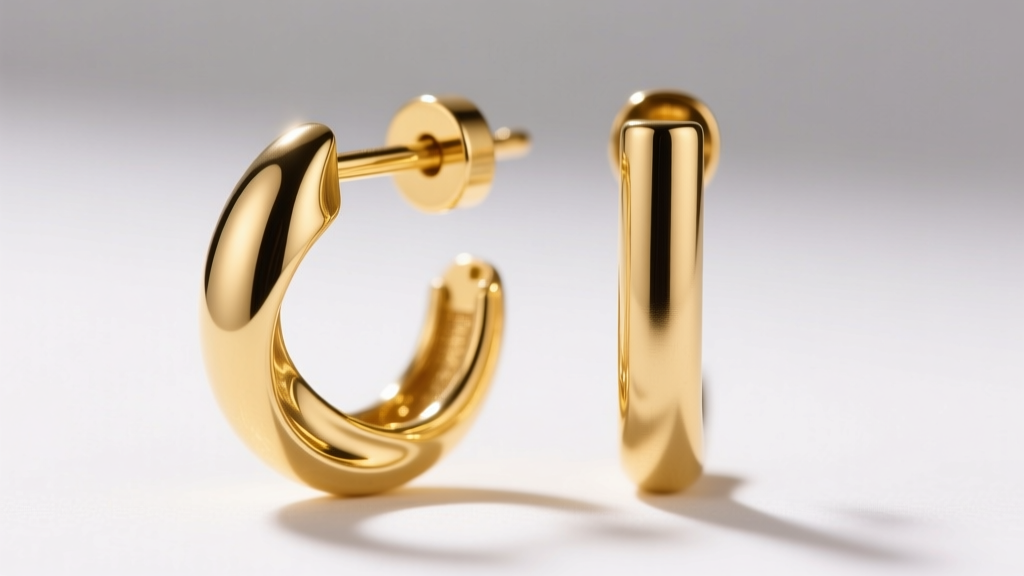
If you are looking for 24 karat gold earrings in the form of huggies, seamless hoops, or cartilage clickers, you will almost certainly be disappointed by solid pure gold. Huggies require a hinge-and-snap closure that relies on precise mechanical tension; a 24k gold clasp will warp and fail to close within a few uses. Similarly, cartilage clickers feature a locking segment that requires a spring-like 'click' mechanism. Pure gold lacks the elastic memory to snap back into place, meaning the closure will bend permanently upon the first insertion. Even a simple 20-gauge (0.81mm) solid 24k gold wire post will bend if pushed through a slightly tight earlobe fistula.
The 24k Gold Plated and Vermeil Trap
Because solid 24k gold is structurally unsuited for modern earring mechanisms and prohibitively expensive by weight, the vast majority of '24k gold earrings' sold online are actually plated. It is vital to understand the terminology regulated by the Federal Trade Commission (FTC) to avoid being misled by marketing jargon.
- Gold Plated (Brass Core): A base metal like brass is coated with a microscopic layer of 24k gold, often less than 0.5 microns thick. This is 'flash plating.' It will wear off rapidly, exposing the brass beneath, which can cause severe allergic reactions and turn the skin green.
- Gold Vermeil (Sterling Silver Core): By legal definition, vermeil must have a sterling silver (.925) base and a gold plating of at least 2.5 microns thick. High-quality 24k vermeil huggies and hoops offer the rich color of pure gold with the structural integrity and hypoallergenic properties of sterling silver.
- Gold Filled: A thick layer of gold (usually 12k or 14k, rarely 24k) is mechanically bonded to a brass core under high heat and pressure. The gold layer constitutes at least 5% of the total weight. This is highly durable but almost never done in 24k due to the softness of the outer layer.
Pricing Expectations and Market Realities
Understanding the pricing structure of 24 karat gold earrings requires separating the melt value of the gold from the manufacturing premium. According to the World Gold Council, gold prices fluctuate daily, but the premiums on pure gold jewelry remain relatively stable.
- Solid 24k Studs (2 to 4 grams): Expect to pay between $300 and $600. The price is heavily tied to the daily spot price of gold, plus a 20% to 40% artisan markup for the bezel work and finishing.
- Solid 24k Bridal Dangles (15 to 30 grams): These are substantial investments, typically ranging from $1,500 to $3,500+. They are often sold by weight plus a fixed 'making charge' per gram.
- 24k Vermeil Hoops/Huggies: High-quality, 2.5-micron vermeil pieces generally retail between $60 and $150. If you see 'solid 24k' hoops selling for $40, they are definitively plated, regardless of the product description.
Care, Maintenance, and Failure Modes
Owning solid 24k gold requires a shift in how you handle and store your jewelry. Because the metal is so soft, it is highly susceptible to abrasive wear and chemical contamination.
Storage: Never store 24k gold earrings in a communal jewelry box where they can rub against diamonds, sapphires, or even 14k gold pieces. Harder gemstones and metals will easily gouge and scratch pure gold. Store them individually in soft velvet pouches or lined compartments.
Cleaning: Avoid ultrasonic cleaners. The high-frequency vibrations can easily shake gemstones loose from soft 24k bezel settings. Instead, use a mild dish soap, lukewarm water, and an extra-soft baby toothbrush to gently remove sebum and skin cells.
Chemical Exposure: While pure gold itself does not tarnish or react with oxygen, it can form an amalgam if exposed to mercury. More commonly, exposure to chlorine in swimming pools or harsh household bleach can cause 'stress corrosion cracking' in the solder points where the earring post meets the decorative front, leading to catastrophic failure.
Expert Insight: If your 24k gold earring features a friction-back (butterfly clutch), ensure the backing itself is made of 18k gold, silicone, or surgical steel. A pure 24k gold butterfly back will stretch out and lose its grip on the post within a week of daily wear, drastically increasing the risk of losing your earring.
Final Verdict: Should You Buy Solid 24k?
If your priority is absolute hypoallergenic purity, investment value, and a deeply saturated yellow color, 24 karat gold earrings are unparalleled—provided you choose the right style. Opt for bezel-set studs with titanium posts, or invest in traditional, heavy dangle pieces where the soft drape of the metal is celebrated. However, if you are seeking everyday hoops, huggies, or secure cartilage clickers, you are much better served by high-quality 24k vermeil or stepping down to 18k solid gold, which provides the necessary mechanical strength to keep your jewelry securely fastened and structurally sound for a lifetime.


