Troubleshooting & Caring for Delicate Floral Design Earrings
Learn how to troubleshoot, clean, and repair delicate floral design earrings. Expert tips on fixing snagging, tarnish, and heavy earlobe droop.

The Unique Structural Challenges of Floral Design Earrings
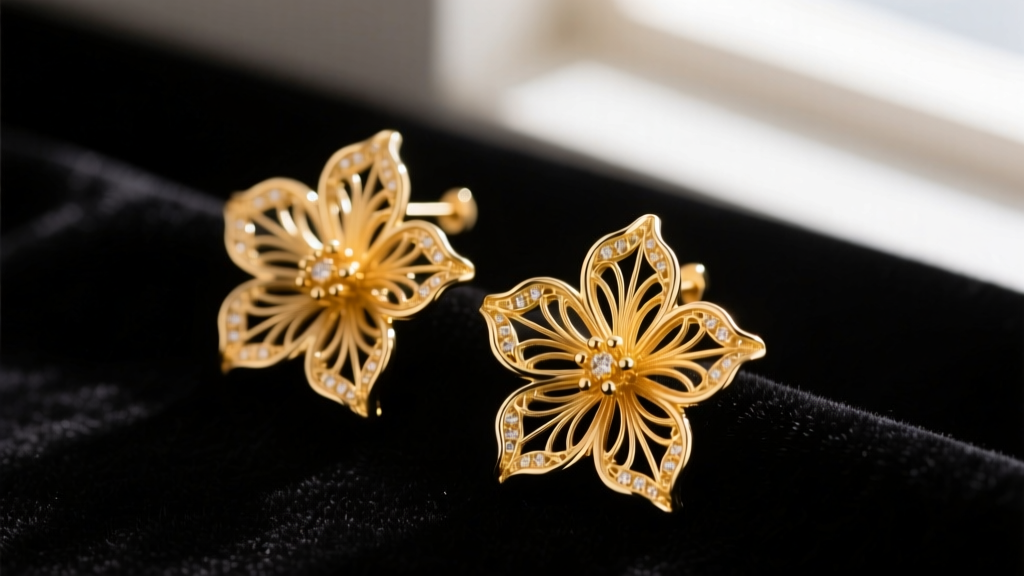
As botanical and hyper-realistic nature motifs dominate the 2026 jewelry landscape, floral design earrings are more intricate than ever. However, this aesthetic complexity introduces specific structural vulnerabilities. Unlike simple geometric studs, floral motifs rely on delicate filigree, multi-prong pave settings for "dewdrop" diamonds, and fragile plique-à-jour enamel to mimic translucent petals. These elements create deep crevices that trap skin oils and cosmetics, while protruding stamen details are highly prone to snagging on hair and knitwear.
Troubleshooting these issues requires a departure from standard jewelry care. Treating a delicate botanical earring like a standard gold hoop will inevitably lead to bent petals, lost accent stones, or irreversible enamel fractures. Below, we break down the exact mechanical failures common to floral design earrings and provide professional-grade solutions to restore and maintain them.
Troubleshooting Snagging and Petal Warping
The most frequent complaint with floral design earrings is snagging. The curved edges of petals and the tiny wire loops used to simulate stamens easily catch on fine meshes and hair. When a snag occurs, it often results in warped filigree or a lifted prong.
How to Safely Reshape Warped Petals
Never use standard steel jewelry pliers to bend a warped gold or silver petal back into place; the hardened steel teeth will permanently mar the soft precious metal. Instead, invest in a pair of nylon jaw pliers (widely available from jewelry supply brands like Euro Tool). The soft nylon pads allow you to apply gentle, even pressure to bend a 20-gauge (0.8mm) wire stamen or a thin sheet-metal petal back to its original curvature without scratching the finish.
Inspecting Prongs on Floral Pave Settings
Floral earrings often use micro-pave settings to create the illusion of a flower's textured center. Snagging can lift these microscopic prongs. Use a 10x triplet jeweler's loupe to inspect the perimeter of the floral center. If you see a prong lifted even a fraction of a millimeter, stop wearing the earring immediately. A lifted prong will act like a tiny blade, cutting the silk thread or nylon wire holding adjacent stones, leading to a cascade of lost gems.
Deep Cleaning Crevices Without Damaging Enamel or Stones
The overlapping layers of a floral design create micro-crevices where lotion, dead skin, and hairspray accumulate, dulling the metal and suffocating the brilliance of inset stones. While ultrasonic cleaners are the industry standard for many jewelry types, they are highly dangerous for intricate floral pieces.
The Danger of Ultrasonic Cleaners
According to the Gemological Institute of America (GIA), ultrasonic cleaners use high-frequency sound waves to create microscopic bubbles that implode, blasting away dirt. However, this intense vibration can easily shatter fragile plique-à-jour enamel (often used in high-end floral petals) and shake loose the delicate glue used in some botanical cluster settings. Furthermore, if your floral earrings feature fracture-filled stones like emeralds or opals, the ultrasonic heat and vibration will destroy the stone's internal integrity.
The Manual Deep-Clean Protocol
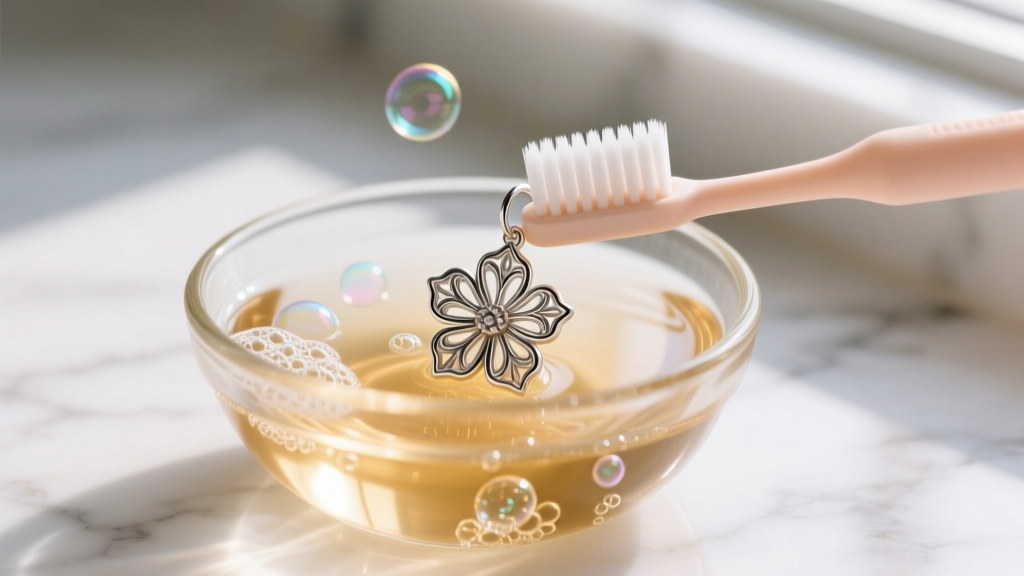
- Prepare a gentle bath: Mix a few drops of phosphate-free dish soap (like Dawn) into a bowl of lukewarm distilled water.
- Soak briefly: Let the earrings sit for 3 to 5 minutes to soften hardened cosmetics. Do not exceed 10 minutes, especially if the piece contains porous stones like pearls or turquoise.
- Agitate with a baby toothbrush: Use an extra-soft baby toothbrush to gently sweep the crevices between the petals. Brush away from the prongs, not toward them, to avoid lifting the metal.
- Rinse and dry: Rinse under a gentle stream of distilled water and pat dry with a lint-free microfiber cloth. Use a hairdryer on the "cool" setting to blast water out of deep floral crevices.
Fixing Earlobe Droop from Heavy Floral Drops
Statement floral dangles and large enamel florals often suffer from poor weight distribution. When the center of gravity sits too far below the piercing hole, the earring pulls the earlobe downward, causing the "droop" effect and potentially stretching the piercing fistula over time.

Upgrading Your Earring Backers
The standard butterfly friction back provides a surface area of roughly 4mm, which is insufficient for a 10-gram floral drop earring. To troubleshoot this, upgrade to one of the following support systems:
- La Pousette Backs: These feature a locking clutch mechanism with a wide, bell-shaped base that distributes the weight of heavy floral drops across a wider area of the earlobe.
- Silicone O-Rings (e.g., Sharkies): For a quick, inexpensive fix, slide a medical-grade silicone O-ring over the post behind the standard butterfly back. The high-friction silicone grips the skin and prevents the heavy floral motif from sliding down the post.
- Adhesive Support Patches: Products like LobeWonder are clear, medical-grade adhesive patches with a pre-punched hole. Applied to the back of the earlobe, they provide a rigid structural base that completely eliminates droop for heavy botanical statement pieces.
Material Guide: Preventing Tarnish in Intricate Florals
Tarnish is particularly problematic in floral design earrings because silver sulfide (the black compound that forms on tarnished silver) builds up in the deep grooves of the petals, making it nearly impossible to polish out without specialized tools. The Jewelers of America recommends understanding your metal's specific vulnerabilities.
| Material | Tarnish Risk in Crevices | Best Maintenance Strategy | Durability Rating |
|---|---|---|---|
| 925 Sterling Silver | High. Sulfur in the air and skin acids cause rapid blackening in deep floral grooves. | Store in anti-tarnish cloth bags; use a silver polishing cloth only on high points, avoiding the crevices to preserve intentional oxidation (patina). | Moderate (Prone to scratching) |
| 14k / 18k Solid Gold | Very Low. Will not tarnish, but can accumulate skin oils and lotions in crevices. | Regular monthly washing with mild soap and a soft brush. Safe for most ultrasonic cleaners (if no fragile stones are present). | High (Excellent for daily wear) |
| Gold Vermeil | Moderate. Once the 2.5-micron gold layer wears thin in high-friction areas, the silver core will tarnish. | Never use abrasive polishing cloths, which will strip the gold plating. Clean only with liquid soap and water. | Low to Moderate |
| Implant-Grade Titanium | Zero. Highly inert and completely resistant to oxidation and tarnish. | Simple wipe-down with alcohol or soap and water. Ideal for intricate floral designs meant for sensitive cartilage piercings. | Very High |
Cartilage Piercings: Why Floral Flats Often Fail
Translating floral designs into flat-back labrets for helix, conch, or tragus piercings introduces mechanical challenges related to gauge sizing and threading. Many mass-market floral cartilage earrings are manufactured at 20-gauge (0.8mm) or 18-gauge (1.0mm) to save on precious metal costs. However, standard cartilage piercings are typically done at 16-gauge (1.2mm) or 14-gauge (1.6mm).
Forcing a thin 20G floral post into a 16G cartilage hole can cause the "cheese-cutter effect," where the thin wire migrates through the tissue, leading to rejection and scarring. Furthermore, many inexpensive floral tops use external threading, where the screw threads are on the post itself. Pushing sharp external threads through a cartilage fistula causes micro-tears and irritation bumps. Always opt for internally threaded or threadless (push-pin) floral tops made from ASTM F-136 implant-grade titanium to ensure the smooth post passes cleanly through the piercing channel.
When to Seek Professional Jewelry Repair
While nylon pliers and gentle cleaning can solve minor issues, certain failures in floral design earrings require a master jeweler. If a delicate wire stamen has completely snapped, traditional soldering torches will melt the surrounding intricate petal details. A professional will use laser welding, which focuses a highly concentrated beam of light to fuse the metal in a fraction of a second without transferring heat to the rest of the floral motif. Similarly, if a piece of guilloché or plique-à-jour enamel has chipped off a petal, do not attempt to fill it with resin; seek a specialist in re-enameling to restore the piece's structural and aesthetic integrity.