How to Wear Long Dangly Earrings Without Earlobe Pain
Learn how to choose, style, and comfortably wear long dangly earrings. Discover weight limits, gauge sizes, and face-shape tips for beginners.


There is an undeniable magic to long dangly earrings. They catch the light, frame the face, and add a kinetic, sweeping elegance to any outfit that simple studs simply cannot match. However, for beginners, the transition from lightweight hoops to dramatic, shoulder-grazing dangles often comes with an unwelcome surprise: earlobe fatigue, stretching, and the dreaded "cheese-wire" effect.
If you have ever taken off a beautiful pair of dangling earrings at the end of the day only to find your earlobes red, sore, or visibly pulled downward, you are not alone. The secret to mastering this striking jewelry style lies in understanding the physics of weight distribution, metal grades, and anatomical support. In this beginner-friendly guide, we will break down exactly how to select, style, and support long dangly earrings so you can wear them comfortably from morning to night.
The Anatomy of a Comfortable Dangle: Weight and Gauge
When shopping for long dangly earrings, most beginners focus entirely on the visual design, ignoring the two most critical factors for comfort: total weight and wire gauge. Understanding these metrics will completely change how you shop for jewelry.
The 7-Gram Rule for All-Day Wear
The human earlobe is composed of soft tissue and fat, lacking the cartilage structure found higher up on the ear. According to professional piercers, a standard, healthy earlobe can comfortably support about 7 to 10 grams of weight for an extended period (8+ hours) without experiencing fatigue or micro-tearing in the fistula (the piercing channel).
To put this in perspective, a standard US quarter weighs 5.67 grams. If a pair of long dangly earrings feels heavier than a coin and a half per ear, you will likely need structural support or should limit your wear time to a few hours. High-end jewelers often list the gram weight of their pieces; if they do not, investing in a cheap digital jewelry scale is a game-changer for your collection.
Wire Gauge: Avoiding the Cheese-Wire Effect
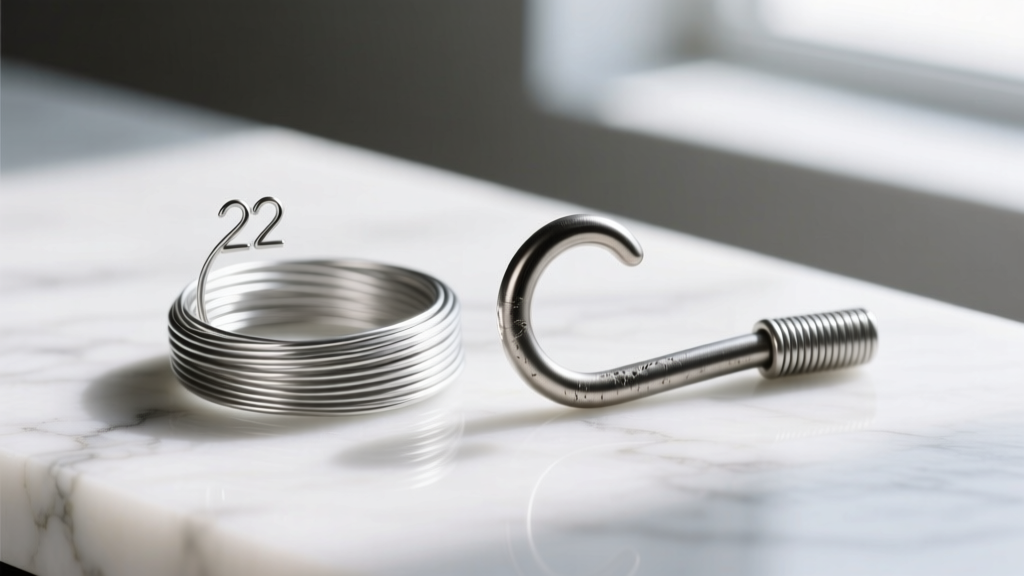
The "cheese-wire effect" occurs when a very thin earring wire bears too much weight, causing it to slice painfully into the soft tissue of your earlobe. In jewelry, wire thickness is measured in gauges (G). Counterintuitively, the lower the number, the thicker the wire.
- 22-Gauge (0.64mm): Extremely thin. Avoid this for any long dangle, as it will almost certainly cause pain and tissue migration.
- 20-Gauge (0.81mm): The standard for lightweight studs and small hoops. Acceptable for dangles only if they weigh under 4 grams.
- 18-Gauge (1.02mm): The sweet spot for most long dangly earrings. Thick enough to distribute weight comfortably, but thin enough to fit standard lobe piercings.
- 16-Gauge (1.29mm): Ideal for heavy, statement-making dangles. Note that some standard, un-stretched lobe piercings may find 16G slightly snug, but it offers the best support for heavy pieces.
Matching Long Dangly Earrings to Your Face Shape
Beyond comfort, the visual impact of long dangly earrings depends heavily on how they interact with your natural bone structure. Because dangles draw the eye vertically, they can be used to balance, elongate, or soften your facial features. Use the framework below to find your most flattering silhouette.
| Face Shape | Characteristics | Best Dangle Styles | Styles to Avoid |
|---|---|---|---|
| Round | Soft angles, equal width and length | Linear drops, rectangular columns, and sharp geometric shapes that add vertical length. | Large circular hoops or wide, clustered chandeliers that emphasize width. |
| Square | Strong, angular jawline, broad forehead | Curved teardrops, oval cascades, and soft, flowing chains that soften the jawline. | Boxy, angular, or harsh geometric dangles that mirror the jaw's sharpness. |
| Heart | Wider forehead, narrow and pointed chin | Chandeliers, teardrops, or dangles that are wider at the bottom to add volume near the jaw. | Inverted triangles or top-heavy designs that exaggerate the width of the forehead. |
| Oval | Balanced proportions, slightly longer than wide | Almost any style! Experiment with dramatic, avant-garde, and asymmetrical long dangly earrings. | Extremely long, narrow drops that might over-elongate the face unnecessarily. |
Material Matters: Dodging Contact Dermatitis
When an earring is heavy and in constant motion, the friction against the piercing channel increases significantly. If the metal contains reactive alloys, this friction accelerates allergic reactions and contact dermatitis. The American Academy of Dermatology identifies nickel as the most common culprit for jewelry allergies, and unfortunately, nickel is frequently used as a hardening agent in cheap fashion jewelry and even some lower-grade stainless steels.
For long dangly earrings that will be moving against your skin all day, you must prioritize biocompatible metals. The Association of Professional Piercers (APP) recommends the following materials for long-term wear and sensitive tissue:
- Implant-Grade Titanium (ASTM F136): The gold standard for sensitive ears. It is entirely nickel-free, incredibly lightweight (making it perfect for large, dramatic dangles), and highly resistant to corrosion.
- Niobium: A reactive metal that is hypoallergenic and can be anodized into brilliant colors without using toxic paints or platings. It is slightly heavier than titanium, so factor that into your weight limits.
- 14k or 18k Solid Gold (Yellow or White): Ensure it is solid, not gold-plated. Plating wears off over time, especially with the friction of a heavy dangle, exposing the base metals underneath. Avoid gold alloys below 14k, as they contain higher percentages of irritating copper and zinc.
Pro Tip: Beware of the term "Surgical Steel" or "316L Stainless Steel." While generally safe for short-term wear in healed piercings, 316L steel still contains trace amounts of nickel. If your lobes ache or itch after a long day of wearing steel dangles, switch to ASTM F136 Titanium immediately.
Pro Gear: How to Support Heavy Earlobes
Sometimes, you find a pair of long dangly earrings that you absolutely love, but they weigh 15 grams and feature a flimsy 20-gauge wire. Instead of returning them, you can use specialized jewelry support gear to redistribute the weight and save your earlobes from stretching.
1. Lobe Support Patches
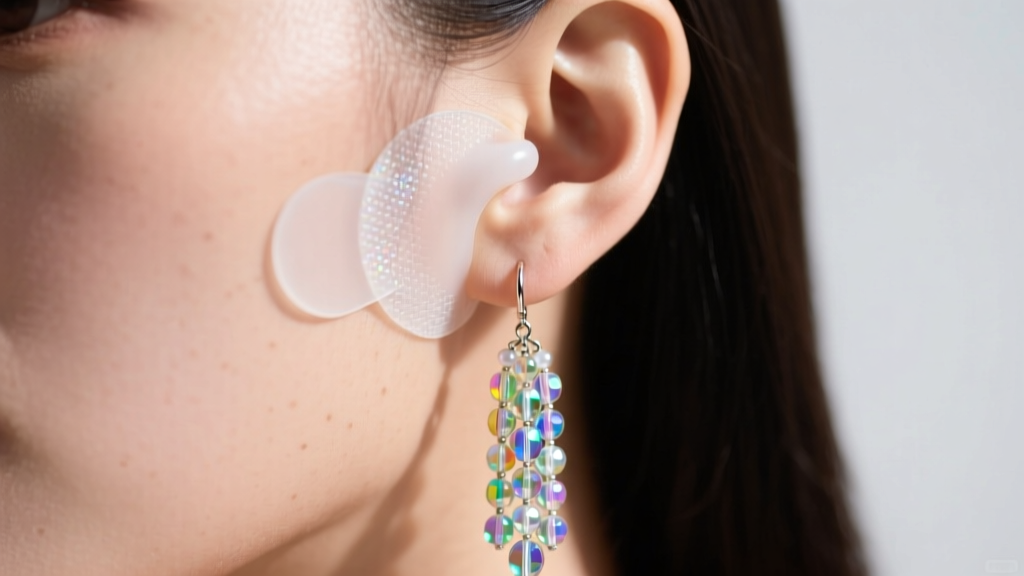
Brands like LobeWonder or BlingWraps manufacture small, medical-grade adhesive patches with a pre-punched hole. You apply the patch to the back of your earlobe before inserting the earring. The patch acts as a splint, distributing the downward pull of the heavy dangle across a wider surface area of skin, completely eliminating the downward drag on the piercing itself.
2. Jumbo Silicone Earring Backs
The tiny butterfly backs that come with standard earrings are useless for dangles. They provide a single, concentrated point of pressure. Swap them for jumbo silicone friction backs (often 10mm to 12mm in diameter). The wide, flat surface area cups the earlobe and provides a stable, cushioned base that prevents the earring from drooping forward.
3. French Wire Stabilizers
If your long dangly earrings use French wires (the fishhook style that loops through the ear), they are prone to sliding around and pulling at an angle. You can purchase tiny, clear silicone "earring stoppers" or O-rings that slide onto the back of the wire, securing it in place and reducing the kinetic swinging that causes friction fatigue.
Maintenance and Piercing Health
Wearing long dangly earrings requires a bit more maintenance than popping in a simple stud. The constant movement can introduce environmental debris, hair products, and dead skin cells into the fistula.
To maintain optimal piercing health, adopt a weekly cleaning routine using a sterile saline wound wash (0.9% sodium chloride with no added preservatives). Spray the front and back of the lobe, gently moving the earring wire back and forth to allow the saline to flush the channel.
Furthermore, never sleep in long dangly earrings. Not only is there a high risk of the wire snapping or catching on your bedding (which can result in a torn earlobe), but your piercings need time to recover from the mechanical stress of gravity. Give your lobes a "rest day" once a week, wearing only lightweight, flat-back titanium studs to allow the tissue to rebound and maintain its structural integrity.
Final Thoughts
Long dangly earrings are a spectacular way to express your personal style, but they demand respect for your anatomy. By paying close attention to the gram weight, opting for an 18-gauge or 16-gauge wire, choosing hypoallergenic metals like implant-grade titanium, and utilizing support patches for heavier statement pieces, you can build a stunning, dramatic jewelry collection that you can wear entirely pain-free.


