Anatomy of 7mm Stud Earrings: A Technical Sizing Guide
Discover the precise anatomy, ideal gauge sizes, and material grades for 7mm stud earrings. An expert technical guide to proportion and backing mechanics.

The "Goldilocks" Metric: Why 7mm is the Technical Sweet Spot
In the precise world of jewelry engineering, millimeter measurements dictate not just visual impact, but structural viability. While 5mm studs are often categorized as delicate everyday wear and 9mm+ stones cross into statement territory, 7mm stud earrings occupy a highly specific technical sweet spot. A 7mm footprint covers approximately 65% to 75% of the average female earlobe's surface area without encroaching on the jawline or risking cartilage overlap.
As of 2026, the widespread adoption of precision-cut lab-grown gemstones has made the 7mm size exponentially more accessible. However, scaling a gemstone from 5mm to 7mm does not merely increase its diameter by 2mm; it increases its volume and mass by roughly 70%. This exponential weight gain introduces unique mechanical challenges regarding post shear strength, center of gravity, and backing retention that most commercial jewelers fail to address.
Gemstone Geometry: How Cut Affects the 7mm Footprint
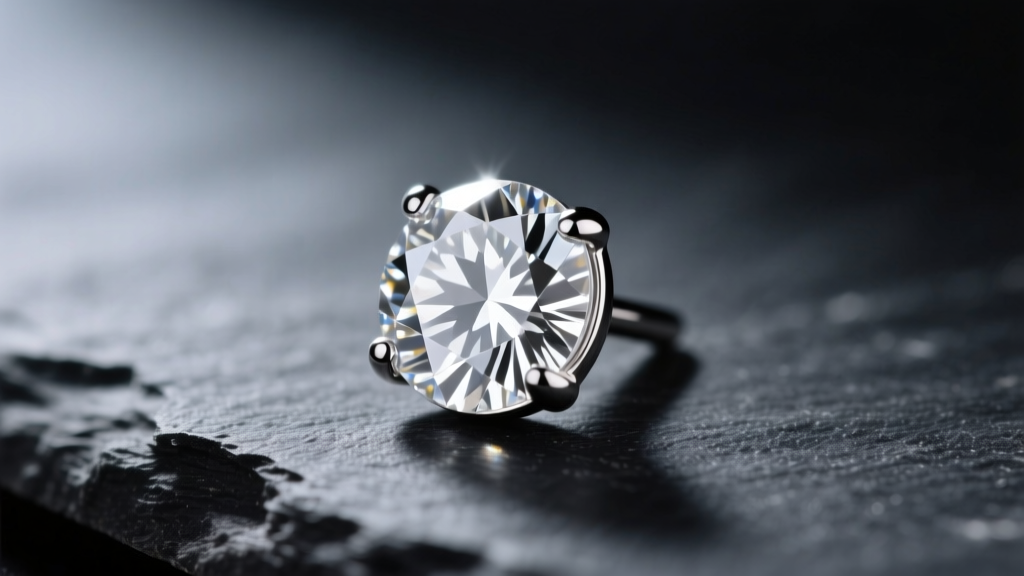
When sourcing or designing 7mm stud earrings, it is critical to understand that "7mm" refers to the physical spread, not the carat weight. Different lapidary cuts distribute mass differently, drastically altering the earring's physical weight and how it sits on the ear. According to the Gemological Institute of America (GIA), the relationship between millimeter spread and carat weight varies significantly by shape.
Visual Spread and Mass Equivalents
| Gemstone Cut | Dimensions | Approx. Diamond Carat Weight | Center of Gravity Profile |
|---|---|---|---|
| Round Brilliant | 7.0mm x 7.0mm | 1.25 - 1.30 ct | Centralized, moderate droop risk |
| Cushion Cut | 7.0mm x 7.0mm | 1.50 - 1.65 ct | Deep pavilion, high droop risk |
| Emerald Cut | 7.0mm x 5.0mm (or 9x5) | 1.10 - 1.20 ct | Shallow, low droop risk |
| Asscher Cut | 7.0mm x 7.0mm | 1.60 - 1.75 ct | Very deep, extreme droop risk |
For a 7mm round brilliant, the standard four-prong martini setting keeps the stone close to the lobe. However, a 7mm cushion or Asscher cut carries significantly more hidden weight in the pavilion (the bottom of the stone), pushing the center of gravity further away from the ear and requiring heavier-duty post mechanics.
Metallurgy and Post Mechanics: Engineering the Perfect Stud
The most common failure point in 7mm stud earrings is post deformation. The mass of a 7mm gemstone exerts continuous torque on the metal post, especially when sleeping or removing garments.
Gauge Thickness and Shear Strength
Standard commercial earrings typically utilize a 20-gauge (0.81mm) post. While sufficient for a lightweight 3mm or 4mm stud, a 20-gauge post lacks the shear strength to support a 1.30-carat (7mm) stone over time without bending. For 7mm stud earrings, an 18-gauge (1.02mm) post is the strict engineering minimum. The 26% increase in diameter yields a nearly 60% increase in cross-sectional area, vastly improving the metal's resistance to bending moments.
Backing Systems: Overcoming the Center of Gravity
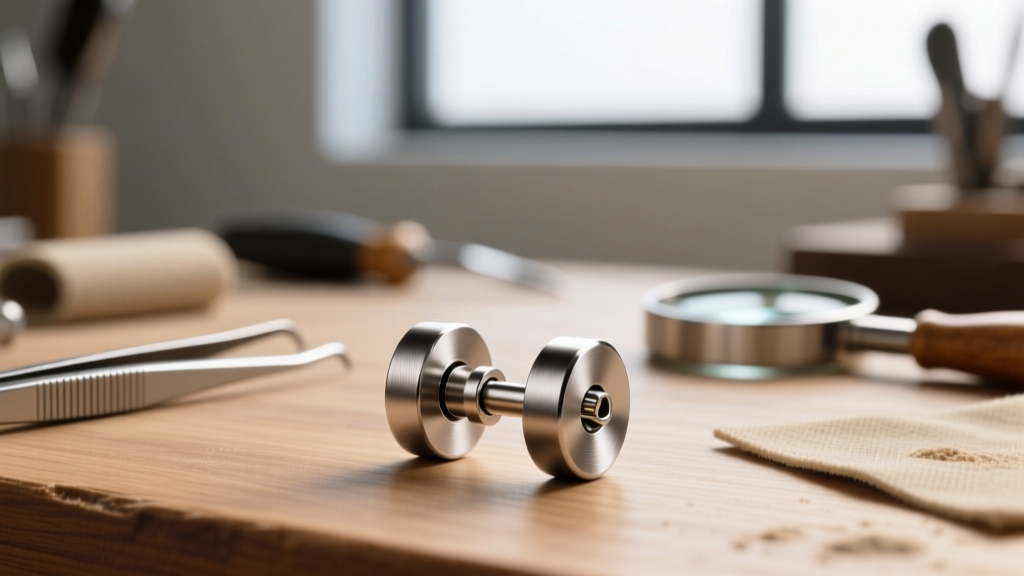
Standard friction backs (butterfly clutches) rely on a simple groove and tension. Due to the forward center of gravity inherent in a 7mm stone, friction backs routinely slip, causing the earring to droop or fall out entirely. For stones of this footprint, two mechanical backing systems are required:
- La Pousette Clutches: These feature a spring-loaded internal mechanism that locks onto the post groove, requiring simultaneous bilateral pressure to release. They provide roughly 4 lbs of withdrawal resistance compared to the 0.5 lbs of a standard friction back.
- Screw-Backs: The post is threaded (usually with a 0.9mm metric thread), and the backing screws on. This completely eliminates accidental withdrawal, though it requires precise alignment during insertion.
Material Grades: Hypoallergenic Standards for Daily Wear
Because 7mm stud earrings are heavy enough to cause micro-movements and friction against the piercing fistula during daily wear, material biocompatibility is non-negotiable. The presence of nickel or low-grade copper alloys will rapidly induce contact dermatitis.
- ASTM F136 Titanium: According to ASTM International, F136 is the standard specification for wrought titanium alloy for surgical implant applications. It contains zero nickel and is the absolute safest choice for heavy, daily-wear studs.
- Palladium-Based White Gold (14k/18k): Traditional white gold is alloyed with nickel to achieve a silver color. For 7mm studs, you must specifically request palladium-alloyed white gold, which is naturally hypoallergenic and possesses a higher Vickers hardness than yellow gold, providing better prong tension.
- Platinum (950 Pt): While dense and heavy, platinum's tensile strength makes it ideal for securing a 7mm stone. Unlike gold, which loses microscopic layers of metal when scratched (potentially loosening prongs over decades), platinum merely displaces, maintaining structural integrity around the gemstone's girdle.
Anatomical Scaling: Lobe Thickness and Post Length
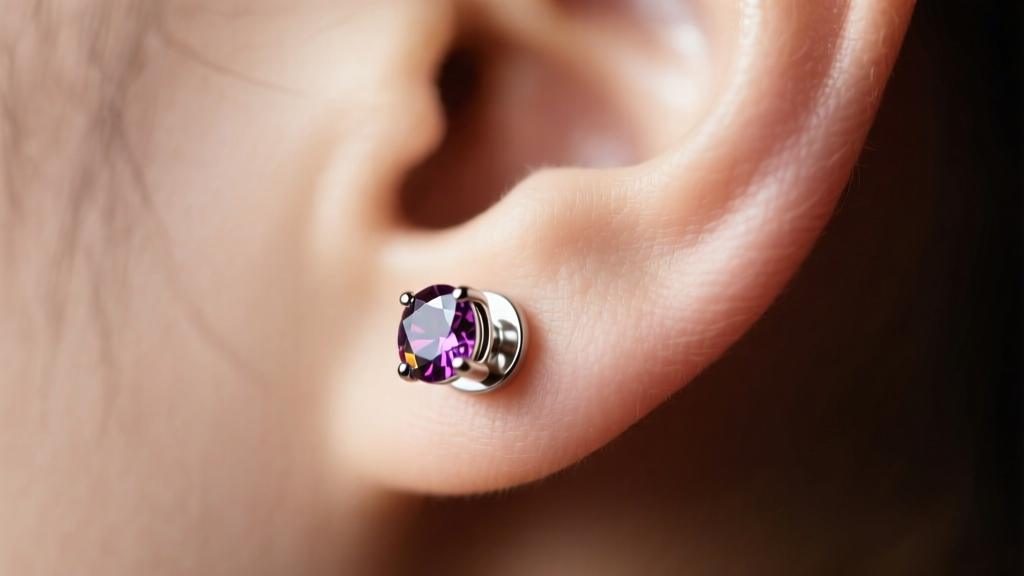
A frequently overlooked variable in the engineering of 7mm stud earrings is the post length relative to the wearer's lobe thickness. Standard earring posts are manufactured at 8mm in length. However, a 7mm gemstone set in a basket or martini head requires 2mm to 3mm of vertical space just for the setting itself.
If a wearer has an average lobe thickness of 3mm, an 8mm post leaves only 5mm of exposed metal behind the ear. This is physically insufficient to accommodate the bulky mechanism of a La Pousette clutch or the wide base of a screw-back. For 7mm studs, jewelers must fabricate 10mm or 11mm posts to ensure the locking mechanism sits comfortably against the back of the ear without pinching the skin or leaving the stud insecurely loose.
Troubleshooting Common 7mm Stud Failures
Even with precise engineering, wearers of 7mm stud earrings may encounter specific mechanical issues. Here is how to diagnose and resolve them:
1. The "Forward Droop"
Diagnosis: The gemstone faces downward rather than straight ahead. This occurs when the setting's basket is too deep, or the post is too thin (20G), allowing the metal to bend under the stone's weight.
Solution: Upgrade to an 18-gauge platinum post and switch to a low-profile bezel setting, which shifts the center of gravity closer to the earlobe.
2. Prong Snagging on Textiles
Diagnosis: A 7mm stone requires larger prongs to secure its wider girdle. Standard V-prongs or rounded prongs can easily catch on knitwear or hair.
Solution: Opt for a bezel setting or a rub-over setting for 7mm stones. If prongs are preferred for maximum light return, request "talon" or "claw" prongs that are filed completely flush and polished to a mirror finish to reduce the friction coefficient against fabrics.
3. Post Thinning and Breakage
Diagnosis: The post snaps near the base of the setting after a few years of wear.
Solution: This is caused by metal fatigue from repeated bending of a 20G gold post. Have a bench jeweler laser-weld a new 18G or 16G (1.29mm) platinum post to the existing setting head to permanently resolve the shear stress vulnerability.