8mm Hoop Earrings: The 2026 Minimalist Trend Guide
Discover why 8mm hoop earrings dominate 2026 minimalist trends. Explore gauge sizes, premium metals, and styling tips for lobe and cartilage.

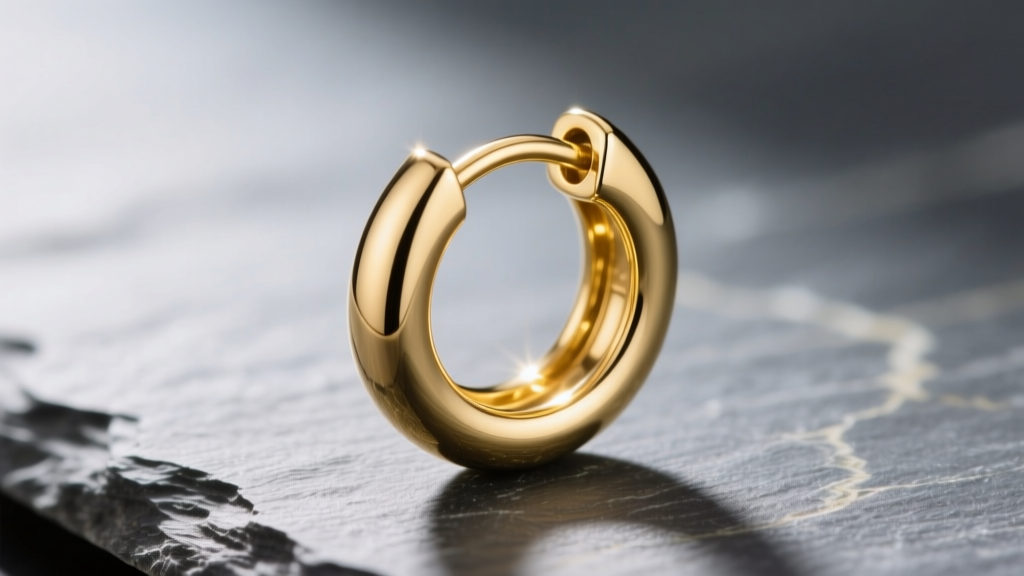
The Resurgence of the Micro-Hoop: Why 8mm is the New Standard
The jewelry landscape of 2026 has decisively pivoted. After years of maximalist "curated ear" projects featuring dozens of mismatched studs and ornate chains, the pendulum has swung toward precision minimalism. At the absolute center of this movement is the 8mm hoop earring. Often classified as a micro-huggie, the 8mm hoop is no longer just a placeholder for healing piercings; it is a deliberate, sophisticated style anchor. Whether crafted in high-polish 18k gold or paved with lab-grown diamond melee, these miniature silhouettes offer a masterclass in subtle luxury. But buying the perfect 8mm hoop requires navigating a minefield of confusing sizing metrics, subpar metallurgy, and fragile hardware. This guide dissects the technical and stylistic nuances of the 8mm hoop, ensuring your next purchase is both anatomically sound and aesthetically flawless.
The Sizing Illusion: Inner Diameter vs. Outer Diameter
One of the most frequent points of failure when purchasing micro-hoops online is misunderstanding how diameter is measured. In the fine jewelry sector, an "8mm hoop" almost universally refers to the Inner Diameter (ID). This means the empty space inside the hoop measures exactly 8 millimeters. When you factor in the thickness of the wire—typically 1.0mm (18-gauge) or 1.2mm (16-gauge)—the Outer Diameter (OD) will actually measure between 10mm and 10.4mm.
Why does this matter? A standard earlobe piercing sits roughly 6mm to 8mm from the edge of the ear. An 8mm ID hoop will "hug" the lobe with a microscopic 1mm to 2mm drop, creating that coveted seamless silhouette. However, if a manufacturer measures by OD, an 8mm OD hoop with a 1.2mm wire leaves an internal space of only 5.6mm. This will aggressively pinch the earlobe, restrict blood flow, and cause the hoop to sit at an awkward, jutting angle.
Always verify that the retailer specifies Inner Diameter (ID) before purchasing micro-hoops to ensure a comfortable, flush fit.
Gauge Thickness and Structural Integrity
The thickness of the wire, known as the gauge, dictates both the visual weight and the structural lifespan of the earring. Choosing the wrong gauge for your specific piercing can lead to deformation or tissue migration.
- 20-Gauge (0.81mm): Visually delicate, but highly prone to bending. A 20G 8mm hoop can easily warp into an oval shape if slept on, permanently compromising the clasp alignment.
- 18-Gauge (1.02mm): The 2026 industry standard for fine jewelry micro-huggies. It offers enough tensile strength to maintain a perfect circle under normal daily wear while remaining lightweight enough for upper-cartilage piercings.
- 16-Gauge (1.29mm): The preferred gauge for structural durability and body jewelry. If you are wearing an 8mm hoop in a helix, tragus, or forward helix piercing, 16G is mandatory to prevent the "cheese-cutter effect," where a thin wire slowly migrates through the cartilage tissue over time due to tension.
Hardware Mechanics: Clickers vs. Continuous Hoops
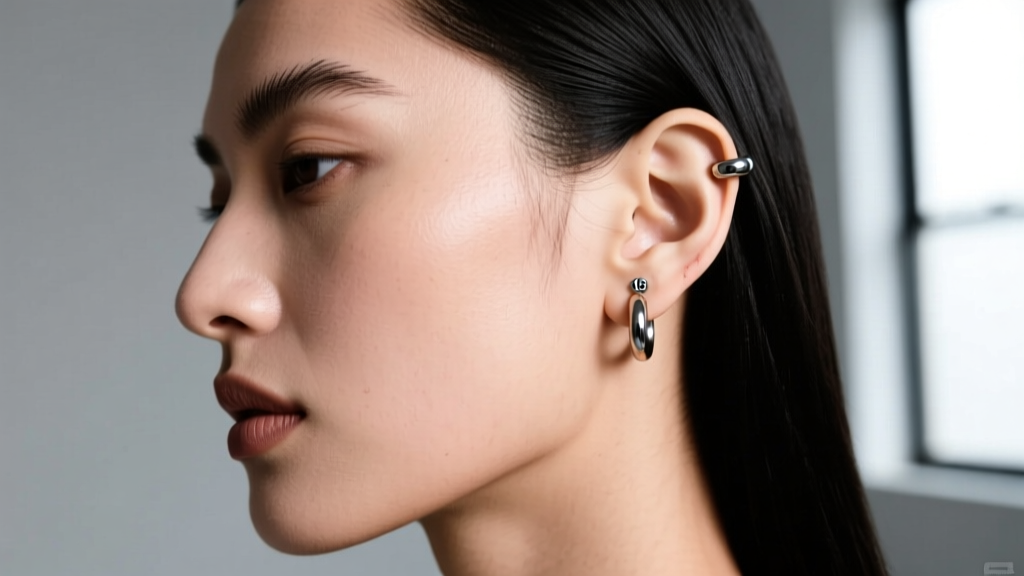
The closure mechanism of an 8mm hoop is arguably more critical than the metal itself, as micro-hardware is notoriously difficult to engineer. The two dominant styles in the market each carry distinct failure modes.
Hinged Segment Rings (Clickers)
These feature a microscopic barrel or snap clasp that clicks shut. In 2026, premium jewelers use CNC-machined hinges that ensure a flush, seamless closure. The primary failure mode here is lateral stress; pulling the hoop open from the sides (rather than hinging it on its intended vertical axis) will snap the micro-pin or strip the internal threading.
Continuous (Endless) Hoops
These rely on metal memory and tension, featuring a thin pin that slides into a hollow tube. While they offer the most invisible closure, they suffer from metal fatigue. Repeatedly bending the pin to open and close the hoop will eventually cause the metal to snap or lose its tension, resulting in the earring silently falling out. For 8mm hoops, hinged clickers are vastly superior for long-term reliability.
Metallurgy and Material Grades
The modern consumer demands hypoallergenic assurance, yet the market remains flooded with misleading terminology. "Gold-plated" over brass or copper is a guaranteed failure mode; sweat and friction will degrade the micron-thin gold layer within months, exposing the reactive base metal and triggering contact dermatitis.
For healed piercings, 14k or 18k solid gold (alloyed with nickel-free metals like silver, copper, or palladium) remains the benchmark. According to the Association of Professional Piercers (APP), if you are downsizing a recently healed cartilage piercing to an 8mm hoop, you must opt for ASTM F-136 implant-grade titanium. This specific alloy is proven biocompatible and entirely free of nickel, preventing the localized swelling that can trap a tight 8mm hoop in the tissue.
For paved styles, the Gemological Institute of America (GIA) notes a massive 2026 surge in lab-grown diamond melee (sub-0.10 carat stones) set in micro-huggies. Lab-grown melee offers identical optical and physical properties to mined diamonds but allows brands to offer fully paved 8mm hoops in the $300 to $500 range, rather than the $1,500+ price tag of natural equivalents.
2026 Styling Matrix: Placement and Proportions
The versatility of the 8mm hoop lies in its ability to adapt to almost any ear anatomy. Below is the definitive 2026 placement guide for maximizing comfort and aesthetic impact.
| Piercing Type | Recommended Gauge | Ideal Hardware | Aesthetic Effect |
|---|---|---|---|
| Standard Lobe | 18G or 16G | Hinged Clicker | Tight hug with 1-2mm drop; seamless everyday wear. |
| Upper Lobe | 18G | Continuous Hoop | Stacks perfectly above a primary lobe stud without tangling. |
| Helix | 16G | Hinged Clicker | Snug cartilage wrap; requires precise ID measurement to avoid jutting. |
| Tragus | 16G | Flat-Back Hinge | Encircles the tragus ridge; flat back prevents hair snagging. |
| Forward Helix | 16G | Continuous Hoop | Minimalist accent; follows the natural curve of the ear root. |
Price Tiers and Market Realities
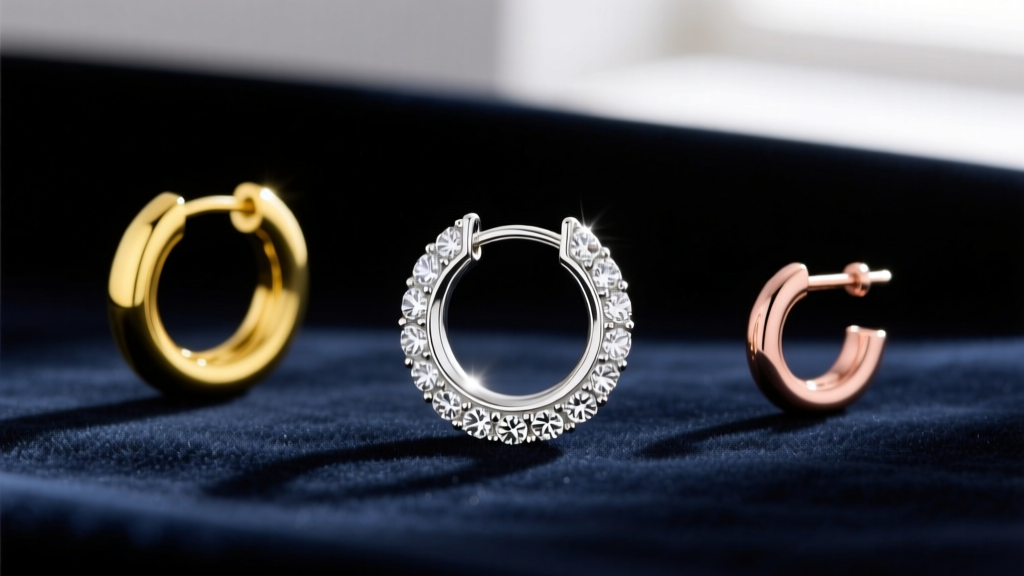
Understanding the pricing landscape prevents overpaying for subpar manufacturing. The 8mm hoop market in 2026 is neatly divided into three tiers:
- Tier 1: Fast Fashion ($15 - $45): Typically brass or copper base metals with PVD gold plating. High failure rate, prone to tarnishing and green skin discoloration. Avoid for cartilage.
- Tier 2: Mid-Tier Body Jewelry ($50 - $120): 316L surgical steel or basic gold vermeil over silver. Excellent for healing piercings (if steel is mirror-polished) but lacks the prestige and longevity of solid gold.
- Tier 3: Fine Jewelry ($180 - $800+): Solid 14k/18k gold, ASTM F-136 titanium, and genuine or lab-grown diamonds. Features CNC-machined hinges and lifetime warranties against hardware defects.
Maintenance and Troubleshooting
Micro-hoops require specific maintenance protocols to ensure the hardware survives daily wear. Ultrasonic cleaners are highly effective for solid gold continuous hoops, but they pose a severe risk to paved micro-huggies. The high-frequency vibrations can loosen the microscopic prongs holding the diamond melee, leading to stone loss. Instead, use a soft-bristled baby toothbrush with a few drops of mild, phosphate-free dish soap and warm water.
For hinged clickers, avoid getting thick lotions, hair masks, or oils trapped in the hinge barrel. This debris creates a vacuum effect that makes the clasp difficult to snap shut, leading users to force the mechanism and bend the micro-pin. A quick blast of compressed air or a soak in warm soapy water will clear the barrel and restore the satisfying click.
Final Verdict
The 8mm hoop earring has cemented its status as a non-negotiable staple in the 2026 jewelry wardrobe. By prioritizing Inner Diameter metrics, selecting the correct gauge for your specific piercing anatomy, and investing in solid metals with precision-machined hinges, you secure a piece of jewelry that is as technically flawless as it is visually striking. Whether anchoring a minimalist lobe stack or providing a subtle glint in a healed helix, the micro-huggie proves that true luxury lies in the details.


