Pear Shaped Diamond Earrings Drop: 2026 Occasion Guide
Discover the ultimate 2026 gift guide for pear shaped diamond earrings drop styles. Match carat weights, settings, and clarity to every milestone.

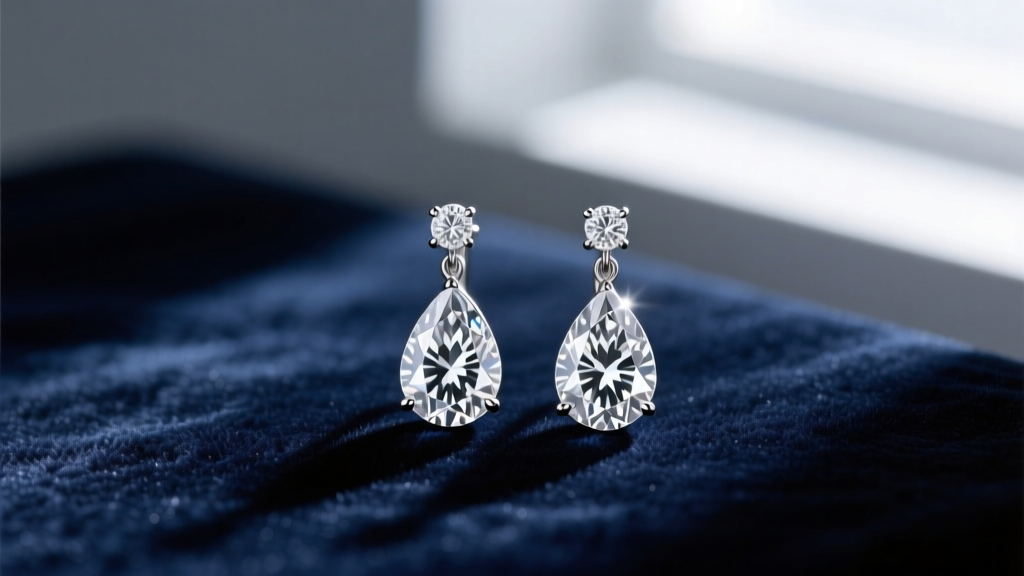
Gifting fine jewelry requires a strategic balance of emotional resonance and technical precision. When it comes to milestone celebrations, the pear shaped diamond earrings drop style stands out as a masterclass in elegance. Combining the brilliant light return of a round cut with the elongating, dramatic flair of a marquise, the teardrop silhouette offers a unique kinetic energy that static studs simply cannot match. However, selecting the right pair involves much more than picking a carat weight. From understanding the critical length-to-width ratios to selecting the proper earring backs to support the stone's physical weight, this 2026 guide provides the exact specifications you need to match the perfect drop earring to any occasion.
The Anatomy of the Perfect Pear Shaped Diamond Earrings Drop
The pear shape is classified as a "fancy" cut, meaning its proportions are not as strictly standardized as the round brilliant. For a drop earring, the visual impact relies heavily on the stone's symmetry and ratio. The ideal length-to-width (L:W) ratio for a pear shaped diamond earrings drop design falls between 1.45 and 1.75. A ratio below 1.45 results in a stubby, almost triangular stone, while a ratio above 1.75 creates a thin, needle-like appearance that can look fragile when swinging on the ear.
Furthermore, the "shoulders" of the pear (the curved areas transitioning from the widest point to the tip) must be perfectly rounded and symmetrical. Flat shoulders indicate a poor cut and will severely diminish the stone's brilliance. Because drop earrings are constantly in motion, light performance is paramount. You must also evaluate the stone for the "bow-tie effect"—a dark, bow-tie-shaped shadow that appears across the width of the stone when light is obstructed by poorly angled pavilion facets. While a slight bow-tie is common in fancy shapes, it should never dominate the stone's face-up appearance.
Matching the Gift to the Occasion
Different milestones call for different specifications. A first anniversary gift requires a different approach than a 20th-anniversary vow renewal. Below is a structured framework to help you align the 4Cs (Carat, Cut, Color, Clarity) and setting styles with the significance of the event.
| Occasion | Total Carat Weight (CTW) | Clarity / Color | Setting Style | Estimated Price Range |
|---|---|---|---|---|
| 1st - 3rd Anniversary | 0.50 - 0.75 CTW | SI1-VS2 / I-J | Bezel or 3-Prong | $1,200 - $2,800 |
| 5th - 10th Milestone | 1.00 - 1.50 CTW | VS1-VS2 / G-H | 5-Prong with V-Tip | $4,500 - $9,000 |
| 15th+ / Major Life Event | 2.00 - 3.00+ CTW | VVS1-VVS2 / D-F | Halo or Pave Drop | $12,000 - $35,000+ |
| Graduation / Early Career | 0.25 - 0.50 CTW | SI2-SI1 / K-L | Yellow Gold Bezel | $600 - $1,500 |
For occasions like graduations or early career milestones, utilizing a warm-toned metal like 18k yellow gold allows you to drop down to a K-L color grade without the stone appearing noticeably yellow, maximizing your budget for a larger carat size. Conversely, for major milestones where platinum or 18k white gold is preferred, you must stick to the G-H color range or higher to prevent the metal from highlighting any warm undertones in the diamond.
Critical Hardware: Settings and Earring Backs
The most frequently overlooked aspect of gifting drop earrings is the hardware. A pear shaped diamond earrings drop design concentrates a significant amount of weight at the bottom of the earlobe. Standard butterfly friction backs are entirely inadequate for drops exceeding 0.75 carats per ear. The weight of the stone will cause the earring to droop forward, pointing the diamond toward the floor rather than allowing it to catch the light.
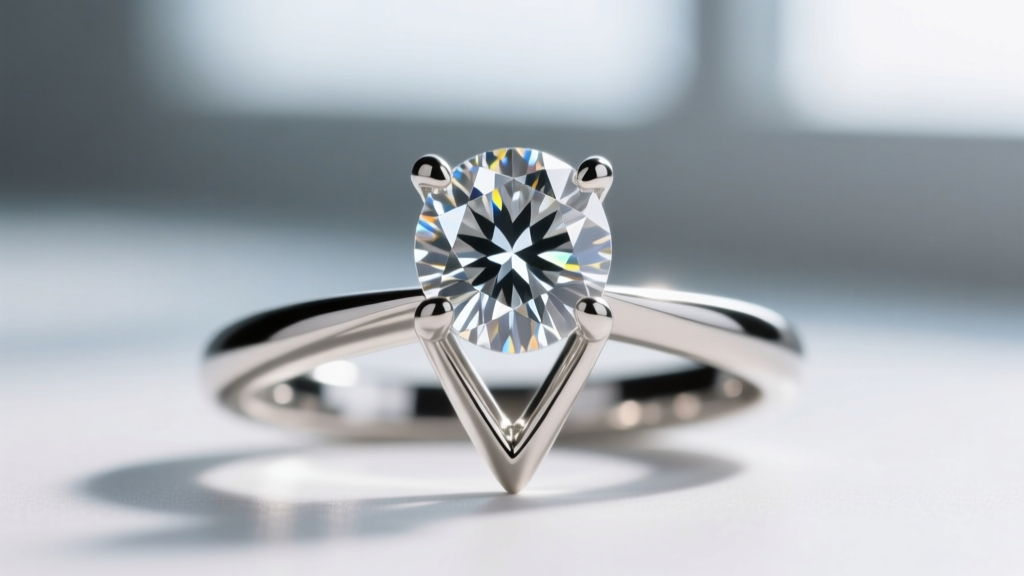
The Necessity of the V-Prong
The culet (the pointed tip of the pear) is the most vulnerable part of the diamond. A standard round prong resting on this sharp point is a recipe for chipping. For any pear shaped stone over 0.40 carats, a V-prong is non-negotiable. This specialized prong wraps around the point, encasing the fragile tip in metal while leaving the rest of the stone exposed to light. According to the Gemological Institute of America (GIA), protecting the points of fancy shapes like pears and marquises is essential for long-term durability.
Upgrading the Earring Back
To ensure the drop hangs perfectly straight, you must upgrade the backing mechanism. Look for:
- La Pousette Backs: These operate like a locking mechanism, clicking securely into a groove on the earring post. They provide the strongest grip and prevent loss.
- Omega Backs: Often used in high-end designer drops, these feature a hinged, curved wire that snaps shut against the post, distributing the weight of the earring across a wider area of the earlobe.
- Screw Backs: While more tedious to put on, threaded posts and screw-on nuts offer excellent security and prevent the heavy drop from sliding forward.
Face Shape Dynamics and Drop Length
Because drop earrings extend below the earlobe, they actively alter the visual geometry of the wearer's face. When gifting a pear shaped diamond earrings drop style, consider the recipient's face shape to ensure the most flattering presentation.
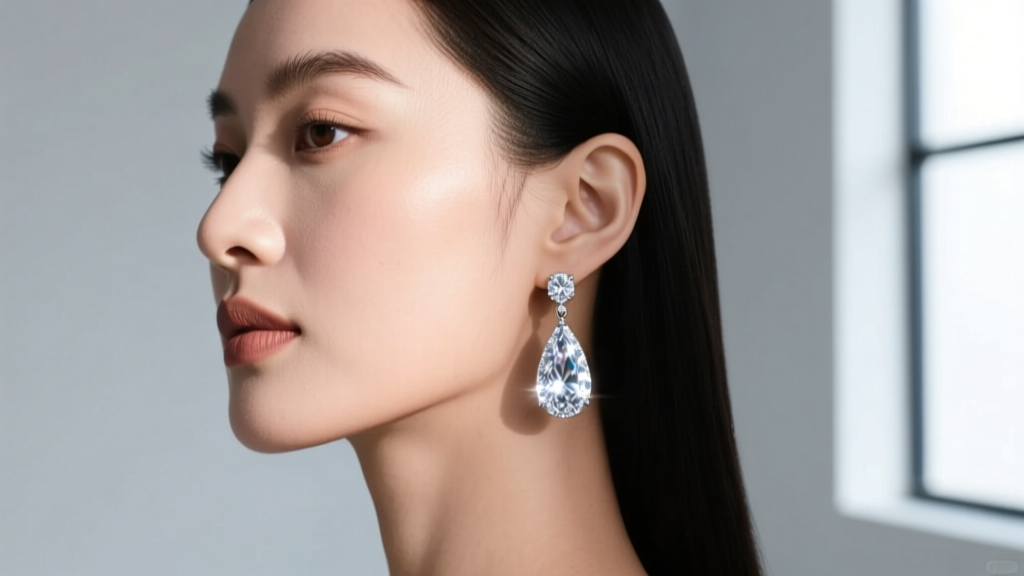
For round and square face shapes, a longer drop (1.5 to 2.5 inches from the top of the hook to the bottom of the diamond) is highly recommended. The vertical elongation of the pear cut, combined with the physical length of the drop, draws the eye downward, softening angular jawlines and adding the illusion of length to the face. Conversely, for oblong or heart-shaped faces, a shorter, more compact drop (under 1 inch) with a wider L:W ratio (closer to 1.45) will add necessary width and balance without over-elongating the facial structure.
Expert Inspection: Avoiding the Bow-Tie Effect
"Never purchase a pear shaped drop earring based solely on a grading report. The GIA or AGS report will detail the 4Cs, but it will not map the light obstruction that causes the bow-tie effect. You must inspect the stones in 360-degree video or in person under mixed lighting environments."
When sourcing the perfect pair, symmetry is even more critical than it is for a single pendant. The two stones must be mirror images of one another. If one pear is slightly wider at the shoulders or has a different L:W ratio, the asymmetry will be glaringly obvious when worn. Trusted retailers like Blue Nile and James Allen offer high-resolution 360-degree videos that allow you to match pairs side-by-side, ensuring the shoulders align and the bow-tie extinction patterns are minimal and symmetrical.
Final Gifting Presentation Tips
When presenting a high-value item like a pear shaped diamond earrings drop pair, the unboxing experience matters. Because drops are prone to tangling, ensure they are housed in a slotted jewelry box where the posts can be secured through a velvet or suede insert, allowing the diamonds to hang freely without the chains or settings scratching the table of the stones. Include the original grading reports in a separate folio, and consider gifting a specialized ultrasonic cleaner or a professional steaming kit to maintain the brilliant fire of the pear cuts for decades to come.


