Acrylic Flower Earrings: Material Science & Wear Guide
Discover the material science, biocompatibility, and manufacturing techniques behind high-quality acrylic flower earrings in our expert guide.

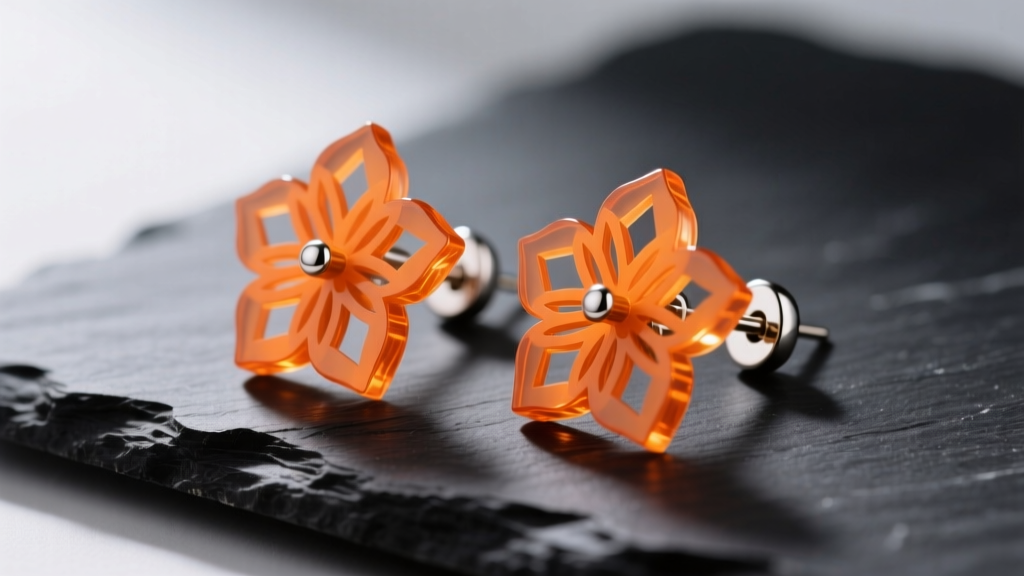
The Polymer Chemistry: Cast PMMA vs. Extruded Alternatives
When evaluating acrylic flower earrings, the term 'acrylic' is frequently misused as a catch-all for any transparent plastic. True high-end acrylic jewelry is crafted from Polymethyl Methacrylate (PMMA). However, the manufacturing origin of the PMMA sheet dictates the longevity, optical clarity, and structural integrity of the final floral piece. According to the British Plastics Federation (BPF), PMMA is prized for its optical clarity and impact resistance, but it exists in two primary forms: cast and extruded.
Cast Acrylic (Cell Cast): This is the gold standard for premium floral earrings. Cast acrylic is produced by pouring liquid monomer into a mold, resulting in a higher molecular weight and superior thermal stability. When laser-cut into intricate petal shapes, cast PMMA yields a glass-like, flame-polished edge without melting into a gummy residue. It also possesses a higher resistance to environmental stress cracking (ESC), which is vital for jewelry that undergoes temperature fluctuations and exposure to skin oils.
Extruded Acrylic: Produced by continuously pushing molten PMMA through a die, extruded sheets are cheaper but have lower molecular weight. When subjected to the heat of a CO2 laser cutter, extruded acrylic tends to melt, leaving tacky, uneven edges on delicate flower petals. It is also significantly more prone to yellowing and micro-fracturing over time.
Acrylic vs. Epoxy Resin: Spotting the Imposters
Many mass-market 'acrylic' flower earrings are actually made from UV-cured epoxy resin. While resin allows for embedded dried flowers and three-dimensional molds, it is fundamentally softer (Mohs hardness of 2-3 compared to PMMA's 3-4) and highly susceptible to UV degradation. True PMMA will feel rigid, produce a sharp 'clink' when tapped against glass, and maintain its structural rigidity in thin 1mm petal cuts, whereas resin will exhibit slight flexibility and a duller acoustic resonance.
Manufacturing Tolerances: Laser Cutting and Thermal Stress
The creation of intricate acrylic flower earrings relies heavily on CO2 laser cutting technology. The laser vaporizes the PMMA, simultaneously cutting the shape and flame-polishing the edge. However, this rapid localized heating introduces severe thermal stress into the polymer matrix.
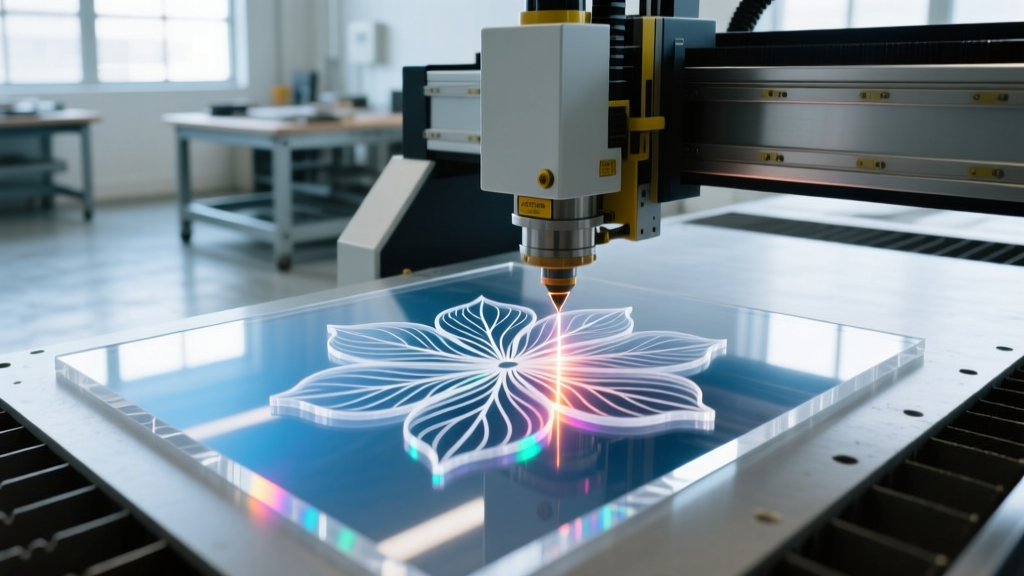
If a laser-cut acrylic daisy or lotus is not properly annealed (slowly heated to roughly 80°C and cooled over several hours to relieve internal tension), the earrings will develop micro-crazing. This manifests as a web of tiny, silvery internal fractures that resemble cracked ice. While initially invisible, these stress lines will propagate when the earring is subjected to the mechanical stress of being inserted into an earlobe or when exposed to aerosolized hairspray.
Expert manufacturers also utilize vector engraving to carve the 'veins' into the floral petals before cutting the outer silhouette. This requires precise focal length calibration; a deviation of just 0.5mm in the laser's Z-axis will result in shallow, frosty engravings rather than deep, optically refractive petal lines.
Biocompatibility and Post Integration Protocols
The most critical failure point in acrylic floral jewelry is the intersection between the plastic and the human body. The Association of Professional Piercers (APP) explicitly warns against wearing acrylic in unhealed piercings. At a microscopic level, PMMA is porous and can harbor bacterial biofilms, leading to contact dermatitis or severe infections in fresh fistulas.
Therefore, high-quality acrylic flower earrings must feature a biocompatible metal post that is mechanically or chemically integrated into the acrylic face. The post should ideally be Implant-Grade Titanium (ASTM F136) or 316L Surgical Steel. The gauge size for standard lobe floral studs is typically 18g (1.0mm) or 20g (0.8mm) to accommodate the delicate nature of the earlobe while supporting the lightweight acrylic face.
Assembly Methods Matrix
| Assembly Method | Adhesive/Hardware | Durability & Risks | Best Application |
|---|---|---|---|
| Cyanoacrylate Bonding | Medical-grade CA glue | High initial strength; degrades with prolonged moisture exposure. Risk of post detachment. | Lightweight studs (under 3g) |
| Mechanical Crimping | Stainless steel micro-rivets | Extremely durable; requires precision drilling. No chemical off-gassing risks. | Heavy dangles and large floral faces |
| UV Resin Embedding | Clear UV-cured resin | Moderate strength; can yellow over time and obscure the back of the acrylic petal. | Complex 3D layered florals |
| Threaded Insert | Titanium screw-in back | Highest security; requires tapping a precise M1.2 thread into the acrylic without cracking it. | Premium heirloom-grade studs |
Weight Distribution and Hardware Mechanics
One of the primary advantages of acrylic flower earrings is their exceptional strength-to-weight ratio. The density of cast PMMA is approximately 1.18 g/cm³, making it roughly six times lighter than glass and significantly lighter than brass or copper. A massive 50mm diameter acrylic lotus flower dangle may weigh a mere 3.5 grams, allowing for dramatic, oversized botanical silhouettes without causing earlobe stretching or 'cheese-cutter' migration.
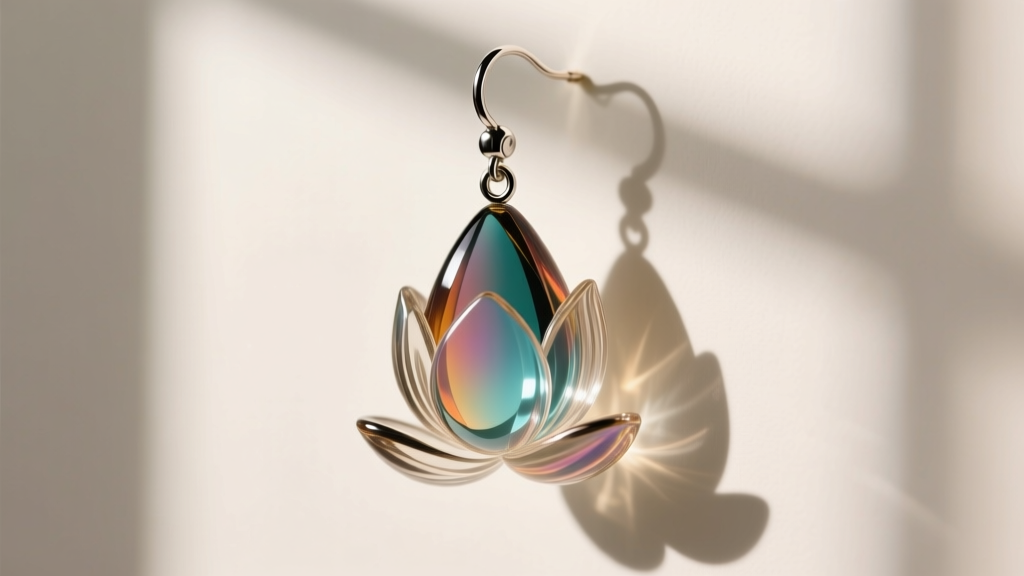
However, the hardware connecting the acrylic face to the ear wire must be meticulously engineered. Because the acrylic itself is so light, the kinetic energy of a swinging dangle earring concentrates entirely on the jump ring and the drill hole in the plastic. Expert jewelers use 18g or 16g stainless steel closed jump rings rather than open jump rings, which can slowly pry apart and slice through the acrylic over time. For stretched lobe wearers (gauges 2g to 00g), acrylic flowers are frequently designed as 'hangers' with reinforced steel hooks that drape over glass or silicone eyelets, bypassing the need for a post entirely.
UV Degradation, Crazing, and Long-Term Care
While PMMA is inherently more UV-resistant than polycarbonate or epoxy resin, prolonged exposure to direct sunlight will eventually break down the polymer chains, leading to a phenomenon known as photo-oxidation. This results in the dreaded 'yellowing' of clear or pale pastel acrylic flowers. To combat this, premium manufacturers incorporate Hindered Amine Light Stabilizers (HALS) into the raw PMMA mixture, which scavenge free radicals and extend the optical clarity of the jewelry by decades.
'The most common way consumers ruin high-end acrylic jewelry is by cleaning it with isopropyl alcohol. Alcohol acts as a solvent that induces environmental stress cracking, turning a flawless, transparent acrylic rose into a cloudy, fractured mess within minutes.' — Master Polymer Technician
Proper Cleaning Protocol
- Do Not Use: Isopropyl alcohol, acetone, ammonia-based glass cleaners, or ultrasonic jewelry baths. These will cause immediate crazing and degrade the cyanoacrylate bonds holding the metal posts.
- Do Use: A mild, fragrance-free dish soap (like Dawn) mixed with lukewarm water. Gently agitate with a microfiber cloth or a soft-bristled baby toothbrush to remove sebum and dead skin cells from the laser-engraved petal veins.
- Drying: Pat dry with a lint-free cloth. Air drying can leave hard water spots that mimic the appearance of micro-scratches on the flame-polished edges.
By understanding the material science, manufacturing tolerances, and biocompatibility requirements of PMMA, collectors and consumers can distinguish between disposable fast-fashion plastics and heirloom-quality acrylic flower earrings designed to last a lifetime.


