How to Safely Clean and Maintain Silver Crystal Earrings
Learn how to safely clean, polish, and store your silver crystal earrings. Expert tips to prevent tarnish and protect delicate gemstone settings.

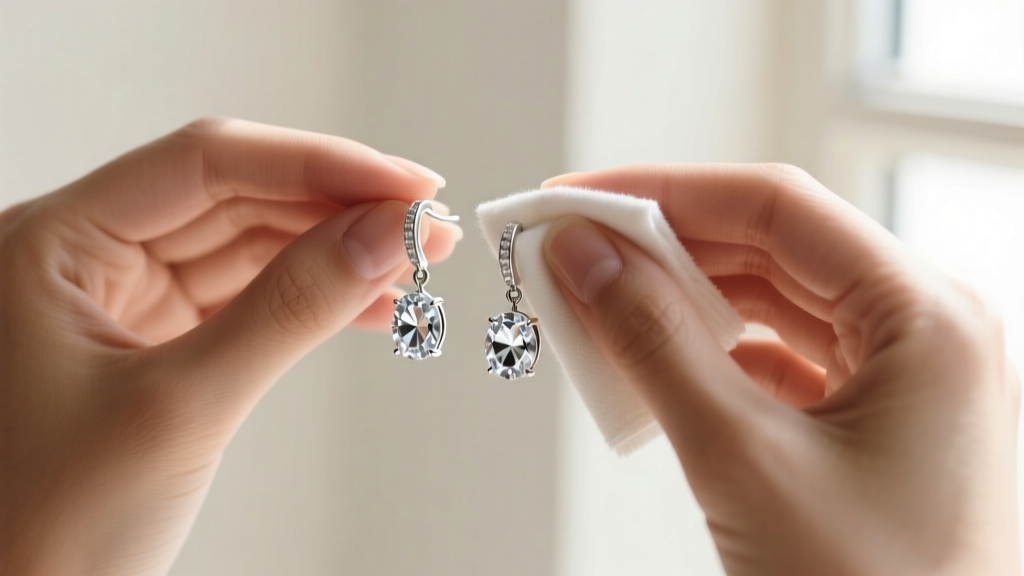
The Unique Vulnerability of Silver Crystal Earrings
Silver crystal earrings represent a delicate intersection of metallurgy and gemology. While 925 sterling silver is a durable, time-honored alloy composed of 92.5% pure silver and 7.5% copper (or other hardening metals), it is inherently prone to oxidation and tarnishing. When you introduce crystals—whether they are precision-cut lead glass (like Swarovski), cubic zirconia, or natural quartz—you create a composite piece of jewelry that requires highly specific care protocols. The primary challenge lies in the fact that the chemicals and mechanical forces required to aggressively polish tarnished silver can easily scratch, cloud, or degrade the delicate facets and backing of crystal gemstones.
Furthermore, many high-end silver crystal earrings feature a rhodium plating over the sterling silver base. This plating, typically ranging from 0.1 to 0.5 microns in thickness, provides a brilliant white-gold-like finish and acts as a barrier against silver sulfide formation. Aggressive polishing can strip this plating, exposing the raw silver beneath and accelerating future tarnish. Understanding the exact material composition of your earrings is the first critical step in establishing a safe maintenance routine.
The Science of Silver Tarnish and Crystal Clouding
Tarnish on sterling silver is not dirt; it is a chemical reaction. When the copper in the 925 alloy reacts with sulfur compounds in the air (such as hydrogen sulfide), it forms silver sulfide (Ag2S), which manifests as a yellow, brown, or black film on the surface. According to the Gemological Institute of America (GIA), environmental factors like high humidity, airborne pollutants, and even the natural pH and sulfur content of your skin can accelerate this process.
Simultaneously, crystals face their own environmental threats. The brilliance of a crystal earring relies on light entering the stone, bouncing off the pavilion facets, and returning to the eye. Any accumulation of sebum (skin oils), cosmetic residues, or hard water minerals on the pavilion (the bottom of the stone) will cause total internal reflection to fail, resulting in a dull, cloudy appearance. Foil-backed crystals, which rely on a delicate metallic coating on the pavilion to enhance sparkle, are particularly vulnerable to moisture ingress, which can cause the foil to delaminate and turn black.
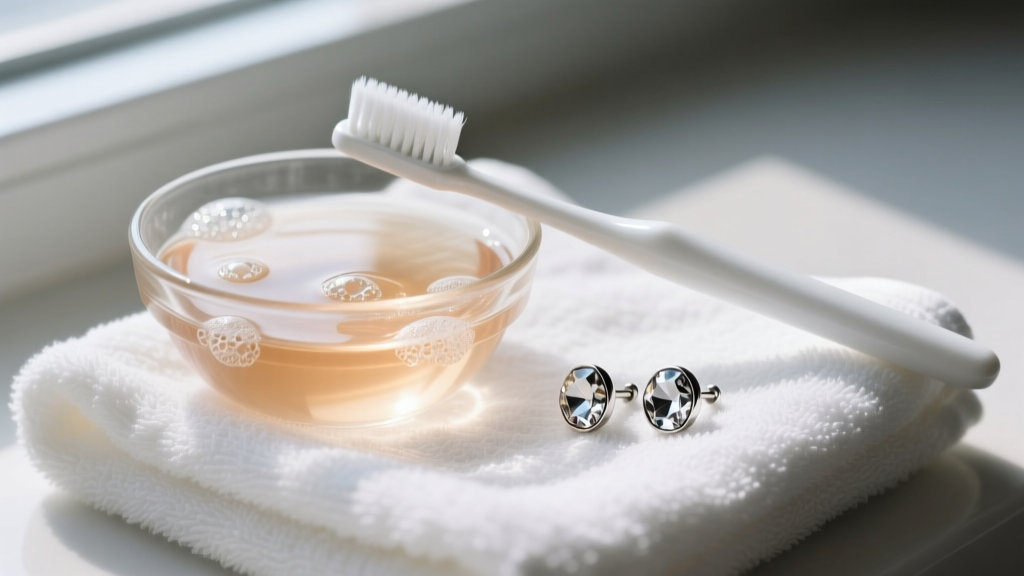
Step-by-Step Cleaning Protocol
To safely clean silver crystal earrings without damaging the stones or stripping the rhodium plating, you must use a gentle, non-abrasive approach. Never use ultrasonic cleaners, as the high-frequency cavitation bubbles can shatter crystals, loosen glued settings, and strip foil backings.
What You Will Need
- Distilled water (tap water contains minerals that leave spots on crystals)
- Mild, phosphate-free dish soap (e.g., original blue Dawn)
- A brand-new, ultra-soft baby toothbrush
- Lint-free microfiber cloths
- A specialized silver polishing cloth (e.g., Sunshine Cloth) for the metal-only areas
The Washing Technique
- Prepare the Solution: Mix a few drops of mild dish soap into a bowl of lukewarm distilled water. Avoid hot water, as extreme temperature shifts can cause thermal shock in some natural crystal inclusions.
- Soak Briefly: Submerge the earrings for no more than 3 to 5 minutes. This is enough time to loosen oils and cosmetics without risking water damage to any adhesive used in the settings.
- Gentle Agitation: Using the soft baby toothbrush, gently brush the silver settings and the prongs. Always brush away from the prongs to avoid accidentally lifting them. Lightly brush the crown (top) of the crystal to remove surface oils.
- The Pavilion Clean: Turn the earring over and gently brush the back of the crystal. This is where the majority of light-blocking oils accumulate.
- Rinse and Dry: Rinse thoroughly under a slow stream of distilled water. Immediately pat dry with a lint-free microfiber cloth. Do not air dry, as this will leave water spots that mimic cloudiness.
Chemicals to Avoid: The Crystal Killer Chart
Many commercial jewelry cleaners are formulated exclusively for metals and will cause irreversible damage to crystal gemstones. The table below outlines common cleaning agents and their specific failure modes when used on silver crystal earrings.
| Cleaning Agent | Effect on Sterling Silver | Effect on Crystal Gemstones | Verdict |
|---|---|---|---|
| Ultrasonic Cleaners | Safe for plain silver | Shatters stones, strips foil backing, vibrates prongs loose | NEVER USE |
| Ammonia-based Dips | Removes heavy tarnish quickly | Dissolves adhesive, clouds treated stones, degrades foil | NEVER USE |
| Baking Soda Paste | Mildly abrasive tarnish removal | Scratches crystal surfaces (Mohs 5-7), leaves residue in prongs | AVOID |
| Silver Polishing Cloths | Safely removes light tarnish | Can leave abrasive micro-fibers caught in stone settings | USE WITH CAUTION |
| Mild Soap & Distilled Water | Does not remove heavy tarnish | Perfectly safe, removes oils without damaging facets | HIGHLY RECOMMENDED |
Tarnish Prevention and Storage Strategies
Because silver crystal earrings cannot be aggressively polished once heavily tarnished without risking the stones, prevention is your most effective maintenance tool. The goal is to limit the silver's exposure to sulfur and moisture.
According to metallurgical guidelines from jewelry suppliers like Rio Grande, storing silver in an airtight environment with anti-tarnish agents is the gold standard. Keep your earrings in individual soft flannel pouches or ziplock bags made of anti-tarnish polyethylene. Always include a 3M anti-tarnish strip or a piece of Pacific Silvercloth inside the storage container. These materials actively absorb sulfur compounds from the enclosed air, effectively sacrificing themselves to protect your jewelry. Replace these strips every 3 to 6 months depending on your local humidity levels.
Prong and Setting Maintenance
Crystals in silver earrings are typically held in place by either cast prongs, die-struck prongs, or bezel settings. Sterling silver is a relatively soft metal compared to platinum or white gold, meaning the prongs holding your crystals are susceptible to bending and wear.
Every three months, perform a visual and tactile inspection of your earrings. Use a 10x jeweler's loupe to examine where the prong tips meet the girdle (the widest edge) of the crystal. If you notice a gap, or if the stone rattles when you gently tap the earring, the prongs need to be tightened. Do not attempt to push silver prongs down yourself with pliers; silver work-hardens quickly and can snap if bent repeatedly without annealing. Take the earrings to a professional jeweler who can use a prong pusher and a burnisher to safely secure the crystal without scratching its table facet.
Expert Troubleshooting: Stubborn Tarnish and Cloudy Stones
Expert Insight: If your crystal earrings look dull even after a thorough wash with soap and distilled water, the issue may not be dirt. Inspect the back of the stone. If you see a dark, mottled, or peeling appearance on the pavilion facets, the foil backing has suffered moisture damage. Unfortunately, this cannot be cleaned at home. The stone must be removed from the silver setting by a professional, the old foil chemically stripped, and the stone re-foiled or replaced entirely.
For stubborn silver tarnish in the crevices of the setting that the toothbrush cannot reach, use a specialized silver dip only if the crystals are unbacked (like natural quartz or unfoiled cubic zirconia). Apply the dip with a cotton swab strictly to the metal, avoiding any contact with the stone, and rinse immediately. For rhodium-plated silver crystal earrings, never use silver dips, as the harsh chemicals will strip the rhodium layer, leaving the earring with a patchy, two-toned appearance that requires professional re-plating to fix.
Summary Checklist for Longevity
- Daily: Put your silver crystal earrings on after applying makeup, perfume, and hairspray to prevent chemical clouding.
- Weekly: Wipe the crystals with a clean, dry microfiber cloth to remove skin oils and restore light return.
- Monthly: Wash with mild soap and distilled water, drying immediately to prevent hard water spots.
- Quarterly: Inspect prongs with a loupe and ensure anti-tarnish strips in your storage boxes are still active.
- Annually: Have a professional jeweler check the structural integrity of the silver settings and professionally steam-clean unfoiled stones.


