The Ultimate 2026 Guide to Buying Affordable Diamond Earrings
Discover how to find affordable diamond earrings without sacrificing quality. Learn about lab-grown options, clarity grades, and smart setting choices.

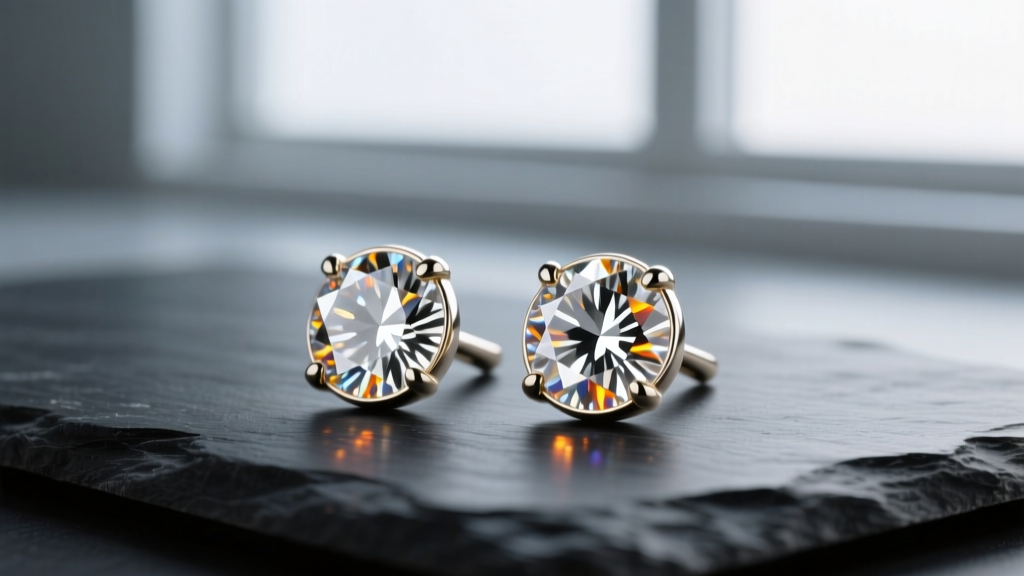
Finding the perfect pair of affordable diamond earrings requires navigating a minefield of marketing jargon, inflated retail markups, and confusing grading reports. In 2026, the landscape of budget-friendly diamond jewelry has shifted dramatically, largely thanks to the mainstream acceptance of lab-grown stones and the rise of direct-to-consumer luxury jewelers. However, 'affordable' should never mean 'poor quality.' As a buyer, your goal is to maximize visual impact and structural longevity while strategically compromising on gemological traits that are invisible to the naked eye. This comprehensive buying guide will equip you with the exact specifications, pricing benchmarks, and red flags you need to secure a stunning pair of diamond earrings without overpaying.
The Real Cost of 'Affordable' Diamonds in 2026
Before diving into gemology, it is crucial to establish realistic pricing expectations. The term 'affordable' is relative, but in the current market, budget-conscious buyers are typically looking at the $300 to $1,200 range for a high-quality pair of studs. The price of diamond earrings is heavily dictated by the 'magic sizes'—industry thresholds where diamond prices jump exponentially. For example, a pair of earrings totaling 0.50 carats (0.25 carats per ear) will cost significantly more per carat than a pair totaling 0.48 carats. The visual difference between 4.9mm and 5.1mm is imperceptible when worn, but the price premium for crossing the half-carat threshold can inflate the cost by 20% to 30%.
When shopping for affordable diamond earrings, target 'off-magic' weights. Look for total carat weights (CTW) of 0.33, 0.45, 0.70, or 0.90. You will get nearly the exact same millimeter spread (the physical size of the diamond as seen from above) while keeping your budget firmly in the affordable tier.
Lab-Grown vs. Natural: The Budget Buyer's Dilemma
If your primary objective is maximizing carat size and clarity on a strict budget, lab-grown diamonds are the undisputed champions of the affordable diamond earrings category. According to the Gemological Institute of America (GIA), lab-grown diamonds possess the exact same chemical, physical, and optical properties as mined diamonds. The only difference is their origin.
In 2026, a 1.00 CTW pair of natural, G-color, VS2-clarity diamond studs will easily set you back $2,500 to $3,500. The exact same specifications in a CVD (Chemical Vapor Deposition) or HPHT (High Pressure High Temperature) lab-grown diamond will cost between $400 and $700. However, not all lab-grown diamonds are created equal. When buying lab stones, always insist on an IGI or GIA grading report. Some lower-tier CVD diamonds can exhibit brownish or grayish undertones if they are not properly treated during the growth process. A certified report ensures you are getting a stone with genuine gemological integrity.
The 4Cs Compromise Matrix for Budget Earrings
Unlike engagement rings, which are scrutinized at close range, earrings are viewed from a distance and are constantly in motion. This unique wearing context allows savvy buyers to make strategic compromises on the 4Cs (Cut, Color, Clarity, and Carat) to secure affordable diamond earrings that still look spectacular. Below is the decision framework you should use when evaluating budget options.
| The 4C | Where to Splurge | Where to Save (Budget Hacks) |
|---|---|---|
| Cut | Always demand 'Excellent' or 'Ideal' cut grades. Cut dictates the sparkle, which is the most noticeable trait from a distance. | Never compromise on cut. A poorly cut 1-carat diamond will look smaller and duller than a perfectly cut 0.75-carat diamond. |
| Color | D-F (Colorless) if setting in Platinum and you have a high budget. | Choose G-H (Near Colorless) for white gold. Choose I-J for yellow or rose gold, as the warm metal masks slight yellow tints. |
| Clarity | VVS or IF grades (completely unnecessary for earrings). | SI1 or even eye-clean SI2. No one will inspect your earlobes with a 10x jeweler's loupe. |
| Carat | Magic sizes like 0.50, 0.75, or 1.00 CTW. | Buy just below the threshold: 0.45, 0.70, or 0.92 CTW to avoid the exponential price jumps. |
Setting Styles That Maximize Visual Spread
If your budget restricts you to a smaller carat weight, the setting style becomes your greatest tool for creating the illusion of size. The way the metal holds the diamond can dramatically alter its perceived footprint on the earlobe.
Halo and Bezel Illusions
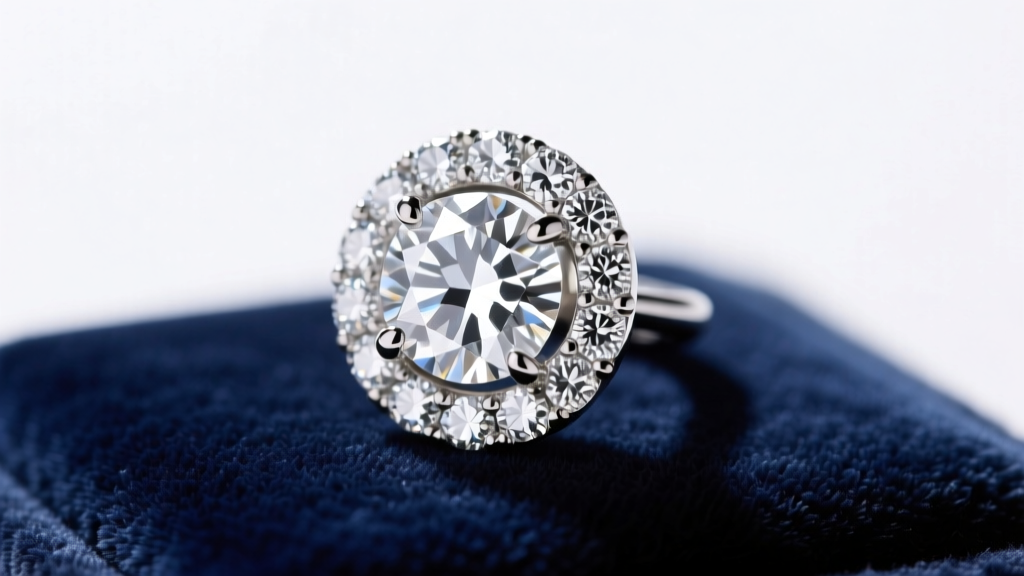
A halo setting surrounds a smaller center stone with a micro-pavé ring of tiny melee diamonds. A 0.25-carat center stone in a well-crafted halo can easily mimic the visual spread of a 0.75-carat solitaire stud. Alternatively, a thin white gold or platinum bezel setting can add 1 to 1.5 millimeters of visual width to the earring while providing superior protection against snagging on hair or clothing. Avoid thick yellow gold bezels if you are trying to maximize the appearance of a small white diamond, as the heavy metal border will visually shrink the stone.
Prong Configurations
For traditional solitaire studs, a 4-prong setting exposes more of the diamond's table (the top flat surface), allowing more light to enter and making the stone appear slightly larger. A 6-prong setting offers more security but obscures more of the diamond's edges, making it look slightly more rounded and marginally smaller.
Red Flags: What to Avoid When Shopping Online
The internet is flooded with deals that seem too good to be true. When hunting for affordable diamond earrings, you must be vigilant against deceptive treatments and poor craftsmanship. Avoid the following pitfalls at all costs:
- Clarity-Enhanced or Fracture-Filled Diamonds: These are low-grade diamonds with visible cracks that have been filled with a glass-like resin to improve their apparent clarity. While they look better to the naked eye initially, the filler can cloud over time, melt under a jeweler's torch, and shatter if placed in an ultrasonic jewelry cleaner. Always verify that the diamonds are 'untreated' or only HPHT color-treated.
- I1 to I3 Clarity Grades Without Photos: While SI1 and SI2 can be excellent budget choices, I-clarity (Included) diamonds often feature large, black carbon spots or structural feathers that make the diamond look dirty or cloudy. Never buy I-clarity earrings without high-resolution, 360-degree video verification.
- 'Total Carat Weight' (CTW) Tricks: Retailers often advertise '1 Carat Diamond Earrings' in fine print, but the asterisk reveals it is a cluster of dozens of microscopic diamond chips glued or fused together, rather than two distinct, faceted solitaire stones. Cluster earrings lack brilliance and have very low resale or appraisal value.
Hardware Matters: Gauge Sizes and Backings
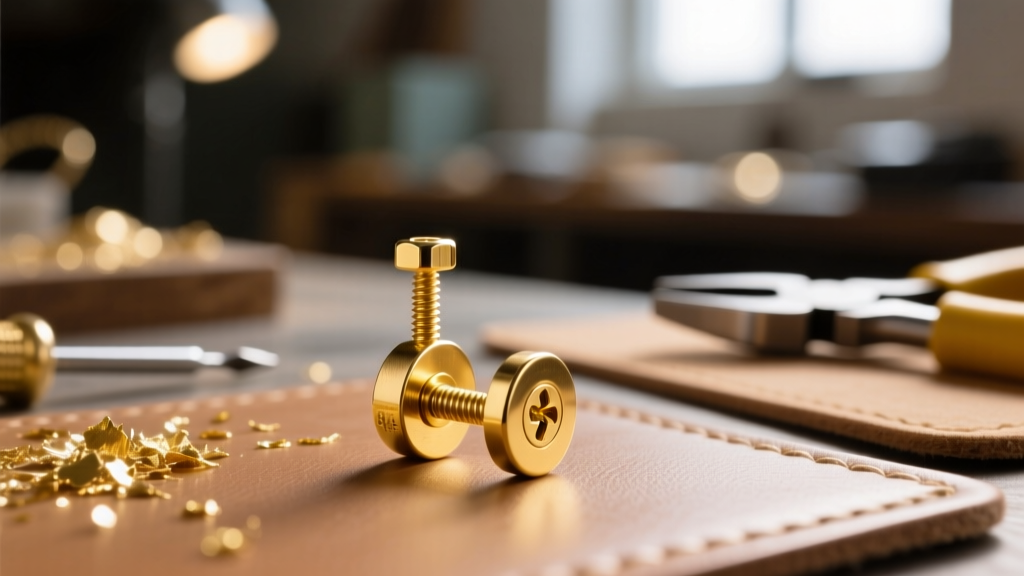
An often-overlooked aspect of buying diamond earrings is the structural integrity of the metal hardware. Earring posts are measured in gauges. The standard lobe piercing is usually 18-gauge (1.02mm) or 20-gauge (0.81mm). If you are purchasing heavier affordable diamond earrings—such as a 1.00 CTW pair or a substantial halo design—ensure the post is at least 18-gauge. A thin 22-gauge post will easily bend under the weight of the stone, causing the earring to droop forward and potentially tearing the earlobe over time.
Furthermore, upgrade your backings. Standard 'butterfly' friction backs are notorious for slipping off, leading to lost diamonds. For any diamond stud valued over $300, insist on screw-back mechanisms or heavy-duty silicone 'la pousette' locking backs. The minor inconvenience of screwing on the backing is a small price to pay for the security of your investment.
Final Verdict: Your Action Plan
Securing affordable diamond earrings is entirely about strategic allocation of your budget. By prioritizing an Excellent cut, opting for near-colorless grades (G-H), embracing SI1 clarity, and strongly considering certified lab-grown diamonds, you can acquire a pair of earrings that deliver maximum brilliance without the luxury markup. Always purchase from reputable online retailers like Blue Nile or James Allen, where you can filter by exact specifications, view 360-degree high-definition imagery, and verify GIA or IGI grading reports before checking out. Armed with this knowledge, you are ready to navigate the market and find a pair of diamond studs that will sparkle for a lifetime.


