Alexis Bittar Lucite Earrings: Troubleshooting & Care
Learn how to clean, repair, and restore your Alexis Bittar Lucite earrings. Expert troubleshooting for scratches, loose posts, and cloudiness.

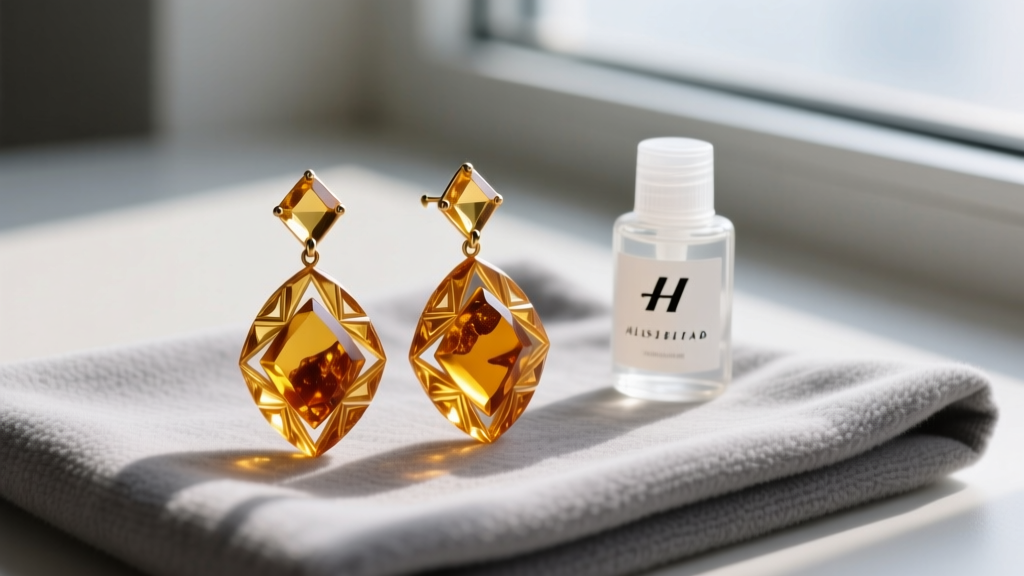
The Material Science of Alexis Bittar Lucite Earrings
Alexis Bittar revolutionized the bridge jewelry market by elevating Lucite—a premium brand name for polymethyl methacrylate (PMMA) acrylic—from a utilitarian plastic to a luxury medium. His signature hand-carved Alexis Bittar Lucite earrings are celebrated for their luminous colorways, intricate textures, and seamless integration with gold-tone and rhodium-plated hardware. However, owning these statement pieces requires an understanding of PMMA’s inherent physical and chemical vulnerabilities.
Unlike glass or gemstones, Lucite sits at a 3 to 4 on the Mohs hardness scale. This makes it exceptionally prone to micro-abrasions from everyday environmental dust, which contains silica (Mohs 7). Furthermore, the chemical bonds in PMMA are highly reactive to common household solvents, leading to irreversible structural damage if cleaned improperly. This comprehensive troubleshooting guide addresses the most frequent issues collectors and daily wearers face, providing actionable, laboratory-grade solutions to restore and maintain your earrings.
Diagnosing Cloudiness and Surface Scratches
The most common complaint among vintage and contemporary Bittar collectors is the gradual loss of optical clarity. When your once-glassy lucite drops or studs appear cloudy, frosted, or dull, you are likely looking at a dense network of micro-scratches rather than internal degradation.
The Improper Cleaning Trap
Many owners inadvertently cause this cloudiness by wiping their earrings with abrasive materials like paper towels or tissue paper, which contain wood pulp fibers capable of scoring the acrylic surface. Similarly, using ultrasonic jewelry cleaners is a catastrophic error; the high-frequency cavitation bubbles can pit the surface of the Lucite and violently shake the glued hardware loose from the acrylic body.
The 3-Step Restoration Protocol
To remove surface scratches and restore optical clarity, you must use a progressive abrasive polishing system designed specifically for plastics. The industry standard is the Novus Plastic Polish kit, which utilizes a three-tier approach:
- Novus #3 (Heavy Scratch Remover): Use this only for deep, tactile gouges. It contains aggressive pumice particulates that will level the acrylic surface.
- Novus #2 (Fine Scratch Remover): This is your primary workhorse for general cloudiness and micro-abrasions. Apply with a clean, 100% cotton flannel cloth using tight, circular motions.
- Novus #1 (Plastic Clean & Shine): A non-abrasive surfactant that removes the residual polishing oils and leaves an anti-static, UV-resistant barrier.
Expert Warning: Never use glass cleaners (like Windex) or ammonia-based solutions on Lucite. Ammonia attacks the polymer chains in PMMA, accelerating environmental stress cracking and causing permanent internal fogging.
Chemical Damage: The Alcohol and Acetone Hazard
A frequent troubleshooting scenario involves earrings that have developed a web-like pattern of microscopic internal fractures, a phenomenon known as "crazing." This is almost always the result of exposure to isopropyl alcohol, ethanol, or acetone. According to conservation guidelines for acrylic polymers, these solvents act as plasticizers that temporarily soften the PMMA. As the solvent rapidly evaporates, it creates severe surface tension differentials, causing the acrylic to literally tear itself apart on a microscopic level.
If your Alexis Bittar Lucite earrings have suffered from alcohol-induced crazing (often caused by aggressive sanitizing or using nail polish remover nearby), the damage is unfortunately subsurface and cannot be polished out. Prevention is the only viable strategy: always remove your earrings before applying hand sanitizer, hairspray, or acetone-based cosmetics.
Hardware Failure: Re-attaching Loose Posts and Clasps
Because Lucite cannot be soldered, Alexis Bittar relies on high-tension friction fits and specialized jewelry adhesives to bind metal hardware to the acrylic body. Over time, thermal expansion and contraction (from moving between cold outdoor air and heated indoor environments) can break this adhesive bond, resulting in a detached earring post or a loose omega-back clasp.
Why You Must Avoid Cyanoacrylate (Super Glue)
The most destructive mistake an owner can make is reaching for standard cyanoacrylate (Super Glue) to reattach a fallen post. As cyanoacrylate cures, it releases vapors that react with the moisture in the air and the plasticizers in the Lucite. This causes "blooming"—a permanent, frosty white residue that permanently ruins the optical clarity of the surrounding acrylic. Furthermore, cyanoacrylate cures brittle, meaning the post will simply snap off again under the minor torque of putting the earring on.
The Professional Epoxy Repair Method
To properly reattach hardware to Lucite, use a clear, two-part epoxy formulated for mixed media, such as Loctite EA E-30CL or a specialized UV-curing jewelry resin. Follow this precise framework:
- Surface Prep: Use a wooden toothpick dipped in a tiny amount of acetone to clean the old adhesive only from the metal post. Do not let the acetone touch the Lucite.
- Scoring: Lightly score the base of the metal post with fine-grit (600) sandpaper to create a mechanical grip for the epoxy.
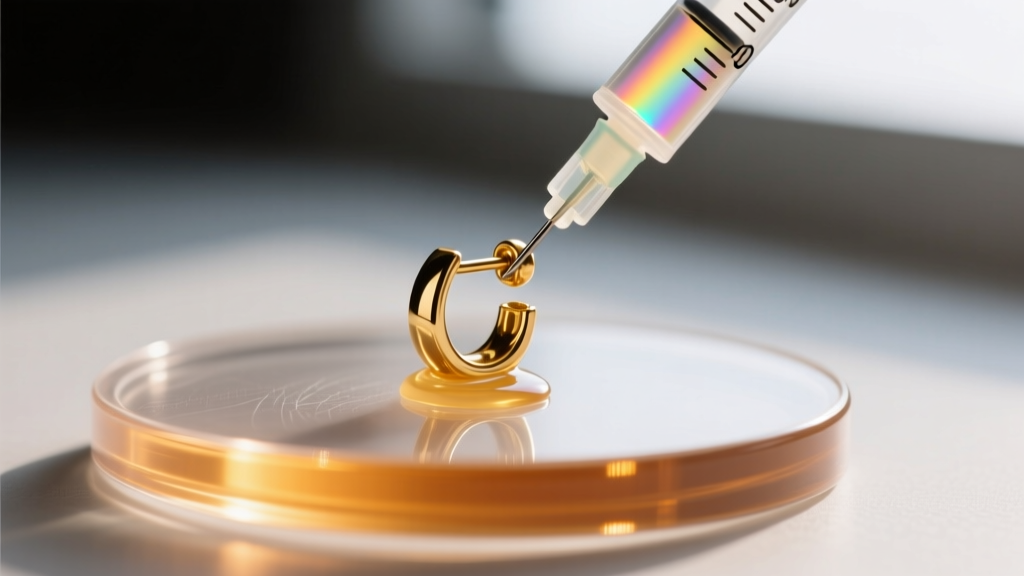
- Application: Mix the two-part epoxy and apply a micro-drop to the post using a precision syringe or toothpick. You need just enough to fill the void; excess will squeeze out and create a visible halo.
- Curing: Seat the post and use painter's tape to hold it perfectly perpendicular to the Lucite body for 24 hours at room temperature (70°F/21°C).
Structural Cracks and Stress Fractures
Drop earrings and large sculptural hoops are subject to leverage stress. If an earring is dropped or caught on a garment, the Lucite can crack. Assessing the viability of a repair depends entirely on the fracture's geometry and location.
| Fracture Type | Characteristics | Repair Viability | Recommended Action |
|---|---|---|---|
| Hairline Stress Crack | Thin, superficial line near a hardware drill hole. | High | Wick capillary acrylic cement (Weld-On 3) into the crack. |
| Split Seam | Complete separation along a carved groove. | Moderate | Two-part UV resin injection, followed by wet-sanding and polishing. |
| Shatter / Chunk Loss | Missing acrylic material or jagged multi-axis break. | None | Retire the piece; structural integrity is permanently compromised. |
| Post-Hole Blowout | The acrylic surrounding the metal post has split. | Low | Drill out to a larger gauge and insert a custom metal sleeve. |
For hairline cracks, professional conservators use solvent cements like Weld-On 3. Unlike glue, this solvent temporarily melts the PMMA edges, fusing them back together at a molecular level as it evaporates. However, it requires a steady hand and proper ventilation, as the capillary action can pull the solvent into unwanted areas if over-applied.
Preventative Maintenance & Storage Protocols
Troubleshooting is ultimately about mitigating the need for repairs. To preserve the structural and aesthetic integrity of your Alexis Bittar Lucite earrings, implement the following storage protocols:
- UV Degradation Prevention: While modern Bittar pieces use UV-stable dyes, prolonged exposure to direct sunlight will eventually cause clear and pale-colored Lucite to yellow (a process called photo-oxidation). Always store your earrings in a closed drawer or an opaque jewelry box.
- Thermal Isolation: Never leave your earrings in a parked car or near a radiator. PMMA begins to soften and warp at temperatures exceeding 160°F (71°C), and rapid temperature swings will weaken the adhesive bonds holding the hardware.
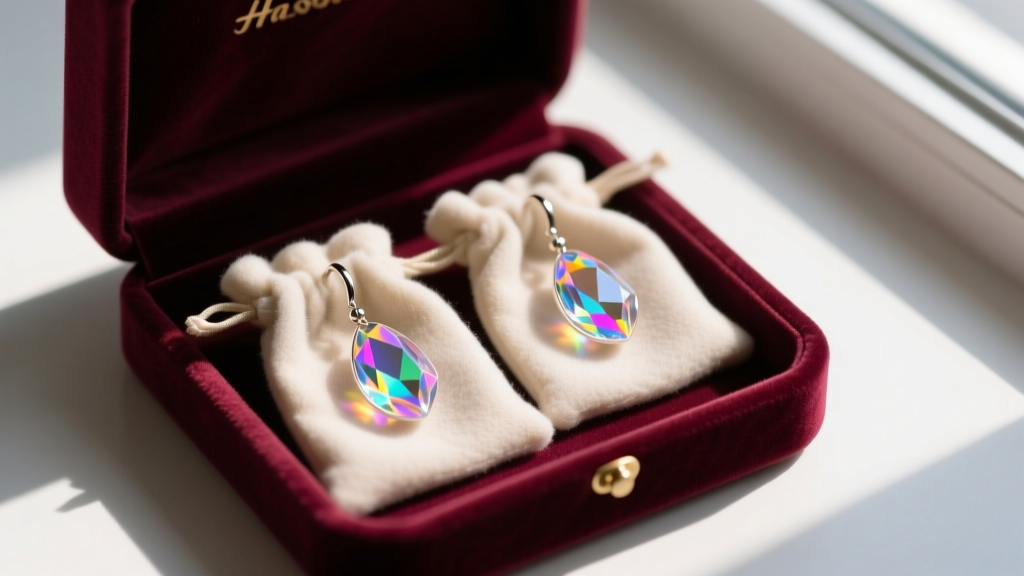
- Individual Isolation: Store each pair in its own soft flannel or microfiber pouch. Storing multiple pairs together in a single compartment guarantees that the metal hardware of one pair will scratch the acrylic body of another.
By treating your Alexis Bittar Lucite earrings not merely as costume jewelry, but as sculptural acrylic artifacts, you can ensure their vibrant colors and structural integrity endure for decades. When in doubt regarding a severe crack or complex hardware failure, consult a professional bench jeweler who has documented experience working with mixed-media plastics and specialized plastic polishing compounds rather than attempting aggressive DIY interventions.


