How to Choose a Large Earring Organizer for Heavy Statement Jewelry
Discover how to troubleshoot and select the perfect large earring organizer for heavy statement pieces, preventing bent posts and tangled dangles.

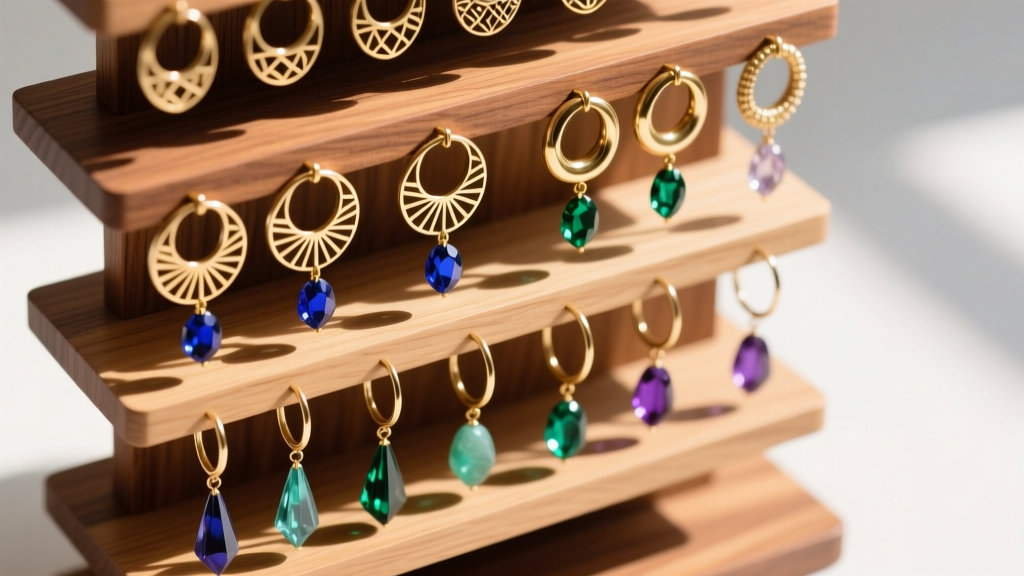
Managing an extensive jewelry collection is a unique challenge, particularly when your repertoire includes oversized hoops, heavy brass dangles, and intricate statement pieces. Standard jewelry boxes simply cannot accommodate the volume or the physical weight of these items. When collectors attempt to force heavy earrings into inadequate storage, the results are predictably disastrous: bent posts, warped metalwork, lost friction backs, and hopelessly tangled chains. If you are struggling with a chaotic drawer or a flimsy display stand that buckles under the weight of your collection, it is time to rethink your approach. In this comprehensive troubleshooting guide, we will diagnose the most common storage failures and help you select a large earring organizer engineered specifically for heavy, oversized jewelry.
The Hidden Costs of Poor Earring Storage
Before investing in a new storage solution, it is crucial to understand the mechanical and chemical damage caused by improper organization. Heavy statement earrings—often weighing between 15 and 40 grams per piece—exert continuous downward force on whatever is holding them. When suspended on thin acrylic rods or crammed into shallow velvet rolls, this gravitational pull leads to metal fatigue. According to the Gemological Institute of America (GIA), improper storage is a leading cause of structural degradation in fine jewelry, second only to chemical exposure.
Beyond physical warping, poor organization accelerates tarnishing. When heavy silver or copper-alloy earrings are piled together in a non-climate-controlled space, the friction between pieces strips away protective rhodium plating or anti-tarnish coatings. Furthermore, the microscopic scratches created by tangled dangles catch moisture and skin oils, creating localized galvanic cells that speed up oxidation. A proper large earring organizer must solve both the mechanical stress and the environmental exposure problems simultaneously.
Diagnosing Your Current Storage Failures
If your current setup is failing, it usually exhibits one of three distinct symptoms. Identifying your specific failure mode will dictate the type of organizer you need to buy or build.
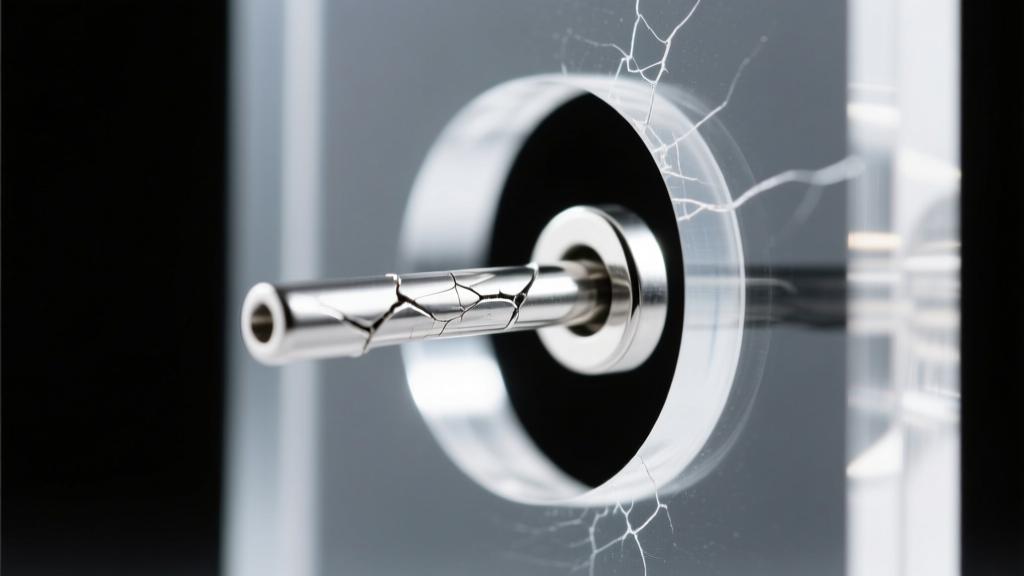
1. The Bent Post Syndrome
This is the most common issue with laser-cut acrylic grid organizers. Standard earring posts are typically 20-gauge (0.81mm thick) or 18-gauge (1.02mm thick). Many mass-produced acrylic organizers feature holes that are only 0.7mm to 0.8mm wide to keep manufacturing costs low. When you attempt to push a heavy 18-gauge brass or sterling silver post through a tight acrylic hole, the lateral pressure bends the post. Over time, repeatedly bending the post back into shape causes work-hardening, eventually leading to a clean snap at the solder joint.
2. The T-Bar Collapse
Freestanding T-bar organizers are popular for dangles, but they are notoriously unstable for heavy pieces. A standard acrylic T-bar might support 200 grams total, but if you hang five pairs of 30-gram resin and metal drop earrings on one side, the center of gravity shifts. The base lacks the necessary counterweight, resulting in the entire organizer tipping over, which can bend earring hooks and scratch gemstones against the tabletop.
3. The Velvet Roll Crush
Travel rolls and shallow drawer inserts rely on tension to hold earrings in place. Heavy statement pieces with wide ear wires or lever-back closures do not fit neatly into standard 10mm slits. Forcing them in crushes the metalwork, while oversized hoop earrings simply fall out when the roll is unrolled, leading to lost pieces.
Material and Build: Why Flimsy Organizers Fail
When shopping for a large earring organizer capable of handling heavy jewelry, the material composition is non-negotiable. You must evaluate the structural integrity of the primary materials used in the market today.
- Cast Acrylic (PMMA): While visually appealing and dust-resistant, acrylic is brittle. It has a low tensile strength and will crack if subjected to the point-load stress of heavy metal hooks. Only choose acrylic if the horizontal rods are at least 6mm in diameter and reinforced with metal cores.
- MDF Wood with Veneer: Medium-density fiberboard is heavy and stable, making it an excellent base material. However, the veneer can peel in high humidity. Look for sealed, lacquered MDF or solid bamboo, which offers superior weight-bearing capabilities without warping.
- PU Leather over Cardboard: Avoid this entirely for heavy earrings. The cardboard core will sag under the weight of statement pieces, causing the organizer to bow in the middle and dump your jewelry onto the floor.
- Tempered Glass and Steel: The gold standard for heavy pieces. Steel frames provide rigid support, while tempered glass shelves offer smooth, snag-free surfaces for wide ear wires.
The Gauge and Post-Size Problem: A Technical Breakdown
To troubleshoot the bent post issue, you must match your jewelry's wire gauge to the organizer's hole diameter. Here is a technical reference chart to ensure compatibility:
| Wire Gauge | Diameter (mm) | Common Jewelry Type | Required Organizer Hole Size |
|---|---|---|---|
| 22-Gauge | 0.64mm | Lightweight studs, fine gold | 0.8mm - 1.0mm |
| 20-Gauge | 0.81mm | Standard commercial earrings | 1.0mm - 1.2mm |
| 18-Gauge | 1.02mm | Heavy statement pieces, hoops | 1.2mm - 1.5mm |
| 16-Gauge | 1.29mm | Cartilage piercings, heavy wire | 1.5mm - 2.0mm |
If you already own an expensive acrylic organizer with holes that are too small, do not throw it away. You can troubleshoot this by using a 1.2mm or 1.5mm micro-drill bit attached to a pin vise to carefully widen the holes by hand. Avoid using power drills, as the high RPM will melt and warp the acrylic.
Configuration Matrix: Matching Organizer Type to Earring Weight
Not all heavy earrings are shaped the same. A 30-gram chandelier dangle requires a completely different storage geometry than a 40-gram solid brass sleeper hoop. The American Gem Society recommends storing pieces individually to prevent scratching, which means your organizer must offer modular spacing.
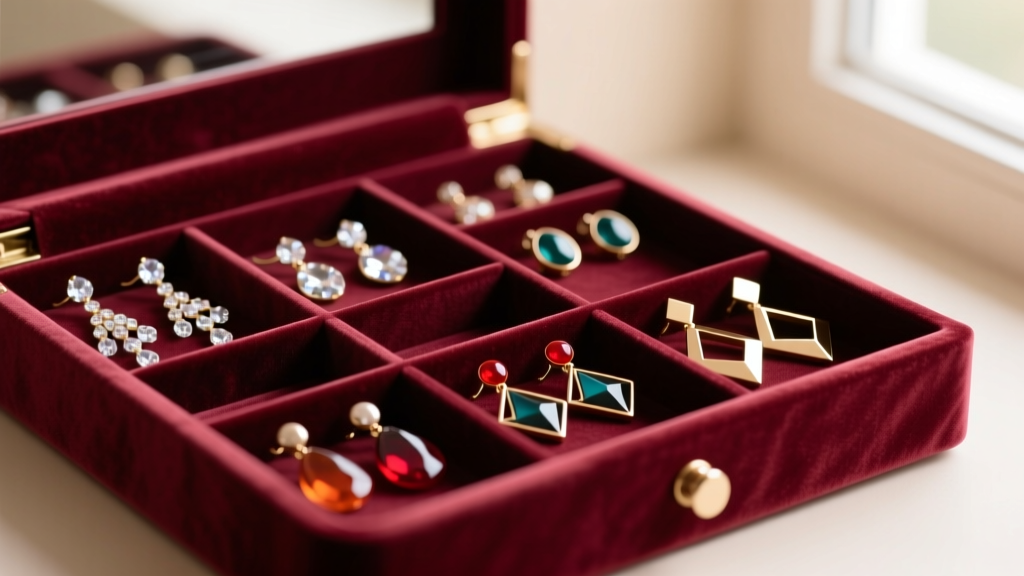
Deep-Drawer Grid Systems
For chandelier dangles and long drop earrings, shallow trays are useless. You need a drawer-style large earring organizer with a minimum depth of 2.5 inches (6.3 cm). This allows the longest elements of the earring to hang freely without resting on the bottom of the drawer, which can cause the ear wire to bend backward. Look for drawers lined with Pacific Silvercloth or untreated cotton flannel, as synthetic velvets can sometimes trap moisture and emit volatile organic compounds (VOCs) that accelerate silver tarnishing.
Slotted T-Bar and Wall-Mounted Racks
For heavy, continuous hoops and huggies, a slotted rack is superior to a hole-grid. Slots allow you to slide the hoop in laterally rather than forcing a post through a tight hole. Wall-mounted wooden racks with 3mm to 5mm wide slots provide excellent weight distribution, transferring the load directly into the wall studs rather than relying on a freestanding base.
DIY Modifications for Existing Organizers
If you are committed to your current large earring organizer but it is failing to protect your heavy pieces, consider these professional-level modifications:
Pro-Tip: Apply a micro-thin layer of Renaissance Wax to the metal contact points of your acrylic or wooden organizer. This reduces friction when inserting heavy posts and creates a temporary vapor barrier that slows down localized tarnishing on the earring posts themselves.
Another common failure point is the loss of earring backs in deep drawers. To solve this, apply small dots of reusable museum putty to the bottom of each grid compartment. This creates a gentle, non-damaging adhesive zone where you can press your silicone or metal friction backs, ensuring they stay exactly where you left them, even if the drawer is opened and closed forcefully.
Maintenance and Tarnish Prevention in Bulk Storage
A large earring organizer holds a massive volume of metal in a confined space, making it a prime environment for rapid oxidation if not properly managed. To troubleshoot tarnish issues in high-capacity storage, integrate 3M Anti-Tarnish Strips into the organizer. These strips utilize a copper-based polymer that absorbs sulfur compounds and other corrosive gases from the ambient air. Place one strip in every enclosed drawer or under the lid of your display case, replacing them every six months. By combining robust structural support with proactive chemical defense, your heavy statement pieces will remain pristine, structurally sound, and ready to wear at a moment's notice.


