2026 Value Guide: Buying Aquamarine and Gold Earrings on a Budget
Discover the true cost of aquamarine and gold earrings in 2026. Compare karat options, gemstone grades, and smart buying strategies for maximum value.

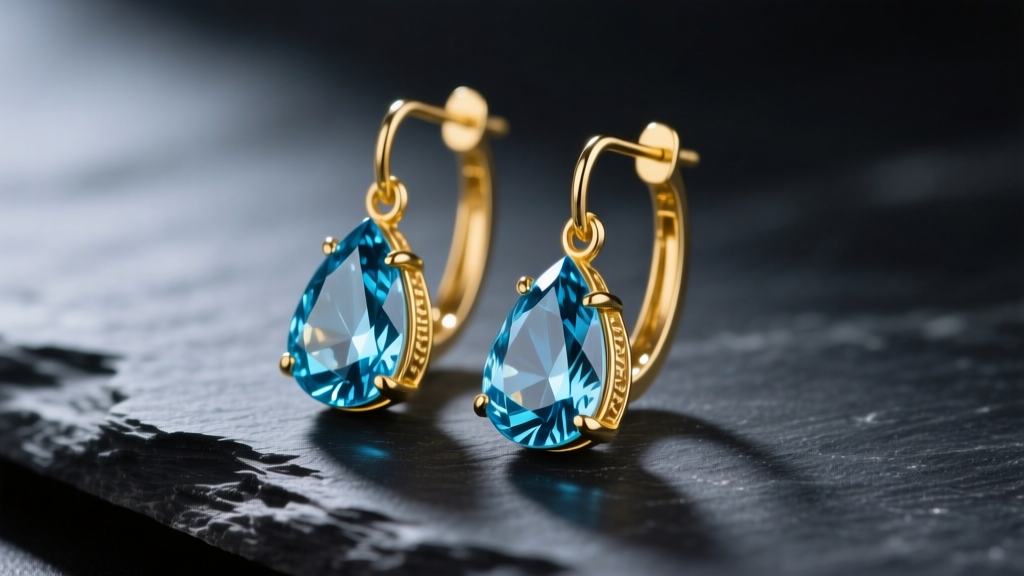
The True Cost of Aquamarine and Gold Earrings in 2026
Navigating the fine jewelry market requires a sharp eye for both aesthetics and economics. As we move through 2026, the intersection of fluctuating precious metal markets and shifting gemstone supply chains has fundamentally altered the pricing landscape. When evaluating aquamarine and gold earrings, buyers are often caught between the allure of luxury and the reality of their budget. The secret to maximizing value isn't simply finding the lowest price tag; it is understanding the precise material grades, gemological treatments, and structural integrity that dictate a piece's true worth.
Aquamarine, a stunning blue variety of the mineral beryl, has long been a staple in spring and summer jewelry collections. However, not all aquamarines are created equal, and pairing them with the wrong gold alloy can lead to premature wear or inflated costs. This comprehensive value assessment breaks down exactly where your money goes when purchasing these earrings, providing a data-driven framework to help you secure heirloom-quality pieces without overpaying for brand premiums or unnecessary carat weights.
Decoding the Gold: 10K vs. 14K vs. 18K Value Proposition
The gold setting accounts for a significant portion of the baseline cost of your earrings. According to the Federal Trade Commission Jewelry Guides, gold purity is measured in karats, with 24K being pure gold. Because pure gold is far too soft for daily wear, it is alloyed with metals like copper, silver, and zinc. Understanding these alloys is the first step in budget optimization.
| Gold Karat | Gold Content | Durability & Wear | 2026 Price Premium | Best Earring Style |
|---|---|---|---|---|
| 10K Gold | 41.7% | Highly durable, prone to tarnishing, higher nickel allergy risk | Baseline (Lowest) | Heavy hoops, cartilage clickers |
| 14K Gold | 58.5% | Excellent balance of strength and color, hypoallergenic if nickel-free | +35% to 50% | Studs, huggies, drop earrings |
| 18K Gold | 75.0% | Softer, richer yellow hue, scratches more easily | +80% to 120% | Delicate studs, special occasion dangles |
The Value Verdict: For most buyers, 14K gold offers the optimal return on investment. It provides the rich, warm luster associated with fine jewelry while maintaining the tensile strength required to secure gemstone prongs. Upgrading to 18K gold for heavy dangle earrings is actually a structural liability; the softer metal increases the risk of prongs pulling away from the aquamarine over time. Conversely, 10K gold, while budget-friendly, often lacks the visual depth to complement the icy blue of aquamarine and can cause contact dermatitis in sensitive earlobes.
Aquamarine Grading: Where Your Budget Actually Goes
Unlike diamonds, which are strictly graded by the 4Cs, colored gemstones like aquamarine are evaluated primarily on color saturation and tone. The Gemological Institute of America (GIA) notes that the most valuable aquamarines exhibit a pure, vibrant blue to slightly greenish-blue hue, free of visible inclusions.
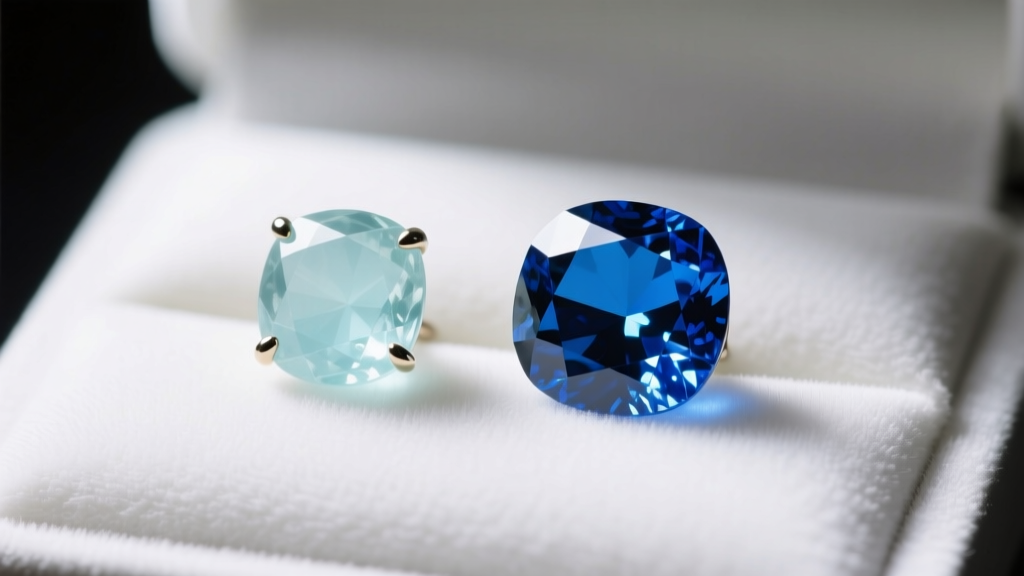
The 'Santa Maria' Premium
If you are browsing high-end jewelers, you will inevitably encounter the term 'Santa Maria.' Originally referring to a specific, now-depleted mine in Brazil, the term is now used trade-wide to describe aquamarines with an exceptionally deep, saturated blue color. In 2026, genuine Santa Maria aquamarine earrings command a premium of 200% to 400% over standard commercial-grade stones. If your budget is strict, a well-cut, lighter-toned 'sky blue' aquamarine set in 14K rose gold can offer a stunning, modern aesthetic at a fraction of the Santa Maria cost.
The Reality of Heat Treatment
A crucial factor in value assessment is understanding gemstone treatments. Over 90% of the aquamarine on the market is heat-treated to around 400°C to eliminate greenish or yellowish secondary hues, resulting in the pure blue color consumers desire. This treatment is permanent, universally accepted in the gemological community, and does not negatively impact the stone's structural integrity or long-term value. However, you must avoid stones that have been 'fracture-filled' with resins or oils to hide internal cracks, as this drastically reduces value and makes the stone highly vulnerable to damage.
Smart Buying Strategies: Maximizing Value
To stretch your budget without sacrificing the visual impact of your aquamarine and gold earrings, implement these expert purchasing strategies:
- Prioritize Cut Over Carat: Aquamarine is a relatively large gemstone by nature. A poorly cut 3-carat stone will look dull and lifeless, while a precision-cut 1.5-carat stone will reflect light brilliantly, appearing larger and more vibrant. Always pay for the cut quality first.
- Embrace Halo Settings: If you desire the look of a massive 4-carat aquamarine drop but lack the $3,000+ budget, opt for a 1-carat center stone surrounded by a micro-pave diamond or white sapphire halo. This optical illusion triples the visual footprint of the earring for a 40% lower cost.
- Consider Lab-Created Alternatives: While natural aquamarine holds traditional prestige, lab-created beryl offers identical chemical and optical properties. For fashion-forward, oversized statement earrings where natural stones would be prohibitively expensive, high-quality simulants or lab-grown options provide flawless clarity at a 70% discount.
- Opt for Bezel Settings for Active Lifestyles: Aquamarine ranks 7.5 to 8 on the Mohs hardness scale. While hard enough for daily wear, it is somewhat brittle. If you are buying earrings for everyday use, a bezel setting (where gold completely encircles the gem's edge) protects the vulnerable girdle from chipping, saving you from costly future repairs.
Red Flags and Failure Modes to Avoid
When shopping on a budget, discount retailers often cut corners in ways that are invisible to the untrained eye. Protect your investment by actively screening for these common failure modes:
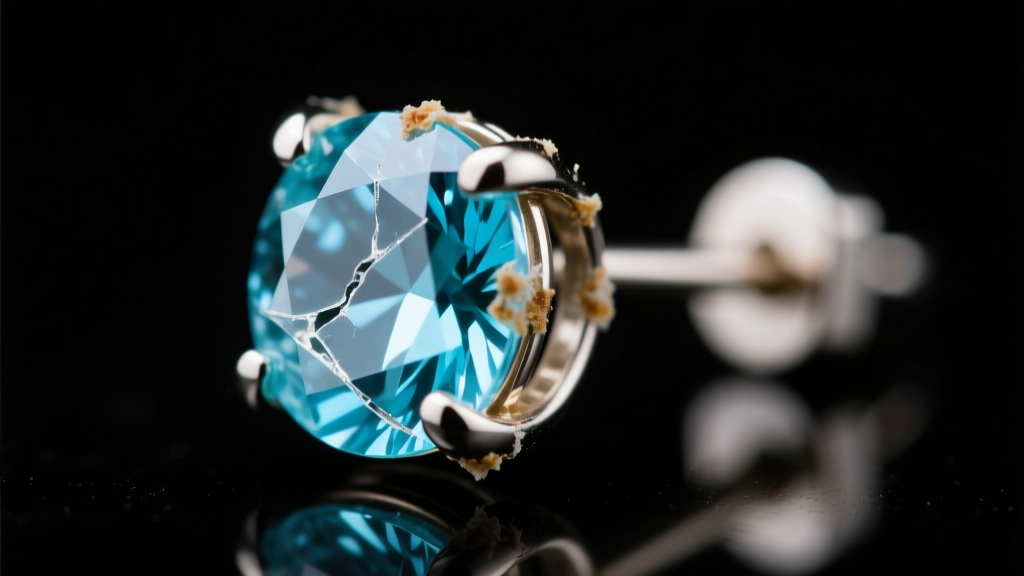
1. Glued Prongs and 'Gypsy' Settings
Inspect the setting under magnification. In mass-produced, low-budget earrings, manufacturers sometimes use industrial epoxy to secure the aquamarine instead of properly burnishing the gold prongs over the stone's girdle. Over time, exposure to skin oils, perfumes, and temperature changes degrades the glue, leading to sudden stone loss. Always ensure the metal is physically gripping the gem.
2. Hollow Ear Posts
To save on gold weight (and therefore cost), some manufacturers use hollow tubular gold for the earring posts that pass through your piercing. These posts are notoriously weak and will bend or snap under the slight pressure of inserting a tight earring back. Always verify that the post is solid gold, ideally with a slightly thicker gauge (such as 20-gauge or 18-gauge) for structural stability.
3. Ultrasonic Cleaner Vulnerability
If a seller warns you never to use an ultrasonic cleaner on your aquamarine earrings, ask why. While natural, untreated aquamarine is generally safe in ultrasonics, stones with heavy internal fracturing or fracture-filling will shatter or cloud when subjected to high-frequency vibrations. This warning is often a hidden admission of poor gemstone clarity.
Final Verdict: Building a Timeless Collection
Evaluating the budget and value of aquamarine and gold earrings in 2026 requires looking past the initial price tag. The smartest buyers allocate their budget toward precision gemstone cutting and durable 14K gold settings, rather than paying exorbitant premiums for deep 'Santa Maria' color grades or fragile 18K alloys. By understanding the realities of heat treatment, avoiding structural red flags like hollow posts and glued settings, and leveraging optical illusions like halo designs, you can acquire breathtaking, high-quality earrings that offer lifelong durability and enduring style. True value in fine jewelry is found at the intersection of gemological integrity and masterful metallurgy.


