Technical Guide to Archival Earring Display Box Selection
Discover the technical specifications for an archival earring display box. Learn about anti-tarnish materials, compartment geometry, and preservation.

The Science of Jewelry Preservation: Why Standard Boxes Fail
For serious collectors and fine jewelry archivists, an earring display box is not merely a vessel for organization; it is a controlled micro-climate. Standard commercial jewelry boxes often utilize materials that actively accelerate the degradation of precious metals and gemstones. As of 2026, museum-grade preservation standards dictate that any enclosure housing fine earrings must pass rigorous off-gassing and chemical stability tests.
The primary culprit in jewelry degradation is the use of Polyvinyl Chloride (PVC) and low-grade polyurethanes in box linings and structural adhesives. Over time, PVC releases hydrochloric acid and phthalate plasticizers. According to the American Institute for Conservation, these volatile organic compounds (VOCs) cause rapid silver sulfide tarnishing, degrade the porous nacre of pearls, and induce stress-corrosion cracking in karat gold alloys. Selecting a proper archival earring display box requires a deep understanding of material chemistry and compartment geometry.
Material Specifications for Archival Storage
When evaluating the interior lining and structural components of a display box, conservationists rely on the Oddy Test—a 28-day accelerated aging protocol developed by the British Museum to detect corrosive off-gassing. Below is a technical breakdown of acceptable versus unacceptable materials for high-end earring storage.
| Material Type | Chemical Stability | Archival Suitability | Common Use Case |
|---|---|---|---|
| Polyethylene (PE) | Highly Stable | Excellent (Passes Oddy Test) | Structural trays, modular inserts |
| Polypropylene (PP) | Highly Stable | Excellent (Passes Oddy Test) | Hinges, latches, transparent lids |
| Acid-Free Board (pH 7.5-8.5) | Stable (Buffered) | Excellent for Silver/Gold | Substrate base layers, dividers |
| Polyvinyl Chloride (PVC) | Unstable (Off-gasses HCl) | Fail (Causes Corrosion) | Avoid entirely in fine jewelry |
| Polyurethane Foam | Unstable (Degrades to acids) | Fail (Causes Pearl Damage) | Avoid; use polyethylene foam instead |
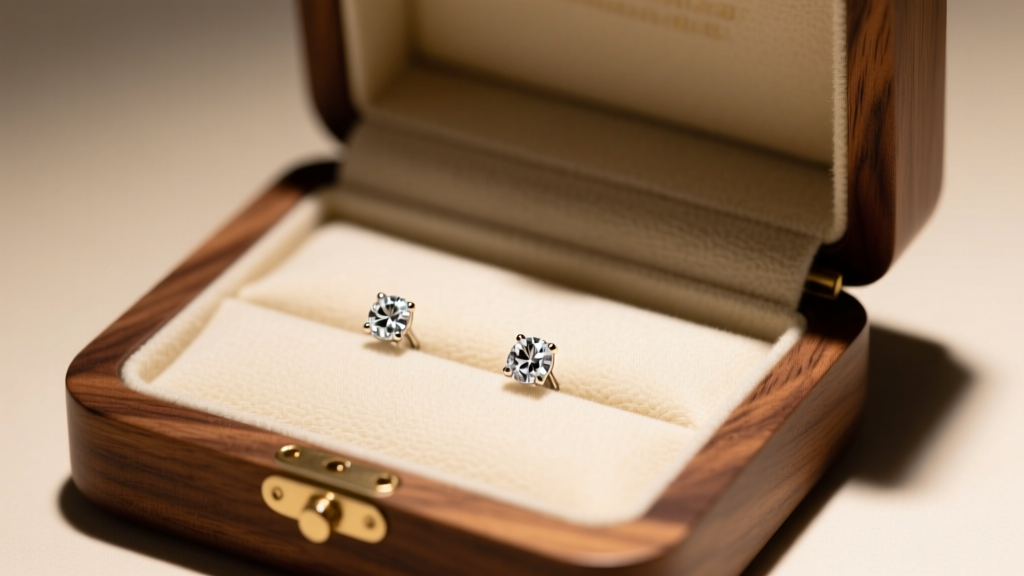
For the exterior shell, kiln-dried hardwoods like walnut or mahogany are acceptable only if they are sealed with a water-based polyurethane or an acrylic dispersion to prevent the migration of natural wood acids (such as tannic and acetic acids) into the display cavity.
Compartment Geometry: Sizing for Specific Earring Silhouettes
A critical failure point in many commercial display boxes is the homogenization of compartment sizes. Earrings possess vastly different spatial and structural requirements based on their silhouette and backing mechanisms.
Studs and Huggies: Depth and Post Protection
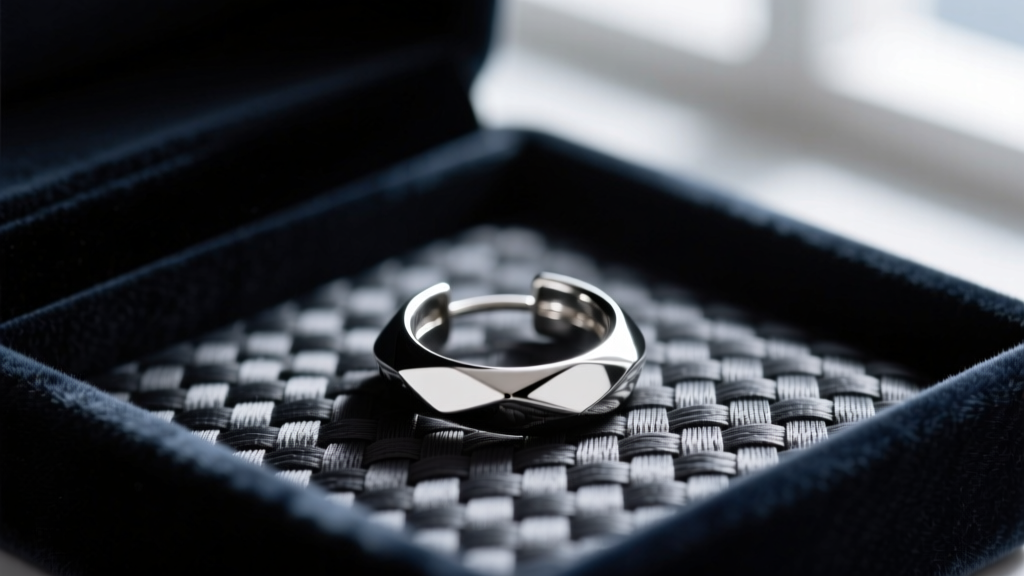
Stud earrings require a minimum compartment depth of 1.25 inches (31.75 mm). This specific depth accommodates the earring post, the butterfly or screw-back clutch, and a 5mm buffer zone. If the depth is too shallow, closing the lid will exert downward pressure on the post, leading to micro-bending or snapping of the solder joint at the base of the gemstone setting. For huggies, which feature a hinged hoop mechanism, shallow channels measuring 2.0 by 1.0 inches prevent the clasps from being accidentally triggered and unfastened during transit.
Dangles and Chandeliers: Suspension vs. Flat Lay
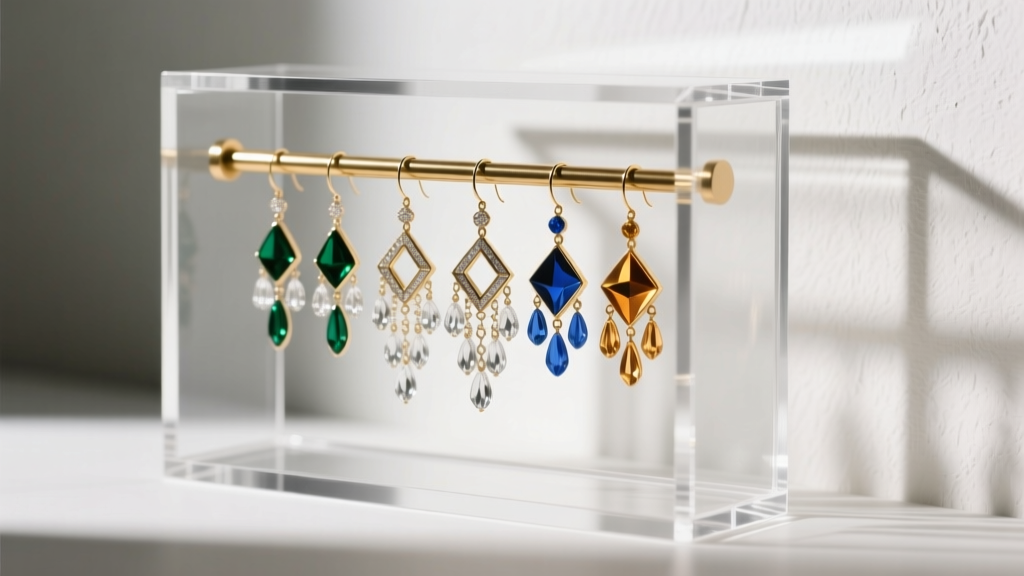
Chandelier and drop earrings are highly susceptible to chain tangling and gemstone abrasion when laid flat. An expertly engineered earring display box for dangles utilizes a suspension system. This involves a built-in horizontal rod (ideally made of brass or acrylic) positioned at least 3.5 inches above the base. Suspending the earring by its primary hook allows the articulated segments to hang freely, preserving the kinetic movement of the piece and preventing metal-on-metal scratching.
Ear Cuffs and Cartilage Pieces: Curved Inserts
Ear cuffs rely on precise tension and a specific C-spring curvature to grip the cartilage securely. Storing them in flat, rigid slots can slowly stretch the metal, resulting in a loss of tension. High-end archival boxes feature thermoformed, curved polyethylene inserts that mimic the radius of the human ear, ensuring the cuff retains its original structural memory.
Environmental Controls and Anti-Tarnish Integration
Tarnish on silver and copper alloys is primarily caused by a reaction with hydrogen sulfide (H2S) gas present in ambient air. To combat this within a sealed earring display box, active environmental controls must be integrated into the design.
- Pacific Silvercloth Integration: This specialized fabric is embedded with microscopic silver particles. Through a galvanic sacrifice mechanism, the H2S gas reacts with the fabric's silver particles before it can reach and tarnish the actual jewelry. It is most effective when used as an interior lining rather than just a cover.
- 3M Anti-Tarnish Strips: These strips utilize chemically treated copper substrates to absorb and neutralize H2S and other corrosive gases. For a standard 10x10 inch display box, one 2-inch strip provides approximately 6 to 12 months of active protection, depending on the frequency of opening the box and the ambient humidity.
- Desiccant Protocols: While controlling moisture does not stop H2S tarnish, it prevents the oxidation of base metals and protects moisture-sensitive gems like opals and turquoise from cracking due to rapid humidity fluctuations. Indicating silica gel cassettes (which change color when saturated) should be housed in a dedicated, ventilated sub-compartment.
According to gemological preservation guidelines outlined by the Gemological Institute of America (GIA), maintaining a stable relative humidity (RH) between 40% and 50% is critical for organic gems like pearls and amber, which can desiccate and craze in overly dry environments or suffer from fungal growth in high humidity.
Buyer’s Matrix: Evaluating High-End Options
When procuring an archival-grade earring display box, use this technical checklist to evaluate the manufacturer's claims:
- Lignin and Acid Testing: Request a certificate of analysis confirming the interior boards are lignin-free and have a pH between 7.0 and 8.5.
- Adhesive Verification: Ensure that all fabric-to-board bonding utilizes stable, non-off-gassing acrylic adhesives rather than hot-melt glues or rubber-based cements.
- Hinge and Hardware Composition: External hinges should be stainless steel or solid brass. Avoid zinc-alloy or nickel-plated hardware, which can corrode and introduce metallic dust into the display cavity.
- Seal Integrity: The lid must feature a compression gasket (such as silicone or neoprene) to create a semi-hermetic seal, drastically reducing the exchange of ambient air and extending the life of anti-tarnish strips.
Maintenance Protocols for Long-Term Display
Even the most advanced earring display box requires a strict maintenance protocol to ensure long-term preservation. Every six months, the micro-climate should be reset. This involves replacing the 3M anti-tarnish strips, recharging or replacing the silica gel desiccants, and gently vacuuming the interior polyethylene inserts with a HEPA-filtered micro-vacuum to remove accumulated dust and skin oils transferred from handling. Furthermore, earrings should be cleaned with a specialized, non-abrasive jeweler's cloth before being returned to the archival environment, ensuring that no acidic residues from fingerprints are sealed inside the display cavity.