Claire's Earrings Cost vs Material Quality: 2026 Guide
Analyze the true Claire's earrings cost against material quality, gauge sizes, and safety for fresh piercings versus healed lobes in 2026.

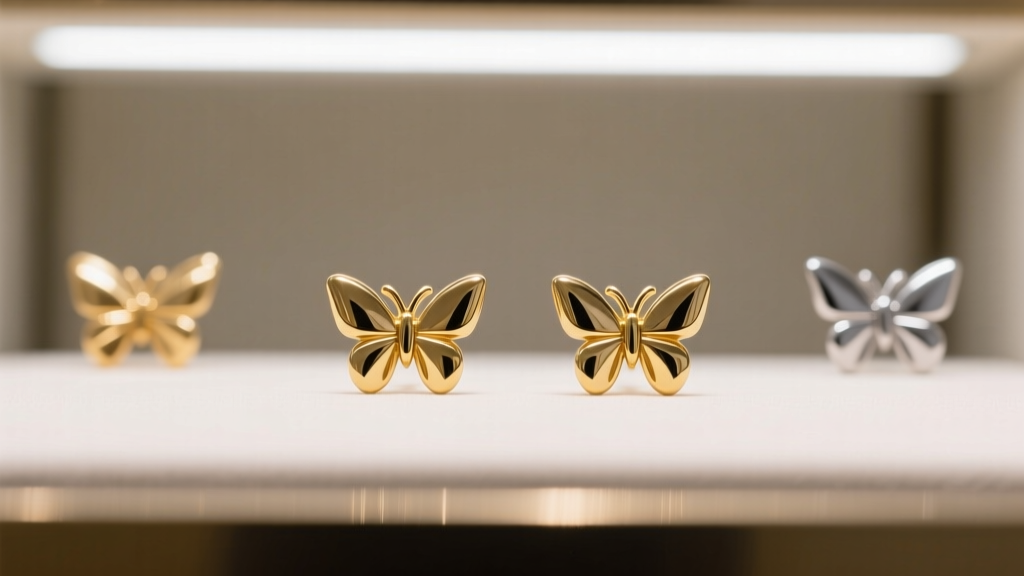
For decades, the illuminated mall storefront of Claire's has been a rite of passage for first-time ear piercings and affordable accessory shopping. But as consumers become more educated about metallurgy, biocompatibility, and body modification safety, a critical question has emerged: does the low Claire's earrings cost justify the materials you are actually putting into your body? In 2026, the gap between mass-produced mall jewelry and professional body jewelry has never been more apparent. Understanding this difference requires looking past the price tag and examining the exact material grades, gauge sizes, and structural properties of these accessories.
The True Breakdown of Claire's Earrings Cost in 2026
When you walk into a Claire's today, the pricing structure is generally divided into three distinct tiers. However, the cost rarely reflects the intrinsic value of the raw materials used. Instead, you are paying for brand accessibility, trend-driven designs, and retail convenience.
- Basic Fashion Studs ($5 - $12): These are typically made from a base metal alloy (like brass or copper) with a microscopic layer of flash plating. The posts are often glued or soldered to the decorative front, creating a weak point that can snap under pressure.
- Mid-Tier Hoops and Dangles ($15 - $28): Usually constructed from 'surgical steel' or zinc alloys. While they look substantial, the internal wire thickness is often incredibly thin, making them prone to warping when inserted into a healed piercing.
- 'Premium' Piercing Studs ($20 - $35+): Marketed specifically for fresh piercings, these claim to be hypoallergenic. While they may use slightly better grades of steel or thicker gold plating, they still fall short of professional implant-grade standards, and the cost is heavily inflated by the piercing service bundle.
Material Analysis: What You Are Actually Paying For
To truly evaluate the Claire's earrings cost, we must dissect the metallurgical properties of their most common materials and compare them to professional body jewelry standards.
The 'Surgical Steel' Illusion
The term 'surgical steel' is largely an unregulated marketing buzzword. In most mall jewelry, this refers to 316L stainless steel. While 316L is excellent for surgical tools that are sterilized and used briefly, it is highly problematic for long-term body jewelry. 316L steel contains between 8% and 10.5% nickel. When worn in a piercing, the saline environment of the human body causes the nickel to leach out, triggering contact dermatitis in sensitive individuals. Professional piercers, by contrast, use ASTM F-136 implant-grade titanium, which contains zero nickel and is biologically inert, meaning the body will not reject it or react to it.
Gold-Plated vs. Solid Gold Realities
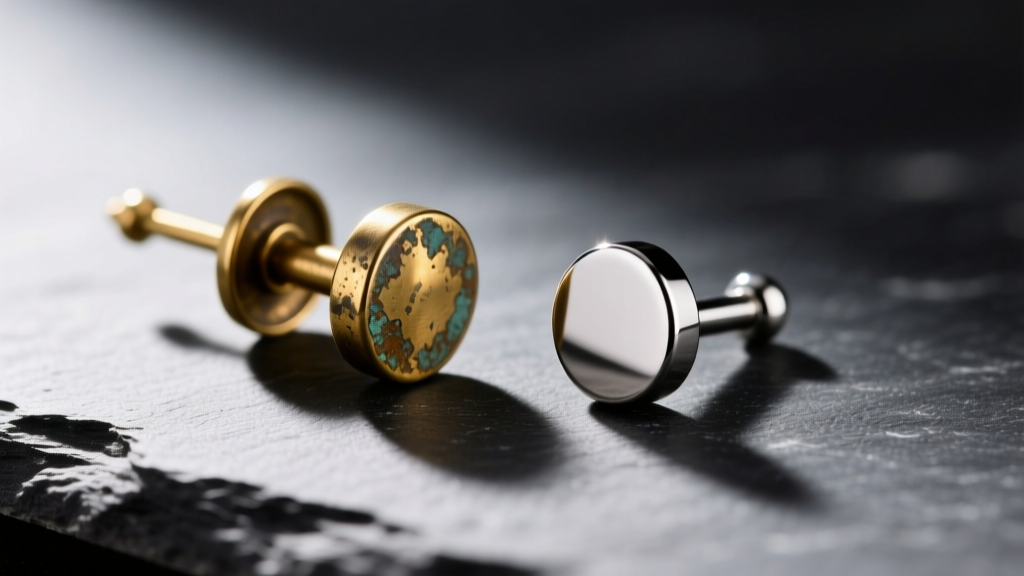
Claire's offers many 'gold' earrings, but at the $10 to $25 price point, these are never solid gold. They utilize flash plating—a process where a layer of gold less than 0.5 microns thick is electroplated over a base metal. According to the American Academy of Dermatology, once this microscopic plating wears away from friction and sweat, the underlying nickel-heavy brass or copper is exposed directly to the fistula (the piercing hole). Professional studios charge upwards of $60 to $150 for earrings, but they use solid 14k or 18k nickel-free gold that will last a lifetime without degrading.
The Hidden Costs of Allergic Reactions and Infections
The initial Claire's earrings cost might seem like a bargain, but the secondary costs of dealing with material failure can be steep. Allergic contact dermatitis from nickel exposure results in red, itchy, weeping piercings that mimic infections. Treating these reactions requires topical steroids, antibiotics, and eventually, the cost of replacing the jewelry entirely. Furthermore, the standard butterfly backing used on almost all Claire's studs is a notorious harbor for bacteria, dead skin cells, and hair products. The tight, enclosed mechanism restricts airflow to the healing fistula, creating an anaerobic environment where bacteria thrive. Professional flat-back labrets, which cost more upfront, eliminate this trap entirely and allow the piercing to breathe and drain properly.
Claire's vs. Professional Piercing Studios: A Material & Cost Matrix
When deciding where to spend your money, it is vital to compare the complete package—not just the jewelry, but the methodology and safety standards. The Association of Professional Piercers (APP) strongly advises against the use of piercing guns and substandard alloys for fresh piercings.
| Feature | Claire's Mall Jewelry & Piercings | Professional Piercing Studio |
|---|---|---|
| Average Jewelry Cost | $5 - $35 | $40 - $150+ |
| Primary Material | 316L Steel, Brass, Flash-Plated Alloys | ASTM F-136 Titanium, Solid 14k/18k Gold |
| Nickel Content | High (in steel and base metals) | Zero (Nickel-Free) |
| Standard Gauge Size | 20g or 18g (Very Thin) | 16g or 14g (Structurally Sound) |
| Backing Style | Butterfly Clutch (Traps Bacteria) | Flat-Back Labret (Threadless or Internal) |
| Sterilization Method | Wipe-down or UV cabinet (Non-Medical) | Autoclave Spore-Tested (Medical Grade) |
Gauge Sizes and Structural Integrity
One of the most overlooked aspects of the Claire's earrings cost debate is the physical thickness of the jewelry post, known as the gauge. Mall jewelry is predominantly manufactured in 20-gauge (0.81mm) or 18-gauge (1.02mm) to save on metal costs and to fit the proprietary cassettes used in their piercing guns.
While a thin 20g wire might be fine for a temporary fashion earring in a fully healed, decades-old lobe piercing, it is disastrous for cartilage or fresh tissue. Thin wires act like a cheese cutter; if the earring is snagged on a sweater or hairbrush, the thin metal will slice right through the delicate healing fistula. Professional piercers use 16-gauge (1.29mm) or 14-gauge (1.60mm) jewelry for lobes and cartilage. This added thickness provides structural integrity, prevents migration, and drastically reduces the risk of the jewelry tearing through the tissue during a snag.
When to Buy Mall Jewelry vs. When to Invest
Does this mean you should never purchase from a mall retailer? Not necessarily. It comes down to understanding the biological state of your piercing and managing your expectations regarding longevity.
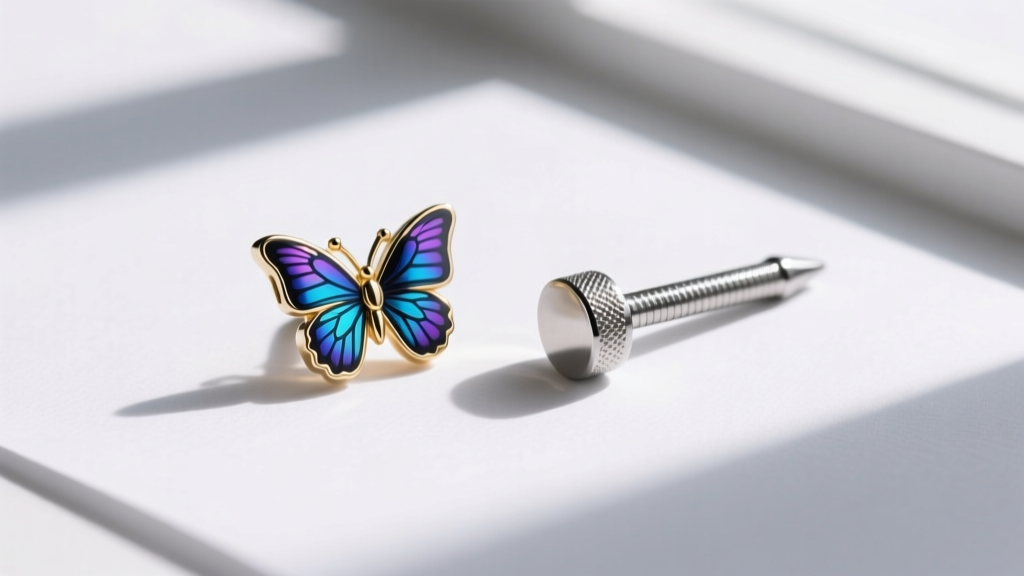
- Buy Mall Jewelry When: You have fully healed, mature lobe piercings (at least 1-2 years old) and you want a trendy, inexpensive accessory for a single event or a short season. If your ears are not sensitive to nickel, fashion jewelry is a fun, low-stakes way to experiment with aesthetics.
- Invest in Professional Grade When: You are getting a brand-new piercing (lobe or cartilage), you have a known nickel allergy, or you are buying jewelry for a child whose developing immune system and skin barriers are more vulnerable to heavy metal exposure and infection.
Final Verdict on Value and Safety
Ultimately, the Claire's earrings cost reflects a fast-fashion approach to body modification. You are paying for immediate gratification, recognizable branding, and accessible mall locations. However, when you factor in the high nickel content, the fragile flash plating, the bacteria-trapping butterfly backs, and the structural weakness of 20-gauge posts, the long-term value plummets. For fresh piercings, cartilage work, or anyone prone to contact dermatitis, the initial savings are quickly negated by the physical discomfort and the eventual need to replace the jewelry. In 2026, prioritizing biocompatible materials like implant-grade titanium and solid gold remains the gold standard for ear health, proving that when it comes to what you put inside your body, you truly get what you pay for.


