Art Deco Amber Earrings: Material Properties & Authentication Guide
Explore the material properties of art deco amber earrings. Compare Baltic vs. Dominican amber, metal pairings, and authentication tips for collectors.

The Allure of Art Deco Amber Earrings: A Material Overview
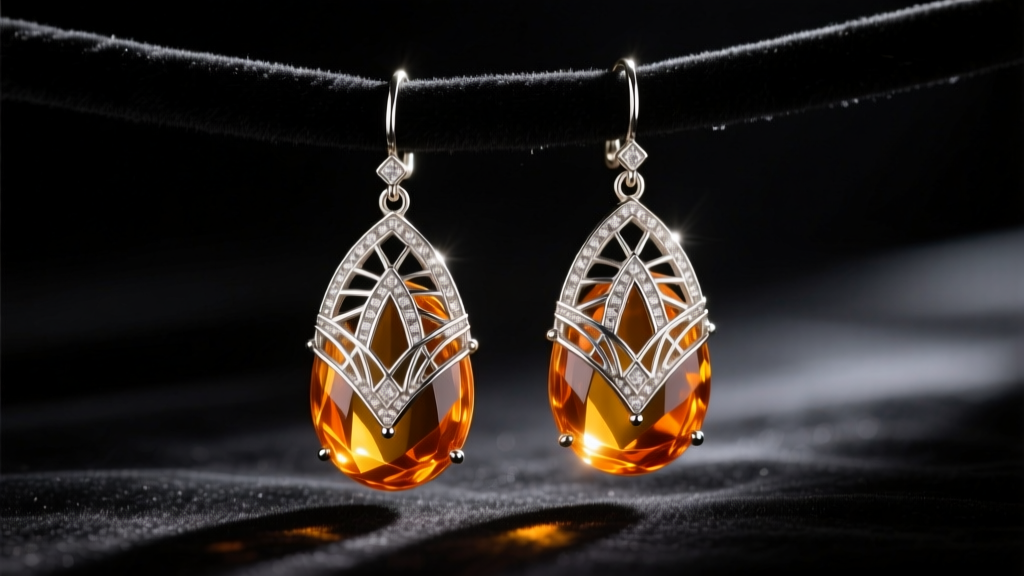
The Art Deco era (roughly 1920 to 1939) was defined by a radical departure from the flowing, organic lines of the preceding Art Nouveau period. Designers embraced stark geometry, bold color contrasts, and the sleek machinery of the modern age. While diamonds, onyx, and rock crystal dominated the high jewelry houses of Paris, art deco amber earrings occupied a unique and highly coveted niche. Amber provided a necessary organic warmth that contrasted beautifully with the cold, industrial precision of platinum and white gold filigree.
For modern collectors and jewelry historians, understanding the material science of amber is critical. Unlike crystalline gemstones formed under immense tectonic pressure, amber is an organic gemstone—specifically, fossilized tree resin. Its polymerization process, physical vulnerabilities, and distinct chemical signatures dictate how these vintage earrings were constructed, how they survive today, and how they must be authenticated in the modern market.
The Material Science of Amber: Resin vs. Mineral
To properly evaluate vintage amber jewelry, one must first understand its chemical foundation. Amber is not a mineral; it lacks a crystalline structure. It is a complex mixture of organic compounds, primarily terpenes, that have undergone polymerization and oxidation over millions of years. The initial sticky resin secreted by ancient coniferous trees (primarily from the family Pinaceae or Araucariaceae) hardens into copal, and eventually, over tens of millions of years, into true amber.
From a gemological standpoint, amber possesses a Mohs hardness of just 2.0 to 2.5, making it incredibly soft—easily scratched by a copper coin or even a fingernail if the surface is degraded. Its specific gravity ranges from 1.05 to 1.10, which is remarkably low for a gemstone, giving art deco amber drop earrings a surprisingly lightweight feel on the earlobe despite their often large, dramatic geometric dimensions. Furthermore, amber is amorphous, meaning it does not cleave along defined planes, allowing 1920s lapidaries to carve it into the sharp baguettes, stepped arches, and calibré-cut shapes demanded by Deco aesthetics.
Amber Varieties: Baltic, Dominican, and the Copal Imitation
Not all amber used in vintage jewelry is created equal. The geographic origin of the resin dictates its color stability, inclusion types, and fluorescence. When examining art deco amber earrings, you will typically encounter three primary materials:
| Material Type | Geographic Origin | Approximate Age | Mohs Hardness | UV Fluorescence (365nm) | Key Characteristics |
|---|---|---|---|---|---|
| Baltic Amber (Succinite) | Northern Europe / Baltic Sea | 35 - 50 Million Years | 2.0 - 2.5 | Pale Blue / Greenish-White | Contains 3-8% succinic acid; often opaque or 'butterscotch' colored. |
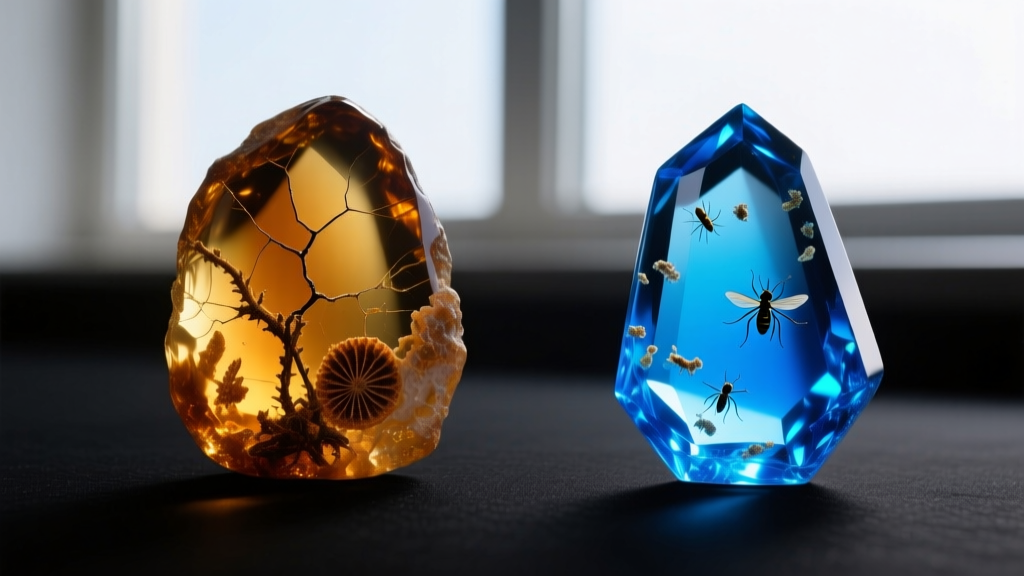
| Dominican Amber | Dominican Republic | 15 - 20 Million Years | 2.0 - 2.5 | Intense Bright Blue | Highly transparent; famous for rare blue hues and detailed insect inclusions. |
| Mexican Amber | Chiapas, Mexico | 25 - 30 Million Years | 2.0 - 2.5 | Pale Blue / Chalky White | Often features deep red and green surface oxidation layers. |
| Copal (Immature Resin) | Colombia, Madagascar, etc. | 10,000 - 2 Million Years | 1.5 - 2.0 | Weak / Chalky White | Not fully fossilized; highly prone to crazing, melting, and solvent damage. |
According to the Gemological Institute of America (GIA), Baltic amber (succinite) was the most prevalent material in European and American jewelry manufacturing during the 1920s due to established trade routes and its ability to be heat-treated to clarify cloudy stones. Dominican amber, while prized today, was less common in mainstream 1920s commercial Deco pieces but appears in high-end custom commissions.
Metal Pairings and Structural Integrity in Deco Settings
The structural design of art deco amber earrings is a masterclass in balancing material vulnerabilities with aesthetic ambition. Platinum was the undisputed king of the 1920s. Its immense tensile strength allowed jewelers to create impossibly thin, intricate filigree work and milgrain edges that framed the soft, warm tones of carved amber. As the 1930s progressed and platinum became scarce due to wartime demands, 14k and 18k white gold became the standard替代品 (substitutes), often rhodium-plated to mimic platinum's bright white luster.
Common Failure Modes in Vintage Amber Settings
Because amber is exceptionally soft and sensitive to environmental stressors, vintage settings often exhibit specific failure modes that collectors must inspect:
- Prong Fatigue and Abrasion: Art Deco designs frequently utilized sharp, geometric prongs to hold square-cut amber. Over a century of wear, the amber can literally abrade the metal, or conversely, worn prongs can slip off the soft stone, leading to loss.
- Thermal Shock and Melt Damage: Amber begins to soften at approximately 150°C and melts or burns between 200°C and 380°C. Many vintage earrings show localized melting or 'crazing' (surface cracking) near the post or clutch, caused by careless jewelers using torches to resize or repair the metal findings without removing the amber first.
- Solvent Degradation: The introduction of early plastics like Bakelite and celluloid in Deco jewelry often meant amber was set alongside these materials. However, amber is highly susceptible to damage from alcohols, acetone, and harsh perfumes, which can dissolve the polymerized surface, leaving a sticky, matte finish.
Authentication: Separating True Amber from Glass and Plastic
The 1920s and 30s saw a massive boom in imitation materials. Glass, early phenolic resins (Bakelite), and celluloid were frequently molded to mimic the look of carved amber. Furthermore, modern forgers often use heated, pressed amber dust or immature copal to fake vintage Deco pieces. As noted by the vintage jewelry experts at Lang Antiques, provenance and material testing are paramount when investing in period pieces.
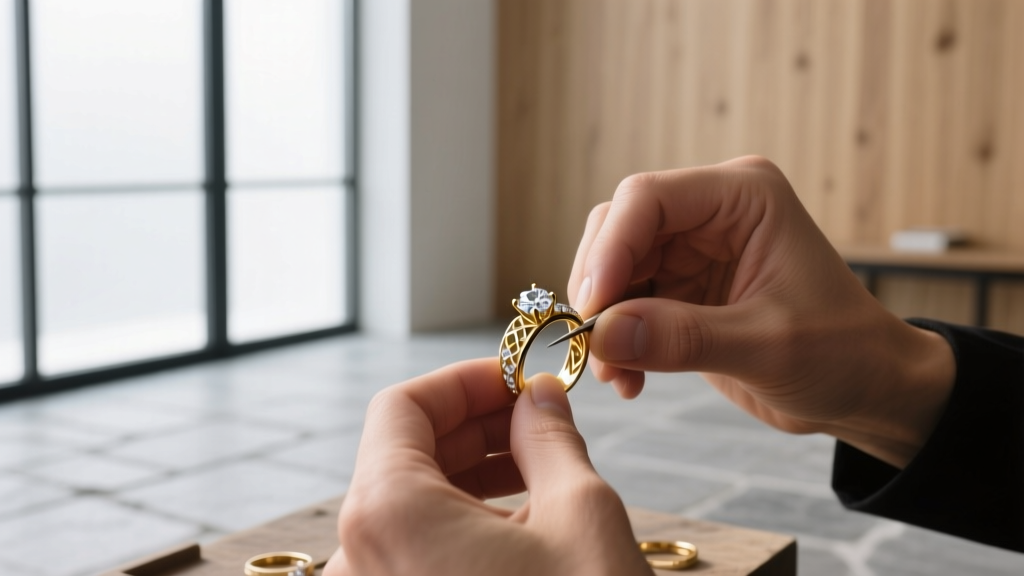
To authenticate art deco amber earrings, gemologists rely on a triad of non-destructive and micro-destructive tests:
- The Saturated Saline Float Test: Because true amber has a specific gravity of 1.05-1.10, it will float in a saturated saltwater solution (roughly 1 part salt to 4 parts water, yielding an SG of ~1.20). Glass, quartz, and most modern dense plastics will sink immediately. Note: This test only works if the amber is removed from the heavy platinum or gold setting, as the metal will cause the earring to sink regardless.
- UV Fluorescence: Under a longwave (365nm) ultraviolet light, genuine Baltic amber will emit a pale, chalky blue or greenish-white fluorescence. Copal glows a stark, bright white, while early plastics like Bakelite and glass will show no fluorescence or a dead, synthetic glare.
- The Hot Needle Test (Micro-Destructive): A heated needle applied to an inconspicuous area (like the back of a cabochon or inside a drill hole) will melt true amber, releasing a distinct, pleasant scent of pine resin and incense. Plastics will smell acrid, sweet, or like burning chemicals, and glass will not melt at all.
"When evaluating 1920s amber jewelry, always look for the 'sun spangles'—internal stress fractures that occur when amber is heated and cooled in a linseed oil bath to clarify it. This treatment was incredibly common in the Art Deco period to achieve the highly transparent, golden look favored by Parisian houses."
Caring for and Preserving Vintage Amber Earrings
Owning genuine art deco amber earrings requires a strict, proactive preservation protocol. Due to its low Mohs hardness, amber must never be stored in a communal jewelry box where it can come into contact with diamonds (Mohs 10), sapphires (Mohs 9), or even quartz (Mohs 7), all of which will severely scratch its surface.
Cleaning must be done exclusively with a soft, lint-free microfiber cloth and lukewarm water. Ultrasonic cleaners are strictly forbidden; the high-frequency vibrations will shatter the internal stress fractures (sun spangles) common in clarified Deco amber. Furthermore, steam cleaners will thermally shock the resin, causing irreversible crazing. Always apply perfumes, hairsprays, and cosmetics before putting on amber earrings, as the alcohol and aerosol propellants will chemically etch the polished surface over time.
Sourcing and Pricing in the 2026 Collector's Market
As we navigate the 2026 vintage jewelry market, the appetite for authentic, well-preserved Art Deco organic gemstones continues to appreciate. Collectors are moving away from heavily restored pieces and seeking original, untouched patinas and original platinum findings.
Pricing varies wildly based on material authenticity and metal purity:
- Genuine 1920s Platinum & Baltic Amber Drops: $1,200 to $3,500+, depending on the complexity of the filigree and the presence of diamond accents.
- 14k White Gold & Carved Amber Geometric Studs (1930s): $400 to $900.
- Bakelite and Amber Composite Clip-ons: $250 to $600, highly sought after by mid-century and late-Deco plastic collectors.
- Modern Copal 'Deco-Style' Reproductions: $50 to $150. These flood online marketplaces and are easily identified by their overly perfect, laser-cut geometries and lack of natural inclusions or historical wear patterns on the metal.
By understanding the deep material properties of amber—from its terpene polymerization to its specific gravity—collectors can confidently navigate the market, ensuring their art deco amber earrings are not just beautiful artifacts of the Jazz Age, but genuine geological time capsules.


