How to Clean and Care for Your ASOS Earrings Safely
Learn how to safely clean and maintain ASOS earrings. Discover expert tips for preserving gold plating, preventing tarnish, and storing costume jewelry.

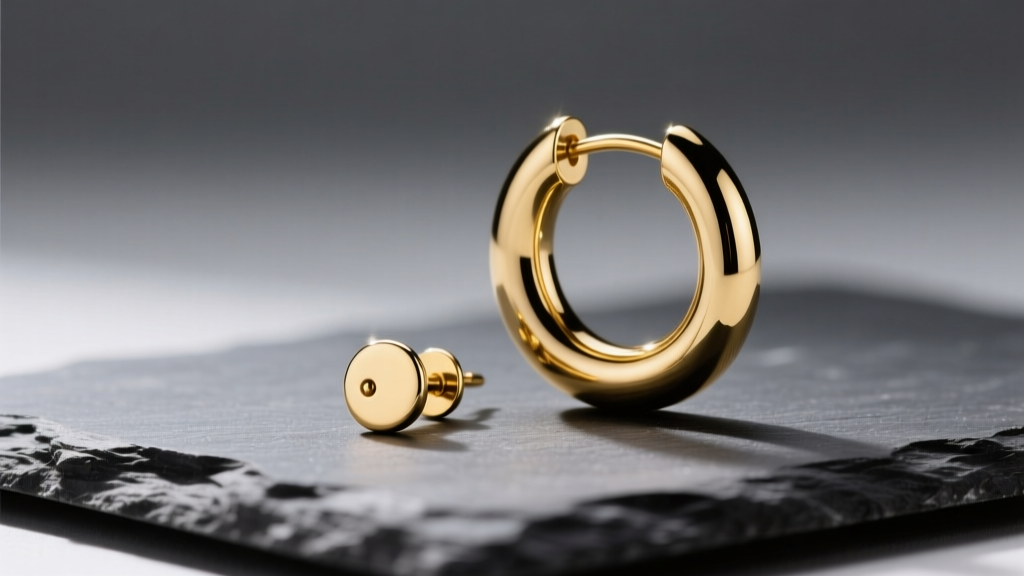
ASOS earrings are a staple in modern accessory wardrobes, offering trend-forward designs at accessible price points, typically ranging from $8 to $35. However, because these pieces are predominantly crafted from plated base metals rather than solid precious metals, they require a highly specific approach to maintenance. As sustainable fashion practices dominate 2026, extending the lifespan of your favorite semi-fine and costume accessories is more important than ever. Improper cleaning can strip the plating, cloud the cubic zirconia (CZ), and accelerate tarnishing. This comprehensive guide details the exact material science behind your ASOS earrings and provides a professional-grade care protocol to keep them looking pristine.
The Material Reality: Anatomy of ASOS Earrings
To properly care for your jewelry, you must first understand its metallurgical composition. According to the Jewelers of America, costume and semi-fine jewelry relies on a base metal core that is electroplated with a microscopic layer of precious metal. ASOS earrings typically utilize brass (a copper-zinc alloy) or zinc alloy for the main body, paired with 316L surgical stainless steel or sterling silver for the earring posts to ensure hypoallergenic contact with the piercing site.
The gold or silver tone you see is usually achieved through 'flash plating,' which deposits a layer of gold or silver that is between 0.1 and 0.5 microns thick. To protect this ultra-thin layer, manufacturers apply an 'e-coating'—a clear, anti-tarnish polymer sealant. Understanding the presence of this e-coating is critical, as it dictates which chemicals are safe to use and which will permanently ruin the finish.
The 'Never Do This' List: Avoiding Catastrophic Damage
Many standard jewelry cleaning hacks found online are actively destructive to plated costume jewelry. Avoid the following methods at all costs:
- Ultrasonic Cleaners: These machines use high-frequency sound waves to create microscopic cavitation bubbles. While excellent for solid gold and diamonds, the violent vibrations will shatter the adhesive holding glued-in CZ stones and strip flash plating right off the brass core.
- Baking Soda and Toothpaste: On the Mohs hardness scale, baking soda sits at a 2.5. While that sounds soft, gold plating is incredibly delicate and easily micro-scratched. Abrasives will wear through the 0.5-micron plating down to the raw brass in seconds.
- Rubbing Alcohol and Hand Sanitizer: High-concentration alcohols dissolve the protective e-coating. Once the e-coating is compromised, the underlying brass is exposed to oxygen and the acids in your skin, guaranteeing rapid tarnishing.
Step-by-Step Cleaning Routine for Plated Styles
When your ASOS huggies or drop earrings accumulate skin oils, lotion residue, or environmental dust, a gentle, pH-neutral approach is required. The Gemological Institute of America (GIA) recommends mild, non-detergent soaps for delicate jewelry finishes.
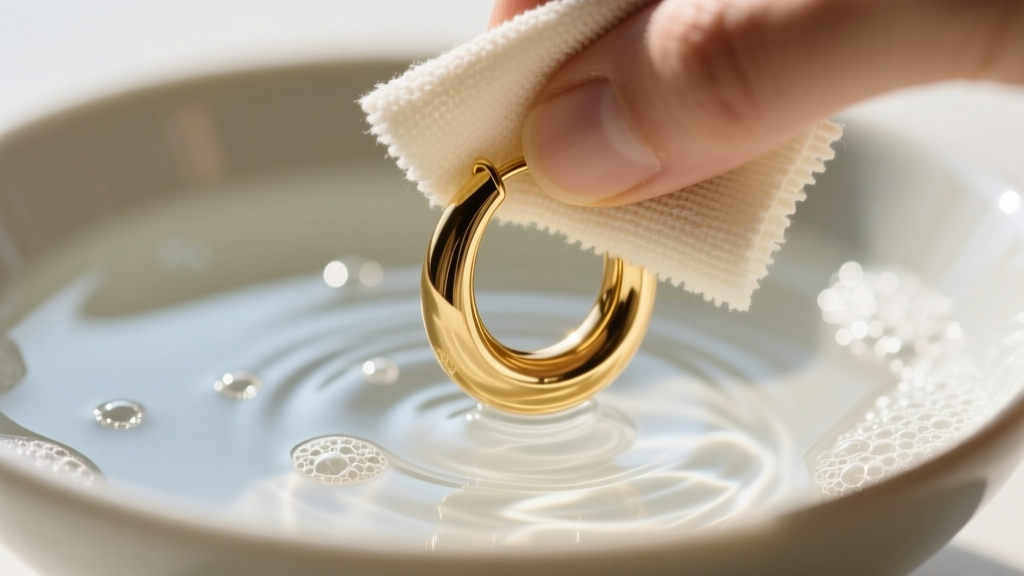
The Baby Shampoo Soak Method
- Prepare the Solution: Fill a small glass bowl with lukewarm distilled water. Tap water contains chlorine and hard minerals that can leave spots on the e-coating. Add two drops of pH-neutral baby shampoo.
- The 30-Second Soak: Submerge the earrings for no longer than 30 seconds. Prolonged water exposure can seep into the foil-backed settings of glued CZ stones, causing the foil to oxidize and the stones to turn black.
- Gentle Agitation: Use a brand-new, extra-soft baby toothbrush to lightly sweep away debris from the crevices of hoop hinges and the backs of stud settings. Never scrub the flat surfaces of the plating.
- Rinse and Dry: Rinse briefly under a slow stream of distilled water. Immediately pat dry with a lint-free microfiber cloth, then leave them on a dry paper towel in a low-humidity room for two hours to ensure all moisture evaporates from the hinge mechanisms.
Tarnish Prevention and Storage Framework
Tarnish on ASOS earrings is not a defect; it is a chemical inevitability when the copper within the brass base metal reacts with sulfur and moisture in the air. Because the plating is thin, any micro-scratch exposes the brass to the elements. Proper storage is your primary defense.
| Storage Environment | Tarnish Acceleration Rate | Preventative Action Required |
|---|---|---|
| Bathroom Countertop | Extreme (High humidity + aerosol chemicals) | Never store here; relocate to a dry bedroom drawer. |
| Open Jewelry Tree | High (Constant oxygen and UV exposure) | Use only for daily wear rotation; wipe down after use. |
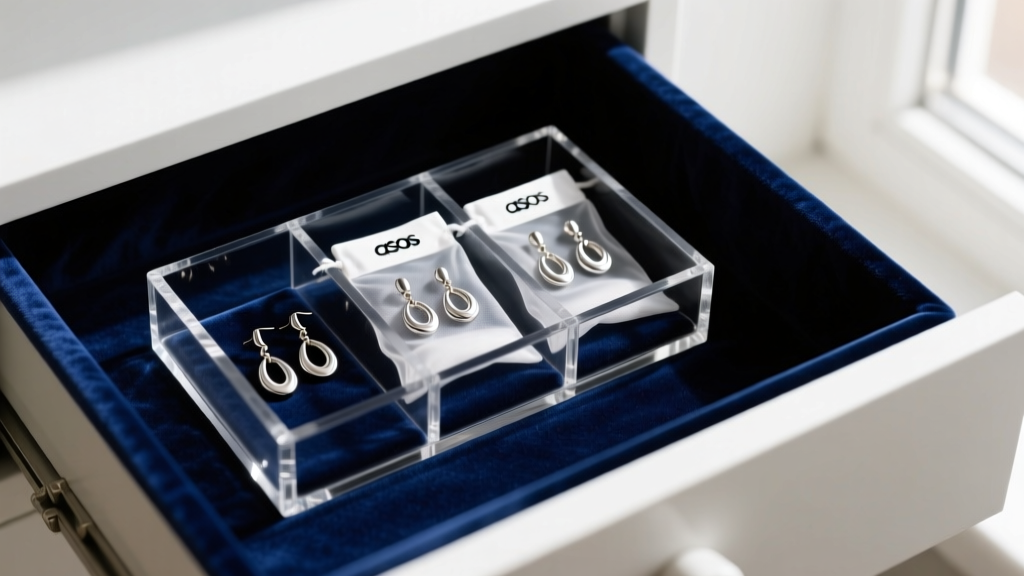
| Sealed Acrylic Drawer | Moderate (Trapped ambient moisture) | Add silica gel packets to absorb residual humidity. |
| Anti-Tarnish Ziplock Bags | Minimal (Sulfur-blocking polymer lining) | Ideal for long-term storage of seasonal ASOS drops. |
Troubleshooting Common ASOS Earring Issues
Even with meticulous care, fast-fashion jewelry presents specific mechanical and chemical challenges. Here is how to troubleshoot the most frequent issues:
1. The 'Green Skin' Reaction
If an ASOS earring post or hoop leaves a green or black mark on your skin or earlobe, it means the plating has worn away, exposing the copper-rich brass underneath. The copper reacts with the salts and acids in your sweat. The Fix: Paint a thin layer of clear, hypoallergenic nail polish over the earring post and the back of the earring. Allow it to cure for 24 hours before wearing. This creates a physical barrier between the base metal and your skin.
2. Loose or Missing Cubic Zirconia Stones
ASOS earrings frequently use adhesive rather than metal prongs to secure small CZ stones. If a stone becomes loose, do not use cyanoacrylate (Super Glue). Super glue releases fumes as it cures, creating a permanent, cloudy white 'bloom' on the surface of the CZ stone. The Fix: Use a precision tip to apply a microscopic dot of E6000 Jewelry & Bead adhesive. Let it sit for 24 hours in a well-ventilated area.
3. Bent Earring Posts
Most ASOS studs use 20-gauge (0.8mm) or 18-gauge (1.0mm) posts. Because these are relatively thin, they bend easily when pushed through a tight piercing or dropped. The Fix: You can bend them back using flat-nose jewelry pliers padded with a microfiber cloth to prevent scratching. However, bend them slowly and only once; repeated bending causes metal fatigue, which will snap the post cleanly off the earring body.
When to Retire Your Costume Jewelry
While proper maintenance can extend the life of ASOS earrings for several years, flash-plated jewelry has a finite lifespan. If the base metal is visibly pitting, if the earring causes persistent allergic contact dermatitis despite clear polish barriers, or if the structural integrity of a heavy hoop's hinge is compromised, it is time to retire the piece. Responsible disposal involves removing any steel or silver components for recycling and discarding the brass-plastic composites according to your local e-waste and metal guidelines.


