Austrian Crystal Earrings: A Budget & Value Assessment
Discover if Austrian crystal earrings are worth your money. We analyze pricing tiers, metal settings, and crystal grades to help you spot true value.

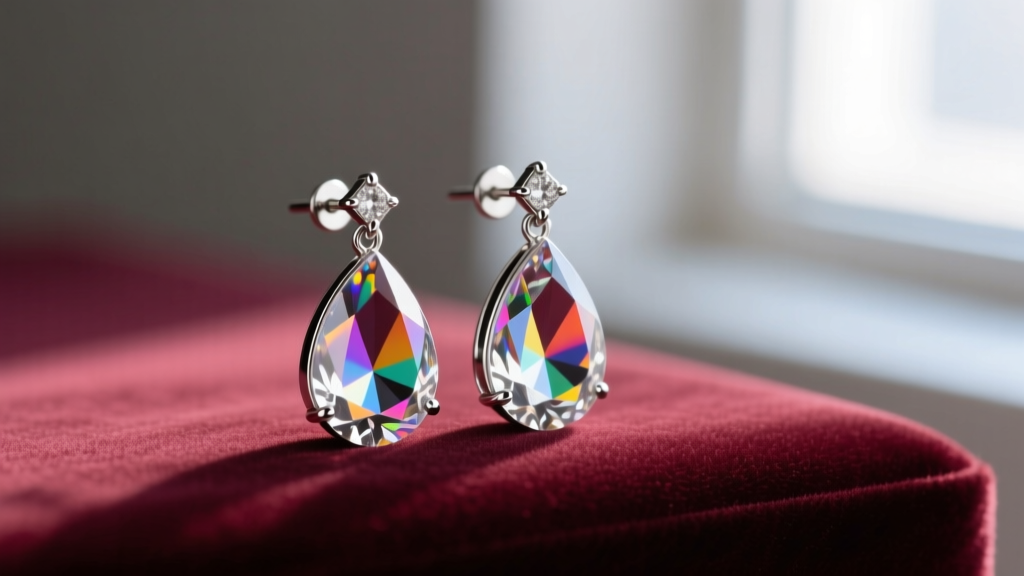
When shopping for affordable luxury, Austrian crystal earrings frequently dominate the market. Known for their brilliant light dispersion and diamond-like sparkle, these pieces offer a compelling alternative to fine gemstones. However, as we navigate the jewelry market in 2026, the term 'Austrian crystal' has become heavily diluted. What was once synonymous with a single, prestigious Swarovski lineage now encompasses a vast spectrum of quality, from premium precision-cut glass to cheap, mass-produced imitations.
If you are allocating a budget for crystal jewelry, how do you separate genuine value from overpriced costume pieces? This comprehensive value assessment breaks down the metallurgy, optical properties, and pricing structures of Austrian crystal earrings to ensure your money is well spent.
The Evolution of the 'Austrian Crystal' Market
To assess value, you must first understand the current landscape. Prior to 2021, 'Austrian crystal' was largely a veiled reference to Swarovski's B2B crystal components. Following the brand's strategic pivot to restrict bulk component sales to protect its luxury positioning, the market experienced a massive vacuum.
Today, the term is largely genericized. High-quality alternatives emerged from specialized manufacturers in Asia and Eastern Europe, producing lead-free crystal glass that mimics the optical brilliance of traditional leaded crystal. According to the GIA Gem Encyclopedia, the optical brilliance of these modern crystals relies on precise faceting and high refractive indices rather than just heavy metal content. Therefore, evaluating value in 2026 requires looking past the 'Austrian' label and scrutinizing the actual material specifications and craftsmanship.
Material Breakdown: Assessing the Core Components
The true value of any crystal earring lies in the intersection of the stone's optical grade and the durability of its metal setting. A flawless crystal ruined by a tarnishing base metal is a poor investment.
1. The Crystal: Refractive Index and Cut Precision
Standard window glass has a Refractive Index (RI) of about 1.52. Historically, adding lead oxide boosted the RI to 1.7, creating that signature rainbow dispersion. However, to comply with strict European Chemicals Agency (ECHA) REACH regulations regarding lead and cadmium, modern premium Austrian crystals use barium oxide, zinc oxide, or titanium dioxide.
What to look for: High-value crystals will feature a 'Chaton' cut (a round stone with exactly 16 precision-cut facets) or an 'Octagon' emerald cut. The facets should meet at perfectly sharp points. If the facet junctions look rounded, dull, or if the stone appears cloudy near the culet (the bottom point), you are looking at low-grade, machine-molded glass that holds virtually zero resale or long-term aesthetic value.
2. The Metal Setting: Base Alloys and Plating Thickness
The metal dictates the lifespan of the earring. Budget manufacturers often use brass or zinc alloy bases with 'flash plating'—a microscopic layer of gold or rhodium measuring less than 0.05 microns. This will wear off within weeks of daily use, exposing skin to potential nickel allergens.
The Value Standard: Look for 925 Sterling Silver bases or solid brass with heavy vermeil. The Federal Trade Commission (FTC) Jewelry Guides stipulate that for a piece to be legally marketed as gold vermeil, it must feature a sterling silver base plated with at least 2.5 microns of 10k (or higher) gold. Additionally, high-end settings will feature an 'e-coat' (electrophoretic coating) beneath the plating to prevent tarnishing and extend the jewelry's life by years.
Pricing Tiers: What You Should Actually Pay
Understanding the correlation between manufacturing costs and retail pricing is critical for budget assessment. Below is a breakdown of what you should expect to pay based on material integrity and craftsmanship.
| Tier | Price Range (USD) | Crystal Quality | Metal & Setting | Value Verdict |
|---|---|---|---|---|
| Budget / Fast Fashion | $12 - $28 | Molded glass, low RI, dull culet | Zinc alloy, flash plating, glued stones | Poor. High risk of skin irritation and rapid tarnish. |
| Mid-Range / Boutique | $35 - $75 | Precision-cut barium crystal, high RI | 925 Silver or thick vermeil, prong-set | Excellent. The sweet spot for durability and brilliance. |
| Premium / Designer | $85 - $200+ | Hand-polished, VVS-grade CZ accents | Solid gold, platinum-plated, secure locks | Good. Paying for brand prestige and heirloom metals. |
4 Red Flags When Shopping on a Budget
When evaluating Austrian crystal earrings in the $20 to $50 range, watch out for these common manufacturing shortcuts that destroy long-term value:
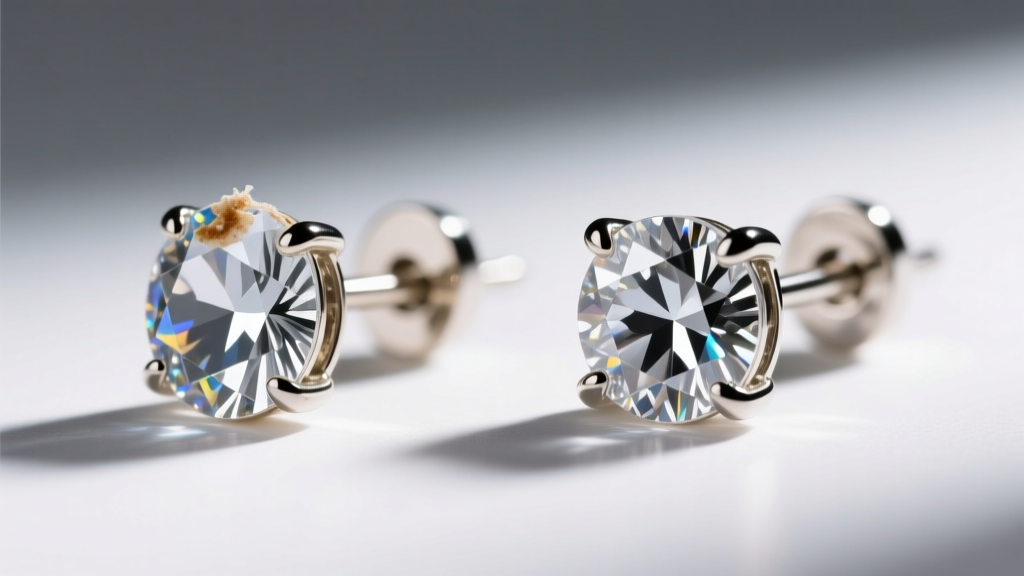
- Adhesive Settings: If you can see a ring of glue around the base of the crystal, walk away. Adhesive degrades with exposure to skin oils and perfumes, leading to lost stones. Always demand prong-set or bezel-set crystals.
- Hollow Butterfly Backs: Flimsy, stamped-metal butterfly backs with thin posts (under 0.8mm gauge) bend easily and fail to secure the earring. Look for solid 'La Pousette' push-backs or secure lever-backs for drops.
- The 'Austrian Diamond' Misnomer: Crystal is glass. Any seller marketing these earrings as 'Austrian Diamond' or 'Simulated Diamond' is violating FTC guidelines and likely cutting corners on other material disclosures.
- Uneven Aurora Borealis (AB) Coating: The AB coating creates the iridescent rainbow effect. On cheap pairs, this coating is sprayed on unevenly, resulting in patchy coloration that scratches off easily. High-value pairs use a vacuum-deposition process for a flawless, durable finish.
Care and Maintenance to Protect Your Investment
Even mid-range Austrian crystal earrings require specific care to maintain their optical clarity and metallic luster. The most common mistake consumers make is using ultrasonic jewelry cleaners.
Expert Warning: Never place Aurora Borealis (AB) or metallic-coated Austrian crystals in an ultrasonic cleaner or steam cleaner. The high-frequency vibrations and heat will cause the delicate vacuum-deposited coatings to delaminate and peel, permanently ruining the stone's iridescence.
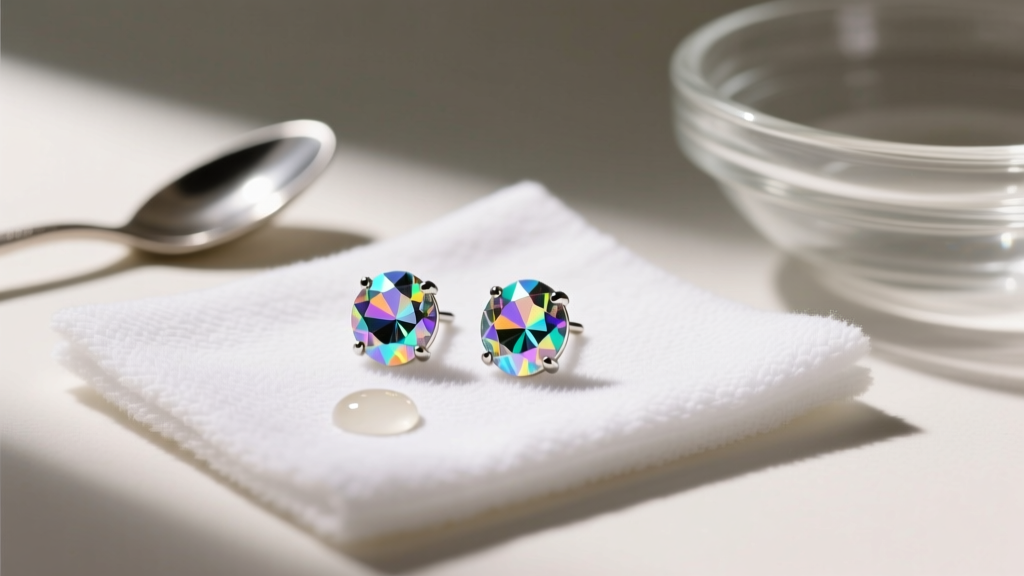
The Proper Cleaning Protocol:
- Mix a few drops of pH-neutral dish soap with lukewarm distilled water.
- Use an ultra-soft baby toothbrush to gently dislodge sebum and lotion buildup from the pavilion (the underside facets) of the crystal. Buildup here is the #1 cause of 'cloudy' earrings.
- Rinse briefly under a gentle stream of water, ensuring the earring back is secured so it doesn't wash down the drain.
- Pat dry with a lint-free microfiber cloth. Never use tissue paper, as the wood fibers will micro-scratch the metal plating over time.
Final Verdict: Are They Worth the Money?
From a strict budget and value assessment perspective, Austrian crystal earrings are absolutely worth the investment—provided you shop in the mid-range tier ($35 to $75). At this price point, you secure precision-cut, REACH-compliant crystals set in tarnish-resistant sterling silver or heavy vermeil. You achieve 90% of the visual brilliance of fine diamond or sapphire jewelry for a fraction of the cost.
However, if your budget restricts you to the sub-$20 fast-fashion tier, you are better off saving your money. The rapid degradation of flash-plated metals and glued, low-RI glass results in a negative cost-per-wear. By prioritizing prong settings, verifying metal micron thickness, and understanding modern lead-free crystal compositions, you can confidently curate a collection of Austrian crystal earrings that deliver lasting luxury and undeniable value.


