Beginner's Guide to the Channel Earring Setting & Care
Discover everything about the channel earring setting. Learn how this secure, snag-free design works, compare metals, and master proper cleaning.

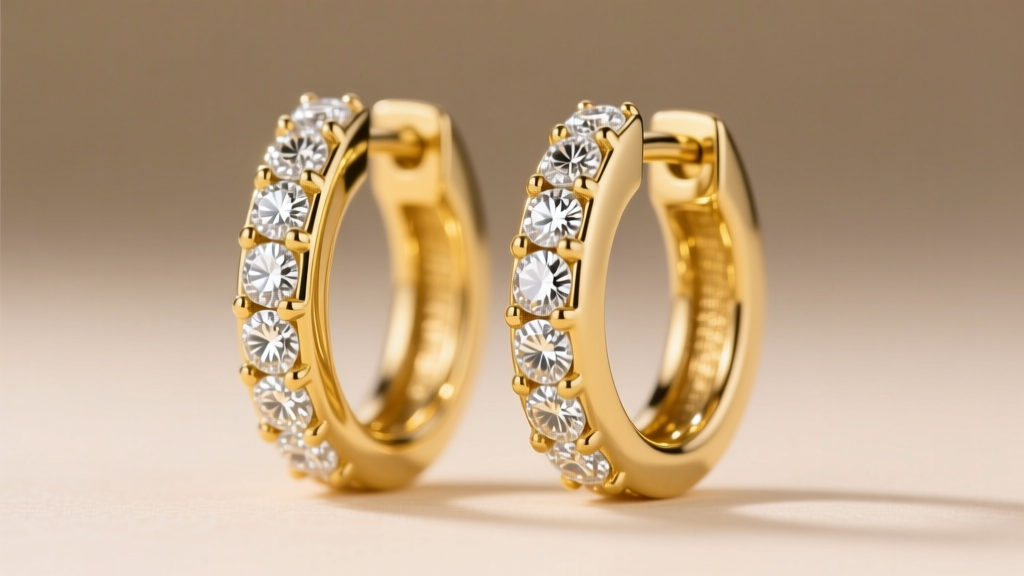
When building a curated ear stack or selecting a reliable everyday diamond hoop, the structural integrity of the gemstone setting is just as critical as the carat weight. Among the myriad of setting styles available in modern fine jewelry, the channel earring design stands out as a masterclass in both security and sleek aesthetics. Whether you are looking at a pair of diamond huggies for a healed lobe piercing or a straight barbell for your cartilage, understanding the engineering behind channel settings will help you make informed, long-lasting purchases.
This comprehensive guide breaks down the mechanics, metallurgy, and maintenance of channel-set earrings, providing you with the exact specifications needed to navigate the market like a seasoned jeweler.
The Engineering Behind the Channel Earring
At its core, a channel setting suspends gemstones between two parallel walls of precious metal. Unlike prong settings that rely on small metal claws to grip the crown of a stone, or bezel settings that wrap entirely around the girdle, the channel earring design relies on precision-milled grooves. The gemstones are slid into this track, and the metal walls are then carefully burnished or hammered inward to secure the stones by their girdles.
According to the Gemological Institute of America (GIA), channel settings require exact calibration. The gemstones must be uniformly sized—often to a tolerance of 0.02 millimeters—to ensure they sit perfectly flush against one another without gaps. If the stones are too small, they will rattle and eventually fall out; if they are too large, the pressure can fracture the diamonds or warp the metal walls.
The Snag-Free Advantage
The primary benefit of a channel earring is its completely smooth exterior profile. Because there are no protruding prongs to catch on hair, clothing, or bedding, channel-set hoops and huggies are widely considered the gold standard for active lifestyles and sleeping. This makes them particularly advantageous for newer piercings that are fully healed but still sensitive to micro-trauma caused by jagged metal edges.
Channel vs. Prong vs. Pavé: A Structural Comparison
To understand where the channel earring excels, it helps to compare it directly against other popular setting techniques. Below is a structural breakdown of how these settings perform in everyday wear scenarios.
| Feature | Channel Setting | Prong Setting | Pavé / Micro-Pavé |
|---|---|---|---|
| Security | Exceptional (Metal walls protect girdle) | Moderate (Prongs can bend or snap) | Low (Tiny beads wear down quickly) |
| Snag Risk | Zero (Flush surface) | High (Exposed claws catch fabrics) | Low to Moderate (Texture can catch) |
| Light Return | Moderate (Side walls block some light) | Maximum (360-degree light exposure) | High (Minimal metal obstruction) |
| Cleaning Ease | Difficult (Dirt traps in narrow seams) | Easy (Open design allows rinsing) | Moderate (Crevices require brushing) |
| Best Use Case | Huggies, hoops, active wear | Solitaire studs, statement drops | Halo rings, delicate accent bands |
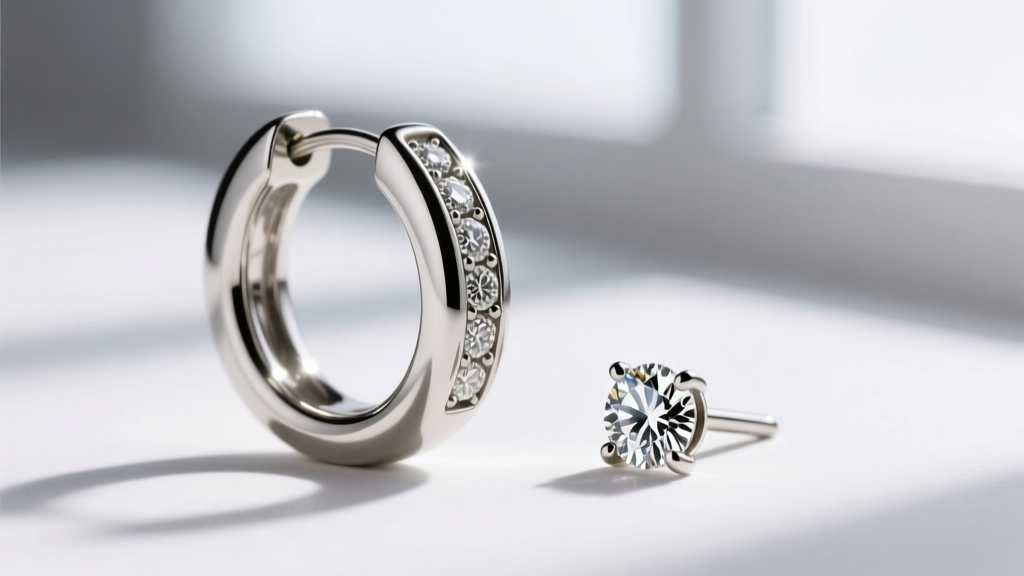
Sizing, Gauges, and Piercing Placements
When shopping for a channel earring, particularly for body jewelry applications like cartilage or inner conch placements, you must pay strict attention to the wire gauge and inner diameter. The Association of Professional Piercers (APP) emphasizes that wearing the correct gauge is vital for tissue health and preventing the "cheese-cutter effect," where a wire that is too thin migrates through the piercing fistula.
- Standard Lobe Huggies: Typically crafted in 16-gauge (1.2mm) or 18-gauge (1.0mm) wire. The inner diameter usually ranges from 10mm to 14mm. A 12mm inner diameter is the most universal fit for a standard lobe piercing.
- Cartilage Hoops (Helix/Forward Helix): Often require a slightly larger diameter (14mm to 16mm) to accommodate the angle of the piercing channel. A 16-gauge wire is highly recommended here for structural rigidity.
- Threadless Channel Ends: For flat or conch piercings, jewelers often create channel-set straight bars or curved barbells that push into a 14-gauge or 16-gauge titanium post. These offer the sparkle of diamonds with the absolute security of a threadless tension pin.
Metallurgy: Which Gold Karat is Best for Channel Walls?
The metal used to form the channel walls dictates the longevity of the earring. Because the walls must be thin enough to allow light into the stones, yet strong enough to hold them in place under daily stress, the alloy composition is critical.
14k Gold: The Pragmatic Choice
14k gold (58.5% pure gold) is alloyed with metals like copper, silver, and zinc. This results in a higher Vickers hardness compared to higher karats. For a channel earring, 14k gold is often the superior choice because the harder metal walls are less likely to bend or pull away from the stones if the earring is dropped or squeezed.
18k Gold: The Luxury Standard
18k gold (75% pure gold) offers a richer, warmer yellow hue and is hypoallergenic for those with nickel sensitivities. However, it is a softer metal. Jewelers must design 18k channel earrings with slightly thicker metal walls to compensate for the softness, which can marginally reduce the visible surface area of the gemstones.
Platinum: The Ultimate Density
Platinum is incredibly dense and durable. Unlike gold, which loses microscopic particles when scratched, platinum simply displaces. A platinum channel earring will securely hold stones for decades, though it requires occasional polishing to remove the natural patina that develops over time.
The Hidden Risks of Ultrasonic Cleaners
One of the most common mistakes owners make is tossing their fine jewelry into an ultrasonic cleaner without considering the setting type. While ultrasonic waves are excellent for blasting debris out of open prong settings, they can be disastrous for an older or heavily worn channel earring.
"High-frequency vibrations in an ultrasonic bath can cause 'stone walking' in a channel setting. If the metal walls have experienced even microscopic wear over the years, the vibrations will slowly rattle the calibrated stones out of their track, resulting in lost diamonds."
If your channel earrings are brand new and the metal is perfectly taut, occasional ultrasonic cleaning is generally safe. However, for long-term preservation, manual cleaning is the industry standard.
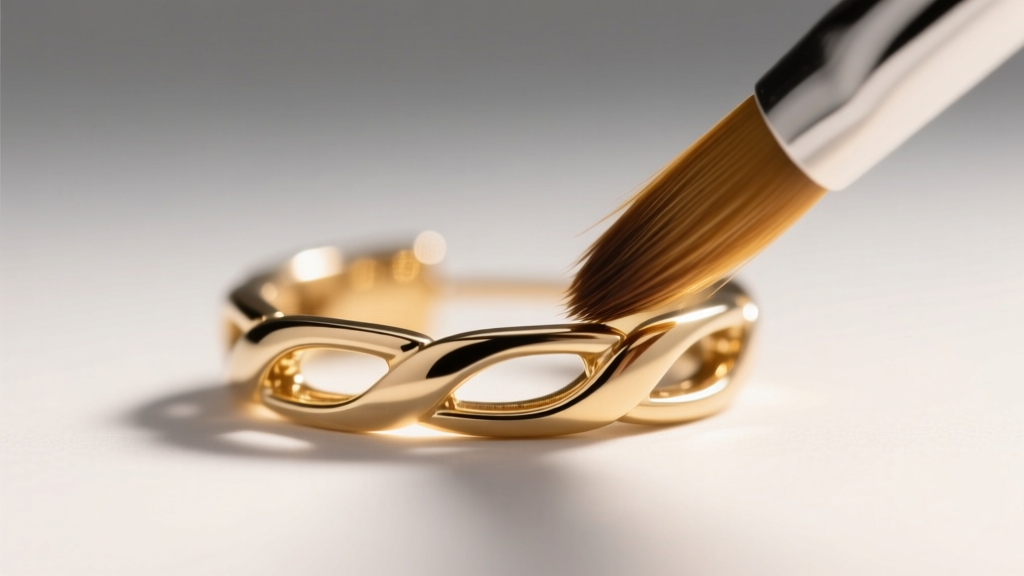
Step-by-Step Manual Cleaning Protocol
Because the channel design features tight seams where the metal meets the gemstone girdle, oils from your skin, lotions, and environmental dust will inevitably accumulate in the track. This buildup dulls the sparkle of the diamonds. Follow this professional protocol to restore your earrings safely:
- Prepare a Degreasing Solution: Mix a few drops of mild, phosphate-free dish soap (like Dawn) into a bowl of warm distilled water. Avoid harsh chemicals or bleach, which can degrade the alloy metals over time.
- Soak Briefly: Submerge the channel earrings for 10 to 15 minutes. This softens the sebum and cosmetic buildup trapped in the channel seams.
- Agitate with a Soft Brush: Using a baby toothbrush or a specialized extra-soft jewelry brush, gently sweep along the channel track. Do not scrub aggressively across the stones, as this can push dirt deeper into the microscopic gaps.
- Rinse and Dry: Rinse thoroughly under lukewarm running water (always use a strainer over the drain!). Pat dry with a lint-free microfiber cloth, and use a hairdryer on the "cool" setting to blow out any remaining water droplets trapped between the stones.
Final Thoughts on Investing in Channel Settings
A well-crafted channel earring is an investment in both elegance and practicality. By prioritizing precise stone calibration, selecting the appropriate metal hardness for your lifestyle, and adhering to a gentle, manual cleaning routine, your channel-set hoops and huggies will remain secure and brilliant for a lifetime. Whether you are stepping into the world of fine body jewelry for the first time or adding to an established collection, the channel setting remains an unparalleled triumph of functional jewelry design.


