Native American Beading Earrings: Authentic Buying Guide
Discover how to identify, evaluate, and buy authentic Native American beading earrings. Learn about bead sizes, stitching, and fair artisan pricing.

The Legal and Cultural Weight of Authenticity
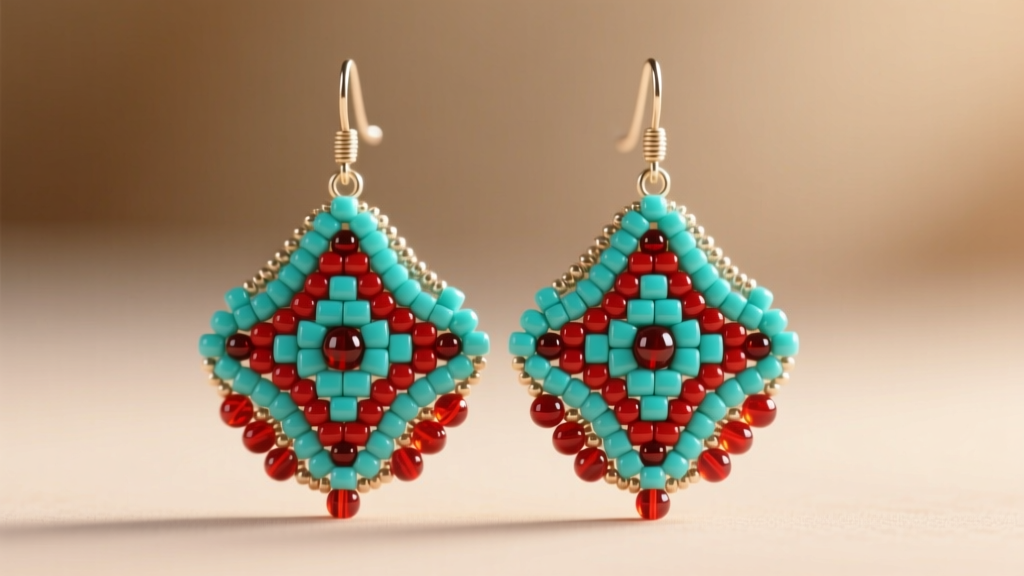
When you search for Native American beading earrings, you are navigating a market flooded with both breathtaking indigenous artistry and deceptive, mass-produced knockoffs. Beadwork is not merely a decorative craft; it is a profound cultural language. Different nations utilize distinct color palettes, motifs, and stitching techniques that reflect their specific histories, environments, and spiritual beliefs. For instance, the intricate, symmetrical floral patterns of Woodland tribes like the Ojibwe contrast sharply with the bold, geometric abstraction favored by Plains nations such as the Lakota and Cheyenne.
Your first and most critical filter as a buyer is the Indian Arts and Crafts Act (IACA) of 1990. This federal truth-in-advertising law makes it illegal to offer or display for sale any art or craft product in a manner that falsely suggests it is Indian-produced. To legally market earrings as "Native American," the creator must be a member of a State or Federally recognized tribe, or an artisan certified by such a tribe. When browsing online or at powwows, always look for the artist's specific tribal affiliation (e.g., "Diné," "Oglala Lakota," "Muscogee Creek") rather than vague pan-Indian terms.
Decoding the Beadwork: Materials and Techniques
Seed Bead Sizing and Origin
The foundation of any premium pair of beaded earrings lies in the beads themselves. Authentic artisans predominantly rely on high-quality glass seed beads, specifically from Japan (Miyuki and Toho) or the Czech Republic. The sizing system uses aughts (e.g., 11/0, pronounced "eleven-aught").
- Size 11/0: The undisputed workhorse of Native American beadwork. It offers the perfect balance between intricate detail and structural durability for earrings.
- Size 15/0 (Micro): Used for hyper-detailed, contemporary pieces or delicate fringe work. These require exceptional eyesight and skill, significantly driving up the price.
- Size 8/0 or 6/0: Often utilized in traditional Plains-style "lazy stitch" or lane stitch work, providing a bolder, more textured, and historic aesthetic.
For collectors seeking a vintage or antique sparkle, look for earrings crafted with Czech Charlotte cut beads. These beads feature a single, precise facet that catches the light beautifully, a highly prized characteristic in both historical and modern regalia.
Thread, Tension, and Backing
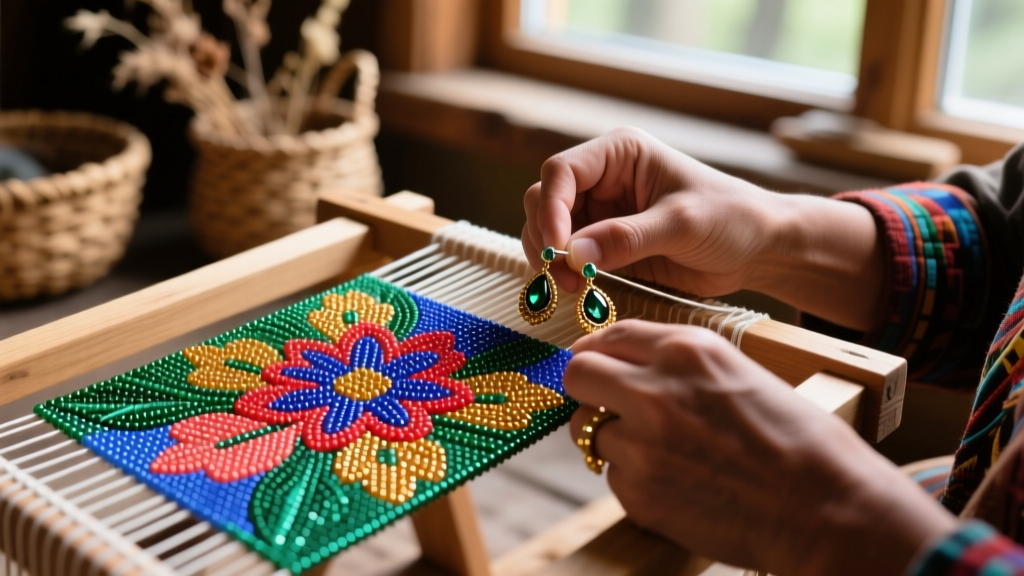
The invisible architecture of the earring is just as important as the visible beads. Master beadworkers use specialized threads like FireLine (a braided, gel-spun polyethylene) or WildFire (thermally fused polyethylene). These synthetic threads are waterproof, stretch-resistant, and immune to the natural oils from skin that degrade older cotton or silk threads. If an artisan uses traditional Nymo (a flat nylon thread), it must be heavily conditioned with beeswax to prevent fraying and tangling.
Inspect the backing. While some off-loom stitches (like peyote or brick stitch) are self-supporting, loom-woven or appliqué beadwork requires a sturdy foundation. High-end pieces are backed with Ultra-Suede, brain-tanned deer hide, or heavy-duty archival interfacing. Avoid pieces backed in cheap, fraying craft felt, which will degrade and pull the beads apart within a year.
Hardware and Edge Finishing: Ensuring Longevity
A $200 pair of meticulously beaded earrings is instantly ruined if attached to cheap, reactive base-metal hardware. When evaluating Native American beading earrings, scrutinize the metal components.
- Ear Wires (French Hooks): Should be crafted from .925 sterling silver, niobium, or surgical-grade stainless steel. Sterling silver is the traditional favorite, often hand-forged or stamped by the artist or a collaborating silversmith.
- Stud Posts: If the design is a beaded rosette or medallion stud, ensure the post is soldered securely to a brass or silver backing plate, rather than merely glued to the back of the beadwork. Glue will eventually fail due to humidity and temperature changes.
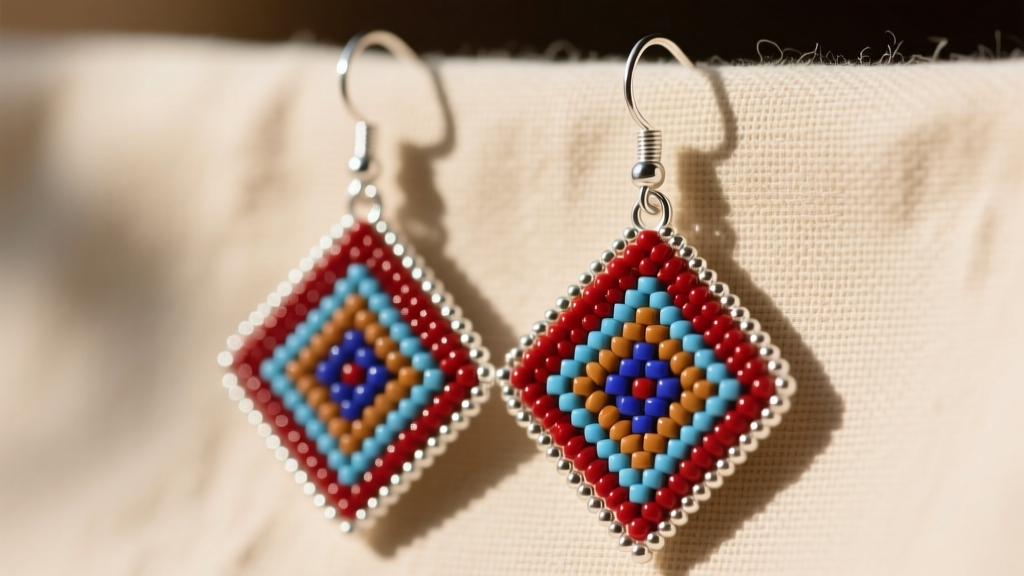
- The Picot Edge: In loom-woven earrings, the raw edges must be finished. A "picot edge" is a traditional technique where tiny loops of beads are stitched along the perimeter. This not only protects the structural thread from abrasion but adds a refined, scalloped border that mass-produced imitations almost never replicate.
Pricing Matrix: Valuing the Artisan's Time
Authentic beadwork is an investment in time. A skilled artisan may spend anywhere from 8 to 40 hours on a single pair of complex, fringed beaded earrings. Understanding the pricing tiers will protect you from overpaying for fakes and help you appreciate the value of genuine indigenous art.
| Category | Price Range (USD) | Characteristics & Red Flags |
|---|---|---|
| Mass-Produced Imitations | $12 - $35 | Sold under terms like "Southwestern style" or "Native inspired." Machine-loomed, poor tension, plastic beads, base metal hooks. |
| Emerging Artisan / Powwow Vendor | $45 - $95 | Genuine tribal members. Solid 11/0 beadwork, basic geometric or floral patterns, sterling silver or steel hooks, ultra-suede backing. |
| Established Master Beadworker | $120 - $280 | Complex brick/peyote stitches, micro-beading (15/0), Charlotte cut beads, custom sterling hardware, intricate picot edging. |
| Heirloom / Competition Regalia | $350 - $800+ | Museum-quality, fully fringed, incorporating rare antique trade beads, precious metal overlays, and hundreds of hours of labor. |
Red Flags: Spotting Mass-Produced Imitations
The market is saturated with overseas factories attempting to replicate indigenous designs. According to the National Museum of the American Indian, supporting authentic artists is vital for the economic sovereignty of tribal communities. Watch out for these immediate red flags:
The "Inspired By" Loophole: If the listing uses words like "Native-style," "Indian-inspired," "Tribal motif," or "Southwestern boho," it is legally admitting it is not made by a Native American artist.
- Perfect Uniformity in Bulk: If a vendor has 50 identical pairs of highly complex beaded earrings in stock, it is likely machine-loomed or produced in a sweatshop. Hand-beaded pairs will have microscopic, human variations in tension and bead placement.
- Glued Backings: Turn the earring over (or ask for a photo of the back). If you see a thick layer of hot glue or E6000 seeping through the backing fabric to hold the ear wire, walk away. Authentic artists stitch their hardware directly into the beadwork matrix or use securely riveted/soldered metal plates.
- Plastic or Acrylic Beads: Authentic artists rarely use plastic seed beads, which have a dull finish, irregular sizing, and melt easily if exposed to heat. Glass beads have a distinct weight and a sharp, clean hole.
Archival Care for Heirloom Beadwork
Once you have acquired an authentic pair of Native American beading earrings, proper preservation is essential. The Native Arts and Cultures Foundation frequently highlights the importance of preserving indigenous material culture.
- Moisture Control: Never wear seed bead earrings in the shower or while swimming. While modern synthetic threads are waterproof, the metallic linings inside certain glass beads (like galvanized or silver-lined beads) will tarnish, oxidize, and turn black when exposed to water and skin acids.
- UV Protection: Store your earrings in a dark jewelry box or drawer. Prolonged exposure to direct sunlight will fade certain dyed glass beads and natural backings like smoked deer hide over time.
- Storage Position: For earrings with long beaded fringe, never store them in a tangled pile. Hang them from a specialized jewelry rack or lay them perfectly flat in a compartmentalized box to prevent the fringe threads from kinking or snapping.
By understanding the materials, the law, and the labor behind the art, you can confidently invest in Native American beading earrings that honor the artist's heritage and provide you with a wearable masterpiece for decades to come.


