The Ultimate Beginner Guide to Zuni Needlepoint Earrings
Discover everything about Zuni needlepoint earrings. Learn to identify authentic turquoise and silver styles, pricing, and care tips in our beginner guide.

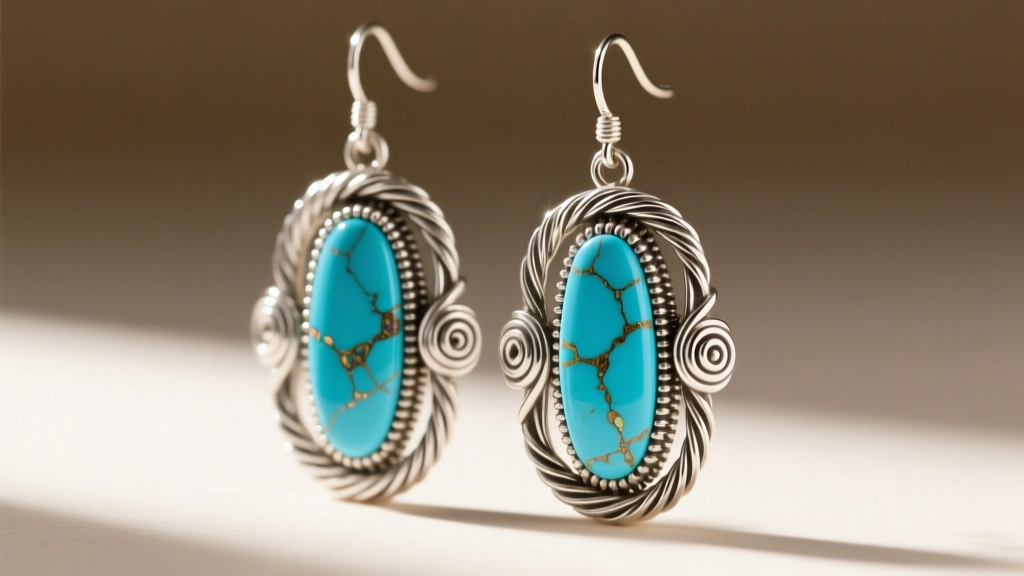
When exploring the rich heritage of Native American jewelry, few styles command as much respect and admiration as Zuni needlepoint earrings. Originating from the Zuni Pueblo in western New Mexico, this intricate lapidary technique transforms raw turquoise into delicate, elongated masterpieces. For beginners stepping into the world of authentic indigenous jewelry, understanding the craftsmanship, materials, and pricing of needlepoint earrings is essential to making an informed purchase and avoiding mass-produced imitations.
What Are Zuni Needlepoint Earrings?
Zuni needlepoint is a highly specialized jewelry-making technique that emerged in the early 20th century. Unlike the heavier, chunkier squash blossom necklaces or the wide inlay cuffs typical of Navajo and Hopi artisans, Zuni needlepoint focuses on extreme precision. The term 'needlepoint' refers to the shape of the gemstones: long, narrow, and sharply pointed at both ends, resembling a sewing needle or a marquise cut.
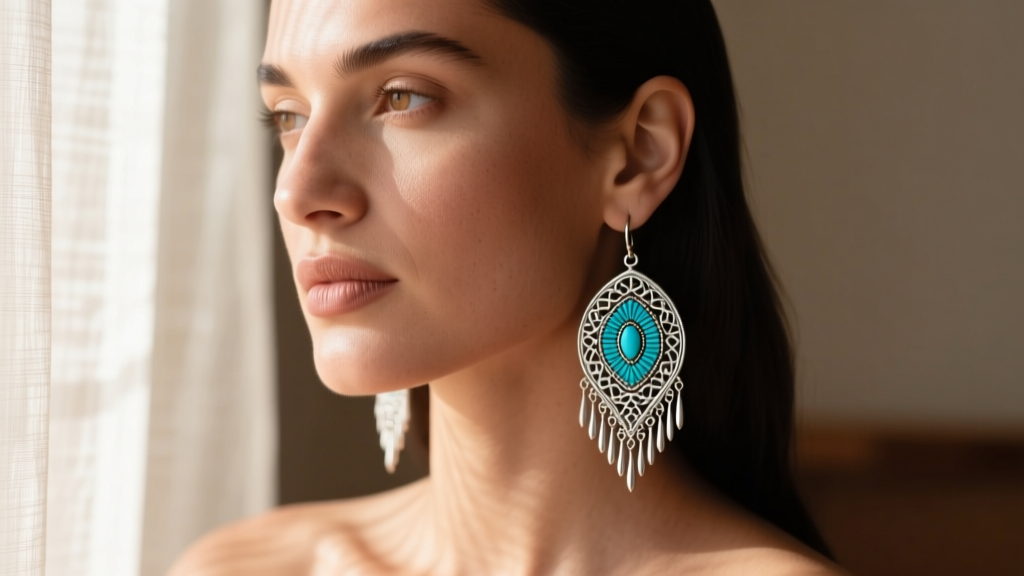
These elongated cabochons are meticulously set in sterling silver bezels, often clustered together in symmetrical, floral, or geometric patterns. While turquoise is the undisputed star of needlepoint jewelry, artisans occasionally incorporate red coral, lapis lazuli, or mother-of-pearl. The resulting earrings range from subtle, everyday studs to dramatic, shoulder-grazing dangles that serve as wearable art.
The Anatomy of Authentic Needlepoint Jewelry
To truly appreciate Zuni needlepoint earrings, you must understand the two core components that dictate their quality, value, and longevity: the stones and the silverwork.
The Stones: Turquoise Grading and Cuts
The lapidary work required for needlepoint is unforgiving. Artisans typically use high-grade, stabilized, or natural turquoise from renowned mines such as Sleeping Beauty (prized for its pure, matrix-free sky-blue color) and Kingman (famous for its deep blue hues with striking black or brown spiderweb matrix).
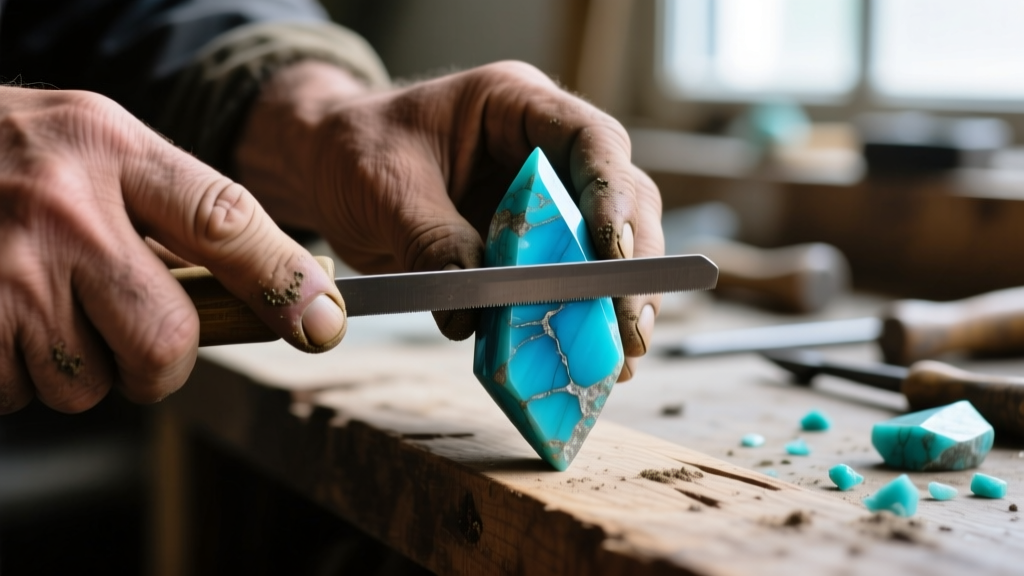
A standard needlepoint stone measures between 2mm and 4mm in width, and 15mm to 30mm in length. Cutting a stone this narrow requires a diamond-blade lapidary saw and immense skill. The cabochons must be perfectly domed and smoothly tapered to a sharp point without snapping.
The Metal: Sterling Silver and Bezels
Authentic Zuni jewelry is crafted exclusively from .925 sterling silver. The silverwork is not merely a backing; it is an integral part of the design. Look for traditional Zuni silver accents, including:
- Rainbow Twist Wire: Two or more strands of silver wire twisted together and soldered flat, creating a textured, rope-like border around the stone clusters.
- Silver Raindrops (Granulation): Tiny, hand-applied spheres of sterling silver placed along the shanks or between stone settings to add dimensional contrast.
- Hand-Cut Bezels: Thin strips of silver soldered around each individual stone. In authentic pieces, the bezel is pushed tightly over the turquoise edge using a bezel pusher, leaving no gaps or visible glue.
How to Spot Authentic Zuni Needlepoint vs. Imitations
The market is unfortunately flooded with overseas imports that mimic Native American styles. Under the Indian Arts and Crafts Act of 1990, it is illegal to market jewelry as 'Native American' or 'Indian' unless it is made by a member of a state or federally recognized tribe. To protect your investment, use this comparison framework when evaluating Zuni needlepoint earrings.
| Feature | Authentic Zuni Handmade | Mass-Produced Imitations |
|---|---|---|
| Stone Uniformity | Microscopic variations in shape; hand-cut points may differ by fractions of a millimeter. | Perfectly identical, machine-stamped stones with harsh, unnatural edges. |
| Silver Weight | Heavy, solid .925 sterling silver backplates and thick wirework. | Lightweight, hollow-backed, or plated base metals (often stamped 'Tibet Silver' or 'Alpaca'). |
| Bezel Setting | Tight, smooth silver edges wrapping the stone. No adhesive visible. | Glue seepage around the stone edges; bezels may be stamped rather than hand-set. |
| Maker's Mark | Often signed or stamped with the artisan's hallmark or clan symbol on the back. | Generic stamps like '925' with no artist hallmark, or no stamp at all. |
According to the Smithsonian National Museum of the American Indian, purchasing directly from tribal artisans, certified Native American art markets, or reputable gallery dealers is the most reliable way to ensure your jewelry complies with federal authenticity laws.
Sizing, Gauges, and Comfort for Everyday Wear
When selecting Zuni needlepoint earrings, the physical hardware is just as important as the visual design. Because needlepoint clusters can become heavy, the earring post or hook must be robust enough to support the weight without bending or tearing the earlobe.
- Standard Studs: Typically feature a 20-gauge (0.81mm) sterling silver post. These are lightweight (usually under 5 grams per earring) and ideal for daily wear.
- Medium Dangles: Often utilize 18-gauge (1.02mm) posts or thick 20-gauge French hooks. The thicker gauge prevents the silver from warping under the weight of the dangling turquoise clusters.
- Statement Drops: Large, multi-tiered needlepoint earrings can weigh upwards of 15 grams each. For these, look for reinforced French hooks or lever-back closures that distribute the weight more evenly across the cartilage and lobe.
Pricing Guide: What Should You Expect to Pay?
Authentic Zuni needlepoint earrings are an investment in master-level lapidary art. Pricing is dictated by the quality of the turquoise, the complexity of the silverwork, and the reputation of the silversmith. As of current market valuations, here is what you should expect to pay for genuine pieces:
- Small Studs (Single or Double Stone Clusters): $80 – $150. Perfect for beginners and minimalist styling.
- Medium Dangles (3 to 5 Cluster Tiers): $180 – $350. The most popular category, offering a balance of visual impact and wearability.
- Large Statement Pieces (Intricate Floral or Chandelier Designs): $450 – $900+. These require dozens of individually cut stones and days of meticulous soldering.
Beware of 'bargain' needlepoint earrings priced under $50. The cost of raw high-grade turquoise and .925 silver alone makes authentic handmade pieces at this price point economically impossible.
Caring for Your Turquoise and Silver Earrings
Turquoise is a porous, relatively soft gemstone, ranking between 5 and 6 on the Mohs hardness scale. The Gemological Institute of America (GIA) notes that untreated or lightly stabilized turquoise can easily absorb oils, lotions, and chemicals, which may alter its color over time.
To preserve your Zuni needlepoint earrings:
- Put Them On Last: Always apply perfumes, hairsprays, and lotions before putting on your earrings to prevent chemical absorption into the stone.
- Wipe After Wear: Use a soft, dry microfiber cloth to gently wipe the turquoise and silver after each use to remove natural skin oils.
- Polish the Silver Only: When the sterling silver tarnishes, use a treated silver polishing cloth. Rub the silver gently, but avoid rubbing the turquoise, as the polishing compounds can dull the stone's finish.
- Store Properly: Keep your earrings in a dry, airtight container or anti-tarnish bag. Store them flat to prevent the delicate needlepoint tips from catching on other jewelry and chipping.
By understanding the profound skill required to create Zuni needlepoint earrings, you can confidently navigate the market, support indigenous artisans, and add a piece of living history to your jewelry collection.