How to Authenticate and Care for Blue Gold Earrings
Learn how to verify, select, and clean blue gold earrings. Our step-by-step metallurgist guide covers AuIn2 alloys, PVD, and rhodium plating.

The Metallurgy of Blue Gold: What You Are Actually Buying
When shopping for blue gold earrings, the first step is understanding that "blue gold" is not a single, universal material. In the jewelry industry, this term refers to three distinctly different metallurgical processes, each with unique structural properties, price points, and failure modes. According to the Gemological Institute of America (GIA), alloying gold with specific base metals alters its crystal lattice, changing both its color and its physical durability.
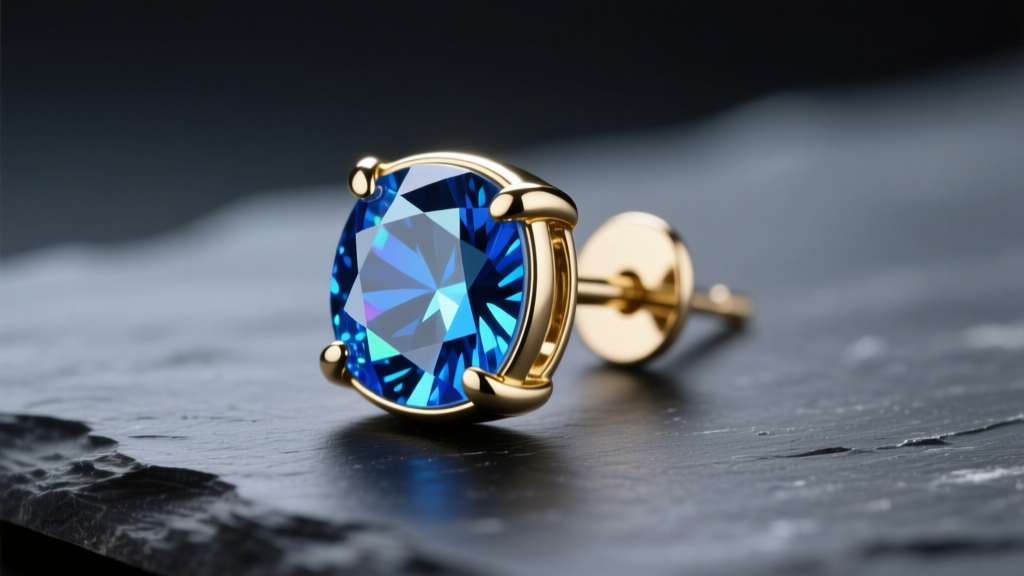
True blue gold is an intermetallic compound known as AuIn2 (Gold-Indium). It consists of approximately 46% gold and 54% indium. While it produces a stunning, authentic blue hue, AuIn2 is notoriously brittle. It has a low fracture toughness, meaning it behaves more like glass than a malleable metal. It cannot be drawn into wire, cast into thin bands, or used for earring posts. Therefore, genuine blue gold alloy is exclusively used as an inlay or a bezel-set cabochon within a structural white or yellow gold housing.
Alternatively, many modern jewelers use surface treatments to achieve the blue gold look. Blue rhodium plating involves a galvanic process where a microscopic layer (usually 0.1 to 0.3 microns) of rhodium alloyed with cobalt or indium is electroplated over a 14k or 18k white gold base. In 2026, Physical Vapor Deposition (PVD) has also become a dominant force. PVD uses a vacuum chamber to bond titanium or zirconium nitrides to a gold or titanium substrate at the molecular level, creating a highly durable, interference-based blue color that will not flake like traditional plating.
Step 1: Match the Material to the Earring Style
Because the structural integrity of blue gold varies wildly depending on its creation method, you must match the material to the correct earring silhouette. Choosing the wrong combination will result in shattered inlays or rapid color loss.
AuIn2 Alloy (True Blue Gold)
- Best Styles: Stud earrings, thick bezel-set inlays, and protected geometric accents.
- Avoid: Hoops, dangles, or any design where the blue gold forms the structural band or the post.
- Gauge Warning: Never attempt to use AuIn2 for a standard 20-gauge (0.8mm) or 18-gauge (1.0mm) earring post. The indium alloy will snap under the sheer stress of insertion. Always ensure the post is standard 14k white gold, with the blue gold serving only as the decorative face.
Blue Rhodium Plating
- Best Styles: Dangle earrings, drop earrings, and statement chandeliers.
- Avoid: Huggies, sleepers, or cartilage clickers. The constant friction against the ear and hair will wear away the 0.2-micron plating within months, revealing the white gold beneath.
PVD Coated Blue Gold
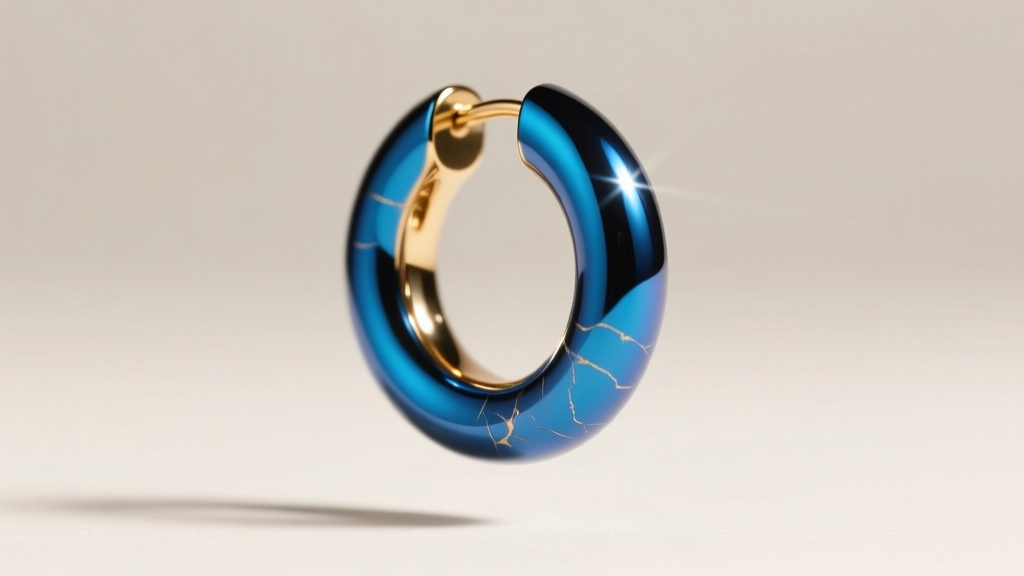
- Best Styles: Huggie hoops, seamless cartilage rings, and ear cuffs.
- Why: PVD coatings boast a Vickers hardness exceeding 2000 HV, making them virtually scratch-proof and ideal for high-friction areas like the helix or tragus.
Step 2: Verify Hallmarks and Ask the Right Questions
The jewelry market is flooded with misleading listings. To ensure you are paying the correct premium for genuine blue gold earrings, you must interrogate the seller and verify the hallmarks. The World Gold Council mandates strict hallmarking for gold alloys, but surface treatments often exist in a legal gray area.
The Golden Rule of Verification: If a jeweler claims a piece is "solid blue gold," they are either misinformed or lying. True AuIn2 cannot be solid and structural; it must be an inlay. Always ask: "Is the blue color an intermetallic indium alloy, a rhodium plating, or a PVD coating?"
When inspecting the earrings, look for standard gold hallmarks (e.g., 585 for 14k, 750 for 18k) on the post or the backing. If the piece is PVD coated over titanium, it may bear a "Ti" stamp instead. Be highly skeptical of unmarked pieces sold at premium prices, as they are likely base metals dipped in cheap blue lacquer or enamel, which will degrade rapidly when exposed to the natural oils of your skin.
Step 3: The Ultimate Cleaning and Care Protocol
Maintaining the vibrant hue of blue gold earrings requires a strict departure from standard jewelry cleaning habits. The chemicals and vibrations used for yellow or white gold will actively destroy blue gold finishes.
What to Avoid at All Costs
- Ultrasonic Cleaners: The high-frequency cavitation bubbles will shatter brittle AuIn2 inlays and strip blue rhodium plating down to the base metal.
- Steam Cleaners: Extreme thermal shock can cause indium alloys to micro-fracture or "whisker" over time.
- Harsh Chemicals: Bleach, ammonia, and even heavy chlorinated pool water will cause galvanic corrosion in gold-indium alloys, turning the blue surface a dull, oxidized gray.
The Step-by-Step Cleaning Method
- Prepare a Mild Solution: Mix three drops of phosphate-free, pH-neutral dish soap into a bowl of lukewarm (never hot) distilled water.
- Soak Briefly: Submerge the earrings for no more than 3 minutes to loosen sebum and dead skin cells from the earring backs and clutch.
- Agitate Gently: Use an extra-soft, baby-hair brush to lightly sweep around the bezel settings. Do not scrub the blue surface directly.
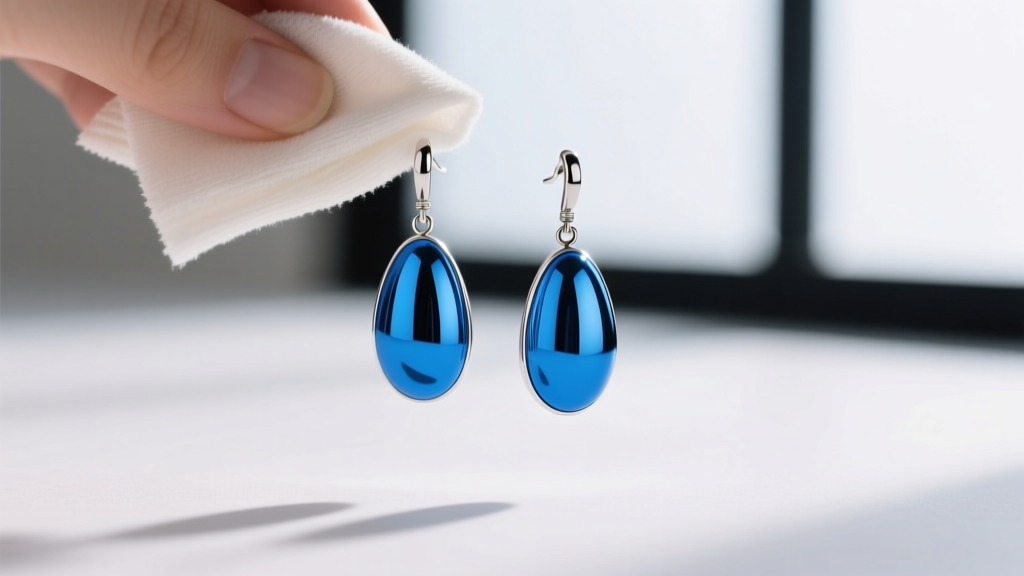
- Rinse and Dry: Rinse under a gentle stream of distilled water. Immediately pat dry with a lint-free microfiber cloth. Air-drying can leave hard water spots that etch into PVD coatings over time.
Comparison Chart: Blue Gold Earring Types
Use this matrix to evaluate pricing, durability, and application before making a purchase.
| Material Type | Composition | Durability & Wear | Avg. Price Range | Best Earring Style |
|---|---|---|---|---|
| AuIn2 Alloy | 46% Gold, 54% Indium | Extremely Brittle (Low Fracture Toughness) | $450 - $1,500+ | Bezel-set Studs |
| Blue Rhodium | 14k/18k Gold + Rhodium/Cobalt Plating | Moderate (Wears off in 1-3 years) | $150 - $600 | Dangles & Drops |
| PVD Coating | Titanium/Gold + Nitride Gas Vacuum Coating | Exceptional (Scratch & Tarnish Resistant) | $80 - $350 | Huggies & Cartilage Hoops |
Troubleshooting Common Blue Gold Failures
Even with meticulous care, blue gold earrings can experience material-specific failures. Here is how to diagnose and address them:
- Flaking or Patchiness: This exclusively happens with blue rhodium plating. The galvanic layer has worn through due to friction or acidic skin pH. Solution: Take the earrings to a master jeweler for a professional re-plating. Do not attempt DIY polish, as this will remove the remaining plating.
- Micro-Cracking or Chipping: If your AuIn2 inlay develops a hairline fracture, it is usually due to blunt force trauma (e.g., dropping the earring on a tile floor) or thermal shock. Solution: The inlay must be replaced by a lapidary or metalsmith; it cannot be soldered or glued back together seamlessly.
- Fading to a Bronze/Green Hue: This indicates a failure in cheap PVD coatings or enamel fakes, where the underlying base metal (usually brass or copper) is oxidizing and bleeding through the porous top layer. Solution: The piece is unsalvageable. Upgrade to a reputable brand utilizing medical-grade titanium substrates for PVD coatings.
By understanding the exact metallurgical reality behind blue gold, you can confidently select a pair of earrings that not only captures the eye with its rare, oceanic hue but also stands up to the physical demands of daily wear.


