How to Tell if an Earring is Real Diamond: Simulant & Lab Trends
Learn how to tell if an earring is real diamond using expert optical tests, metal hallmark analysis, and thermal conductivity tools for modern simulants.

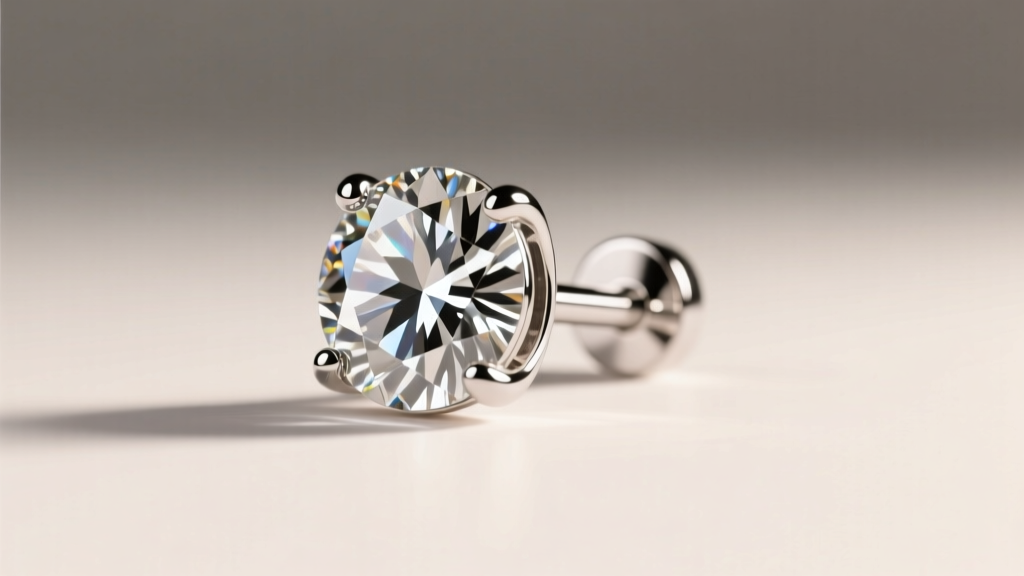
The 2026 Earring Market: Why Authentication is Harder Than Ever
The landscape of fine jewelry has shifted dramatically. With the mainstream explosion of lab-grown diamonds and ultra-high-quality simulants like moissanite and cubic zirconia (CZ), the naked eye is no longer a reliable tool for authentication. When analyzing current earring trends, particularly the enduring dominance of the classic round brilliant stud, buyers and stylists alike must rely on gemological science rather than simple visual guesswork. Understanding how to tell if an earring is real diamond requires a multi-layered approach that examines optical physics, setting architecture, and metallurgical hallmarks.
It is crucial to establish a baseline definition: lab-grown diamonds are real diamonds. They share the exact same carbon crystal structure, hardness (10 on the Mohs scale), and refractive index as mined diamonds. The authentication challenge addressed in this guide focuses on distinguishing natural or lab-grown diamonds from simulants (moissanite, CZ, white sapphire) that merely mimic the appearance of a diamond.
Optical Physics: Analyzing Fire, Brilliance, and Scintillation
Diamonds are prized for their unique interaction with light, governed by two specific optical properties: refractive index (RI) and dispersion. A real diamond has an RI of 2.42, which dictates how much light bends upon entering the stone, creating internal brilliance. However, simulants behave very differently under light.
- Cubic Zirconia (RI 2.15): CZ lacks the deep light return of a diamond. When viewed face-up, CZ often exhibits a 'glassy' or overly transparent appearance, lacking the sharp, contrasting scintillation patterns of a well-cut diamond.
- Moissanite (RI 2.65 - 2.69): Moissanite is doubly refractive, meaning it bends light twice. This creates a 'disco ball' effect. Furthermore, moissanite's dispersion (0.104) is more than double that of a diamond (0.044), resulting in excessive rainbow 'fire' that is easily identifiable to a trained eye.
The Read-Through and Fog Tests
For loose stones or earrings with flat-backed settings, the read-through test is highly effective. Place the stone table-down on a piece of text. Because of a diamond's extreme refractive index and precise facet angles, light is reflected back upward rather than passing through. If you can read the text through the stone, it is almost certainly CZ or glass. Similarly, the fog test relies on thermal conductivity. Breathe on the earring; a real diamond disperses heat instantly, meaning the fog will vanish in under a second. Simulants retain heat longer, causing the condensation to linger for several seconds.
Setting Architecture and Metal Hallmarks
A diamond's value dictates the quality of its mounting. High-end diamond studs are rarely set in base metals or low-grade alloys. Analyzing the earring post, backing mechanism, and metal stamps provides immediate clues regarding the center stone's authenticity.
"The integrity of the precious metal mounting is often the most immediate indicator of a center stone's value. We rarely see natural or high-grade lab diamonds set in anything less than 14k gold or platinum." — Gemological Institute of America (GIA)
Decoding Metal Stamps and Post Gauges
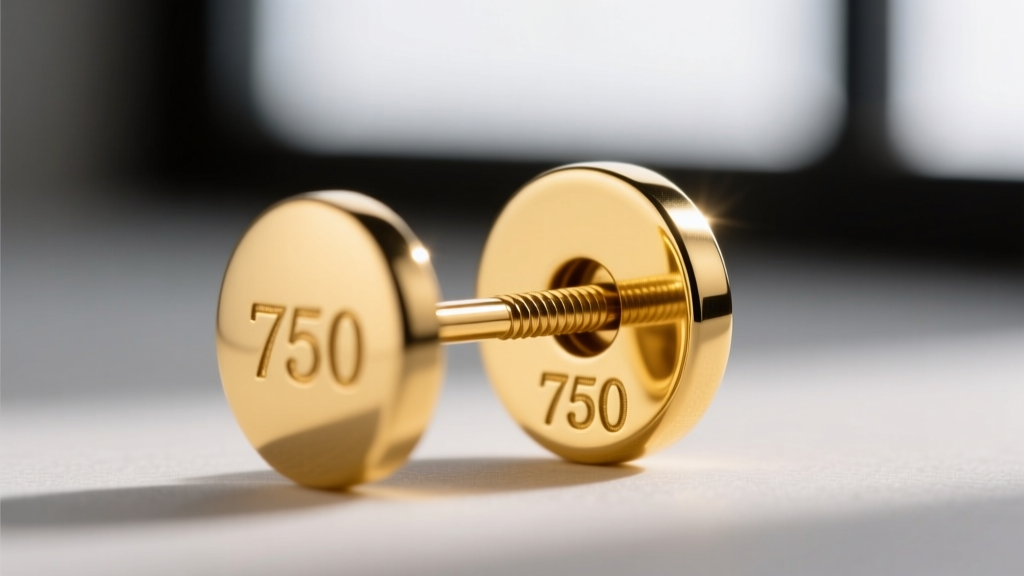
Examine the earring post and the butterfly back or locking mechanism for hallmarks. Real diamonds are typically set in 14K (stamped 585), 18K (stamped 750), or Platinum (stamped PT, 900, or 950). If the earring is stamped 925 (sterling silver), 18KGP (gold plated), or lacks a stamp entirely, the stone is almost certainly a simulant. Furthermore, standard diamond earring posts are manufactured in 18-gauge (1.0mm) or 20-gauge (0.8mm) thicknesses to support the weight of the precious metal and stone. Flimsy, easily bendable posts are a red flag for mass-produced CZ fashion jewelry.
Prong Construction and Security Backs
Diamonds require secure, durable settings. Look for martini settings, basket settings, or bezel settings with thick, well-finished prongs. Simulants are often held in by 'cast-in-place' prongs that look thin, rough, or uneven. Additionally, high-value diamond studs (typically 1 carat total weight and above) are frequently paired with secure locking backs, such as La Pousette backs or heavy-duty screw backs, rather than standard friction butterfly backs.
Comparative Data: Diamond vs. Simulant Earrings
To streamline your authentication process, refer to this comparative matrix detailing the physical and market differences between common earring center stones.
| Property | Natural / Lab Diamond | Moissanite | Cubic Zirconia (CZ) |
|---|---|---|---|
| Mohs Hardness | 10 | 9.25 | 8.0 - 8.5 |
| Refractive Index | 2.42 | 2.65 - 2.69 | 2.15 |
| Dispersion (Fire) | 0.044 | 0.104 (Rainbow heavy) | 0.058 |
| Inclusions (10x Loupe) | Carbon spots, feathers, needles | Parallel needle-like inclusions | None (Flawless), gas bubbles |
| Avg. Price (1 ctw Studs) | $3,000 - $7,000+ | $400 - $900 | $20 - $80 |
Advanced Electronic Testing: Thermal vs. Electrical
For definitive at-home or retail verification, electronic testers are mandatory. However, not all testers are created equal. Early thermal conductivity testers measure how quickly a stone draws heat away from a sensor. Because moissanite and diamond share very similar thermal conductivity profiles, a standard thermal tester will incorrectly identify moissanite as a diamond.
To accurately authenticate an earring, you must use a multi-tester that combines thermal and electrical conductivity testing. Diamonds are excellent thermal conductors but poor electrical conductors. Moissanite, conversely, is slightly electrically conductive. A multi-tester will accurately separate the two. When testing earrings, ensure the stone is completely clean; oils from the skin and earlobes can create a conductive film that yields false readings on sensitive electronic testers.
The Loupe Inspection: Girdle Inscriptions and Inclusions
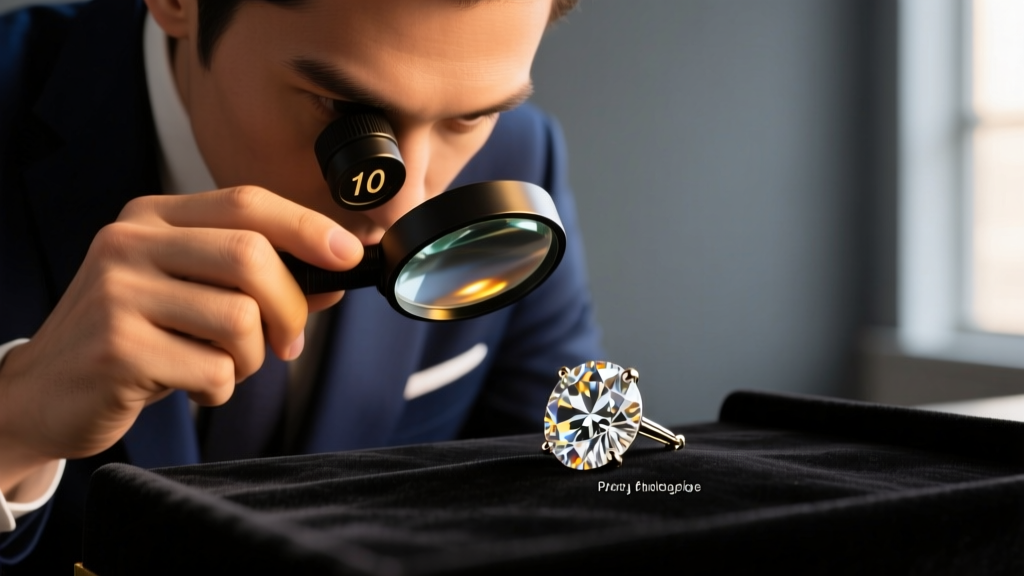
Using a 10x or 20x triplet loupe, examine the girdle (the outer edge) of the earring's stone. Most certified lab-grown and natural diamonds feature a microscopic laser inscription of their grading report number (e.g., GIA or IGI). You can verify this number against the GIA Report Check database. Furthermore, look for natural inclusions. While high-clarity diamonds exist, most feature microscopic internal characteristics. CZ is entirely flawless and may contain spherical gas bubbles from the manufacturing process, while moissanite exhibits distinct, parallel needle-like inclusions.
Final Verdict on Earring Authentication
As earring trends continue to embrace both minimalist diamond studs and maximalist simulated clusters, the burden of authentication falls on the educated consumer. Relying solely on sparkle is a relic of the past. By combining optical analysis, strict scrutiny of metal hallmarks and post gauges, and the use of dual-conductivity electronic testers, you can confidently determine the true nature of any diamond earring. When in doubt, always consult a certified gemologist or request an independent grading report to ensure your investment aligns with its material reality.


