Does Earring Hole Close? How Jewelry Materials Affect Tissue
Discover if your earring hole will close based on jewelry materials, gauge sizes, and metal weights. Expert guide on tissue memory and piercing care.

The Biology of the Fistula and Tissue Memory
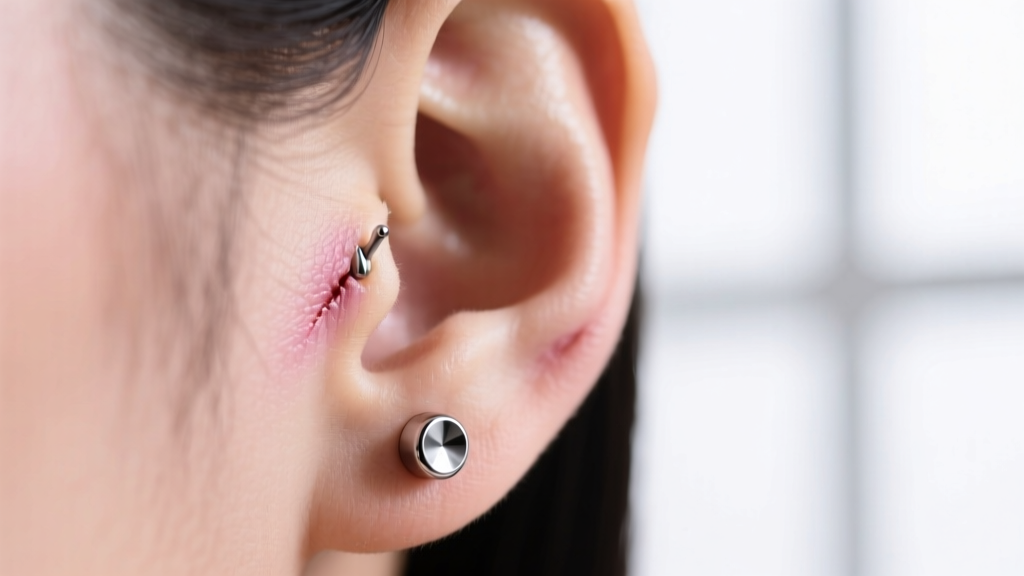
When clients and collectors ask, "does earring hole close," the answer is rarely a simple yes or no. The closure of a piercing depends entirely on the biological structure of the fistula—the tube of skin that forms around the jewelry—and how the physical properties of your chosen metals interact with that tissue over time. Unlike a standard wound that scabs over, a healed piercing is lined with epithelial cells. When jewelry is removed, the body's elastin and collagen fibers attempt to snap the tissue back to its original state. However, this "tissue memory" is heavily compromised by the weight, gauge, and biocompatibility of the materials you wear.
If you have worn heavy metals for decades, or if your jewelry has caused chronic micro-inflammation, the fistula may develop dense scar tissue that resists contraction. Understanding the material science behind your earrings is the first step in predicting whether your holes will shrink to an invisible pinpoint, remain as visible divots, or require surgical revision.
Material Density and Gravitational Stretching
The specific gravity (density) of your earring material dictates how much gravitational drag is placed on the earlobe. Over years of wear, heavy materials cause a slow, continuous stretching of the fistula, fundamentally altering the tissue's ability to close once the jewelry is removed. This is often referred to as the "cheese-cutter effect," where the weight of the metal slowly migrates downward through the tissue.
| Material Grade | Density (g/cm³) | Impact on Hole Closure & Tissue Memory |
|---|---|---|
| Implant-Grade Titanium (ASTM F136) | 4.43 | Ultra-lightweight and highly biocompatible. Exerts minimal gravitational drag, allowing the fistula to retain strong elastin memory and close effectively. |
| Niobium | 8.57 | Moderate weight but completely hypoallergenic. Safe for larger gauge hoops, though heavy statement pieces may cause slight stretching over decades. |
| 316L Surgical Steel | 8.00 | Moderate weight, but contains 8-10.5% nickel. Chronic micro-inflammation from nickel exposure creates rigid scar tissue that resists shrinking. |
| 14k / 18k Solid Gold | 12.9 - 15.6 | Extremely heavy. While inert and hypoallergenic (if nickel-free), wearing large solid gold hoops or drops will permanently stretch lobes due to sheer mass. |
| Acrylic / PMMA | 1.18 | Feather-light, but highly porous. Harbors bacteria that cause chronic swelling, artificially stretching the hole through inflammation rather than weight. |
According to the Association of Professional Piercers (APP), choosing low-density, high-biocompatibility metals like ASTM F136 titanium is crucial not just for initial healing, but for preserving the structural integrity of the earlobe over a lifetime.
Surface Finish and Micro-Abrasions
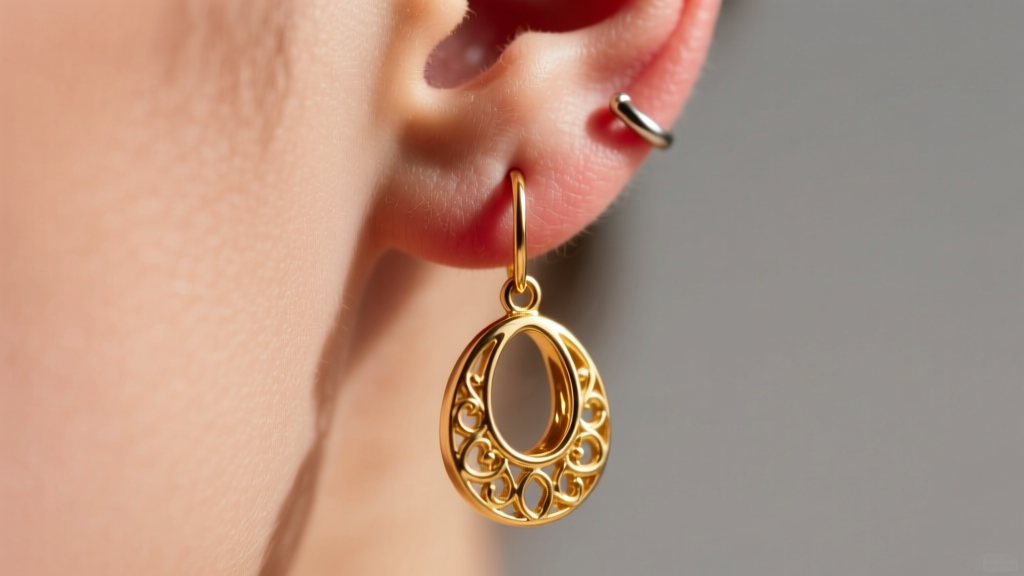
Beyond weight, the microscopic surface finish of your earrings plays a critical role in fistula health. A material's polish determines how much friction occurs against the delicate epithelial lining of the hole during daily movement.
- Mirror Polish (High-End Gold & Titanium): A flawless, glass-like surface allows the jewelry to glide through the fistula without causing micro-tears. This preserves the elasticity of the tissue, making closure much more likely if the jewelry is removed.
- Matte or Brushed Finishes: While aesthetically pleasing, brushed textures act like microscopic files against the inside of the piercing. Over time, this friction triggers the body to produce thicker, less elastic scar tissue to protect the area, which permanently prevents the hole from closing tightly.
- Plated Metals (Gold-Plated Brass/Silver): As the thin plating wears off, the porous base metal is exposed. This creates a rough surface that snags the fistula lining, leading to blowouts and jagged tissue that will not close cleanly.
Allergic Contact Dermatitis and Tissue Inflammation
You cannot discuss tissue contraction without addressing allergic contact dermatitis. The American Academy of Dermatology (AAD) notes that nickel is the most common metal allergen, and it is prevalent in cheaper jewelry and even some commercial "surgical steels."
"When the immune system detects nickel ions leaching from jewelry, it triggers a localized inflammatory response. In a piercing fistula, this chronic inflammation replaces healthy, elastic skin cells with rigid, fibrotic scar tissue. A fibrotic fistula loses its ability to contract, meaning the hole will remain permanently visible even after the jewelry is removed."
If your goal is to eventually let your earlobes close or shrink significantly, you must strictly avoid 316L surgical steel, white gold (which often contains nickel alloys), and mystery metals. Stick exclusively to implant-grade titanium, niobium, or high-purity 14k/18k yellow gold to ensure the tissue remains soft and elastic.
The Gauge Threshold: When Holes Stop Closing
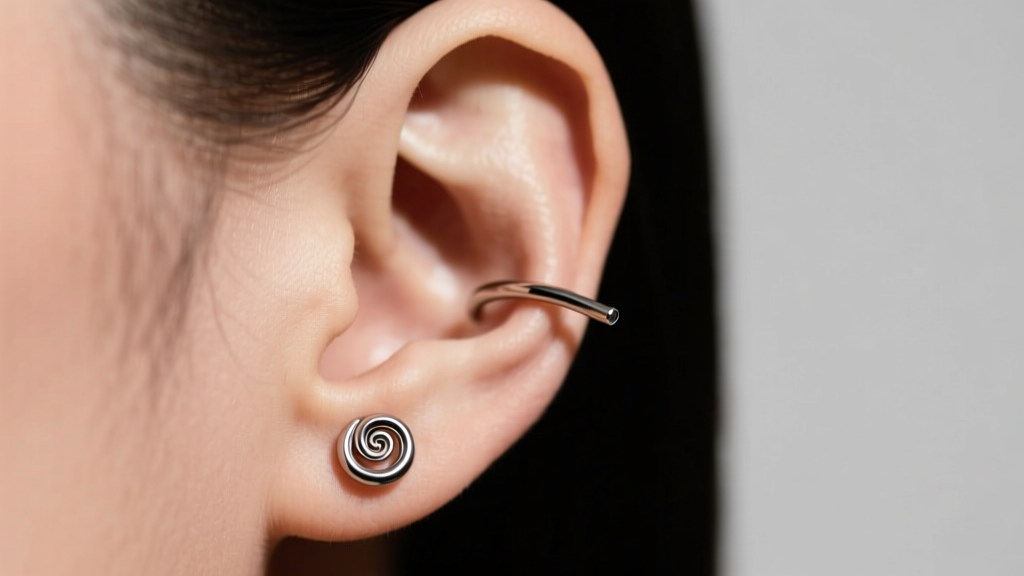
The physical diameter of the jewelry (the gauge) establishes the baseline for tissue memory. While material weight and toxicity dictate the quality of the tissue, the gauge dictates the quantity of tissue displacement.
The Closure Spectrum by Gauge Size
- 20G (0.81mm) to 18G (1.02mm): Standard earring sizes. Holes at these sizes will almost always close or shrink to an invisible pinpoint within a few months of jewelry removal, provided the tissue hasn't been torn by heavy drops.
- 16G (1.2mm) to 14G (1.6mm): Common for cartilage and some lobe piercings. Lobes will shrink significantly, but a small, visible divot may remain. Cartilage holes at this size often remain permanently open due to the rigid nature of auricular cartilage.
- 12G (2.0mm) to 8G (3.2mm): The "grey zone." The hole will shrink, but the fistula tube will likely remain palpable and visible. Complete closure is rare without surgical intervention.
- 6G (4.0mm) and Larger: The "point of no return" for most tissue types. The skin has been permanently displaced. While the hole may shrink slightly, it will not close on its own.
Expert Troubleshooting for Stretched or Torn Fistulas
If you are dealing with a stretched hole caused by heavy materials or a tear from a snagged earring, specific protocols can encourage tissue repair and contraction.
- The Taping Method: For holes stretched between 14G and 8G, wrap the jewelry in a single layer of PTFE (Teflon) tape every two weeks. This slowly and gently forces the tissue to contract around a decreasing diameter without causing the micro-tears associated with jumping down multiple gauge sizes.
- Jojoba Oil Massage: Apply pure, unrefined jojoba oil to the earlobe daily. Jojoba closely mimics human sebum and helps soften fibrotic scar tissue, restoring elasticity to the fistula walls and encouraging the hole to shrink.
- Surgical Revision: For holes larger than 6G, or lobes that have suffered a complete blowout from heavy gold or brass drops, conservative methods will fail. A minor in-office lobuloplasty (earlobe repair) performed by a board-certified dermatologist or plastic surgeon is the only way to restore the tissue to its original, unpierced state.
Ultimately, whether your earring hole closes is a direct reflection of the physics and chemistry of the metals you choose to wear. By prioritizing lightweight, hypoallergenic materials and respecting the biological limits of your tissue, you maintain complete control over the lifespan of your piercings.


