How to Authenticate and Buy Vintage 90s Earrings in 2026
Discover how to authenticate, source, and style vintage 90s earrings. Learn about 1990s hallmarks, gauge sizes, and material safety in our 2026 guide.

The 2026 Shift: From Y2K to True 90s Authenticity
As the fashion cycle pushes past the hyper-nostalgia of the early 2000s, 2026 has seen a definitive pivot toward the broader, more nuanced aesthetics of the 1990s. For jewelry collectors and style enthusiasts, this means a surging demand for vintage 90s earrings. However, the market is currently flooded with modern '90s-inspired' reproductions that lack the structural integrity, unique metallurgy, and cultural weight of genuine decade-specific pieces. Whether you are hunting for grunge-era scaffold barbells, hip-hop heritage bamboo hoops, or corporate-minimalist geometric studs, knowing how to authenticate true 1990s ear styling is essential. This comprehensive buying guide breaks down the exact hallmarks, gauge specifications, and material safety protocols you need to navigate the vintage market with confidence.
Defining the Decade: Key Silhouettes of 1990s Ear Styling
The 1990s was not a monolith; it was a decade of stark subcultural contrasts. To buy authentic vintage 90s earrings, you must first understand the distinct silhouettes that defined the era's various style tribes.
The Grunge & Body-Mod Influence: Scaffold Barbells
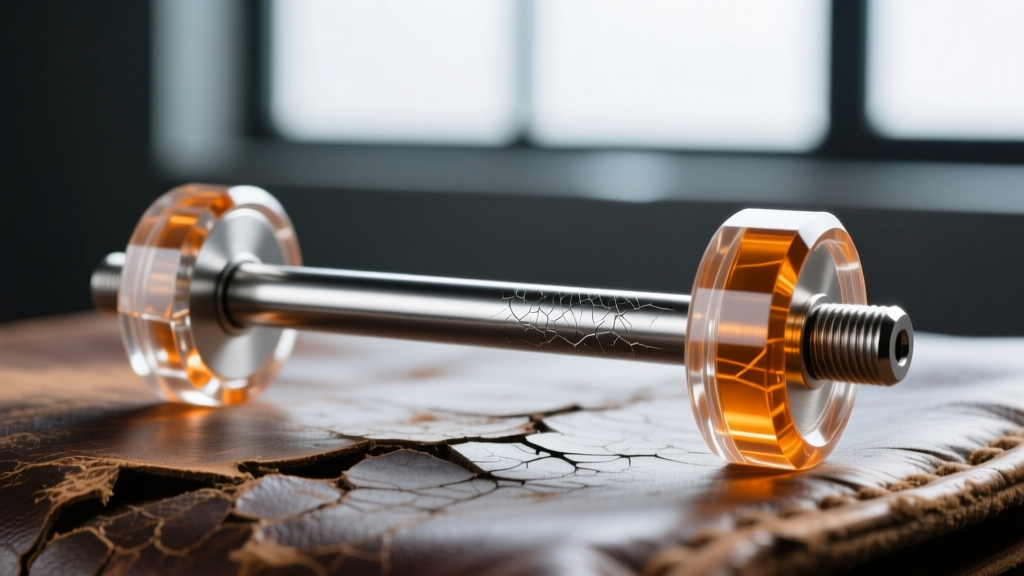
Before the mainstreaming of curated ear projects, the mid-90s underground grunge and body-mod scenes popularized the industrial scaffold piercing. True vintage pieces from this era differ vastly from modern body jewelry. Early 90s industrials were often crafted from surgical steel or early-grade titanium, featuring external threading rather than the internal threading standard today. They frequently showcased acrylic or UV-reactive resin ends, which have a distinct, slightly yellowed patina when aged authentically.
Hip-Hop Heritage: Bamboo and Door-Knocker Hoops
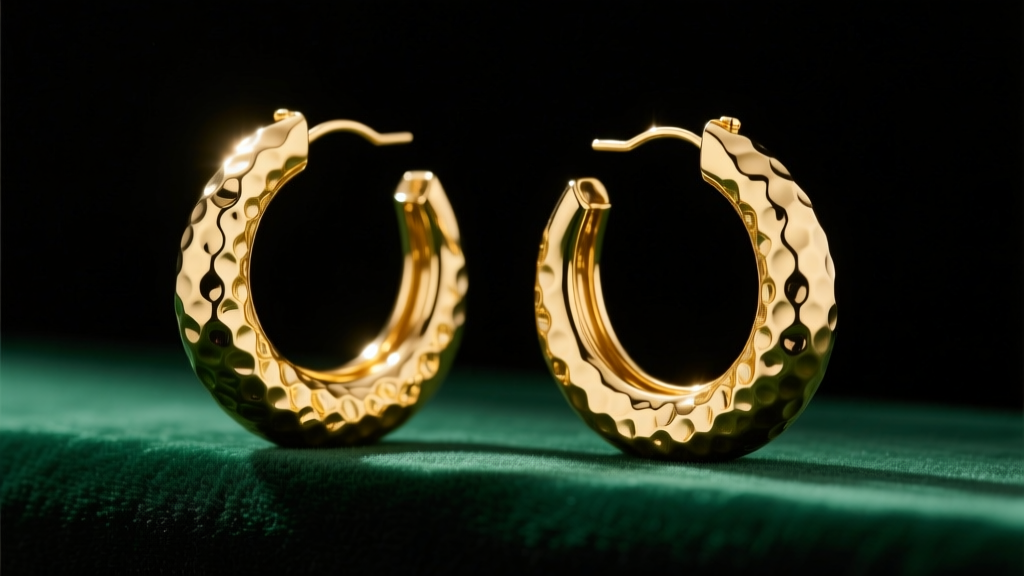
Rooted deeply in Black and Latino culture, oversized bamboo hoops and 'door-knocker' earrings were a staple of 90s hip-hop fashion. Authentic vintage pairs are notably heavy, often cast in solid brass or thick gold-plated base metals. Look for the specific 'butterfly' friction backs that were wider and more rudimentary than modern clasps, designed to support the substantial weight of the hoop without tearing the earlobe.
Corporate Minimalism: Geometric Studs and Button Pearls
On the opposite end of the spectrum, the 'supermodel off-duty' and corporate minimalism trends favored clean lines. According to the Gemological Institute of America (GIA), the 90s saw a massive spike in the popularity of Akoya cultured pearls. Vintage 90s button pearl studs typically range from 6mm to 7.5mm, set in low-profile 14k yellow gold bezels or friction cups, contrasting sharply with the high-prong settings of the 1980s.
The Authentication Matrix: Spotting True 90s vs. Modern Reproductions
Distinguishing a genuine 1992 piece from a 2024 fast-fashion replica requires a trained eye. The Lang Antiques hallmark guide emphasizes that maker's marks and clasp evolution are your best indicators of age. Use the table below as your primary authentication framework when evaluating vintage 90s earrings.
| Feature | True 1990s Vintage | Modern '90s-Inspired' Replica |
|---|---|---|
| Clasp Mechanism | Spring-ring clasps, early lobster claws, or wide butterfly friction backs. | Standardized, lightweight lobster claws or modern silicone stoppers. |
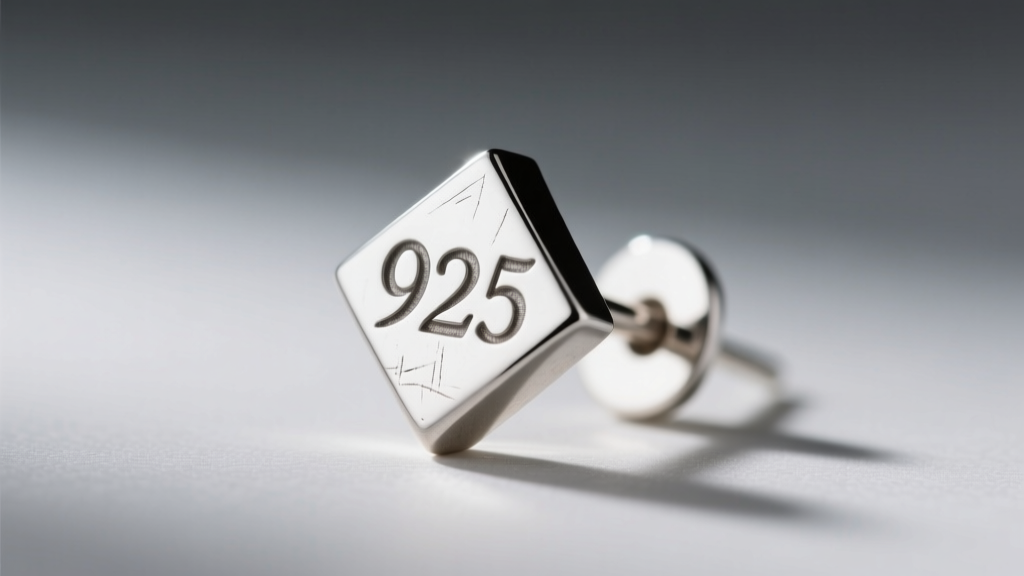
| Hallmarks & Stamps | '14K', '925', or specific maker marks (e.g., Monet's underlined 'M', Trifari with a crown, or Chanel's interlocking Cs with seasonal codes). | Laser-etched '925' or '18KGP' with modern, uniform font types. |
| Patina & Wear | Organic silver sulfide tarnish in crevices; slight gold-rub on high-contact friction points; acrylic yellowing. | Uniform antiquing (fake patina) or pristine, bright rhodium plating. |
| Ear Wire Gauge | Often thicker (18g or 16g) due to older piercing gun standards and heavier earring weights. | Standardized thin wires (20g or 22g) for lightweight modern casting. |
Material Safety, Gauge Sizing, and Piercing Compatibility
One of the most critical, yet overlooked, aspects of buying vintage 90s earrings is material safety. The 1990s was an era where nickel-heavy base metals were routinely used in costume jewelry, often plated with a thin wash of gold or silver that has long since worn away.
The Nickel Allergy Hazard
Iconic 90s costume brands like Napier, Monet, and Anne Klein produced stunning geometric and enamel earrings. However, the posts and ear wires were frequently made of nickel alloys. If you have sensitive ears or contact dermatitis, wearing these directly is a risk. Pro-Tip: Purchase the vintage piece for the decorative front, and have a local bench jeweler snip off the original post and laser-weld a modern, hypoallergenic 20-gauge niobium or 18k white gold post in its place. This preserves the vintage aesthetic while ensuring biological safety.
Understanding 90s Gauge Sizing
If you are buying vintage cartilage pieces or early body-mod jewelry, be aware of gauge discrepancies. Modern standard lobe piercings are typically 20g (0.81mm) or 18g (1.02mm). However, many 90s mall-kiosk piercings were performed with early stud guns that utilized 16g (1.29mm) or even 14g (1.6mm) posts. Always measure the post thickness with digital calipers before purchasing vintage studs, as forcing a thick 16g vintage post into a modern 20g lobe piercing can cause micro-tears and scar tissue buildup.
Market Pricing & Sourcing Strategy
The market for vintage 90s earrings is highly stratified. Knowing the current 2026 pricing tiers will prevent you from overpaying for costume pieces or missing out on high-end bargains.
- Tier 1: Vintage Costume ($25 - $95)
Brands: Monet, Trifari, Napier, Anne Klein.
Where to source: Etsy, eBay, local estate sales. Look for pieces with intact enamel and minimal base-metal pitting. - Tier 2: Demi-Fine & Designer Archives ($150 - $600)
Brands: Early Stephen Dweck, vintage Gorjana, David Yurman cable studs.
Where to source: 1stDibs, The RealReal, specialized Instagram vintage curators. Expect solid sterling silver or 14k gold vermeil. - Tier 3: High Jewelry & Luxury House ($800 - $5,000+)
Brands: Chanel (gripoix glass and pearl), Dior, Bulgari (early Tubogas or Parentesi motifs).
Where to source: Sotheby's online auctions, verified luxury resellers. Authentication papers or original 90s boutique receipts add a 20-30% premium to the resale value.
Final Pre-Purchase Checklist
Before you finalize your checkout on any vintage 90s earrings, run through this rapid E-E-A-T verification checklist:
- Verify the Clasp: Does the clasp mechanism match the manufacturing era? (e.g., spring rings for early 90s, bulkier lobster claws for late 90s).
- Inspect the Post: Is the post straight? Vintage friction posts often bend. Check for stress fractures at the solder point where the post meets the earring face.
- Assess the Plating: If it is gold-plated costume jewelry, is the underlying base metal exposed on the post? If so, plan for a jeweler to swap the post to avoid nickel exposure.
- Check for Maker's Marks: Use a 10x jeweler's loupe to inspect the back of the earring or the inside of the hoop for stamped copyrights (©) and brand signatures.
By prioritizing structural authenticity and material safety, you can successfully curate a collection of vintage 90s earrings that not only captures the spirit of the decade but also stands the test of time in your modern jewelry rotation.


