Care Guide: Men Earrings Black Metal & Onyx Maintenance
Discover expert cleaning and maintenance tips for men earrings black PVD metals and onyx stones to prevent fading, scratching, and tarnish.

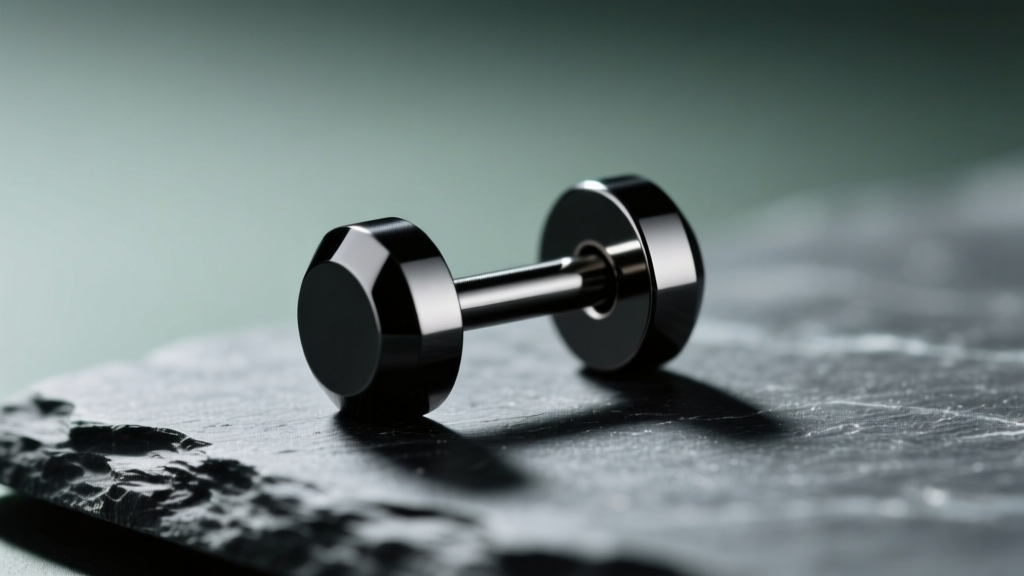
The Metallurgy of Black Men's Earrings
When navigating the modern jewelry market, the demand for men earrings black metal and gemstone variations has exploded. However, 'black' in jewelry is rarely a natural metal state; it is an engineered finish or a specific gemological treatment. Understanding the exact material science behind your earrings is the foundational step in proper maintenance. A cleaning method that restores one black finish might permanently destroy another.
In 2026, the three most dominant black metal treatments in men's earrings are PVD coating, DLC (Diamond-Like Carbon), and chemical oxidation. Each requires a distinct approach to care.
PVD (Physical Vapor Deposition) Coatings
PVD is a vacuum-coating process where titanium or zirconium nitride is vaporized and bonded to a stainless steel or titanium base. It creates a deep, uniform black color that is highly resistant to tarnish. However, PVD is a surface layer, typically only a few micrometers thick. While durable against sweat and water, it is vulnerable to micro-scratches from abrasive polishing cloths and harsh chemical solvents like bleach or chlorine, which can cause the coating to delaminate or cloud.
DLC (Diamond-Like Carbon) Finishes
DLC is the premium tier of black coatings. Utilizing amorphous carbon, DLC achieves a Mohs hardness of up to 9, making it vastly superior to PVD in scratch resistance. According to metallurgical standards tracked by The Birmingham Assay Office, DLC coatings are chemically inert, meaning they will not react to pool chlorine, salt water, or acidic skin pH. Maintenance for DLC is straightforward, but the high replacement cost of DLC pieces makes preventative care essential.
Oxidized Sterling Silver
Oxidation is a chemical patina, usually achieved by exposing sterling silver to liver of sulfur (potassium sulfide). This creates a layer of black silver sulfide on the surface. Unlike PVD or DLC, oxidation is meant to wear away slightly over time to create a vintage, high-contrast look. The critical error many make is using silver polish or ultrasonic cleaners on oxidized silver, which strips the black patina entirely, reverting the earring to bright, shiny silver.
Gemstone Focus: Caring for Black Onyx and Spinel
Beyond metals, black gemstones are a staple in men's stud and signet earrings. The two most common are black onyx and black spinel, and their care requirements differ drastically due to their crystalline structures and treatments.
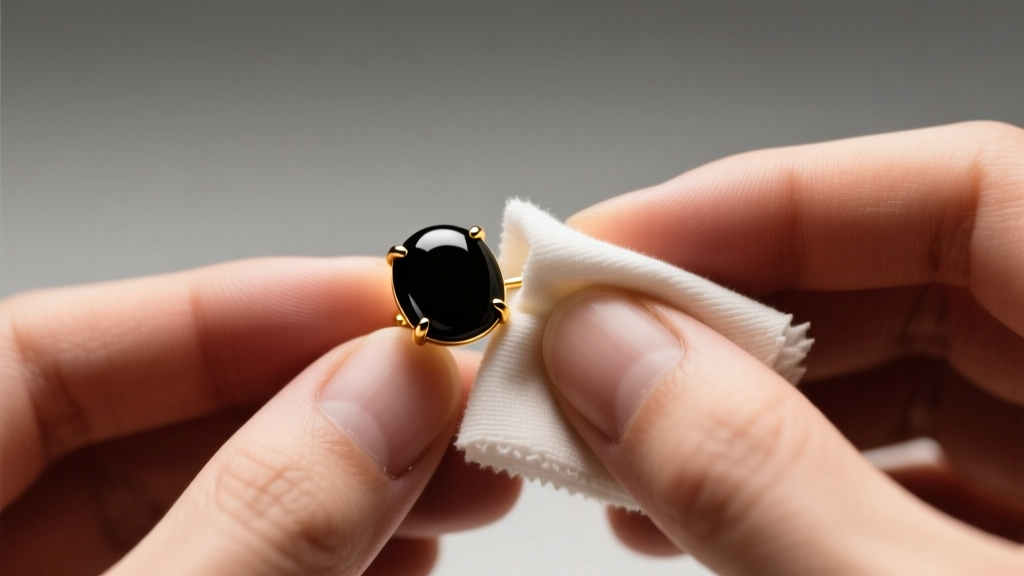
Black Onyx: Most commercial black onyx is actually gray chalcedony (a type of quartz) that has been dyed and heat-treated to achieve its opaque black color. The Gemological Institute of America (GIA) warns that while onyx is relatively hard (Mohs 7), the dye can be sensitive to prolonged exposure to harsh chemicals, extreme heat, or prolonged direct sunlight, which can cause the black to fade to a dull brown. Never steam-clean dyed onyx.
Black Spinel & Black Diamond: Natural black spinel (Mohs 8) and irradiated black diamonds (Mohs 10) are incredibly durable. They do not rely on surface dyes and can withstand ultrasonic cleaning and mild chemical solvents without losing their color. However, black diamonds are often heavily included and porous; they can trap skin oils and soap scum in their microscopic fissures, requiring regular brushing with a soft-bristled toothpick or baby toothbrush to maintain their luster.
Material-Specific Cleaning Protocol
Use the following matrix to determine the safest cleaning protocol for your specific black earrings. Using the wrong solvent is the leading cause of irreversible finish damage.
| Material / Finish | Safe Cleaning Agent | Unsafe Agents (Avoid) | Recommended Tool |
|---|---|---|---|
| PVD Coated Titanium | Mild dish soap & warm water | Bleach, chlorine, polishing pastes | Lint-free microfiber cloth |
| DLC Coated Steel | Isopropyl alcohol (70%) | Abrasive diamond files | Soft cotton swab |
| Oxidized Silver | Dry polishing only (selective) | Silver dip, ultrasonic, baking soda | Q-tip for targeted bright areas |
| Dyed Black Onyx | Damp cloth with plain water | Steam, ultrasonic, ammonia | Untreated flannel cloth |
| Black Diamond/Spinel | Ammonia-based jewelry cleaner | Heavy oils, lotions (traps in pores) | Soft baby toothbrush |
Step-by-Step Deep Cleaning Guide
For routine maintenance of PVD, DLC, and gemstone black earrings, follow this 5-step protocol to remove sebum, dead skin cells, and environmental grime without compromising the finish.
- Preparation: Fill a small glass bowl with distilled water and two drops of phosphate-free, lotion-free dish detergent (like Dawn). Avoid tap water, as hard water minerals can leave micro-deposits on black finishes, creating a cloudy white haze.
- Soaking: Submerge the earrings for exactly 3 to 5 minutes. Do not exceed 10 minutes, especially if the earrings feature glued gemstone settings, as prolonged soaking can weaken cyanoacrylate adhesives.
- Agitation: Using a brand-new, ultra-soft baby toothbrush, gently sweep the bristles around the earring post, the threading, and the gemstone bezel. Apply zero downward pressure; let the bristles do the work.
- Rinsing: Rinse thoroughly under a gentle stream of lukewarm distilled water. Ensure all soap residue is removed from the earring backs and clutch mechanisms.
- Drying: Pat dry with a microfiber cloth, then use a hair dryer on the 'cool' setting to blast moisture out of the threading and crevices. Trapped moisture against the skin can lead to contact dermatitis.
Gauge-Specific Maintenance and Piercing Hygiene
The physical dimensions of your earrings dictate specific care challenges. Men's earrings typically range from 20-gauge (0.81mm) for standard lobe studs to 14-gauge (1.6mm) or thicker for cartilage and helix piercings.
Threadless and Internally Threaded Mechanics: High-end black men's earrings often feature threadless (push-pin) or internally threaded mechanisms to protect the piercing fistula. When cleaning black PVD threadless pins, never use pliers to bend the pin for tension adjustment, as this will crack the microscopic PVD layer. Always use your fingers or nylon-jawed jewelry pliers.
Piercing Health: According to the Centers for Disease Control and Prevention (CDC), proper piercing hygiene extends beyond the jewelry to the ear tissue itself. Sebum and keratin buildup around the piercing hole can degrade the black coating on the earring post over time due to the slightly acidic nature of skin oils (pH 4.5 to 5.5). Clean the earlobe with a sterile saline spray (0.9% sodium chloride) before inserting freshly cleaned black earrings to prevent oil transfer.
The Enemies of Black Finishes: What to Avoid
To preserve the factory finish of your black earrings, you must eliminate the following habits and products from your maintenance routine:
- Ultrasonic Cleaners: The high-frequency cavitation bubbles generated by ultrasonic machines are devastating to oxidized silver, blasting the black patina out of the crevices. They can also cause internal fractures in dyed onyx.
- Silver Polishing Cloths: These cloths are impregnated with microscopic abrasives (like jeweler's rouge) designed to strip tarnish. If used on black PVD or oxidized silver, they will literally sand off the black finish, leaving patchy, silver-colored streaks.
- Hairspray and Cologne: Aerosolized alcohols and polymers from grooming products will coat black gemstones, dulling their light return. Always apply grooming products before putting on your earrings.
- Gym Environments: Sweat is highly corrosive. While DLC can withstand it, standard PVD and oxidized silver will degrade rapidly if exposed to heavy perspiration. Remove black earrings before weightlifting or cardio.
Storage and Long-Term Preservation
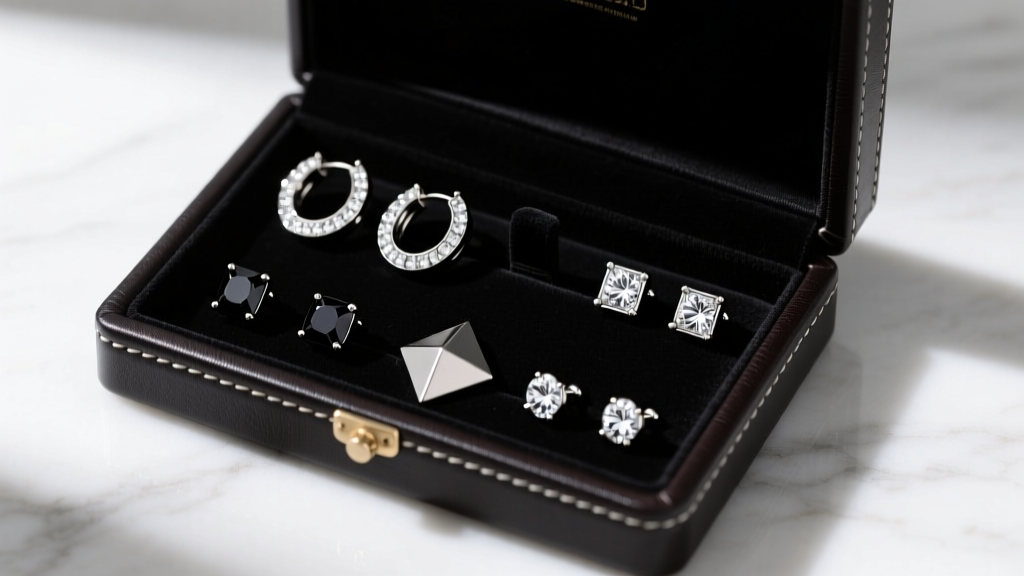
How you store your black earrings is just as critical as how you clean them. Black metals, particularly those with matte or satin finishes, are prone to 'finish burnishing'—a phenomenon where repeated friction against other jewelry slowly polishes the matte texture into a shiny, uneven gloss.
Store each pair of black earrings in individual, anti-tarnish flannel pouches or soft silicone capsules. Never toss multiple black PVD or oxidized earrings into a communal jewelry box where they can collide. For hoop earrings and huggies, ensure the clasp is fully closed before storage to prevent the post from scratching the inner diameter of adjacent hoops. By respecting the material science of your jewelry and adhering to these targeted protocols, your black earrings will maintain their dark, architectural aesthetic for years to come.


