Evil Eye Earrings: Eyes, Motifs & Budget Value Guide
Discover our 2026 budget and value assessment of evil eye and eye motif earrings. Compare materials, pricing tiers, and gemstone authenticity.

The Allure of the Gaze: Decoding Eye Motif Jewelry
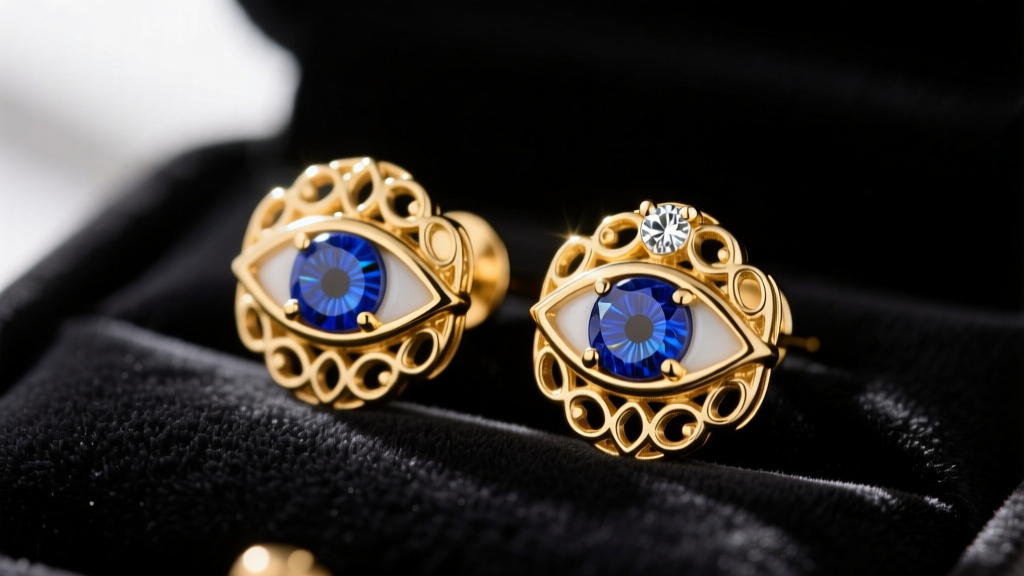
When shopping for protective jewelry, earrings, eyes, and evil eye motifs remain some of the most culturally resonant and aesthetically versatile choices available. From the traditional Mediterranean Nazar to modern, hyper-realistic anatomical eye designs, the "gaze" motif has transcended fleeting trends to become a permanent staple in fine and fashion jewelry. However, as we move through 2026, the market is saturated with everything from $12 fast-fashion alloy studs to $2,500 solid gold heirloom pieces. How do you determine the actual value of an eye motif earring?
This comprehensive budget and value assessment breaks down the material science, gemstone authenticity, and hardware integrity of eye-themed earrings. Whether you are looking for a subtle cartilage stud or a bold lapis lazuli drop, understanding the cost-per-wear and degradation timelines of these specific materials is crucial for making an informed investment.
The Material Matrix: What Are You Actually Paying For?
The foundation of any earring's value lies in its base metal and finishing. Eye motifs require intricate detailing—often involving layered metals, enamel work, or inlaid stones—which makes the choice of base material critical for both longevity and skin safety.
Base Metals and Plating Standards
Cheap eye earrings often utilize brass or zinc alloy bases plated with a microscopic flash of gold. These are prone to causing contact dermatitis, especially on fresh piercings. For mid-tier budgets, Sterling Silver (925) is the minimum acceptable standard. However, the true value indicator in 2026 is Gold Vermeil. According to the FTC Jewelry Guides, true vermeil must consist of a sterling silver base plated with at least 10k gold that is a minimum of 2.5 microns thick. Anything less is merely "gold plated" and will rub off the intricate ridges of an eye motif within months of daily wear.
| Material Tier | Base Metal | Finish / Plating | Expected Lifespan (Daily Wear) | Value Rating |
|---|---|---|---|---|
| Budget / Fast Fashion | Brass / Zinc Alloy | Flash Plated (< 0.5 microns) | 3 - 6 Months | Poor |
| Mid-Tier / Demi-Fine | Sterling Silver (925) | Gold Vermeil (2.5+ microns) | 2 - 4 Years | Good |
| Investment / Fine | Solid 14k or 18k Gold | None (Solid throughout) | Lifetime / Heirloom | Excellent |
The Color of the Iris: Enamel and Gemstone Authenticity
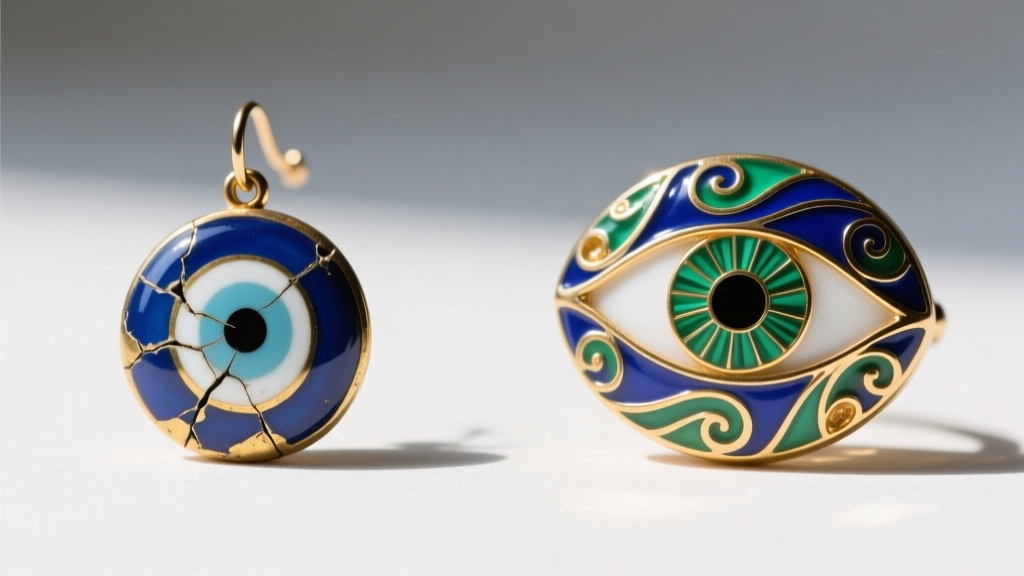
The defining feature of eye earrings is the "iris" and "pupil." Jewelers achieve these striking colors through either enamel work or inlaid gemstones. This is where budget brands cut the most corners, and where informed buyers can spot true value.
Enamel: Epoxy Resin vs. Vitreous Glass
In budget earrings ($15–$40), the blue or green "iris" is typically made from epoxy resin or cold enamel. This is essentially a hardened paint. It is highly susceptible to chipping, yellowing from UV exposure, and peeling away from the metal bezel. In contrast, luxury and high-end artisan pieces utilize vitreous enamel (often guilloché). This involves fusing powdered glass to the metal at temperatures exceeding 1,400°F. Vitreous enamel will never yellow, is highly scratch-resistant, and possesses a luminous depth that cold enamel cannot replicate. If a brand does not specify "vitreous" or "fired" enamel, assume it is cold enamel and price your expectations accordingly.
Gemstone Substitutes: Spotting the Fakes
Many eye motifs rely on the deep, celestial blue of Lapis Lazuli or the vibrant matrix of Turquoise. Unfortunately, these are two of the most frequently faked stones in the jewelry industry.
- Lapis Lazuli vs. Sodalite/Dyed Howlite: Genuine lapis lazuli should feature natural pyrite (fool's gold) flecks and occasional white calcite veining. If the blue is perfectly uniform with no metallic flecks, you are likely looking at sodalite or dyed howlite. The Gemological Institute of America (GIA) notes that true lapis has a specific gravity and refractive index that differs vastly from cheap dyed substitutes.
- Turquoise vs. Dyed Magnesite: Natural turquoise features a distinct, organic webbing (matrix). Budget earrings often use dyed magnesite or howlite, which can be identified by examining the cracks under a loupe; if the dye concentrates heavily in the crevices, it is a treated stone.
Pricing Tiers: A 2026 Market Breakdown
To accurately assess value, we must segment the market into three distinct pricing tiers. This framework helps you determine if an earring is priced fairly based on its intrinsic material worth and craftsmanship.
Tier 1: The Budget Category ($15 - $45)
At this price point, you are paying for the design, not the materials. Expect brass bases, cubic zirconia "pupils," and cold enamel. These are perfectly fine for occasional wear or trend-chasing, but they hold zero resale value and will likely tarnish or chip within a season. Value Verdict: High style, low longevity.
Tier 2: The Demi-Fine Sweet Spot ($55 - $140)
This is where the best cost-per-wear value exists. Brands in this tier use 925 sterling silver bases with 2.5-micron 18k gold vermeil. The "eyes" are often crafted from synthetic spinel, high-grade cubic zirconia, or genuine but lower-grade turquoise. The hardware is usually upgraded to include thicker posts and secure friction backs. Value Verdict: Excellent daily wear value, provided you keep them dry and store them properly.
Tier 3: The Investment & Heirloom Tier ($180 - $600+)
Solid 14k or 18k gold, genuine lapis lazuli, natural turquoise, and occasionally diamond or sapphire accents for the pupil. These pieces are cast or hand-fabricated, meaning the bezels holding the stones are solid and secure. They can be worn in the shower, slept in, and eventually passed down. Value Verdict: High initial cost, but the lowest cost-per-wear over a lifetime.
Sizing, Gauge, and Hardware Integrity
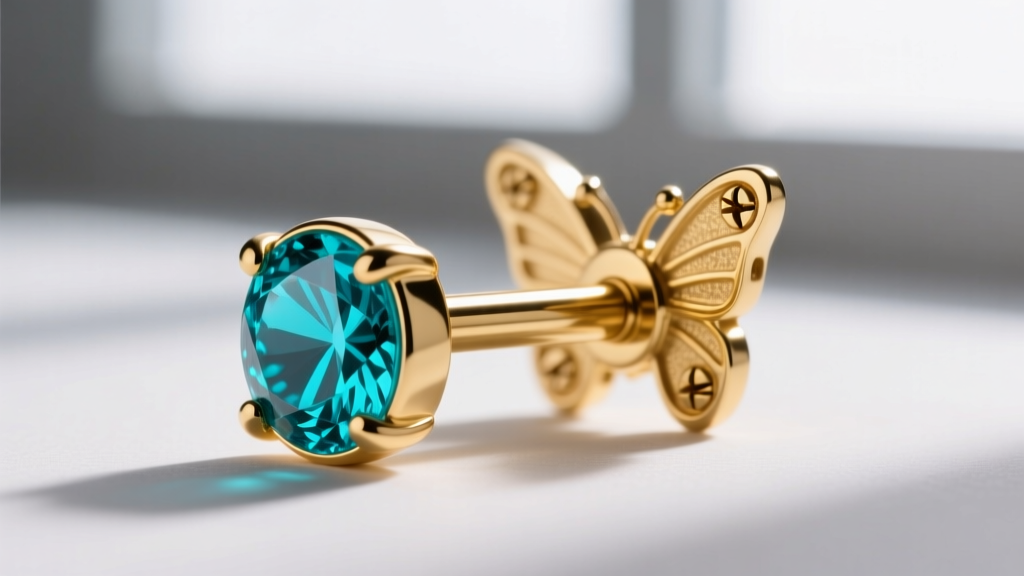
An often-overlooked aspect of earring value is the hardware. Eye motifs, especially those featuring layered enamel and stone inlays, carry more physical weight than a simple metal stud. If the hardware is inadequate, the earring will droop, causing the post to bend or the piercing to stretch uncomfortably.
Gauge Specifications
Standard lobe piercings are typically 20-gauge (0.81mm) or 18-gauge (1.02mm). However, if you are purchasing an evil eye or anatomical eye stud for a cartilage piercing (like the helix or tragus), you must seek out 16-gauge (1.29mm) or 18-gauge posts. Cartilage tissue requires thicker jewelry to prevent the "cheese-cutter effect," where a thin, heavy earring slowly migrates through the flesh.
Backing and Clutch Quality
A $200 solid gold eye earring loses its value if it falls out and gets lost. Budget brands use thin, stamped-metal butterfly backs that lose tension over time. High-value earrings feature La Pousette backs (which use a mechanical spring lock) or heavy-duty silicone O-rings paired with a threaded screw-back post. When assessing a piece in person or online, always check the backing mechanism. A secure, engineered backing is a hallmark of a brand that values the structural integrity of its jewelry.
Expert Troubleshooting Tip: If your heavy eye motif earring constantly droops forward on your lobe, do not blame the earring's design. Upgrade to a wider, flat-disc friction back or a silicone stabilizer pad. This distributes the weight of the motif across a larger surface area of the earlobe, keeping the "eye" facing perfectly forward.
Final Verdict: Maximizing Your Investment
Evaluating the budget and value of eye and evil eye earrings requires looking past the initial aesthetic appeal. While a $25 epoxy-resin evil eye stud might seem like a bargain, its inevitable chipping and tarnishing make it a poor long-term investment. Conversely, spending $90 on a properly verified 2.5-micron vermeil piece, or $250 on a solid 14k gold stud with genuine lapis lazuli, ensures that your jewelry remains a vibrant, protective, and beautiful staple in your collection for years to come. Always demand transparency regarding base metals, plating thickness, and gemstone origins from your jeweler.


