Back Stuck on Earring? Expert Technical Removal Guide
Learn expert techniques to safely remove a back stuck on earring posts. Discover technical causes like metal galling and step-by-step extraction methods.

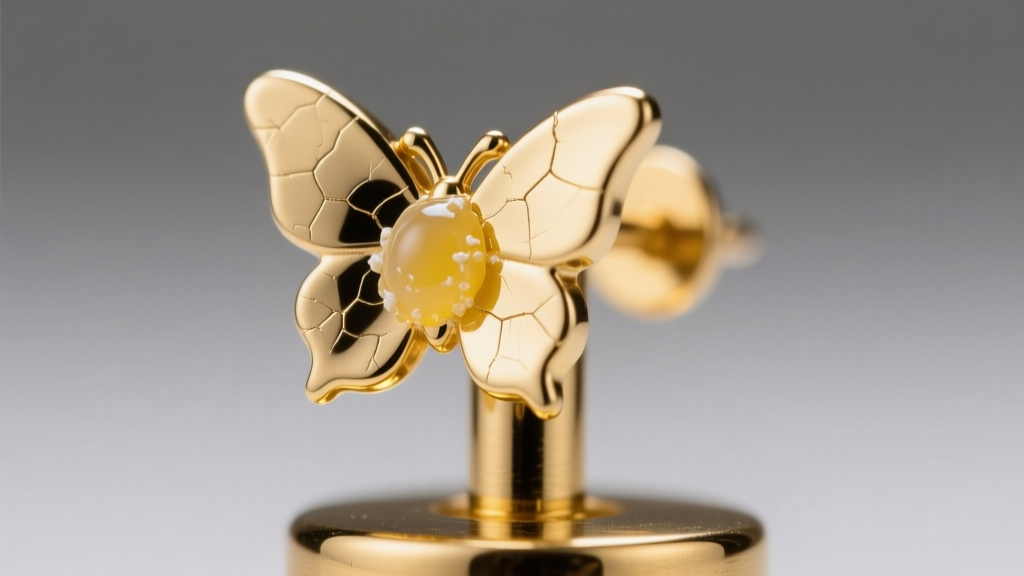
The Physics and Metallurgy of a Jammed Earring Back
Experiencing a back stuck on earring hardware is rarely a simple matter of pulling too hard. From a metallurgical and biomechanical perspective, a jammed friction clutch or threaded back is the result of specific physical failures. Understanding whether you are dealing with metal galling, biological calcification, or mechanical misalignment is the first step in safe extraction without tearing the earlobe or snapping the post.
Standard butterfly clutches rely on a friction fit. When pushed onto a post, the tensioned metal loops grip the groove. However, if the post is bent—even by a fraction of a millimeter—the clutch binds against the groove's edge, creating a mechanical lock. Furthermore, in 2026, while jewelry manufacturing tolerances have improved, soft alloys like 925 sterling silver remain highly susceptible to metal galling. Galling occurs when microscopic metal asperities cold-weld together under friction, essentially fusing the back to the post.
Diagnostic Matrix: Why is the Back Stuck?
Before attempting removal, identify the failure mode. Applying brute force to a galled post will snap it inside the ear canal, requiring surgical removal. Use this diagnostic matrix to determine your extraction protocol.
| Failure Mode | Primary Material Susceptibility | Technical Cause | Extraction Protocol |
|---|---|---|---|
| Biological Calcification | All metals (esp. Titanium) | Sebum and keratinocytes oxidize and harden into a cement-like resin inside the clutch. | Enzymatic Solvent |
| Metal Galling | 925 Silver, Low-Karat Gold | Friction-induced cold welding of similar metal alloys under pressure. | Lubrication & Torsion |
| Mechanical Binding | 20G & 18G Thin Posts | Post bending causes the clutch groove to misalign and wedge against the backing loops. | Thermal & Leverage |
Technical Extraction Protocols
Abandon the use of bare fingers. The human grip lacks the localized torque required to break a calcified or galled seal without causing tissue trauma. Follow these professional-grade extraction protocols.
Protocol A: Solvent Dissolution for Biological Debris
If the earring has been worn continuously for months, the 'cheese' factor (desquamated skin and sebum) has likely calcified. Standard soap will not break down these lipid-peptide bonds.
- Saturate: Apply 91% isopropyl alcohol or an enzymatic jewelry cleaner directly to the junction where the post meets the clutch.
- Agitate: Use a soft-bristled interdental brush to work the solvent into the micro-gaps of the butterfly back.
- Dwell: Allow the solvent to penetrate for 4 to 6 minutes to dissolve the lipid matrix.
- Extract: Grip the post firmly at the base of the earlobe with one hand to prevent tissue tearing, and twist the clutch while pulling.
Protocol B: Mechanical Leverage for Bent Posts
When an 18-gauge (1.02mm) or 20-gauge (0.81mm) post bends, the clutch jams against the groove edge. You must realign the axis of extraction.
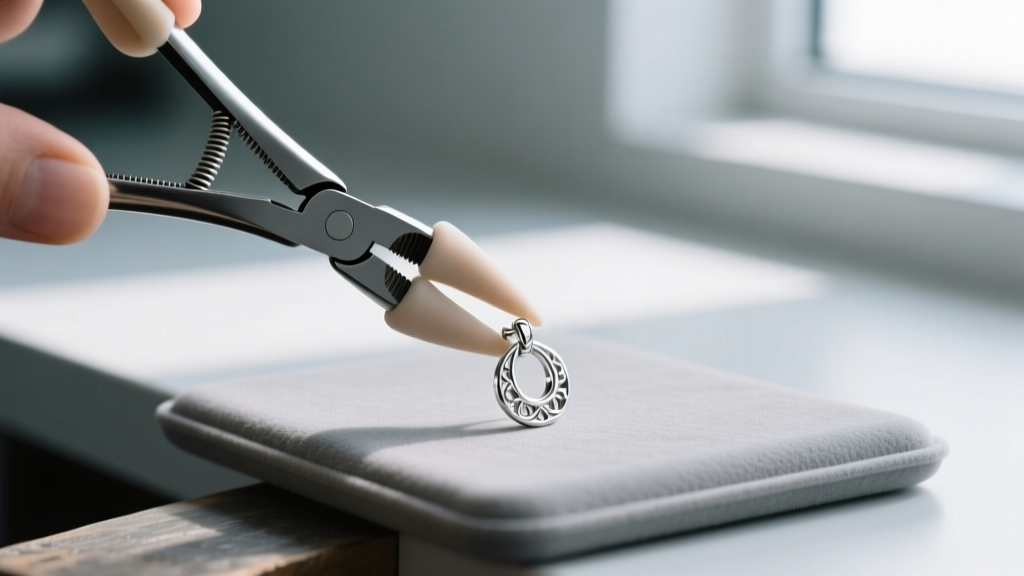
- Tool Selection: Use a pair of McGurrin hemostats or specialized earring back removal pliers. Critical: Slip medical-grade silicone tubing over the jaws of the hemostats. Bare steel jaws will crush soft gold or silver clutches, permanently locking them.
- Stabilization: Pinch the earlobe tissue directly behind the clutch to act as a fulcrum, preventing the post from pivoting and tearing the fistula (piercing hole).
- Micro-Torsion: Clamp the silicone-tipped hemostats onto the butterfly back. Instead of pulling straight out, apply a micro-rotational force (wiggling side-to-side) while applying steady outward traction. This realigns the bent post with the clutch's exit channel.
Protocol C: Breaking Metal Galling
If you are dealing with sterling silver or gold galling, solvents will not work. You must break the microscopic welds.
- Apply a drop of synthetic watch oil or penetrating fluid (like WD-40 Specialist Silicone) to the seam. Avoid standard oils that can irritate the piercing.
- Wait 10 minutes for capillary action to draw the lubricant into the galled threads or friction groove.
- Using two pairs of silicone-padded pliers, grip the post and the back independently. Apply counter-rotational torque (twist left and right simultaneously) to snap the galled asperities before pulling.
'Never apply heat to a stuck earring while it is in the ear. Metals like silver and gold are highly thermally conductive and will transfer heat to the tissue, causing second-degree burns before the metal expands enough to break a galled seal.' — Master Bench Jeweler Guidelines, Rio Grande
Preventative Engineering: Upgrading Your Earring Backs
The traditional butterfly clutch is an outdated mechanical design that prioritizes cheap manufacturing over security and hygiene. To eliminate the risk of a back stuck on earring posts entirely, upgrade to high-tolerance backing systems.
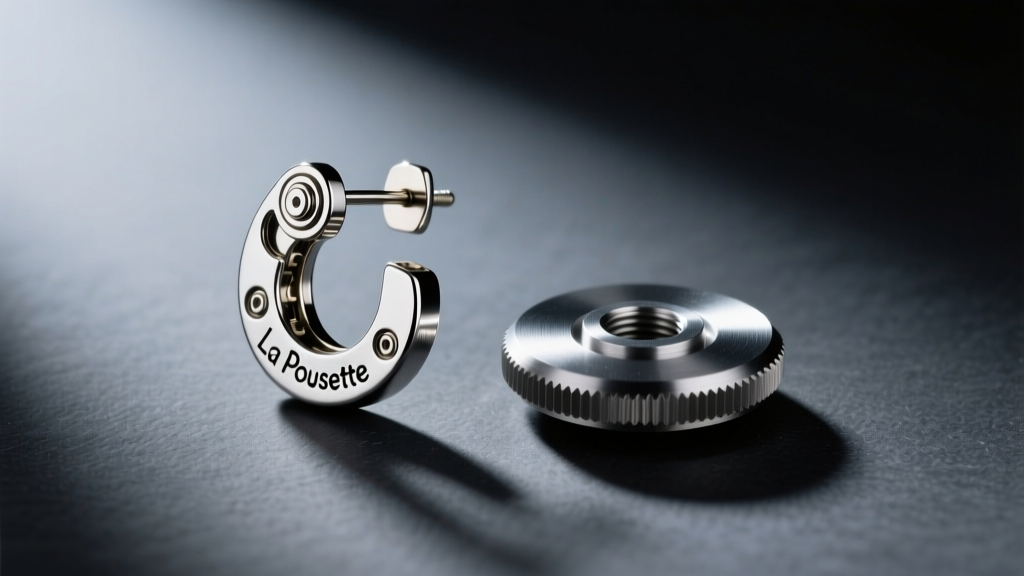
The La Pousette Locking Back
Originally engineered for high-carat diamond studs, the La Pousette back utilizes a spring-loaded, dual-pin internal mechanism that locks into a precision-milled groove on the post. Because it relies on internal mechanical locking rather than external friction, it cannot gall, and biological debris cannot interfere with the release mechanism. You simply squeeze the side tabs to retract the pins and slide it off.
Internally Threaded Flat-Back Labrets
For cartilage and lobe piercings, the industry standard in 2026 is the internally threaded flat-back labret, typically in 14-gauge (1.63mm) or 16-gauge (1.29mm) ASTM F-136 implant-grade titanium. Unlike friction posts, these screw together. Because the threads are inside the hollow post, they are protected from sebum buildup, and the thicker gauge completely eliminates post-bending, rendering mechanical binding impossible.
When to Seek Professional Piercer Intervention
There are specific failure thresholds where DIY extraction becomes dangerous. According to the Association of Professional Piercers (APP), you should immediately visit a professional piercer or urgent care if:
- Tissue Embedding: The earlobe has swollen over the clutch, hiding the metal entirely. This requires a scalpel incision to expose the hardware.
- Post Fracture: The post has snapped flush with the clutch, leaving no surface area for pliers to grip.
- Fistula Trauma: You have been pulling for more than 5 minutes, resulting in blanching (whitening) of the tissue or bleeding, which indicates you are compromising blood flow to the lobe.
By understanding the mechanical and biological reasons why a back gets stuck, you can transition from panicked pulling to precise, tool-assisted extraction, preserving both your jewelry and your tissue health.


