Band Golden Earring Trends: 2026 Style & Fit Guide
Explore the 2026 band golden earring trend. Discover expert styling tips, gauge mechanics, gold purity grades, and face-shape pairing frameworks.

The Evolution of the Band Golden Earring in 2026
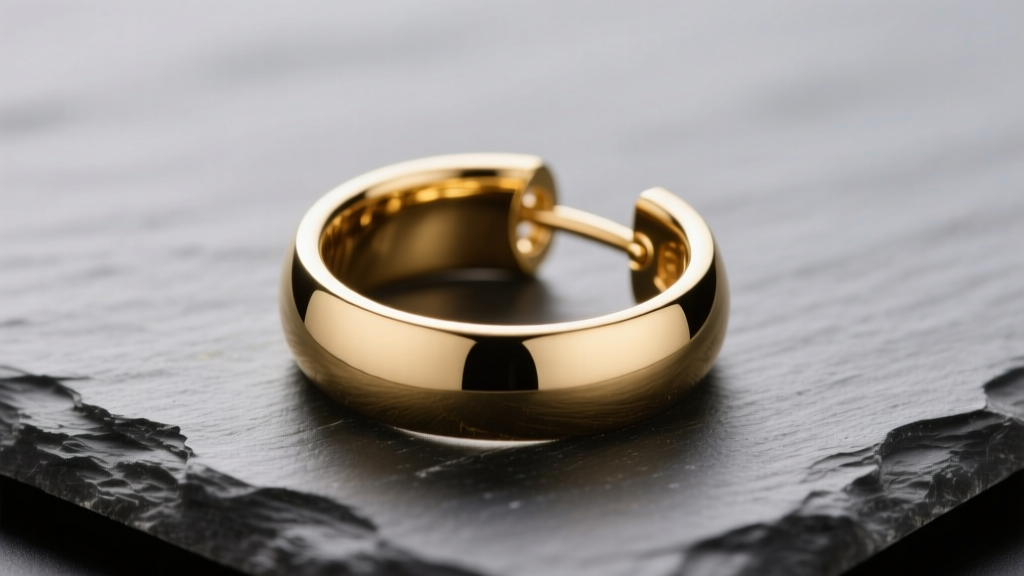
The jewelry landscape of 2026 has decisively pivoted away from the ultra-delicate, barely-there wire hoops of the early 2020s. Today, the modern ear curation is anchored by architectural weight, structural integrity, and bold metallurgy. At the center of this shift is the band golden earring—a substantial, thick-profiled hoop or huggie that prioritizes sculptural presence over minimalist subtlety. Unlike standard tubing hoops, a true band golden earring features a solid or semi-solid cross-section, offering a premium, heavy-duty aesthetic that catches light from every angle.
However, the transition to heavier, thicker ear aesthetics requires a sophisticated understanding of material science and piercing biomechanics. A poorly engineered band golden earring can lead to cartilage migration, lobe stretching, or alloy degradation. This comprehensive guide breaks down the metallurgy, gauge mechanics, and styling frameworks necessary to master this dominant 2026 trend.
Anatomy and Closure Mechanics
When evaluating high-end band styles, the closure mechanism dictates both the longevity of the piece and the health of the piercing. The market is currently dominated by three distinct engineering approaches:
- Seamless Clicker Hinges: The gold standard for 2026. These feature a hidden hinge with a satisfying, secure 'click' closure. They maintain a continuous visual line, making the band appear endless. Best for 16G and 14G cartilage placements.
- Segment Rings (Ball Closure Alternatives):strong> Utilizing a precisely machined detachable segment rather than a tension ball. These offer a flush, uninterrupted band profile but require specialized ring-opening pliers to avoid warping the metal.
- Endless Hoops with Saddle Clasps: A traditional design where a curved wire (saddle) tucks into a hollow receiving tube. While cost-effective, these are prone to snagging and are generally discouraged for fresh or easily irritated cartilage piercings.
Material Grades: Vickers Hardness and Tarnish Resistance
The term 'gold' encompasses a wide spectrum of alloy compositions. Because a band golden earring relies on its structural rigidity to maintain its shape during daily insertion and removal, the Vickers Hardness (HV) of the alloy is a critical metric. Pure 24k gold measures roughly 25-30 HV, making it entirely unsuitable for structural jewelry—it will warp under minimal pressure.
According to the Gemological Institute of America (GIA), alloying gold with metals like copper, silver, and zinc drastically alters its durability and color profile. Below is a comparative framework for selecting the right material grade for heavy band styles.
| Alloy Grade | Gold Purity | Vickers Hardness (Approx) | Best Use Case | 2026 Price Range (Per Pair) |
|---|---|---|---|---|
| 14k Yellow Gold | 58.5% | 120 - 140 HV | Everyday wear, heavy structural bands, cartilage | $250 - $600 |
| 18k Yellow Gold | 75.0% | 90 - 110 HV | Lobe wear, luxury huggies, rich color priority | $450 - $1,200 |
| 22k Yellow Gold | 91.6% | 60 - 70 HV | Collector pieces, lightweight open bands only | $800 - $2,000+ |
| Gold Vermeil | 2.5µm over Silver | N/A (Base dependent) | Trend-chasing, temporary wear (high failure rate) | $60 - $150 |
For a substantial band golden earring intended for daily cartilage wear, 14k gold remains the superior choice. Its higher copper and zinc content provides the necessary tensile strength to withstand the mechanical stress of a clicker hinge without bending.
Piercing Biomechanics: Gauge and the Cheese-Cutter Effect
A critical failure mode in heavy jewelry styling is the 'cheese-cutter effect.' This phenomenon occurs when a heavy piece of jewelry rests on a thin wire gauge, creating concentrated downward pressure that slowly slices through the fistula (the piercing tunnel). The Association of Professional Piercers (APP) consistently warns against using thin-gauge jewelry for heavy or oversized pieces.
Gauge Sizing Framework for Band Styles
- 20-Gauge (0.81mm): Strictly prohibited for heavy bands. Only suitable for ultra-lightweight, thin-wire endless hoops in standard lobe piercings.
- 18-Gauge (1.0mm): The minimum acceptable thickness for a standard lobe band golden earring. Can support moderate weight (up to 6 grams) without causing lobe migration.
- 16-Gauge (1.2mm): The mandatory standard for any cartilage placement (helix, conch, tragus). A 16G wire distributes the weight of a thick band evenly, preventing tissue rejection and angle shifts.
- 14-Gauge (1.6mm): Reserved for industrial scaffolds, daith piercings, or intentionally stretched lobes. Offers maximum structural support for oversized, avant-garde band designs.
When shopping, always verify the exact millimeter thickness of the wire. Many fast-fashion brands market 'chunky' hoops that feature a thick visual face but taper down to a fragile 22G wire at the post, guaranteeing eventual tissue damage.
Face Shape Pairing and Visual Weight
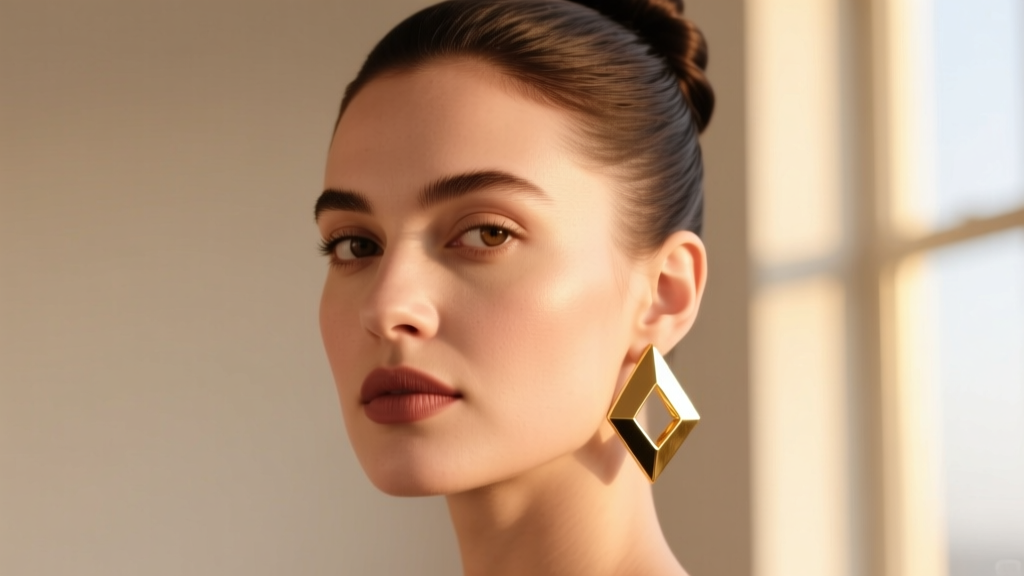
The visual weight of a band golden earring can dramatically alter facial proportions. In 2026, stylists are utilizing geometric and architectural band profiles to complement specific bone structures. Here is a practical decision matrix for pairing band styles with face shapes:
Round and Oval Faces
Round faces benefit from angularity and vertical elongation. Opt for a band golden earring that features a flattened, rectangular, or geometric cross-section rather than a perfect circle. Elongated oval bands or 'staple' shaped huggies draw the eye downward, creating the illusion of a sharper jawline. Avoid perfectly round, thick huggies that sit tightly against the lobe, as they emphasize facial width.
Square and Heart-Shaped Faces
Square and heart-shaped faces possess strong, prominent jawlines and wider foreheads. The objective here is softening and balancing. A continuous, perfectly circular band golden earring with a high-polish, domed finish introduces necessary curves to the lower half of the face. Medium-diameter hoops (20mm - 30mm) that fall just below the earlobe provide a visual anchor that softens angular features without overwhelming them.
Curating the 2026 Ear Stack
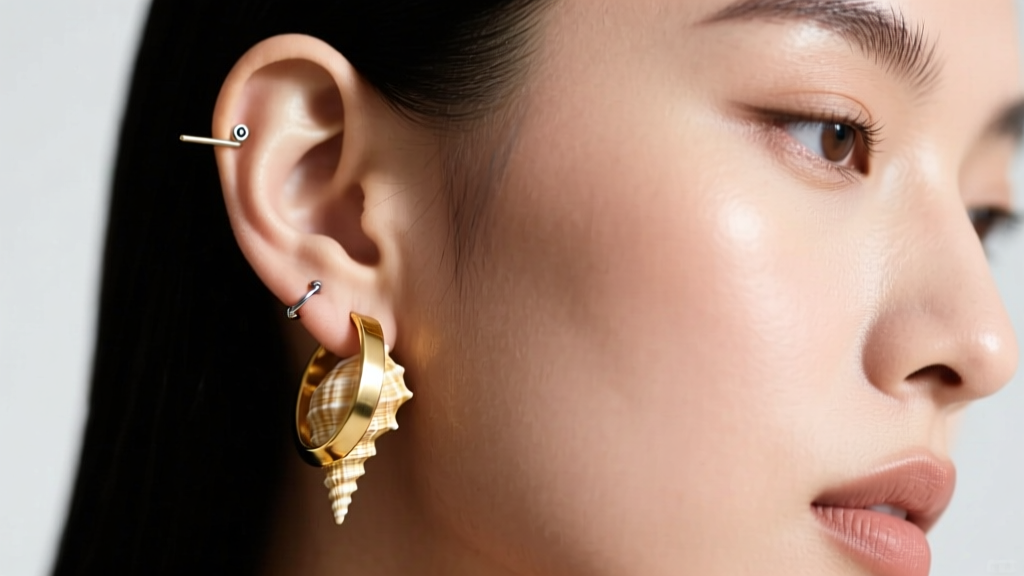
The era of the uniform, matching ear stack has been replaced by intentional eclecticism. When styling a dominant band golden earring, the supporting pieces must provide contrast in both texture and scale. If your primary lobe piece is a high-polish, 5mm thick gold band, pair it with a matte-finished or hammered gold stud in the second hole. For cartilage, contrast the smooth, reflective surface of a gold conch clicker with a dark, oxidized titanium or black spinel flat-back in the helix.
"The 2026 ear curation is an exercise in tension. We are pairing the heavy, luxurious permanence of a solid gold band with the industrial, utilitarian edge of mixed metals and textured gemstones." — Editorial Direction, Jewel Style Radar
Final Considerations on Maintenance
A thick band golden earring requires specific maintenance to preserve its structural integrity. Never use traditional ring-opening pliers on a clicker-hinge band, as this will permanently compromise the internal locking mechanism. For continuous segment rings, always use nylon-jawed pliers to prevent marring the high-polish finish. Clean the interior of the band weekly with a non-alcoholic saline solution to prevent the buildup of sebum and environmental debris, which can degrade the alloy's luster over time. By respecting the metallurgy and biomechanics of these pieces, you ensure your investment remains a cornerstone of your personal style for decades.