Bathing Ape Earrings: 2026 Authenticity & Material Guide
An expert technical breakdown of Bathing Ape earrings, covering alloy compositions, gauge sizing, authentication markers, and 2026 resale market data.

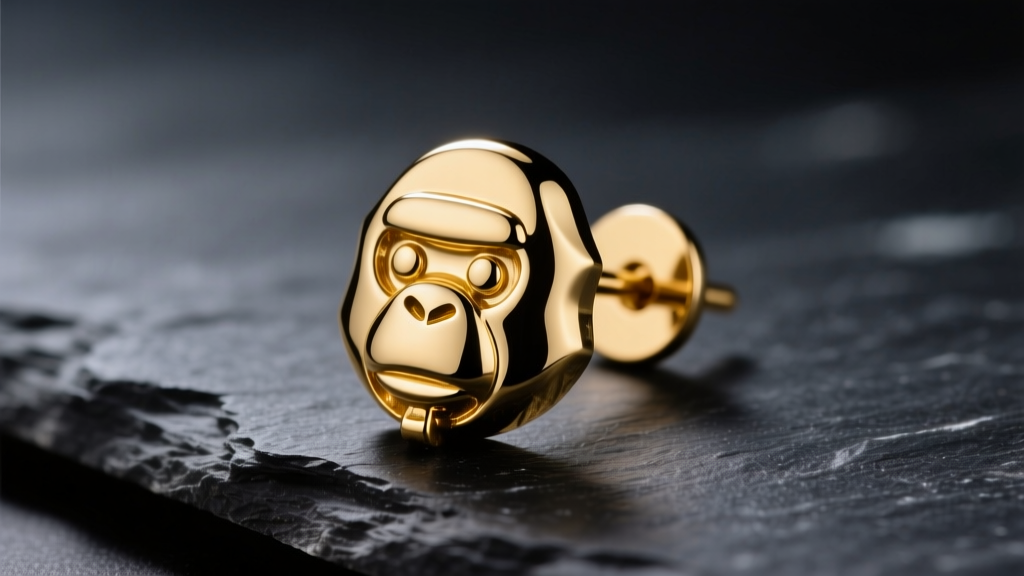
The Intersection of Streetwear and Metallurgy
When evaluating luxury streetwear accessories, the technical execution often separates archival grails from disposable merch. Bathing Ape (BAPE) earrings—ranging from the iconic Ape Head studs to Baby Milo huggies and camo-motif drops—occupy a unique space in the 2026 fashion jewelry market. Unlike traditional fine jewelers who work with solid 14k gold or platinum, BAPE operates within the high-end fashion jewelry sector. This means their earwear relies on complex base alloys, specialized plating technologies, and precise die-casting techniques to achieve the brand's signature bold aesthetics. For collectors and daily wearers alike, understanding the metallurgical reality of these pieces is critical for assessing longevity, skin compatibility, and secondary market value.
Base Alloys and Plating Technologies
The structural foundation of most BAPE stud and dangle earrings is a copper-zinc brass alloy or a Zamak (zinc, aluminum, magnesium, and copper) composite. Brass is typically reserved for the earring posts due to its high tensile strength and malleability, which prevents the post from snapping under lateral stress. Conversely, the decorative face—such as the intricate Ape Head motif—is often die-cast from Zamak. Zamak allows for high-fidelity mold reproduction, capturing the micro-textures of the design, but it is inherently more brittle and heavier than brass.
To achieve the brand's signature gold and silver finishes, BAPE utilizes either traditional electroplating or Physical Vapor Deposition (PVD). Standard seasonal drops usually feature flash electroplating, applying a microscopic layer (typically 0.1 to 0.3 microns) of 14k gold or rhodium over a nickel underlayer. While visually striking, flash plating is highly susceptible to friction wear. In contrast, BAPE's premium collaborative releases and 30th-anniversary archival pieces have increasingly adopted PVD coating. PVD bonds the metal vapor to the brass substrate at a molecular level in a vacuum chamber, resulting in a finish that is up to ten times more resistant to tarnishing and sweat-induced degradation than standard electroplating.
Post Gauge, Friction Backs, and Biomechanics
An often-overlooked technical specification in streetwear jewelry is the post gauge. The vast majority of authentic BAPE stud earrings are manufactured with a 20-gauge (0.81mm) or 18-gauge (1.02mm) post. While 20G is the fashion industry standard for lightweight studs, it presents a biomechanical risk for heavy die-cast Zamak pieces. If the decorative face exceeds 4 grams, a 20G post can induce the "cheese-cutter effect," where the thin metal slowly migrates downward through the earlobe tissue due to gravitational drag and kinetic movement.
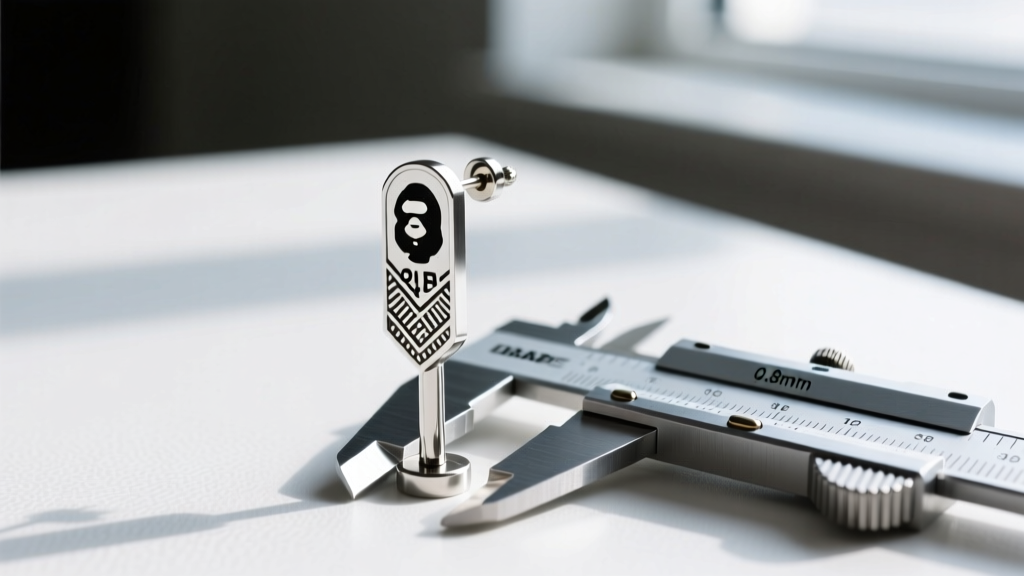
Furthermore, BAPE predominantly utilizes standard butterfly friction backs. From a hygienic standpoint, the dual-loop spring mechanism of a butterfly back creates microscopic crevices that trap sebum, dead skin cells, and environmental bacteria. For wearers with healing piercings or a history of localized infections, swapping the factory BAPE friction back for a 14k gold or implant-grade titanium flat-back labret stud is a highly recommended technical modification that preserves the streetwear aesthetic while upgrading the biocompatibility of the jewelry.
Authentication Matrix: Spotting Counterfeit BAPE Earrings
The proliferation of counterfeit streetwear accessories has flooded the secondary market. Fakes often fail at the metallurgical and micro-detail levels. Below is a technical comparison matrix to help authenticators and buyers verify legitimate BAPE earwear.
| Technical Feature | Authentic BAPE | Counterfeit / Replica |
|---|---|---|
| Base Weight | 3.5g - 6.2g (Solid Brass/Zamak) | 1.2g - 2.5g (Hollow Pot Metal) |
| Hallmarking | Laser-etched micro-font, crisp edges | Deep stamped, blurred, or completely absent |
| Enamel Application | Cold epoxy resin, perfectly flush with metal dams | Vitreous or painted, raised edges, frequent bleeding |
| Butterfly Back | Branded 'BAPE' or star motif, tight spring tension | Generic smooth friction back, loose tension |
Authenticators should also examine the enamel work. BAPE uses high-grade cold enamel (an epoxy-based resin) cured under UV light. This allows for vibrant, opaque colors that sit perfectly flush with the metal dams. Counterfeits often use cheap acrylic paints that sit above the metal line and chip within weeks of wear.
Contact Dermatitis and the Nickel Underlayer
The most common failure mode for fashion jewelry wearers is allergic contact dermatitis. As noted by the Mayo Clinic, nickel is the leading culprit behind jewelry-induced skin reactions. Because BAPE's standard electroplating process requires a nickel underlayer to ensure the gold or silver topcoat adheres properly to the brass base, wearers with nickel sensitivities are at high risk once the 0.2-micron flash plating wears through.
The European Union's Nickel Directive (EN 1811:2011) mandates that post-assembly jewelry intended for prolonged skin contact must not release nickel at a rate greater than 0.5 µg/cm²/week. While BAPE's premium PVD-coated pieces generally pass this threshold due to the impermeable nature of the vapor barrier, standard mall-drop BAPE earrings frequently exceed it once micro-abrasions occur. For sensitive wearers, applying a medical-grade hydrocolloid barrier or a clear polyurethane nail polish to the post before insertion provides a temporary, non-destructive shield against nickel ion migration.
2026 Resale Valuation and Archival Care
From an investment perspective, BAPE earrings have transitioned from mere accessories to archival collectibles. According to market data tracked by platforms like StockX and Highsnobiety, limited-run collaborative pieces—such as the BAPE x G-Shock accessory kits or regional exclusive drops—command a 40% to 85% premium over their original retail price on the 2026 secondary market. Standard production Ape Head studs, however, tend to depreciate or hold flat, hovering around the $60 to $90 resale mark depending on condition and packaging completeness.

To preserve the numismatic and resale value of archival BAPE earwear, proper storage is non-negotiable. Zamak and brass are highly reactive to atmospheric sulfur and humidity. Collectors should store these pieces in individual, non-PVC polyethylene ziplock bags alongside 3M anti-tarnish strips. Avoid storing BAPE earrings in their original cardboard and velvet presentation boxes long-term, as the adhesives and dyes used in the packaging can off-gas volatile organic compounds (VOCs) that accelerate the oxidation and pitting of the underlying base metals.


